Megtekintés
 Küldés
 Megosztás
 Részletek
 Útmutató

 Letöltés
 Hasonló darabok
 X-ray felvétel
 Diavetítés
 Kérdések és válaszok
 Statisztika
Litho 2 (Waves 2)

- 117.0 x 81.0 cm


 Összes részlet megjelenítése
Az ezen az oldalon megjelenített műalkotások szerzői jogi védelem alatt állnak, ami azt jelenti, hogy törvényileg nem készíthetünk és nem adhatunk el belőlük pontos másolatokat. Ez a védelem olyan nemzetközi megállapodások alapján érvényesül, mint például a Berni Egyezmény és a nemzeti jogszabályok által, beleértve azokat is, amelyeket meghatározott Az USA szerzői jogi törvénye – 17. cím.
Ez a módszer teljes mértékben megfelel a szerzői jogi szabályozásnak, mivel nem tartalmazza a védett műalkotás másolását vagy duplikálását. Ehelyett ez egy kreatív újinterpretáció – egy új festmény, amely az eredetivel való összefüggései miatt hatással van rá, de nem az az.
Giclée / Műnyomat
Múzeumi minőségű giclée vagy vászonnyomat, gyors gyártással és rugalmas finomítási lehetőségekkel. ( Kézzel festett másolat rendelése Áttérés digitális képre)




P118B Ft10

P118H Ft10

P118W Ft10

P438Z Ft10

P508JH Ft12

P508YH Ft12

P805H Ft10

P805Z Ft10

P919BZ Ft10

P919G Ft10

P919XJ Ft10

P959ZH Ft10

P968JZ Ft12

W106C Ft8

W218G Ft10

W218JH Ft8

W218Y Ft10

W307PJ Ft10

W316G Ft10

W316PJ Ft8

W316Y Ft10

W398PJ Ft8

W4111J Ft10

W500HY Ft15

W500JH Ft15

W692G Ft12

W849H Ft8

W940BG Ft15

W953PJ Ft8




Válasszon előre meghatározott méreteink közül, amelyek megfelelnek a műalkotás eredeti arányainak.

Írja be a keretének vagy a falának megfelelő szélességet és magasságot. A nyomatot csak le lehet vágni, soha nem tehető nagyobbá, mint az eredeti kép, így egy eltérő alakú méretnél a kép egy része elveszik. Mielőtt bármit kinyatintanánk, küldünk egy digitális próbamodellt jóváhagyásra. Az oldalon látható kép nem tartalmazza a valós levágást — ezt csak a próbamodell mutatja meg.
Világszerte történő kiszállítás területére mindössze 2 hét alatt, a szokásos 4-5 hét helyett. (11 november)

Ingyenes globális expressz szállítás

Prémium minőségű len vászon

Teljes körű szállítási biztosítás

Vámvisszatérítési Garancia

Hiteles színarányosság garancia

100 napos visszaküldési lehetőség (csak hibás termékek esetén)

100% pénzvisszatérítési garancia

Több darab vásárlásakor kedvezmény
 Az üvegkeretes opció csak 110 cm alatti méretben érhető el

Litho 2 (Waves 2)
Giclée / Műnyomat
Reprodukció mérete
-


Összesített ár
Ft 26351
A Raw Expression of Movement and Emotion
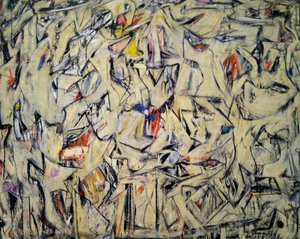
Willem de Kooning’s “Litho 2 (Waves 2),” created in 1960, is a potent distillation of the artist's signature style – a dynamic blend of abstraction and figuration that pulsates with raw energy. This lithograph, measuring 117 x 81 cm, offers a glimpse into de Kooning’s intensely personal vision, capturing not just a scene but a state of being. The work immediately commands attention through its bold contrasts and unsettling juxtapositions, hallmarks of the Abstract Expressionist movement that defined much of mid-20th century American art.
The image depicts three distinct figures engaged in an ambiguous interaction within a swirling landscape dominated by waves. These aren’t idealized representations; they are fragmented, distorted forms – almost violently rendered – suggesting a struggle for control and a confrontation with the primal forces of nature. De Kooning deliberately avoids smooth transitions or harmonious compositions, instead favoring jagged lines, abrupt shifts in tone, and an overall sense of instability. This deliberate disruption mirrors the turbulent emotional landscape that informed much of his work.
The Language of Abstraction and Gesture
As a lithograph, “Litho 2 (Waves 2)” showcases de Kooning’s masterful control over printmaking techniques while retaining the spontaneity and immediacy characteristic of his painting. The process involved transferring ink from a stone to paper, resulting in a textured surface that amplifies the sense of movement and physicality within the image. The artist's gestural marks – visible brushstrokes and energetic lines – are particularly pronounced, echoing the “action painting” style he pioneered alongside Jackson Pollock. These aren’t simply decorative flourishes; they represent the physical act of creation itself, conveying a sense of urgency and emotional intensity.
Interestingly, de Kooning's exploration of lithography occurred during a period when printmaking was less favored in America compared to painting. This shift reflects a broader movement within Abstract Expressionism towards large-scale canvases and a rejection of traditional artistic conventions. The lithograph format allowed him to experiment with scale and composition while retaining the expressive power of his hand.
Symbolism and the Human Condition
The figures in “Litho 2 (Waves 2)” are open to interpretation, inviting viewers to project their own emotions and experiences onto the scene. Some scholars suggest they represent a confrontation with mortality or the anxieties of modern life. The waves themselves can be seen as metaphors for overwhelming forces – both internal and external – that threaten to engulf the individual. De Kooning’s deliberate ambiguity ensures that the work remains perpetually relevant, resonating with viewers across generations.
Considering de Kooning's biography—his difficult childhood marked by parental separation and a restless spirit—it’s not surprising that his art often grapples with themes of isolation, struggle, and the search for identity. “Litho 2 (Waves 2)” embodies this internal conflict through its fragmented forms and unsettling atmosphere, offering a powerful meditation on the complexities of the human condition.
A Reproduction Worthy of Display
OriginalUniqueArt offers meticulously crafted hand-painted reproductions of “Litho 2 (Waves 2),” capturing the essence of de Kooning’s original work with exceptional detail and fidelity. Our artists utilize archival-quality materials to ensure that each reproduction will endure for generations, preserving the vibrancy and emotional impact of this iconic painting. Whether you're a seasoned art collector or seeking a striking piece to elevate your interior design, a OriginalUniqueArt reproduction of “Litho 2 (Waves 2)” is an investment in timeless artistry.
Kérdések és válaszok
Milyen módon kapcsolódik a "Litho 2 (Waves 2)" stílusa alkotójának korához?
A „Litho 2 (Waves 2)”, Willem De Kooning alkotása a Abstract Expressionism irányzat alkotása, mely alkotójának Modern kor korszakából származik.
Hol találhatok olyan műalkotásokat, amelyek hasonlóak a(z) „Litho 2 (Waves 2)”, Willem De Kooning alkotása alkotáshoz?
A „Litho 2 (Waves 2)”, Willem De Kooning alkotása Hasonló alkotások oldala kapcsolódó műalkotásokat mutat be.
Milyen összefüggésben áll a "Litho 2 (Waves 2)" témája Willem De Kooning megszokott motíveivel?
Willem De Kooning dokumentált témái – surrealism, abstraction, emotional intensity, post-war anxieties, urban landscape, de kooning’s exploration of form, dynamic figures, complex narratives – között a „Litho 2 (Waves 2)” különös hangsúlyt fektet waves, figures, de kooning, lithograph, dynamic, composition, 1960-ra.
Kapcsolódó cikkek

Willem de Kooning: Abstraction, Gesture & the Evolution of Post-War American Painting
Explore the evolution of Willem de Kooning's iconic Abstract Expressionist paintings. Discover his signature style, key themes & investment potential with expert insights for discerning art collectors.
Beyond Representation: Exploring the Emotional Landscape of Abstract Expressionism
Explore the profound emotional world of Abstract Expressionism with OriginalUniqueArt. Discover key artists like Pollock & Rothko, learn about collecting, and find museum-quality reproductions to inspire your space.

Absztrakt Expresszionizmus Mesterei: 10 alkotás, ami meghatározta a művészetet | OriginalUniqueArt.com
Fedezze fel a 10 legikonikusabb absztrakt expresszionista alkotást! Ismerje meg Jackson Pollock, Mark Rothko és más mesterek történetét. Művészeti reprodukciók prémium minőségben – OriginalUniqueArt.com.

Kandinsky Mesterművei: 25 Lenyűgöző Festmény a Modern Művészet Gyöngyszemeiből | OriginalUniqueArt
Fedezze fel Wassily Kandinsky 25 legikonikusabb művét! Merüljön el az absztrakt művészet világában, ismerje meg a színek és formák lenyűgöző történetét. Prémium minőségű reprodukciók és inspiráló dekorötletek a OriginalUniqueArt.com-on.

Goya Mesterművei: A Spanyol Lélek 25 Legikonikus Képe – OriginalUniqueArt
Fedezze fel Goya 25 leglenyűgözőbb mesterművét! Ismerje meg a spanyol festő életművét, portréit és ikonikus képeit. Vásároljon prémium minőségű reprodukciókat a OriginalUniqueArt.com-on, és teremtsen egyedi otthoni dekorációt klasszikus művészettel! Explore the full collection online.