Megtekintés
 Küldés
 Megosztás
 Részletek
 Útmutató

 Letöltés
 Hasonló darabok
 X-ray felvétel
 Diavetítés
 Statisztika
Línea quebrada


 Összes részlet megjelenítése
Kézzel készített olajfestmény reprodukció
Kézzel festett olajvastú vászon, az Ön által választott méretben és keretben, művészeink készítik meglévőre. ( Váltás nyomtatványra Áttérés digitális képre)




P118B Ft10

P118H Ft10

P118W Ft10

P438Z Ft10

P508JH Ft12

P508YH Ft12

P805H Ft10

P805Z Ft10

P919BZ Ft10

P919G Ft10

P919XJ Ft10

P959ZH Ft10

P968JZ Ft12

W106C Ft8

W218G Ft10

W218JH Ft8

W218Y Ft10

W307PJ Ft10

W316G Ft10

W316PJ Ft8

W316Y Ft10

W398PJ Ft8

W4111J Ft10

W500HY Ft15

W500JH Ft15

W692G Ft12

W849H Ft8

W940BG Ft15

W953PJ Ft8




Válasszon előre meghatározott méreteink közül, amelyek megfelelnek a műalkotás eredeti arányainak.

Írja be a kívánt szélességet és magasságot, hogy illeszkedjen a keretéhez vagy a falához. Mivel ez kézzel festett alkotás, egy eltérő formájú méret esetén a művész akár festhet is valamivel többet a kép körül, vagy korolathat is belőle — az Ön döntésének megfelelően. A festés megkezdése előtt küldünk egy digitális tervezetet jóváhagyásra. Az oldalon látható kép nem tartalmazza a végeredményt — csak a tervezet mutatja meg a valódi eredményt.
A rendelést követően a OriginalUniqueArt.com csapata e-mailt küld az ügyfélnek az instrukciókért, és biztosít egy előnézeti képet (mockup).
Világszerte elérhető szállítás () 3-4 hét alatt a szokásos 5 hét helyett. (28 október). A minőség nem kérdőjelezhető.

Ingyenes globális expressz szállítás

Prémium minőségű len vászon

Teljes körű szállítási biztosítás

Vámvisszatérítési Garancia

Hiteles színarányosság garancia

100 napos visszaküldési lehetőség (csak hibás termékek esetén)

100% pénzvisszatérítési garancia

Több darab vásárlásakor kedvezmény
 Az üvegkeretes opció csak 110 cm alatti méretben érhető el

Línea quebrada
Reprodukciós technika
Reprodukció mérete
-


Összesített ár
Ft 97055
A Megszáltezett Vonal: Egy Forradalmi Művészeti Kaland
Wassily Kandinsky, a 20. század egyik legjelentősebb festője és elméleti gondolója, nem csak a modern művészetet definiálta, hanem a színek és formák közötti kommunikáció új dimenzióját is megnyitotta. A 1934-ben létrehozott "Línea Quebrada" (Megszáltezett Vonal) című alkotása egyedülállóan tökéletes példa a festő egyedi stílusára, mely a látványtalanul egyszerű formák és vibráló színek szimfonikus összhangját idézi. Ez a 80 x 100 cm-es olajfestmény nem csupán egy kép, hanem egy spirituális és érzelmi utazás, mely Kandinsky mélyen összeköt minket a művész belső világával.
Kandinsky munkássága évtizedeken át változott, a figuratív képektől az absztrakt irányzat felé haladva. A festő stílusa a vibrant színek, a dinamikus formák és egyedi vizuális nyelvezettel jellemezhető, mely a hagyományos képződésen kívülállóan működik. "Línea Quebrada" címe a festő törött vonalainak használatára utal, melyek mozgást és energiát kölcsönöznek a kompozíciónak. Ezek a szétnyíró vonalak nem csupán díszítőelemek, hanem Kandinsky hitének kifejezései: a látás előttről a érzés erejéről – egy olyan megközelítés, mely a művészetet a valóságot átható érzelmi kifejezésekre helyezi. A festő nem próbálta meg rögzíteni, amit látta, hanem azt, amit érezett. Ez a kutatás vezetett ahhoz, hogy kísérletezzék a színek kombinációival, melyek célja az érzelmek és pszichológiai állapotok közvetlen kifejezése volt – egyfajta zeneművel való párhuzamosítás.
A Bauhaus Hatása és Az Expressionizmus Szelleme
“Línea Quebrada” születésének időszaka, a német Bauhaus mozgalom virágzási ideje, kulcsfontosságú volt Kandinsky művészetében. A Bauhaus-hoz való kapcsolódás azt mutatja be, hogy a festő elkötelezett maradt a művészet és a kézművesség egyesítésében – egy radikális lépés az akkori művészi hagyományok ellen. A Bauhaus iskola a funkcionális tervezést ötvözte az artistikus kísérletezéssel, ahol művészek, mint Kandinsky, hatolva a határokba, új utakat nyitottak meg. Ez a befolyás jól látható "Línea Quebrada" dinamikus formáin és harmonikus színvilágában, mely tükrözi a Bauhaus eszméinek egyszerűsítő és tisztázó jellegét.
A művemet az expressionizmus szelleme is inspirálta, ami a belső érzelmek kifejezésére összpontosít a torzított képekkel. A festő mélyen foglalkozott a pszichológiai felfedezéssel, és a színek közvetlen kommunikációs képességét hitte volna. A kompozíció központi eleme, a piros kör, szenvedélyt és vitalitást sugall, mely egyfajta tűzvonal, mely a Wagner operákban megismert energiát idézi. Környezője pedig egyfajta egyensúlyt és kontemplációt fejez ki, ami egybánuló erőforrások között belső harmóniát sugall.
Szimbolikus Hangvétel: A Szín Az Érzelem Nyelve
“Línea Quebrada” több mint csupa formák; tele van szimbólumokkal. Kandinsky úgy hitte, hogy a szín képes közvetlenül kommunikálni az érzéseket és gondolatokat a néző alváló tudatában. A festő a piros körre fókuszált, mely a kompozíció központi eleme, ami szenvedélyt és vitalitást sugall, mely egyfajta tűzvonal, mely a Wagner operákban megismert energiát idézi. Környezője pedig egyfajta egyensúlyt és kontemplációt fejez ki, ami egybánuló erőforrások között belső harmóniát sugall.
Egy Érték Ausztrál Művészeti Képtárban
A Centre Pompidou, Párizsban található, a modern és kortárs művészet kiemelkedő gyűjteményét őrzi, beleértve Kandinsky műveit is. A múzeum gyűjteménye egyfajta utazás a művész világába, mely lehetőséget kínál mélyebb betekintést a festő életművébe és gondolataiba. Ha elméletesen szeretnénk megérteni Kandinsky "Línea Quebrada" című alkotását, akkor érdemes lehet meglátogatni a Centre Pompidou gyűjteményét.
Kérdések és válaszok
Mennyire népszerű a "Línea quebrada" a Abstract Expressionism irányzatban?
A „Línea quebrada”, Wassily Wassilyevich Kandinsky alkotása a Ikonikus kategóriába tartozik, és a Abstract Expressionism irányzat részeként tekinthető.
Ki készítette a "Línea quebrada" alkotást, és milyen stílusú?
Wassily Wassilyevich Kandinsky a Abstract Expressionism irányzatban alkototta meg a "Línea quebrada" című művét.
Mennyire fényes „Línea quebrada”, Wassily Wassilyevich Kandinsky alkotása?
A "Línea quebrada" színei Fényes fényerőt mutatnak.
A művész életrajza
A Life Immersed in Color and Spirit
Wassily Wassilyevich Kandinsky, born in Moscow in 1866, was a revolutionary figure who irrevocably altered the course of modern art. His journey wasn’t one of immediate artistic calling; initially destined for a career in law and economics at the University of Moscow, it was a profound encounter with Impressionist painting – specifically Claude Monet's “Haystacks” – and a deeply moving experience witnessing Wagner’s opera "Lohengrin" that ignited within him an irrepressible desire to pursue art. This pivotal moment, occurring around age thirty, marked not merely a career change but a complete transformation of perspective, setting him on a path toward pioneering abstraction. He soon relocated to Munich, enrolling at the prestigious Academy of Fine Arts and studying under Franz von Stuck, though even within formal training, Kandinsky’s spirit yearned for exploration beyond conventional boundaries. Early influences included Russian folk art, gleaned from an ethnographic expedition to the Vologda region in 1889, which instilled a fascination with vibrant color palettes and symbolic imagery. This foundation would prove crucial as he began to develop his unique artistic language. These early explorations weren’t simply about aesthetic preference; they were rooted in a deep cultural connection and a burgeoning understanding of how art could communicate beyond the literal. He was particularly drawn to the rich, earthy tones and intricate patterns found in traditional Russian textiles and icons, which would later inform his use of color and composition.The Dawn of Abstraction: From Expressionism to Inner Necessity
Kandinsky’s early works reveal a strong expressionistic bent, characterized by bold colors and emotional intensity – pieces like “Papeln (Poplars)” from 1902 exemplify this period. These paintings were imbued with a sense of dynamism and movement, reflecting the artist's own inner turmoil and striving for self-expression. However, he wasn’t content with merely representing the external world; he sought to express inner realities, spiritual truths that transcended mere visual depiction. This quest led him gradually away from representational art and toward a revolutionary exploration of color, form, and their emotional resonance. He believed that art should not simply mirror reality but rather serve as a conduit for conveying profound emotions and ideas. He began to believe that colors possessed inherent psychological effects, capable of evoking specific feelings and sensations in the viewer. This conviction was deeply intertwined with his burgeoning interest in Theosophy, a spiritual movement emphasizing esoteric knowledge and universal brotherhood. As he delved deeper into these ideas, Kandinsky’s paintings became increasingly non-objective, shedding recognizable forms in favor of abstract compositions driven by an “inner necessity.” This wasn't simply about abandoning representation; it was about discovering a new visual language capable of expressing the intangible realms of emotion and spirituality. He sought to create a visual equivalent of music, where color and form harmonized to evoke profound emotional responses.Geometric Harmony and Spiritual Resonance
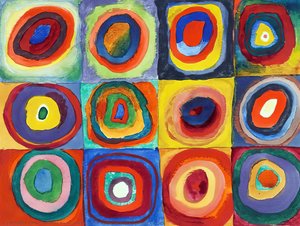
The period following his involvement with the influential artist group Der Blaue Reiter (The Blue Rider), which he co-founded in Munich in 1911, saw a further evolution in Kandinsky’s style. While earlier works often featured fluid, organic shapes, he began to explore geometric abstraction, focusing on the interplay of circles, triangles, and squares. “Several Circles” (140 x 140 cm) stands as a prime example of this phase – a dynamic composition where color and form interact in a harmonious yet energetic dance. He believed that these simple geometric forms held profound symbolic meaning, representing fundamental aspects of the universe and human consciousness. The use of primary colors—red, blue, and yellow—was deliberate, reflecting his belief in their inherent power to evoke specific emotions. This wasn’t cold or sterile geometry; rather, it was imbued with spiritual significance. Kandinsky believed that geometric shapes possessed inherent symbolic meaning, and their arrangement within the canvas could evoke specific emotional responses. His theoretical writings, most notably “Concerning the Spiritual in Art” (1911), articulated these beliefs, laying the groundwork for a new understanding of abstract art as a vehicle for expressing profound spiritual truths. He argued that art should not aim to imitate nature but rather to reveal the artist’s inner world and connect with the viewer on a deeper, more intuitive level.Bauhaus Influence and Lasting Legacy
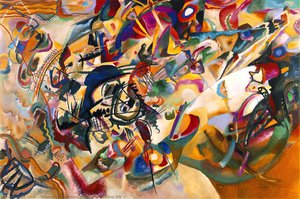
The outbreak of World War I forced Kandinsky's return to Russia in 1914, but following the Russian Revolution, he found himself increasingly at odds with the prevailing artistic climate. In 1920, he accepted a teaching position at the Bauhaus school in Germany, where he profoundly influenced generations of artists with his theories on color, form, and abstraction. The Bauhaus provided an ideal environment for Kandinsky to further develop his ideas and explore new creative avenues. He emphasized the importance of intuitive feeling and non-objective expression, encouraging students to move beyond representational art and embrace the expressive potential of pure color and form. He continued to experiment with geometric forms and vibrant colors, often incorporating layered impasto techniques to create textured surfaces that added depth and complexity to his compositions – as seen in later works like “An Intimate Party” (1942). After the closure of the Bauhaus by the Nazi regime in 1933, Kandinsky moved to France, where he remained for the rest of his life. His impact on modern art is immeasurable; he is widely recognized as a pioneer of abstract expressionism and a key figure in the development of non-representational painting. His works are held in major museums worldwide, including the Tretyakov Gallery in Moscow, which houses his monumental “Composition VII,” a testament to his artistic vision and enduring legacy. Kandinsky’s exploration of color, form, and spirituality continues to inspire artists today, solidifying his place as one of the most important figures in 20th-century art history. He didn't just paint pictures; he painted emotions, ideas, and the very essence of the human spirit.
Wassily Wassilyevich Kandinsky
1866 - 1944 , Oroszország
Rövid információk
- Artistic Movement Or Style: Ábrázatlan művészet, Kifejezőművészet
- Artists Or Movements Influenced By This Artist:
- Ábrázatlan művészet
- Der Blaue Reiter
- Artists Who Influenced This Artist:
- Claude Monet
- Richard Wagner
- Date Of Birth: 1866
- Date Of Death: 1944
- Full Name: Wassily Wassilyevich Kandinsky
- Nationality: Orosz, Francia
- Notable Artworks:
- Múzeum Színes Újra
- Tömbös Elán
- Belső Vendégvárás
- Számos Kör
- Place Of Birth: Moszkva, Oroszország
Kapcsolódó cikkek

Absztrakt Expresszionizmus Mesterei: 10 alkotás, ami meghatározta a művészetet | OriginalUniqueArt.com
Fedezze fel a 10 legikonikusabb absztrakt expresszionista alkotást! Ismerje meg Jackson Pollock, Mark Rothko és más mesterek történetét. Művészeti reprodukciók prémium minőségben – OriginalUniqueArt.com.

Neo-Abstract Art: The High-Impact Evolution of Modern Visual Energy and Geometric Sophistication
Discover the power of Neo-Abstract art. Explore how bold geometric forms and high-impact visual energy are redefining modern design. Learn to curate sophisticated, high-energy spaces with the latest trends in contemporary abstraction and structural color.

Beyond Form & Color: Geometric Abstraction's Evolution in 20th/21st Century Art
Explore the evolution of geometric abstraction from Cubism to contemporary art. Discover key artists like Malevich & Mondrian, investment insights, and expert collecting advice at OriginalUniqueArt.

Geometrikus Absztrakció Mesterei: 10 Alapvető Műalkotás a Lakberendezéshez
Fedezze fel a geometrikus absztrakció 10 legikonikusabb műalkotását! Kandinsky, Mondrian és más mesterek festményeinek története inspirálja otthona dekorációját. Múzeumi minőségű reprodukciók a OriginalUniqueArt.com-on – fedezze fel online!

Kandinsky Mesterművei: 25 Lenyűgöző Festmény a Modern Művészet Gyöngyszemeiből | OriginalUniqueArt
Fedezze fel Wassily Kandinsky 25 legikonikusabb művét! Merüljön el az absztrakt művészet világában, ismerje meg a színek és formák lenyűgöző történetét. Prémium minőségű reprodukciók és inspiráló dekorötletek a OriginalUniqueArt.com-on.