
 Küldés
 Megosztás
 Részletek
 Útmutató

 Letöltés
 Hasonló darabok
 Diavetítés
 Kérdések és válaszok
 Statisztika
Roadside Stand, vicinity Birmingham, Alabama

- 24.0 x 19.0 cm


 Összes részlet megjelenítése
Az ezen az oldalon megjelenített műalkotások szerzői jogi védelem alatt állnak, ami azt jelenti, hogy törvényileg nem készíthetünk és nem adhatunk el belőlük pontos másolatokat. Ez a védelem olyan nemzetközi megállapodások alapján érvényesül, mint például a Berni Egyezmény és a nemzeti jogszabályok által, beleértve azokat is, amelyeket meghatározott Az USA szerzői jogi törvénye – 17. cím.
Ez a módszer teljes mértékben megfelel a szerzői jogi szabályozásnak, mivel nem tartalmazza a védett műalkotás másolását vagy duplikálását. Ehelyett ez egy kreatív újinterpretáció – egy új festmény, amely az eredetivel való összefüggései miatt hatással van rá, de nem az az.
Giclée / Műnyomat
Múzeumi minőségű giclée vagy vászonnyomat, gyors gyártással és rugalmas finomítási lehetőségekkel. ( Kézzel festett másolat rendelése Áttérés digitális képre)




































Válasszon előre meghatározott méreteink közül, amelyek megfelelnek a műalkotás eredeti arányainak.

Írja be a keretének vagy a falának megfelelő szélességet és magasságot. A nyomatot csak le lehet vágni, soha nem tehető nagyobbá, mint az eredeti kép, így egy eltérő alakú méretnél a kép egy része elveszik. Mielőtt bármit kinyatintanánk, küldünk egy digitális próbamodellt jóváhagyásra. Az oldalon látható kép nem tartalmazza a valós levágást — ezt csak a próbamodell mutatja meg.
Világszerte történő kiszállítás területére mindössze 2 hét alatt, a szokásos 4-5 hét helyett. (7 november)

Ingyenes globális expressz szállítás

Prémium minőségű len vászon

Teljes körű szállítási biztosítás

Vámvisszatérítési Garancia

Hiteles színarányosság garancia

100 napos visszaküldési lehetőség (csak hibás termékek esetén)

100% pénzvisszatérítési garancia

Több darab vásárlásakor kedvezmény
 Az üvegkeretes opció csak 110 cm alatti méretben érhető el

Roadside Stand, vicinity Birmingham, Alabama
Giclée / Műnyomat
Reprodukció mérete
-


Összesített ár
Ft 26396
A Window into the American Soul
In the quiet, sun-drenched corners of rural Alabama, Walker Evans captured more than just a storefront; he froze a moment of profound human resilience. "Roadside Stand, vicinity Birmingham, Alabama," produced in 1971, serves as a hauntingly beautiful meditation on American identity. The photograph presents a deceptively simple tableau: a weathered structure, the home of ‘F.M. Pointer – The Old Reliable House Mover,’ where two men stand amidst their trade. There is an undeniable sense of nostalgia clinging to the frame, a slice of Americana that feels both intimately personal and universally significant. Through Evans's lens, the mundane act of commerce becomes a poetic ritual, inviting the viewer to pause and contemplate the dignity found in everyday labor.
The composition is a masterclass in documentary precision. Utilizing a large-format camera, Evans achieved an exceptional level of sharpness and tonal range that allows the textures of the Alabama landscape to breathe. The image relies on a structured geometry, where the straight lines of the building’s signage and architecture guide the eye across the frame, meeting the organic, softer forms of the produce and the figures themselves. This interplay between the rigid man-made structures and the fluid presence of life creates a balanced, rhythmic visual experience. For the discerning collector or interior designer, this piece offers a sophisticated anchor for a room, providing a focal point that is both intellectually stimulating and visually grounding.
The Art of Truthful Observation
Stylistically, Evans was a pioneer of documentary photography, a movement that prioritized raw authenticity over the polished, painterly abstractions popular in the art world of his era. He eschewed unnecessary embellishment, choosing instead to engage directly with his subject. This commitment to "truth-telling" is evident in the muted palette of the photograph; the subtle shades of gray and delicate highlights create an atmosphere of understated solemnity. There is no sentimental gloss here—only the stark, honest reality of a community navigating economic hardship. The lighting, suggesting a soft, overcast day, removes harsh shadows and allows the viewer to focus on the intricate details of the storefront and the weathered faces of its inhabitants.
Beyond its technical brilliance, the photograph is rich with symbolic resonance. The fish displayed at the stand represent more than mere sustenance; they are symbols of livelihood and the persistent pulse of local economy. Similarly, the sign for a house mover hints at the themes of transition and community service. To display a high-quality reproduction of this work is to bring a sense of historical weight and narrative depth into a space. It is an invitation to conversation, a piece that does not merely decorate a wall but tells a story of endurance, making it an exquisite choice for those who value art that possesses both a soul and a profound connection to the human condition.
Kérdések és válaszok
Milyen technikával készült a "Roadside Stand, vicinity Birmingham, Alabama", és mikor készült?
A „Roadside Stand, vicinity Birmingham, Alabama”, Walker Evans alkotása technikája Black and White Photography, a mű alkotási éve pedig 1971.
Milyen helyiségbe javasolt a „Roadside Stand, vicinity Birmingham, Alabama”, Walker Evans alkotása?
A „Roadside Stand, vicinity Birmingham, Alabama”, Walker Evans alkotása számára a javasolt helyszín egy Living Room. Természetesen ez az ajánlás az Ön belső terehez is igazítható.
Hová sorolható a "Roadside Stand, vicinity Birmingham, Alabama" Walker Evans ismétlődő témái közé?
Walker Evans ismétlődő témái közé tartozik a fsa project documentation, let us now praise famous men, social realism focus, eugene atget, august sander, documentary photography style, depression era poverty, rural american life; a „Roadside Stand, vicinity Birmingham, Alabama” fókuszál a rural alabama, roadside market, american scene, 1930s photography, fsa images, small town life, vintage commerce témakörre.
A művész életrajza
A Witness to America: The Life and Legacy of Walker Evans
Walker Evans, born in St. Louis in 1903, didn’t simply document the American experience during the Great Depression; he became inextricably linked to its very soul through his photographs. His name is synonymous with a particular kind of stark realism – an ability to capture not just *what* America was, but *how* it felt: its quiet dignity, its profound hardships, and often, its unexpected beauty. Evans’s journey wasn't a straightforward path; it began with literary aspirations, evolving into a uniquely observant photographic style shaped by his upbringing in cities like Toledo, Chicago, and New York – each location contributing to an early awareness of America’s diverse landscapes and people. His formal education at institutions like Phillips Academy Andover and a brief stint at Williams College were ultimately supplemented by a self-directed study of literature and art, particularly the works of European masters and American writers who valued precision and observation. A year spent in Paris in 1926 exposed him to the currents of modernism, but it was his return to New York that truly ignited his photographic passion around 1928.Forging a Documentary Vision
Evans’s early influences were remarkably diverse. He deeply admired Eugène Atget's meticulous documentation of Parisian streets – images that possessed both timelessness and immediacy – and August Sander’s ambitious portraits, aiming for an objective cataloging of German society. Equally significant were the literary figures who profoundly shaped his artistic sensibilities: T.S. Eliot, D.H. Lawrence, James Joyce, and e.e. cummings. These writers shared a commitment to precision of language and a keen observation of the human condition – qualities that Evans sought to translate into his photographs. This confluence of influences resulted in an aesthetic characterized by clarity, directness, and a deliberate avoidance of sentimentality. This approach found its most powerful expression during his tenure with the Farm Security Administration (FSA) beginning in 1935. Appointed to document the effects of the Depression on rural communities in the Southern United States, Evans embarked on an extensive journey, capturing images that would become enduring symbols of hardship and resilience. His collaboration with writer James Agee on *Let Us Now Praise Famous Men* (1941) stands as a landmark achievement – a groundbreaking work combining stark photographs with lyrical prose to depict the lives of three tenant farming families in Alabama. Initially rejected by *Fortune* magazine for its length and unconventional style, the book ultimately cemented Evans’s reputation as a pioneering figure in documentary literature and photography. The FSA project demanded a specific approach: Evans was tasked with capturing the realities of rural life without imposing his own judgments or narratives. He achieved this through careful observation, unflashy compositions, and an unwavering commitment to portraying subjects with honesty and respect.The Technical Craft and Artistic Choices
Evans’s photographic style wasn't simply a matter of subject matter; it was deeply rooted in technical choices. He favored the large-format 8x10 view camera, which allowed for exceptional detail and control over depth of field. This deliberate choice contributed significantly to the distinctive quality of his images – a sense of timelessness and quiet dignity that sets them apart from more casual snapshots. He was also an early adopter of short exposure times, a technique that required meticulous planning and precise timing. Evans’s approach wasn't about manipulating emotions; it was about revealing truth through careful composition and technical execution. He famously stated, “I believe is really good in the so-called documentary approach to photography is the addition of lyricism… produced unconsciously and even unintentionally and accidentally by the cameraman.” This suggests a belief that genuine emotion could emerge organically from the act of photographing itself. His work demonstrated an understanding of light and shadow, using them not for dramatic effect but to subtly shape the mood and atmosphere of each image.Beyond FSA: Portraits and Shifting Perspectives
Following his work with the FSA, Evans’s artistic trajectory continued to evolve. The landmark exhibition “Walker Evans: American Photographs” at the Museum of Modern Art in 1938 solidified his reputation as a major force in photography, marking the first solo show dedicated to a photographer at the museum. However, he resisted being pigeonholed solely as a documentary photographer. He increasingly turned his attention towards portraits and street photography, capturing candid moments of urban life in New York City with an understated elegance. These later works reveal a subtle shift in focus – less concerned with social commentary and more interested in exploring the aesthetic qualities of everyday scenes. He experimented with color photography in the 1960s, producing vibrant images of interiors, architecture, and commonplace objects. This experimentation demonstrated a willingness to challenge conventional notions of photographic representation and explore new avenues for artistic expression. The playful and decorative quality of these later works often surprised those familiar only with his black-and-white FSA photographs, revealing a previously unseen facet of his creative personality.A Lasting Impact on Photographic History
Walker Evans’s legacy extends far beyond the iconic images he created during the Great Depression. He is widely considered one of the most important figures in the history of documentary photography, having established a new standard for realism and objectivity in photographic representation. His work profoundly influenced generations of photographers, inspiring them to look at the world with fresh eyes and to find beauty and meaning in the ordinary. His impact on social realism is undeniable, as his FSA photographs became powerful symbols of hardship and resilience during a pivotal moment in American history. But perhaps his greatest contribution lies in demonstrating how photography could serve not only as a tool for social commentary but also as a medium for aesthetic exploration. He proved that even the most seemingly mundane subjects could be transformed into works of art through careful observation, precise composition, and a commitment to visual truth. Evans’s work continues to resonate today, reminding us of the power of photography to document our world, challenge our perceptions, and connect us to the shared human experience.
Walker Evans
1903 - 1975 , Egyesült Államok
Rövid információk
- Artistic Movement Or Style: Dokumentumfotográfia
- Artists Or Movements Influenced By This Artist:
- Sherrie Levine
- Amerikai realista
- Artists Who Influenced This Artist:
- Eugène Atget
- August Sander
- Date Of Birth: 1903
- Date Of Death: 1975
- Full Name: Walker Evans
- Nationality: Amerikai Egyesült Államok
- Notable Artworks:
- Let Us Now Praise Famous Men
- Silverware
- Barn with Porch Addition
- Place Of Birth: St. Louis, USA
Kapcsolódó cikkek

Beyond the Lens: Photography's Enduring Influence on Modern & Contemporary Art
Explore photography's pivotal role in shaping modern & contemporary art. Discover key movements, influential artists like Stieglitz, and expert collecting advice from OriginalUniqueArt.
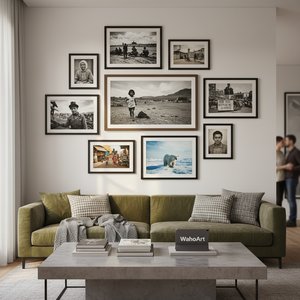
A dokumentumfotózás 10 meghatározó remekműve – művészeti nyomok otthonába
Fedezze fel a dokumentumfotózás 10 legikonikusabb remekművét! Ismerje meg Dorothea Lange, Robert Capa és más mesterek történetét. Múzeumi minőségű művészeti nyomatok otthonába – OriginalUniqueArt.com.
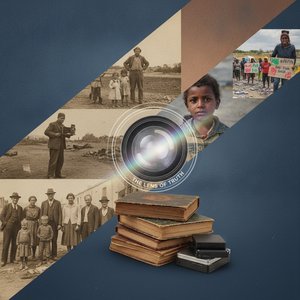
The Lens of Truth: A Comprehensive History and Legacy of Documentary Photography
Explore the profound history of documentary photography. From early daguerreotypes to social reform movements, discover how the lens captures truth, preserves vanishing cultures, and shapes our global visual narrative through an expert art-historical lens.

Pictorialism: A Search for Artistic Photography's Soul – Aesthetics, Techniques & Legacy
Explore the captivating world of Pictorialism – a pivotal movement that transformed photography into fine art. Discover key artists like Stieglitz & Käsebier, techniques, and collecting tips from experts.

Monochrome Visions: Exploring the Aesthetic & Historical Significance of Black & White Photography
Explore the rich history & artistic power of black and white photography. From early techniques to iconic masters like Ansel Adams, discover why monochrome continues to captivate art lovers today. Expert insights for collectors.