

 Megtekintés
 Küldés
 Megosztás
 Részletek
 Útmutató

 Letöltés
 Hasonló darabok
 X-ray felvétel
 Diavetítés
 Statisztika
Holy Conversation
 High Renaissance
 1505
1505- Reneszánsz
 92.0 x 126.0 cm
 Musée du Petit Palais
 Összes részlet megjelenítése
Kézzel készített olajfestmény reprodukció
Kézzel festett olajvastú vászon, az Ön által választott méretben és keretben, művészeink készítik meglévőre. ( Váltás nyomtatványra Áttérés digitális képre)




P118B Ft10

P118H Ft10

P118W Ft10

P438Z Ft10

P508JH Ft12

P508YH Ft12

P805H Ft10

P805Z Ft10

P919BZ Ft10

P919G Ft10

P919XJ Ft10

P959ZH Ft10

P968JZ Ft12

W106C Ft8

W218G Ft10

W218JH Ft8

W218Y Ft10

W307PJ Ft10

W316G Ft10

W316PJ Ft8

W316Y Ft10

W398PJ Ft8

W4111J Ft10

W500HY Ft15

W500JH Ft15

W692G Ft12

W849H Ft8

W940BG Ft15

W953PJ Ft8




Válasszon előre meghatározott méreteink közül, amelyek megfelelnek a műalkotás eredeti arányainak.

Írja be a kívánt szélességet és magasságot, hogy illeszkedjen a keretéhez vagy a falához. Mivel ez kézzel festett alkotás, egy eltérő formájú méret esetén a művész akár festhet is valamivel többet a kép körül, vagy korolathat is belőle — az Ön döntésének megfelelően. A festés megkezdése előtt küldünk egy digitális tervezetet jóváhagyásra. Az oldalon látható kép nem tartalmazza a végeredményt — csak a tervezet mutatja meg a valódi eredményt.
A rendelést követően a OriginalUniqueArt.com csapata e-mailt küld az ügyfélnek az instrukciókért, és biztosít egy előnézeti képet (mockup).
Világszerte elérhető szállítás () 3-4 hét alatt a szokásos 5 hét helyett. (26 október). A minőség nem kérdőjelezhető.

Ingyenes globális expressz szállítás

Prémium minőségű len vászon

Teljes körű szállítási biztosítás

Vámvisszatérítési Garancia

Hiteles színarányosság garancia

100 napos visszaküldési lehetőség (csak hibás termékek esetén)

100% pénzvisszatérítési garancia

Több darab vásárlásakor kedvezmény
 Az üvegkeretes opció csak 110 cm alatti méretben érhető el

Holy Conversation
Reprodukciós technika
Reprodukció mérete
-


Összesített ár
Ft 96158
Holy Conversation – Vittore Carpaccio’s Venetian Masterpiece
Vittore Carpaccio’s “Holy Conversation,” completed around 1505 in Venice, stands as a testament to the enduring power of narrative painting within the High Renaissance. More than just a depiction of religious iconography—the serene tableau featuring Jesus and Mary Magdalene—it embodies Carpaccio's distinctive artistic vision: a meticulous blend of Northern European realism with Venetian tradition.
A Synthesis of Styles
Carpaccio’s approach distinguishes itself from the humanist fervor sweeping across Italy at the time. Unlike many contemporaries preoccupied with philosophical treatises and idealized figures, Carpaccio focused on capturing tangible reality—the textures of fabric, the subtle nuances of light, and the palpable atmosphere of a Venetian courtyard. This influence is evident in his masterful use of tempera paint on canvas, a technique favored by Giovanni Bellini and reflecting the artistic heritage of Flanders.
The Legend of Saint Ursula: A Detailed Narrative Cycle
“Holy Conversation” belongs to Carpaccio’s monumental cycle depicting the legend of Saint Ursula and her seventy companions—a story steeped in Christian symbolism. The painting portrays a gathering of pilgrims, illuminated by candlelight, as Jesus engages in a profound dialogue with Mary Magdalene. Each figure is rendered with painstaking detail, conveying not merely physical likeness but also psychological depth.
Symbolism and Venetian Landscape
Beyond the central figures, Carpaccio’s genius lies in his depiction of the Venetian landscape—a tranquil courtyard adorned with trees and rocks—which serves as a backdrop to this sacred encounter. The architectural elements, particularly the arched bridge visible in the background, contribute to the overall sense of solemnity and contemplation. These details are not merely decorative; they reinforce the narrative’s themes of pilgrimage, faith, and divine grace.
Emotional Resonance
"Holy Conversation" transcends mere visual representation; it aims to evoke a feeling of reverence and serenity. Carpaccio's meticulous attention to light and color—characteristic of Bellini’s style—creates an immersive experience for the viewer. The painting invites reflection on themes of compassion, humility, and spiritual communion—qualities that continue to resonate with audiences centuries later.
- Artist: Vittore Carpaccio
- Year: c.1505
- Location: Venice
- Medium: Tempera on Canvas
- Style: High Renaissance
This artwork is housed in the Musée du Petit Palais, Avignon and can be viewed at http://www.petit-palais.org/.
Kérdések és válaszok
Hol vásárolható „Holy Conversation”, Vittore Carpaccio alkotása kézzel festett másolata?
A "Holy Conversation" kézzel festett olajfesték reprodukció lino vászonon formátumban is elérhető. A rendelés a Kézzel festett másolat oldalon adható le, különböző méretválasztékban.
Mely művészeti irányba tartozik a „Holy Conversation”, Vittore Carpaccio alkotása?
A „Holy Conversation”, Vittore Carpaccio alkotása a High Renaissance irányzat része. Ez az irányzat adja a mű stilisztikai kontextusát.
Milyen arányú „Holy Conversation”, Vittore Carpaccio alkotása, és milyen méretű?
A "Holy Conversation" formátuma Fenyőképi, az eredeti mérete pedig 92 x 126 cm. Mindkét információ hasznos, ha reprodukciót tervezünk.
A művész életrajza
Early Life and Training
Vittore Carpaccio, a prominent Italian painter, was born in Venice around 1465. He studied under the tutelage of Gentile Bellini, a renowned artist of the Venetian school. This apprenticeship laid the foundation for Carpaccio's future success. His family were fishermen and boat builders, shaping his early understanding of craftsmanship and observation—skills that would prove invaluable to his artistic endeavors.Artistic Style and Influences
Carpaccio’s style was characterized by its conservative nature, demonstrating minimal influence from the humanist trends that transformed Italian renaissance painting during his lifetime. However, he absorbed considerable inspiration from Antonello da Messina's masterful use of oil paint and perspective, as well as from early Netherlandish art—particularly the meticulous detail and emotional intensity found in Flemish altarpieces. This unique blend resulted in a distinctive approach to Venetian painting, prioritizing narrative clarity and psychological realism over stylistic experimentation.Notable Works
Carpaccio’s most celebrated achievement was undoubtedly “The Legend of Saint Ursula,” a monumental cycle of nine paintings commissioned by the Scuola di Sant'Orsola. Executed between 1490 and 1519, this series—now housed in the Gallerie dell’Accademia—represents his pinnacle of artistic accomplishment. It exemplifies Carpaccio’s ability to convey complex theological narratives with breathtaking visual splendor, capturing the grandeur of biblical storytelling. Alongside “Saint Ursula,” he created “Glory of St. Ursula Altarpiece” (1491), a testament to Bellini's influence and masterful use of color, and "Miracle of the Relic of the Cross at the Ponte di Rialto" (1494), showcasing Carpaccio’s compositional skill and his dedication to portraying human emotion with profound sensitivity.Career Highlights and Legacy
Carpaccio’s prolific output cemented his position among the early masters of the Venetian renaissance, securing him a place in art history alongside luminaries like Bellini and Giorgione. His distinctive orientalist style—evident in “Saint George Baptizing the Selenites”—reflects Venice's burgeoning engagement with the Levant during this period, marking Carpaccio as an artist attuned to the intellectual currents of his time. Despite being somewhat overshadowed by his contemporaries, Carpaccio’s enduring legacy resides in his contribution to Venetian painting and its lasting impact on subsequent generations of artists. His meticulous technique and unwavering commitment to narrative storytelling continue to inspire admiration and scholarly study today.References and Further Reading
Discover more about Vittore Carpaccio and the Venetian School on OriginalUniqueArt.
Vittore Carpaccio
1465 - 1526 , Olaszország
Rövid információk
- Artistic Movement Or Style: Korai venezeti reneszánsz
- Artists Who Influenced This Artist:
- Gentile Bellini
- Antonello da Messina
- Date Of Birth: Velence, Itália (c. 1465)
- Date Of Death: Koper, Itália (1526)
- Full Name: Vittore Carpaccio
- Nationality: Olasz
- Notable Artworks:
- A Szent Ursúla legenda
- Szent Ursúla oltárképe
- Krisztus relikviájának csodája Rialto hídtoronján
- Place Of Birth: Velence
Kapcsolódó cikkek
The Venetian Renaissance: A Masterclass in Colorito, Light, and the Birth of Atmospheric Brilliance
Explore the breathtaking mastery of the Venetian Renaissance. Discover how legends like Titian revolutionized art through Colorito, capturing the luminous light and vibrant pigments of the Venetian lagoon in a visual journey of unparalleled color and texture.
Venetian Renaissance: The Golden Age of Color, Light, and Luminous Artistry
Embark on a journey through the Venetian Renaissance. Discover how masters like Giorgione and Titian revolutionized art through luminous color and light. Explore the profound legacy of the Venetian School and its enduring influence on the world of fine art.
Jacopo Tintoretto 25 Mesterműve: A Velencei Dráma és Fény Világa | OriginalUniqueArt
Fedezze fel Jacopo Tintoretto 25 legpárásabb műalkotását! A velencei reneszánsz drámája és a barokk fények világa. Vásároljon luxus minőségű reprodukciókat, inspirálja otthonát OriginalUniqueArt-on. Explore the full collection online!
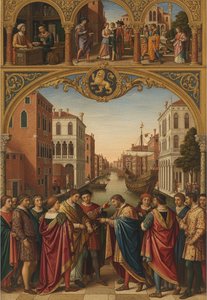
Vittore Carpaccio: Venetian Renaissance Narrative & the Poetics of Detail
Explore the captivating world of Vittore Carpaccio, a master storyteller of the Venetian Renaissance. Discover his intricate details, narrative cycles like 'The Legend of St. Ursula,' and unique artistic style.

Venetian Renaissance: The Mastery of Color, Light, and the Art of Colorito
Explore the luminous mastery of the Venetian Renaissance. Discover how masters like Titian and Giorgione revolutionized art through colorito, light, and atmosphere. An expert guide to the golden age of Italian painting for collectors and enthusiasts.


