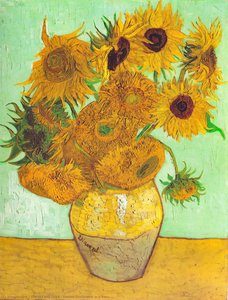
() ·

A painting made for you, by hand

Roses

Kézzel készített olajfestmény reprodukció

Kézzel festett olajvastú vászon, az Ön által választott méretben és keretben, művészeink készítik meglévőre. ( Váltás nyomtatványra Áttérés digitális képre)

A gyűjtemény leírása

Experience Vincent van Gogh's 'Roses'! This vibrant oil painting captures the beauty of a vase overflowing with pink and white blooms, showcasing his signature brushstrokes and emotional intensity.

A művész életrajza

Vincent van Gogh (1853-1890): Fedezze fel a holland posztimpresszionista mester életét és művészetét, aki a 'Csillagos éjszaka' és a 'Napfélvirágok' alkotója. Ismerje meg bátor stílusát és maradandó hatását a modern művészetre.

from ·

Chapter 1

How large should it be?

Slide to change the size; the picture on the left shows the frame at its real width. The proportions of the original are kept.

Standard méret
egyedi méretű
CM
INCH

Válasszon előre meghatározott méreteink közül, amelyek megfelelnek a műalkotás eredeti arányainak.

szélesség
magasság

Írja be a kívánt szélességet és magasságot, hogy illeszkedjen a keretéhez vagy a falához. Mivel ez kézzel festett alkotás, egy eltérő formájú méret esetén a művész akár festhet is valamivel többet a kép körül, vagy korolathat is belőle — az Ön döntésének megfelelően. A festés megkezdése előtt küldünk egy digitális tervezetet jóváhagyásra. Az oldalon látható kép nem tartalmazza a végeredményt — csak a tervezet mutatja meg a valódi eredményt.

Chapter 2

How should it arrive?

Choose the edges of the stretched canvas

Choose your frame

Corner sample of the WhiteWrap canvas edge finish, stretched on tömörfa bars
White Ft1
Corner sample of the BlurSideWrap canvas edge finish, stretched on tömörfa bars
Blurside Ft1
Corner sample of the ExtendedWrap canvas edge finish, stretched on tömörfa bars
Extended Ft1
Corner sample of the P118B picture frame: formázott polisztirol, 5 cm wide and 3 cm thick
P118B Ft10
Corner sample of the P118H picture frame: formázott polisztirol, 5 cm wide and 3 cm thick
P118H Ft10
Corner sample of the P118W picture frame: formázott polisztirol, 5 cm wide and 3 cm thick
P118W Ft10
Corner sample of the P438Z picture frame: formázott polisztirol, 5.5 cm wide and 3.5 cm thick
P438Z Ft10
Corner sample of the P508JH picture frame: formázott polisztirol, 7 cm wide and 3.5 cm thick
P508JH Ft12
Corner sample of the P508YH picture frame: formázott polisztirol, 7 cm wide and 3.5 cm thick
P508YH Ft12
Corner sample of the P805H picture frame: formázott polisztirol, 5 cm wide and 3.5 cm thick
P805H Ft10
Corner sample of the P805Z picture frame: formázott polisztirol, 5 cm wide and 3.5 cm thick
P805Z Ft10
Corner sample of the P919BZ picture frame: formázott polisztirol, 7 cm wide and 3.5 cm thick
P919BZ Ft10
Corner sample of the P919G picture frame: formázott polisztirol, 7 cm wide and 3.5 cm thick
P919G Ft10
Corner sample of the P919XJ picture frame: formázott polisztirol, 7 cm wide and 3.5 cm thick
P919XJ Ft10
Corner sample of the P959ZH picture frame: formázott polisztirol, 5 cm wide and 3 cm thick
P959ZH Ft10
Corner sample of the P968JZ picture frame: formázott polisztirol, 6 cm wide and 4 cm thick
P968JZ Ft12
Corner sample of the W106C picture frame: tömörfa, 5 cm wide and 3 cm thick
W106C Ft8
Corner sample of the W218G picture frame: tömörfa, 5 cm wide and 3 cm thick
W218G Ft10
Corner sample of the W218JH picture frame: tömörfa, 5 cm wide and 3 cm thick
W218JH Ft8
Corner sample of the W218Y picture frame: tömörfa, 5 cm wide and 3 cm thick
W218Y Ft10
Corner sample of the W307PJ picture frame: tömörfa, 6 cm wide and 3 cm thick
W307PJ Ft10
Corner sample of the W316G picture frame: tömörfa, 6 cm wide and 3 cm thick
W316G Ft10
Corner sample of the W316PJ picture frame: tömörfa, 6 cm wide and 3 cm thick
W316PJ Ft8
Corner sample of the W316Y picture frame: tömörfa, 6 cm wide and 3 cm thick
W316Y Ft10
Corner sample of the W398PJ picture frame: tömörfa, 5 cm wide and 3 cm thick
W398PJ Ft8
Corner sample of the W4111J picture frame: tömörfa, 6.5 cm wide and 3.5 cm thick
W4111J Ft10
Corner sample of the W500HY picture frame: tömörfa, 7 cm wide and 5 cm thick
W500HY Ft15
Corner sample of the W500JH picture frame: tömörfa, 7 cm wide and 5 cm thick
W500JH Ft15
Corner sample of the W692G picture frame: tömörfa, 8 cm wide and 4 cm thick
W692G Ft12
Corner sample of the W849H picture frame: tömörfa, 5 cm wide and 3 cm thick
W849H Ft8
Corner sample of the W940BG picture frame: tömörfa, 7.5 cm wide and 4.5 cm thick
W940BG Ft15
Corner sample of the W953PJ picture frame: tömörfa, 6 cm wide and 3.5 cm thick
W953PJ Ft8
Corner sample of the H24-GOLD picture frame: faragott fa gesszóval, 10 cm wide and 6 cm thick
H24-GOLD Ft30
Corner sample of the H24-SILVER picture frame: faragott fa gesszóval, 10 cm wide and 6 cm thick
H24-SILVER Ft30
Corner sample of the H36-GOLD picture frame: faragott fa gesszóval, 15 cm wide and 6.5 cm thick
H36-GOLD Ft45
Corner sample of the H36-SILVER picture frame: faragott fa gesszóval, 15 cm wide and 6.5 cm thick
H36-SILVER Ft45

Moulding: . Overall size with the frame: .

Chapter 3

Who paints it, and should anything change?

Examples of what can be changed: Replace face with customer photo; Add pet (e.g., replace cat with dog); Include hidden message in background; Change background landscape or elements.
After order, OriginalUniqueArt.com team will email client for instructions and provide a mockup preview

Világszerte elérhető szállítás () 3-4 hét alatt a szokásos 5 hét helyett. (1 november). A minőség nem kérdőjelezhető.

Chapter 4

The finishing touches

A nameplate, as in a museum?

A gravírozott bronztábla részletei

This elegant plaque features the artist's name and the title of the artwork, finely engraved for a timeless presentation.

It is made from bronze with a refined, elegant finish. The text is precisely laser-engraved for a sharp and permanent result. Measuring 9x2 cm, the plaque is compact yet easy to read. It's built to be durable and scratch-resistant, offering a professional, museum-quality look. Mounting is simple thanks to the included adhesive backing.

Átlátszó akril tábla részletei

The plaque includes essential engraved details such as the artist's name, the title of the artwork, the date it was created, the type of media used-like oil on canvas or watercolor-a brief description of the piece, and a QR code that links to the complete artwork information.

It is crafted from clear acrylic, offering a sleek, modern appearance. The text is UV-engraved in black to ensure strong visual contrast. With a size of 10x15 cm, it ensures optimal readability. It comes equipped with two metal hooks for secure wall mounting. The plaque is designed to be weather-resistant, making it suitable for various environments, and it includes interactive features that work seamlessly with smartphone scanning.

Fekete akril tábla részletei

This elegant plaque includes engraved information such as the artist's name, the title of the artwork, the date it was created, the type of media used (like oil on canvas or watercolor), a short description of the artwork, and a QR code for quick access to more information.

The plaque itself is made from refined black acrylic with a premium finish. The text is laser-engraved in white for high contrast and readability. Its size is 10x15 cm, designed to be easy to read. It comes with two metal hooks for professional mounting. The design is sleek and fits any interior style. It is also weather-resistant and durable, with built-in digital integration for mobile compatibility.

A protective varnish?

When do you need it?

Chapter 5

Your painting, as you ordered it

Roses

Reprodukciós technika

Reprodukció mérete

-

Kiváló mesterművész

Nagyobb részletesség, finomság és bővített gyártási idő

-

Reprodukció keretezése

-

-

A bármely oldalsó méretét túlszálaló 105 cm (kb. 41 hüvelyk) meghaladó műalkotások vagy reprodukciók esetében a keret összeszerelhető készletként, szétszerelve kerül szállításra. Ez a módszer biztosítja a biztonságos szállítást, és megakadályozza a szállítás során fellépő sérüléseket.

Szakmész összeszerelést igényel – ez nem DIY (önösszeszerelhető) termék.
A készletet egy tapasztalt keretező szakembernek kell összeszerelnie és a vásznat feszítenie kell, fa ragasztó (nem tartalmazza a csomag), vásznfeszítő fogó és szorítók használatával, amelyek a ragasztó száradásáig a keretrészeket egymáshoz vuôngjba tartják. A helytelen összeszerelés vagy a nem egyenletes vásznfeszítés maradandó károsíthatja a műalkotást, és ez nem része a garanciánknak.

  • A készlet tartalmazza az összes tömörfa rudat, pontosan méretre vágva.

  • A mellékelt csavarokkal, valamint a sarokszerekhez szükséges faütő ragasztóval kell összeszerelnie (ez nem tartalmazható a csomagban), így a keretrendezőnek külön kell beszereznie.

  • A csomag nem tartalmazza a szükséges professzionális eszközöket: egy vászonfeszítőt és klipseket a rácsok vízszintes tartásához a ragasztó megszáradásáig.

Fontos:
A sarokcsatlakozásokhoz fánylagra van szükség, a keretrudakat szorítókapcsokkal kell rögzíteni, amíg a rag teljesen meg nem szárad, a kész keretre feszített vászonhoz pedig vászonfeszítő fogat szükséges. Ezek egyike sem található meg a készletben. Kérjük, rendelés előtt győződjön meg róla, hogy rendelkezik tapasztalt keretező szakemberrel.

Névtábla

-

-

Védőréteg (Lakk)

Fényes lakk (intenzívabb színek, védelem a fény és a nedvesség hatása ellen)

-

Műalkotásom egyedi igényre szabása

Példák a módosíthatóságra: az arc kicserélése az ügyfél fotójára; háziállat hozzáadása (pl. macska helyett kutya); rejtett üzenet elhelyezése a háttérben; a háttér tájainak vagy elemeinek megváltoztatása.

-

Sürgős

Világszerte szóló szállítás () mindössze 3-4 hét alatt, a szokásos 5 hét helyett. (1 november). A minőség nem kérdőjelezhető.

-

Express szállítás

Világszerte elérhető szállítás területre 5 héten belül. (8 november).

A szállítás díja tartalmazza

Összesített ár

Ft 98243

Összesített ár Ft 98243

Az üvegkeretes opció csak 110 cm alatti méretben érhető el

Included with every order

  • Ingyenes globális expressz szállítás
  • Prémium minőségű len vászon
  • Teljes körű szállítási biztosítás
  • Vámvisszatérítési Garancia
  • Hiteles színarányosság garancia
  • 100 napos visszaküldési lehetőség (csak hibás termékek esetén)
  • 100% pénzvisszatérítési garancia
  • Több darab vásárlásakor kedvezmény

A Symphony in Pink and Green: Unveiling Van Gogh’s ‘Roses’

Vincent van Gogh's “Roses,” painted in 1890 during his time at the Saint-Rémy asylum, isn’t merely a depiction of flowers; it’s a profound exploration of color, emotion, and the artist’s own turbulent inner world. This intimate still life, now residing within the hallowed halls of the National Gallery of Art in Washington D.C., offers a poignant glimpse into Van Gogh's evolving artistic language and his relentless pursuit of capturing the essence of nature – not through photographic realism, but through intensely felt observation. The painting immediately draws the eye with its vibrant palette: a riot of pinks and whites from the roses themselves, contrasted against the calming backdrop of a simple green wall. Yet, it’s more than just a pleasing arrangement; it's a carefully constructed visual dialogue, brimming with subtle complexities that invite repeated viewing and contemplation.

Van Gogh’s technique in “Roses” is instantly recognizable – bold, impasto brushstrokes layered upon one another to create texture and movement. He doesn’t shy away from applying thick swathes of paint, allowing the physicality of the medium itself to contribute to the artwork's expressive power. The roses aren’t rendered with delicate precision; instead, they are suggested through energetic dabs and dashes, conveying a sense of vitality and fleeting beauty. Notice how he uses short, choppy strokes to define the petals, while longer, flowing lines capture the movement of the stems. This deliberate roughness is a hallmark of his style – a rejection of academic restraint in favor of an intensely personal and immediate approach to painting.

The Context of a Troubled Genius

To fully appreciate “Roses,” it’s crucial to understand the context within which it was created. 1890 marked a pivotal year for Van Gogh, one defined by both artistic breakthroughs and profound psychological distress. Following his infamous episode in Arles, where he mutilated his ear, he voluntarily entered the Saint-Rémy asylum – a place that simultaneously offered him refuge and exacerbated his mental instability. Despite this challenging environment, Van Gogh continued to paint with an almost obsessive fervor, producing some of his most iconic works during his time there. “Roses” is believed to have been painted shortly before his departure from the asylum, reflecting a newfound sense of optimism and a desire to connect with the natural world as a source of solace and inspiration. The choice of roses themselves holds symbolic weight; often associated with love, beauty, and remembrance, they represent a hopeful counterpoint to Van Gogh’s personal struggles.

Interestingly, the painting's color palette has subtly shifted over time due to the degradation of the paint pigments. Originally, the roses were likely a more vivid pink, creating a striking contrast against the green background. This fading serves as a poignant reminder of the ephemeral nature of beauty and the passage of time – themes that resonate deeply within Van Gogh’s oeuvre.

Beyond Representation: A Window into the Soul

“Roses” transcends its simple subject matter to become a powerful meditation on perception, emotion, and the artist's relationship with his surroundings. Van Gogh wasn’t simply painting flowers; he was attempting to capture their *feeling*, their essence. The vibrant colors aren’t merely descriptive; they are expressive – conveying joy, energy, and perhaps even a hint of melancholy. The inclusion of the insect, meticulously rendered with surprising detail amidst the swirling blooms, adds another layer of intrigue, suggesting an awareness of life's delicate balance and the interconnectedness of all things.

Van Gogh’s legacy extends far beyond his artistic innovations; he remains one of the most beloved and influential figures in art history. His work continues to inspire artists and captivate audiences worldwide, offering a profound glimpse into the soul of a brilliant but troubled genius. A high-quality reproduction of “Roses” allows you to bring this extraordinary piece of art into your own space, inviting contemplation and sparking conversation for years to come.

A Legacy Preserved – And Recreated

OriginalUniqueArt offers meticulously crafted hand-painted reproductions of Van Gogh’s “Roses,” capturing the artist's unique style and emotional intensity with unparalleled accuracy. Each reproduction is created by skilled artisans who painstakingly replicate every brushstroke, color nuance, and textural detail of the original painting. Whether you are an art enthusiast, a collector seeking to expand your collection, or simply someone drawn to Van Gogh’s evocative imagery, our reproductions provide a beautiful and authentic way to experience this masterpiece firsthand. Explore the full details and order your own reproduction at OriginalUniqueArt today.

Kérdések és válaszok

Hol találhatok egy útmutatót a(z) "Roses" alkotáshoz?

A "Roses" útmutatója a mű Útmutató oldala – egy kinyomtatható adatlap, amely bemutatja a művet a leírással, a szerzői megjegyzéssel és az azonosító táblázattal (művész, dátumok, technika, eredeti méret, gyűjtemény) együtt.

Van-e rozšíngtott valóság (AR) előnézete a(z) "Roses" alkotásnak?

A(z) "Roses" kiterjesztett valóság (AR) előnézettel rendelkezik: a mű Kiterjesztett valóság előnézet oldalán kompatibilis eszközön megtekinthető saját környezetében.

Mennyire fényes „Roses”, Vincent Van Gogh alkotása?

A „Roses”, Vincent Van Gogh alkotása alkotás Bright Balance fényerőséggel rendelkezik. A fényerő azt mutatja meg, hogy a színek mennyire tűnnek visszafényesnek.

More about this painting

Megtekintés AR előnézet Váltás nyomtatványra Áttérés digitális képre Küldés
Részletek Útmutató Kedvencekhez ad Letöltés Hasonló darabok X-ray felvétel Diavetítés Q&A Statisztika

In numbers

  • 1890the year it was painted
  • 29frames to choose from
  • standard sizes, in its own proportions
  • 5weeks to paint and deliver it
Vincent Van Gogh

Vincent Van Gogh

1853 - 1890, Hollandia

Quick facts about Vincent Van Gogh

  • Artistic Movement Or Style: Posztimpresszionizmus
  • Artists Or Movements Influenced By This Artist:
    • Expressionizmus
    • Fauvizmus
  • Artists Who Influenced This Artist:
    • Rembrandt van Rijn
    • Jean-François Millet
  • Date Of Birth: March 30, 1853
  • Date Of Death: July 29, 1890
  • Full Name: Vincent Willem van Gogh
  • Nationality: Hollandi
  • Notable Artworks:
    • A Régi gabonafésű
    • Napkitörők
    • Éjszakai kávézó
  • Place Of Birth: Zundert, Hollandia

A művész életrajza

A Life Painted in Emotion: The World of Vincent van Gogh

Vincent Willem van Gogh, a name synonymous with artistic passion and turbulent genius, remains one of the most recognizable and beloved figures in Western art history. Born on March 30, 1853, in Groot-Zundert, Netherlands, his journey was not one of immediate acclaim but rather a slow burn of dedication, struggle, and ultimately, profound influence. The eldest of six children born to a Protestant minister, Theodorus van Gogh, Vincent’s early life was steeped in religious contemplation, a sensibility that would subtly permeate much of his later work. Though he displayed an inclination towards drawing from a young age, his path wasn't immediately clear; he explored various vocations – art dealer, teacher, and missionary – before fully embracing the artist’s life. These experiences, though seemingly disparate, proved formative, instilling in him a deep empathy for the working class and a profound sense of spiritual seeking that would become hallmarks of his artistic vision. Early influences included the Dutch Masters like Rembrandt van Rijn and Frans Hals, whose masterful use of light and shadow resonated with young Vincent, as well as contemporary French painters Jean-François Millet and Camille Corot, who depicted scenes of rural life with a poignant realism.

From Darkness to Light: Artistic Development and Style

Van Gogh’s serious engagement with painting began around 1880, largely self-taught, driven by an inner compulsion to express the world as he perceived it. His initial works reflected his compassion for the marginalized, focusing on the lives of peasants and laborers – exemplified in pieces like The Potato Eaters. These early paintings are characterized by dark, earthy tones and a raw, almost brutal honesty that sought to capture the hardship and dignity of rural existence. The figures in *The Potato Eaters* aren’t idealized; they're depicted with unflinching realism, their faces etched with weariness and toil. This wasn’t simply a matter of documenting reality; it was an attempt to convey the soul of these people, their resilience in the face of adversity. A pivotal moment arrived with his move to Paris in 1886, where he was exposed to the vibrant world of Impressionism and Post-Impressionism. This encounter proved transformative, injecting brighter colors into his palette and encouraging experimentation with new techniques. He absorbed the lessons of artists like Monet, Renoir, and Pissarro, but never fully adopted their style; instead, he forged a path uniquely his own. His brushstrokes became more energetic, looser, and expressive, moving away from the meticulous detail of earlier works. He began to use color not just to represent objects, but to evoke emotions—a fiery sunset, a vibrant field of sunflowers, or the oppressive darkness of a rainy night.

Periods of Intensity: Key Works and Artistic Phases

Van Gogh’s artistic journey can be broadly divided into distinct periods, each marked by unique characteristics and significant works. The Dutch Period (1880-1886), as mentioned, was defined by somber tones and depictions of peasant life—scenes of rural labor, portraits of working families, and landscapes imbued with a sense of melancholy. These paintings, like *The Potato Eaters*, are characterized by their muted colors and dramatic lighting, creating a powerful atmosphere of hardship and dignity. The subsequent Parisian Period (1886-1888) saw a dramatic shift towards brighter colors and experimentation with Impressionist techniques. He was particularly influenced by the work of Toulouse-Lautrec and Degas, absorbing their interest in depicting modern life and capturing fleeting moments. However, it was during the Arles Period (1888-1889), in the south of France, that Van Gogh reached a peak of creative intensity. Surrounded by the radiant light and vibrant landscapes of Provence, he produced some of his most iconic works: Sunflowers, bursting with golden hues; *The Night Café*, rendered in jarring, almost hallucinatory colors; and *Starry Night Over the Rhône*, capturing the shimmering beauty of a summer evening. These paintings are not merely depictions of scenes; they are emotional landscapes, pulsating with life and imbued with a sense of longing—a yearning for connection, for beauty, for something beyond the mundane. His distinctive style rapidly evolved, becoming instantly recognizable for its bold colors, expressive brushwork, and emotional intensity.

A Legacy Forged in Suffering: Achievements and Historical Significance

Despite facing rejection and struggling with mental illness throughout his life, Van Gogh created over 2,100 artworks in just over a decade—approximately 860 oil paintings. This astonishing output is testament to his unwavering dedication and relentless creative drive. Remarkably, during his lifetime, only one painting – The Red Vineyard – was sold. Recognition came posthumously, slowly at first, then with increasing momentum in the early 20th century. His work profoundly influenced the development of modern art, particularly Expressionism and Fauvism, inspiring artists to prioritize emotional expression over realistic representation. His bold use of color, distorted forms, and expressive brushwork paved the way for new artistic possibilities. Today, Van Gogh’s paintings are among the most recognizable and valuable artworks in the world, commanding record prices at auction and drawing millions of visitors to museums worldwide. But his legacy extends far beyond monetary value; he remains a cultural icon, representing the archetype of the “tortured artist” – though this narrative often overshadows his skill, dedication, and artistic vision. The Van Gogh Museum in Amsterdam stands as a testament to his enduring influence, showcasing his work and celebrating his life for generations to come. His art continues to resonate with audiences because it speaks to universal human experiences—love, loss, hope, despair—with an honesty and vulnerability that transcends time and culture.
  • Major Influences: Dutch Masters (Rembrandt, Hals), Millet, Corot.
  • Key Periods: Dutch, Parisian, Arles, Saint-Rémy/Auvers-sur-Oise.
  • Notable Works: The Potato Eaters, Sunflowers, Starry Night, The Night Café.

Gyors információk

  • Year: 1890
  • Location: Metropolitan Museum
  • Influences: Japanese prints
  • Movement: Post-Impressionism
  • Dimensions: 33.5 cm x 24.5 cm
  • Title: Roses

Művészeti kvíz

Minden kérdésre csak egy helyes válasz létezik.

Kérdés 1:
What is the primary subject of Vincent van Gogh’s ‘Roses’?
Kérdés 2:
The background of ‘Roses’ features a green wall. What is the purpose of this element?
Kérdés 3:
In what year was Vincent van Gogh’s ‘Roses’ painted?
Kérdés 4:
Which art movement is Vincent van Gogh most closely associated with?
Kérdés 5:
The painting ‘Roses’ is currently housed at which museum?