Menü
INGYENES MŰVÉSZETI TANÁCSADÁS
MegtekintésMegtekintés Műalkotás AR előnézeteMűalkotás AR előnézete Nyomat rendelése Nyomat rendeléseKép letöltése Kép letöltése KüldésKüldés
RészletekRészletek Kedvencekhez ad Kedvencekhez ad LetöltésLetöltés Hasonló darabokHasonló darabok X-ray felvételX-ray felvétel DiavetítésDiavetítés

Calvary

Discover Vasco Fernandes (Grão Vasco), a pivotal Portuguese Renaissance painter renowned for his Manueline style altarpieces & religious scenes. Explore his Flemish-influenced oil paintings, including 'St. John the Baptist', and legacy as one of Port

Kézzel készített olajfestmény reprodukció

Kézzel festett olajvastú vászon, az Ön által választott méretben és keretben, művészeink készítik meglévőre. (Nyomat rendelése Nyomat rendeléseKép letöltése Kép letöltése)

Standard
custom
CM
INCH

Válasszon előre meghatározott méreteink közül, amelyek megfelelnek a műalkotás eredeti arányainak.

szélesség
magasság

Ön megadhat saját méreteket egy adott kerethez vagy térhez igazításhoz. Ha a kiválasztott méret nem egyezik az eredeti kép arányával, akkor a műalkotást levágjuk, vagy további kézzel festett elemekkel meghosszabbítjuk a festményt. A gyártás megkezdése előtt küldünk Önnek egy digitális előnézetet jóváhagyásra.
Kérjük, vegye figyelembe, hogy a képernyőn megjelenő előnézet nem tükrözi a tényleges vágást vagy kiterjesztést. Csak az előnézet fog pontosan mutatni a végső kompozíciót.
Bár egyedi méretek állnak rendelkezésre, javasoljuk, hogy válasszon egy méretet az előre meghatározott listából az eredeti arányok megőrzése érdekében.

Példák arra, mit lehet módosítani: az arc kicserélése az ügyfél fotójára; háziállat hozzáadása (pl. macska helyett kutya); rejtett üzenet elhelyezése a háttérben; a háttér tájának vagy elemeinek megváltoztatása.
A rendelést követően a OriginalUniqueArt.com csapata e-mailt küld az ügyfélnek az instrukciókért, és biztosít egy előnézeti képet (mockup).

Világszerte elérhető szállítás () 3-4 hét alatt a szokásos 5 hét helyett. (21 augusztus). A minőség nem kérdőjelezhető.

why_choose_icon
Ingyenes globális expressz szállítás
why_choose_icon
Prémium minőségű len vászon
why_choose_icon
Teljes körű szállítási biztosítás
why_choose_icon
Vámvisszatérítési Garancia
why_choose_icon
Hiteles színpontosság garancia
why_choose_icon
60 napos visszaküldési lehetőség (csak hibás termékek esetén)
why_choose_icon
100% pénzvisszatérítési garancia
why_choose_icon
Több darab vásárlása esetén kedvezmény

Összesített ár

$ 300

reproduction

Calvary

Reprodukciós technika

Reprodukció mérete

-

Összesített ár

$ 300

A műalkotás leírása

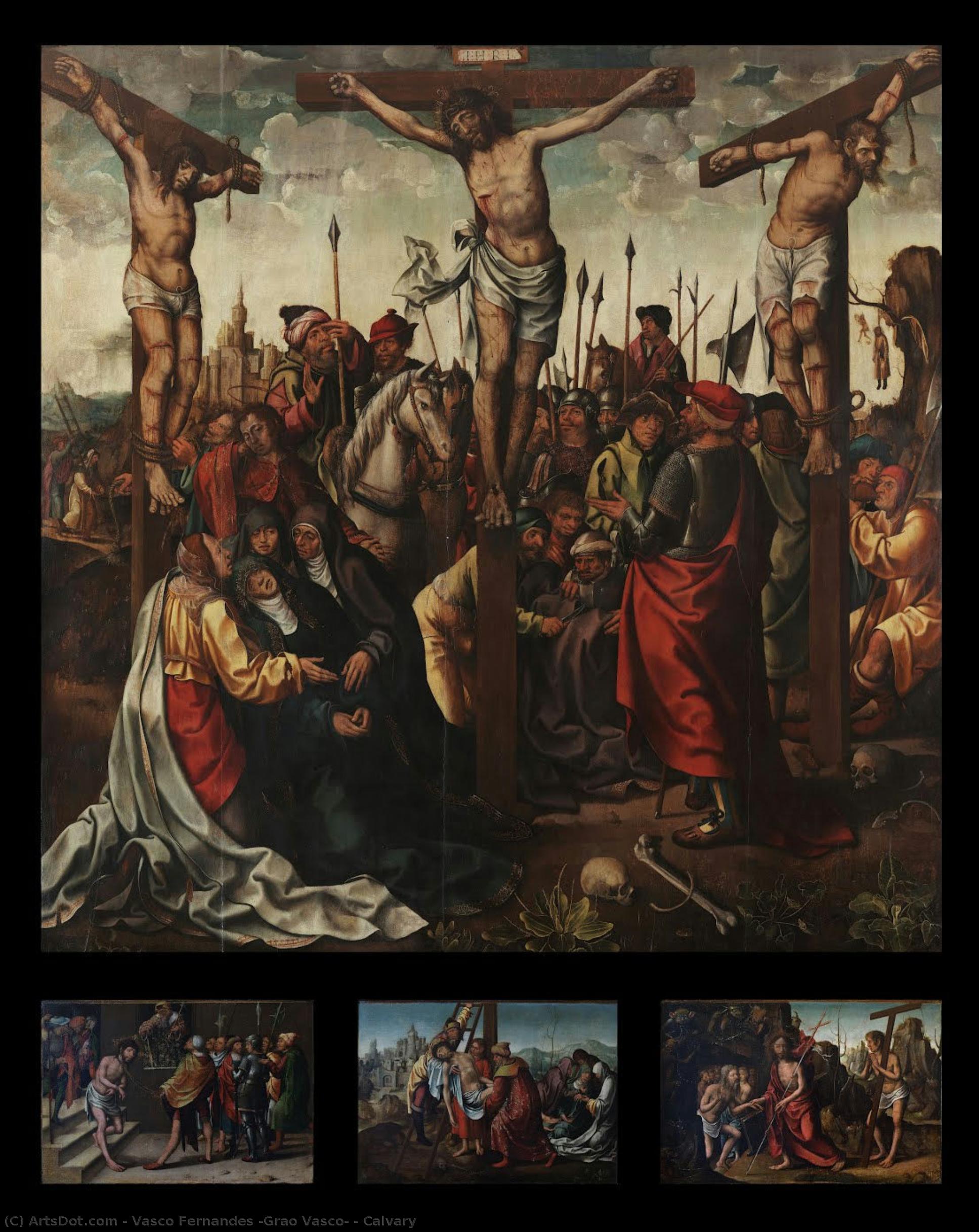
In the Calvary, Christ is crucified between the Good Thief and the Bad Thief, accompanied in his pain by the swooning Virgin, Mary Magdalene, St. John and a holy woman. To the crowd of guards and executioners are added the scenes of the transport of the ladder, on the left, and the hanging of Judas, on a miniature scale, on the right, accompanied by a little devil that is carrying his soul away. In the predella, the scenes alluding to Christ Before Pontius Pilate, the Descent from the Cross and Christ’s Descent into Limbo give the altarpiece the temporal and narrative dimension of the cycle of Christ’s Passion.The cross of Christ is placed more or less in the centre of the composition, in a frontal position and ground that is closer to the spectator, whereas those of the Good and the Bad Thief are positioned slightly further away from the observer, one more so than the other, in keeping with the painting’s diagonal line. This dynamic organisation of the composition is enhanced by the expressive contortion of the figure of the Bad Thief, which contradicts any idea of symmetry at the figurative level in the upper third of the composition and accentuates the dramatic tension throughout the right-hand side of the painting. The same thing happens with the organisation of the formal groups of people witnessing the act.The limits defined by the cross, as well as the staggering of the multitude of people in the painting from the bottom up, further assisted by the presence of the horses and the representation of the scene alluding to the division of Christ’s cloak, allow for different placements of the figures in this ground of the painting, representing a wall of faces and spears that cuts into the intensely dramatic light of the sky, barely making it possible to glimpse the distant city of Jerusalem on the left.Through the relationship between light and colour, in other words, through the vibrant effects of the light on the red, yellow and green, distributed in a rhythmic pattern through the figures in the foreground, the artist spatialises the form in a continuous way and models the volumes with his customary artistic sense. Dalila Rodrigues




































