
 Előnézet
 Megosztás
 Megosztás
 Részletek

 Letöltés
 Hasonló alkotások
 X-ray felvétel
 Diavetítés
The actor (12)

 Tovább olvasom
Giclée / Műnyomat
Múzeumi minőségű giclée vagy vászonnyomat, gyors gyártással és rugalmas finomítási lehetőségekkel. ( Áttérés a kézzel festett másolatra Képváltás)




P118B $10

P118H $10

P118W $10

P438Z $10

P508JH $12

P508YH $12

P805H $10

P805Z $10

P919BZ $10

P919G $10

P919XJ $10

P959ZH $10

P968JZ $12

W106C $8

W218G $10

W218JH $8

W218Y $10

W307PJ $10

W316G $10

W316PJ $8

W316Y $10

W398PJ $8

W4111J $10

W500HY $15

W500JH $15

W692G $12

W849H $8

W940BG $15

W953PJ $8




Válasszon előre meghatározott méreteink közül, amelyek megfelelnek a műalkotás eredeti arányainak.

Megadhat saját méreteket is egy konkrét kerethez vagy helyszínhez igazítva. Amennyiben a kiválasztott méret nem egyezik az eredeti kép arányokkal, a műalkotást le fogjuk vágni, vagy kiegészítjük a képet tükrözött vagy egyszínű szélekkel. A gyártás megkezdése előtt egy digitális tervezetet küldünk jóváhagyásra.
Kérjük, vegye figyelembe, hogy a képernyőn látható előnézet nem tükrözi a tényleges levágást vagy kiegészítést. Csak a tervezet mutatja pontosan a végső kompozíciót.
Bár az egyedi méretek is elérhetőek, az eredeti arányok megőrzése érdekében azt javasoljuk, hogy válasszon a előre meghatározott listából származó méretet.
Világszerte történő kiszállítás területére 2 hét alatt, a szokásos 4-5 hét helyett. 8 augusztus

Ingyenes globális expressz szállítás

Prémium minőségű len vászon

Teljes szállítási biztosítás

Vámvisszatérítési Garancia

Tökéletes színpontosság garancia

60 napos visszaküldési lehetőség (csak gyártási hibák esetén)

100%-os pénzvisszatérítési garancia

Kedvezmény több termény esetén
 Az üvegkeretes opció csak 110 cm alatti méretben érhető el

The actor (12)
Giclée / Műnyomat
A reprodukció mérete
-


Összesített ár
$ 80
Termékinformációk
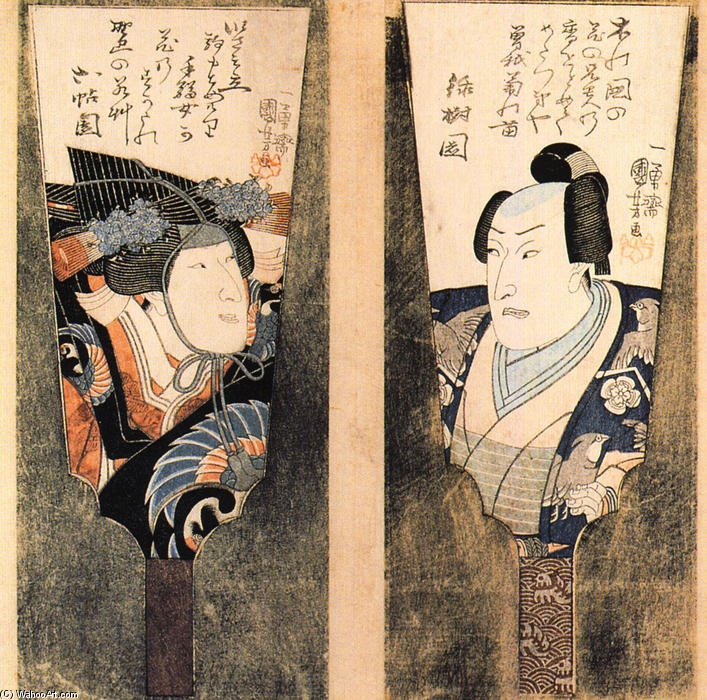
A Window Into Edo Japan: Kuniyoshi's "The Actor" – A Symphony of Color and Drama
Utagawa Kuniyoshi’s “The Actor,” executed in 1847, stands as a quintessential example of *shunga*, the Japanese erotic woodblock print genre that flourished during the Edo period (1603-1868). More than just a depiction of theatrical performance, this triptych delves into themes of beauty, masculinity, and fleeting moments captured in exquisite detail—a testament to Kuniyoshi’s mastery of technique and his profound understanding of Japanese aesthetics. Produced by Ichimura Uzaemon XII for the prestigious Gobuji Chūshingura series, commissioned to commemorate the heroic tale of samurai loyalists defending Edo Castle against Tokugawa forces, “The Actor” embodies the spirit of its time—a fascination with idealized figures and a celebration of artistic virtuosity.- Subject Matter: The print portrays Ichimura Uzaemon XII as Tada Kurodo Yukitsuna, a prominent Kabuki actor known for his dramatic performances and captivating stage presence. Kuniyoshi meticulously captures Yukitsuna’s posture—a deliberate pose designed to convey nobility and strength—emphasizing the importance of gesture and expression within Japanese theater traditions.
- Style & Technique: Kuniyoshi employed a bold, expressive style characteristic of *shunga*, utilizing thick black outlines and vibrant colors achieved through multiple blocks of pigment applied to the wood surface. The artist’s masterful use of tonal gradation—particularly in the background—creates depth and atmosphere, transporting viewers into the theatrical space depicted.
- Historical Context: “The Actor” reflects the Edo period's obsession with idealized beauty and heroic narratives. Gobuji Chūshingura itself was a popular tale celebrating samurai loyalty and courage, mirroring broader societal values during this era. Kuniyoshi’s inclusion of tattoos—a symbol of honor and warrior identity—further reinforces these themes, demonstrating his awareness of cultural conventions.
- Symbolism: The intricate patterns adorning Yukitsuna's kimono serve as visual metaphors for status and refinement—elements central to Edo society’s hierarchical structure. Furthermore, Kuniyoshi’s careful composition directs the viewer’s gaze towards Yukitsuna’s face, highlighting the importance of facial expression in conveying emotion and embodying character within Kabuki performances.
- Emotional Impact: Despite its erotic undertones—a common feature of *shunga*— “The Actor” transcends mere sensuality to evoke feelings of admiration for beauty and contemplation on the ephemeral nature of human experience. Kuniyoshi’s artistic vision captures a moment frozen in time, inviting viewers to appreciate the artistry and cultural significance of Edo Japan.
A művész életrajza
A Life Immersed in the Floating World
Utagawa Kuniyoshi, born Yoshisaburō on January 1, 1798, in Edo (modern-day Tokyo), stands as a towering figure at the close of the *ukiyo-e* tradition – the “pictures of the floating world” that so vividly captured Japanese life during the Edo period. His journey began not amidst artistic circles, but within the practical realm of his father’s silk-dyeing business. This early exposure to color and pattern would subtly inform his later work, imbuing it with a distinctive vibrancy. Even as a young boy, however, Kuniyoshi was captivated by the dramatic world of *ukiyo-e*, particularly the heroic imagery of warriors and artisans that populated popular prints. These formative impressions ignited within him a passion that would define his life’s pursuit. He entered the studio of Utagawa Toyokuni I in 1811, adopting the name Kuniyoshi and embarking on a rigorous apprenticeship that honed his skills and introduced him to the conventions of the Utagawa school.From Humble Beginnings to Masterful Innovation
Kuniyoshi’s early career was marked by a period of relative obscurity. While proficient in the established styles, he struggled to find his unique voice amidst the crowded landscape of Edo printmaking. His initial works largely mirrored those of his teacher, offering little that distinguished him from his contemporaries. However, this period of exploration proved crucial. He experimented with various genres and techniques, gradually developing a distinctive approach characterized by dynamic compositions, bold colors, and an increasingly sophisticated understanding of narrative storytelling. The breakthrough came in 1827 with the release of *The One Hundred and Eight Heroes of the Popular Suikoden*, a monumental series based on the Chinese novel *Shui Hu Zhuan*. This work catapulted Kuniyoshi to fame, establishing him as a master of *musha-e* – warrior prints. The series wasn’t merely an illustration of heroic tales; it was a showcase for Kuniyoshi's burgeoning talent for dramatic composition and characterization. He didn’t simply depict warriors; he brought them to life with compelling emotion and intricate detail, imbuing each figure with a distinct personality and presence. The sheer scale of the undertaking – over 100 figures rendered in vibrant color – demonstrated Kuniyoshi's growing mastery of the *ukiyo-e* technique and his ability to command attention.A Synthesis of Tradition and Western Influence
What truly sets Kuniyoshi apart is his willingness to embrace innovation while remaining deeply rooted in Japanese artistic traditions. As the Edo period drew to a close, Japan experienced increasing contact with the West, and Kuniyoshi was among the first *ukiyo-e* artists to incorporate elements of Western perspective and shading into his work. This wasn’t simply imitation; he skillfully integrated these techniques to enhance depth, realism, and dramatic impact. His landscapes, in particular, demonstrate a masterful command of atmospheric effects and spatial relationships, often evoking a sense of grandeur and awe. He didn't abandon the established conventions of *ukiyo-e*; rather, he subtly layered Western influences onto them, creating a unique visual language that was both familiar and strikingly original. Beyond technique, Kuniyoshi expanded the subject matter of *ukiyo-e*. While traditional themes like beautiful women and Kabuki actors remained popular, he ventured into new territory, depicting historical scenes, mythological creatures, and even satirical commentaries on contemporary society. His triptych *In Minamoto’s Residence the Earth Spider Appears as a Monster* (1843) is a prime example of this daring approach, cleverly disguising political criticism within a fantastical narrative – a testament to his artistic versatility and willingness to engage with complex social issues.The Suikoden Series and Beyond
The *One Hundred and Eight Heroes of the Popular Suikoden* remains Kuniyoshi’s most celebrated achievement, but it was only the beginning of his prolific career. He continued to produce a vast array of prints across diverse genres, including portraits of Kabuki actors (a particularly successful area for him), landscapes, scenes from folklore and mythology, and depictions of everyday life. His work during this period is characterized by a dynamic energy and a masterful use of color – bold reds, vibrant greens, and deep blues create a visually arresting effect. He also developed a distinctive style of portraying animals, often imbuing them with human-like qualities and emotions. Kuniyoshi’s ability to capture the essence of his subjects, whether they were legendary heroes or humble villagers, cemented his reputation as one of Japan's greatest artists. He was a master of capturing movement and emotion, evident in his depictions of warriors engaged in battle, actors performing on stage, and animals in their natural habitats.Legacy and Historical Significance
Kuniyoshi’s influence on subsequent generations of artists is undeniable. He left behind a vast and diverse body of work – estimated to number over 5,000 designs – that continues to inspire awe and admiration today. His innovative blending of traditional Japanese aesthetics with Western techniques paved the way for new artistic possibilities, while his willingness to challenge conventions broadened the scope of *ukiyo-e*. He trained numerous students, including Yoshitoshi, who would carry on his legacy into the Meiji period. Kuniyoshi’s work offers a valuable glimpse into the social and cultural landscape of Edo Japan – a time of rapid change, increasing Western influence, and a vibrant artistic scene. His prints are not merely beautiful images; they are windows into a fascinating era, testaments to the power of artistic innovation, and celebrations of the enduring spirit of Japan. He remains a pivotal figure in the history of Japanese art, whose work continues to resonate with audiences around the world. He passed away on April 14, 1861, leaving behind a legacy that firmly cemented his place as one of the last great masters of *ukiyo-e*.
Kuniyoshi Utagawa
1797 - 1861 , Japán
Rövid tények
- Artistic Movement Or Style: Ukiyo-e
- Artists Or Movements Influenced By This Artist: ['Ozawa Tsuyoshi']
- Artists Who Influenced This Artist: ['Toyokuni Utagawa']
- Date Of Birth: 1798. jan 1.
- Date Of Death: 1861. ápr 14.
- Full Name: Utagawa Kuniyoshi
- Nationality: Japán
- Notable Artworks:
- 108 Hős...
- Sárkányok...
- Taira no Tomomori
- Place Of Birth: Tokió, Japán
Kapcsolódó cikkek
Ukiyo-e's Poetic Visionary: Hiroshige Ando & the Transformation of Landscape in 19th-Century Japan
Explore the life & art of Ando Hiroshige, Japan's last great ukiyo-e master. Discover his iconic landscapes, poetic style, and profound influence on Western Impressionism. Learn about The Fifty-Three Stations & more!
Tōshūsai Sharaku: A Fleeting Glimpse into Edo Period Kabuki – Life, Art, and the Enigma of a Ukiyo-e Master
Explore the captivating world of Tōshūsai Sharaku, the enigmatic Edo period ukiyo-e master. Discover his iconic Kabuki actor portraits and unravel the mystery behind this fleeting artistic genius. Learn about his unique style & lasting legacy.
Tsukioka Yoshitoshi: A Master of Ukiyo-e's Final Flourish – Narrative, Innovation, and the Meiji Transition
Explore the life & art of Tsukioka Yoshitoshi, the last great master of ukiyo-e woodblock printing. Discover his dramatic warrior prints, innovative series like 'One Hundred Aspects of the Moon,' and legacy reflecting Japan's Meiji transition.
Ukiyo-e's Greatest Hits: 10 Masterpieces That Shaped a Movement | OriginalUniqueArt
Journey into Japan's 'Floating World'! Explore 10 Ukiyo-e masterpieces by Hokusai, Hiroshige & more. Discover the stories behind these iconic woodblock prints and bring timeless Japanese art to your home with OriginalUniqueArt.com. Explore the full collection online.
Ukiyo-e: Exploring Japan's Floating World & Enduring Artistic Legacy
Explore the captivating world of Ukiyo-e – Japan's iconic woodblock prints! Discover masters like Hokusai & Hiroshige, learn about Edo period culture, and find expert art collecting guidance at OriginalUniqueArt.


