

 Megtekintés
 Küldés
 Megosztás
 Részletek

 Letöltés
 Hasonló darabok
 X-ray felvétel
 Diavetítés
 Statisztika
Huckleberry Finn


 Összes részlet megjelenítése
Giclée / Műnyomat
Múzeumi minőségű giclée vagy vászonnyomat, gyors gyártással és rugalmas finomítási lehetőségekkel. ( Kézzel festett másolat rendelése Áttérés digitális képre)




P118B $10

P118H $10

P118W $10

P438Z $10

P508JH $12

P508YH $12

P805H $10

P805Z $10

P919BZ $10

P919G $10

P919XJ $10

P959ZH $10

P968JZ $12

W106C $8

W218G $10

W218JH $8

W218Y $10

W307PJ $10

W316G $10

W316PJ $8

W316Y $10

W398PJ $8

W4111J $10

W500HY $15

W500JH $15

W692G $12

W849H $8

W940BG $15

W953PJ $8




Válasszon előre meghatározott méreteink közül, amelyek megfelelnek a műalkotás eredeti arányainak.

Megadhat saját méreteket is egy konkrét kerethez vagy helyszínhez igazítva. Amennyiben a kiválasztott méret nem egyezik az eredeti kép arányokkal, a műalkotást le fogjuk vágni, vagy kiegészítjük a képet tükrözött vagy egyszínű szélekkel. A gyártás megkezdése előtt egy digitális tervezetet küldünk jóváhagyásra.
Kérjük, vegye figyelembe, hogy a képernyőn látható előnézet nem tükrözi a tényleges levágást vagy kiegészítést. Csak a tervezet mutatja pontosan a végső kompozíciót.
Bár az egyedi méretek is elérhetőek, az eredeti arányok megőrzése érdekében azt javasoljuk, hogy válasszon a előre meghatározott listából származó méretet.
Világszerte történő kiszállítás területére mindössze 2 hét alatt, a szokásos 4-5 hét helyett. (17 szeptember)

Ingyenes globális expressz szállítás

Prémium minőségű len vászon

Teljes körű szállítási biztosítás

Vámvisszatérítési Garancia

Hiteles színpontosság garancia

100 napos visszaküldési lehetőség (csak hibás termékek esetén)

100% pénzvisszatérítési garancia

Több darab vásárlása esetén kedvezmény
 Az üvegkeretes opció csak 110 cm alatti méretben érhető el

Huckleberry Finn
Giclée / Műnyomat
Reprodukció mérete
-


Összesített ár
$ 80
Thomas Hart Benton’s “Huckleberry Finn”: A Dramatic Echo of American Struggle
Thomas Hart Benton's "Huckleberry Finn," painted circa the early 20th century, isn’t merely a depiction of a rescue at sea; it’s a visceral embodiment of America’s complex and often troubled past. This monochrome print, rendered with a striking blend of Gothic realism and expressive dynamism, immediately commands attention with its powerful composition and evocative narrative. The scene unfolds on a weathered wooden platform – likely a dock or riverbank – bathed in the dramatic chiaroscuro of a full moon, casting long shadows that amplify the sense of urgency and impending danger. At the heart of the image is a young boy, his outstretched arms reaching towards an older Black man who bravely pulls him from the churning waters of a runaway steamboat.
Benton’s artistic choices are deliberate and layered. The use of monochrome – a technique reminiscent of drypoint etching – lends the work a starkness that underscores the gravity of the situation. Lines are boldly employed, defining forms with sharp precision while simultaneously conveying movement through swirling steam and the boy's desperate gestures. Geometric shapes, particularly evident in the steamboat’s structure and the surrounding landscape, provide a grounding element to the otherwise chaotic scene. Yet, organic elements – the gnarled branches of trees and the flowing river – introduce a touch of naturalism that prevents the image from becoming overly rigid or schematic. The artist masterfully balances these contrasting elements, creating a visual experience that is both intellectually stimulating and emotionally resonant.
A Gothic Narrative Rooted in Historical Context
To fully appreciate “Huckleberry Finn,” it’s crucial to understand its historical context. Benton was deeply invested in portraying the realities of American life, particularly the struggles faced by marginalized communities during a period of immense social and economic upheaval. The image subtly references the Underground Railroad and the perilous journeys undertaken by enslaved people seeking freedom. The runaway steamboat itself can be interpreted as a symbol of oppression – a force relentlessly pursuing its victims. The rescue scene, therefore, becomes an allegory for resistance and resilience, highlighting the courage and determination of those fighting against injustice.
Furthermore, Benton’s artistic style aligns with the Regionalist movement, which sought to depict American subjects and landscapes in a distinctly regional manner. He rejected European modernism, choosing instead to focus on the stories and experiences of his native Midwest. This commitment to portraying authentic American life is evident in the work's raw emotionality and its unflinching portrayal of hardship and struggle.
Symbolism Under the Moonlight
The moon plays a pivotal role in “Huckleberry Finn,” acting as both a beacon of hope and a harbinger of danger. Its stark illumination casts an ethereal glow over the scene, emphasizing the boy’s vulnerability and the urgency of his plight. Simultaneously, the moon's light reveals the shadows lurking beneath the surface – hinting at the darker aspects of American history and the ongoing struggle for equality. The steamboat, with its billowing steam and relentless forward momentum, represents the forces of oppression that threaten to consume those who dare to resist. The older Black man, a figure of strength and compassion, embodies the spirit of liberation and the promise of salvation.
A Legacy of Powerful Imagery
“Huckleberry Finn” is more than just a painting; it’s a powerful statement about American identity, social justice, and the enduring human capacity for courage. Benton's masterful use of composition, technique, and symbolism creates an image that continues to resonate with viewers today. The work’s dramatic intensity, coupled with its historical significance, makes it a compelling subject for art lovers, collectors, and interior designers seeking pieces that tell a story – a story of struggle, resilience, and the enduring hope for a better future. Reproductions of this iconic artwork offer a tangible connection to a pivotal moment in American history and a testament to Benton’s lasting legacy.
A művész életrajza
A Midwestern Voice: The Life and Art of Thomas Hart Benton
Thomas Hart Benton emerged as a pivotal figure in American art, a painter who dedicated his life to capturing the essence of the nation’s spirit—particularly that of its heartland. His story is one of rebellion against societal expectations and a passionate embrace of distinctly American themes. Unlike many artists of his generation drawn to European modernism, Benton resolutely turned inward, seeking inspiration in the landscapes, people, and stories of the United States. This commitment placed him at the forefront of the Regionalist movement, alongside Grant Wood and John Steuart Curry, shaping a uniquely American artistic identity during a period of profound social and economic change. His father, Maecenas Benton, was a lawyer and congressman, intending for his son to follow a path in politics; however, young Thomas possessed an irrepressible creative spirit that led him away from the halls of power and toward the world of art. This divergence began with work as a cartoonist for the *Joplin American* newspaper, a formative experience that honed his observational skills and instilled a love for visual storytelling.From Paris to Regionalism: The Development of a Style
Benton’s formal artistic education took him first to the Art Institute of Chicago and then to Paris in 1909, where he studied at the Académie Julian. While exposed to European artistic traditions, he found himself increasingly disillusioned with their detachment from American life. A period of experimentation followed his return to the United States, marked by a search for a visual language that could authentically express his connection to the land and its people. This quest led him through various styles—from impressionism to synchromism—before culminating in the distinctive Regionalist aesthetic he would become known for. His figures became fluid and sculpted, imbued with a sense of dynamism and vitality. He wasn’t merely depicting scenes; he was conveying the energy and rhythm of American life. This stylistic evolution wasn't simply an artistic choice but a deliberate rejection of European dominance and an assertion of American cultural independence. He embraced naturalistic representation, focusing on everyday subjects—farmers, laborers, families—and portraying them with honesty and empathy. Benton’s work reflected his deep connection to the land and its people, capturing their struggles, triumphs, and enduring spirit.Murals and Masterpieces: Benton’s Artistic Achievements
Benton's artistic output was prolific and diverse, encompassing paintings, murals, prints, and illustrations. He is perhaps best known for his large-scale mural projects, which brought art directly into public spaces and made it accessible to a wider audience. The *America Today* murals, commissioned for the New School for Social Research in New York City (1930-31), stand as a monumental achievement—a sweeping panorama of American life during the Great Depression. These panels, now housed at the Metropolitan Museum of Art, depict scenes from across the country, capturing both the hardships and resilience of the American people. Beyond murals, his easel paintings like *The Sheepherder* and *Prodigal Son* demonstrate a mastery of composition, color, and narrative. He possessed an exceptional ability to imbue biblical or historical stories with contemporary relevance, grounding them in the realities of American experience. His work *City Building (Study for America Today)* exemplifies his dynamic style and raw energy. He wasn’t afraid to tackle complex social issues through his art, using it as a platform for commentary and critique. Benton's murals were not just decorative; they were powerful statements about American identity and the challenges faced by its citizens.A Legacy of American Identity
Thomas Hart Benton's influence on American art is undeniable. He helped define a distinctly American artistic voice, one that celebrated the nation’s unique character and challenged prevailing European aesthetic norms. His Regionalist approach paved the way for future generations of artists to explore their own regional identities and cultural heritage. He was also a dedicated educator, teaching at institutions like the Art Students League of New York and the Kansas City Art Institute, mentoring numerous aspiring artists—including Jackson Pollock. Benton’s commitment to social realism and his willingness to engage with contemporary issues continue to resonate today. He left behind a body of work that serves as a powerful testament to the enduring spirit of America, its people, and its landscapes. His legacy extends beyond the canvas, inspiring artists to find their own voices and tell their own stories—rooted in the places they call home. He died in 1975, leaving behind a rich artistic heritage that continues to captivate and inspire audiences worldwide.Key Influences and Connections
Benton’s artistic development was shaped by a confluence of factors – his family history, his travels, and the social and political climate of his time. His father's career as a politician exposed him to the realities of American life, particularly in rural Missouri, providing a rich source of subject matter for his art. The brief but impactful period he spent in Paris broadened his artistic horizons, introducing him to European modernism while simultaneously fueling his desire to forge an independent American style. Furthermore, Benton’s close association with figures like Diego Rivera and Stanton Macdonald-Wright during his Parisian years exposed him to innovative techniques and ideas that would later inform his own work. His friendship with President Harry S. Truman further cemented his place in the national narrative, as evidenced by their collaborative effort on the *Independence and the Opening of the West* mural at the Truman Library. Benton’s art was not created in a vacuum; it was deeply intertwined with the historical and cultural context of its time, reflecting both the challenges and opportunities facing America during the 20th century.Notable Works
Among Benton's most celebrated works are:- Prodigal Son (1938): A powerful depiction of a farmer returning to his family after years away, symbolizing the resilience of rural America.
- Flood (1936): A dramatic portrayal of a flood in Missouri, capturing both the devastation and the community’s response.
- The Sheepherder (1937): An iconic image of an American farmer, embodying the spirit of hard work and self-reliance.
- City Building (Study for America Today) (1930-31): A monumental mural depicting the growth and development of a Midwestern city.

Thomas Hart Benton
1889 - 1975 , Egyesült Államok
A művészről röviden
- Artistic Movement Or Style: Regionális
- Date Of Birth: Április 15, 1889
- Date Of Death: Január 19, 1975
- Full Name: Thomas Hart Benton
- Nationality: Amerikai
- Notable Artworks:
- Prodigal Son I
- Flood
- City Building
- Place Of Birth: Neosho, USA
Kapcsolódó cikkek

American Regionalism: The Soul of the Heartland and the Mastery of Grant Wood
Explore the profound history of American Regionalism. Discover how Grant Wood captured the heart of the Midwest through masterpieces like American Gothic. An expert guide to the movement, its cultural impact, and the enduring beauty of American Realism.

Grant Wood & American Regionalism: Identity, Myth & the Rural Landscape
Explore the world of Grant Wood & American Regionalism with OriginalUniqueArt. Discover the symbolism behind 'American Gothic', recurring themes, and the movement's lasting impact on art history. High-quality reproductions available.
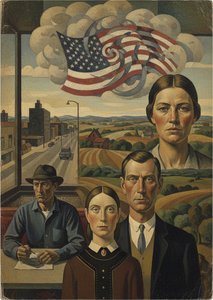
Echoes of Place: Regionalism & American Identity in Interwar Art
Explore the rise of American Regionalism in interwar art! Discover Grant Wood, Thomas Hart Benton & the movement's impact on American identity. Expert analysis & historical context.
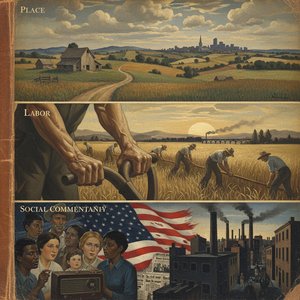
American Regionalism: A Crucible of Identity – Exploring Themes of Place, Labor & Social Commentary
Explore American Regionalism's powerful depiction of the American heartland during the Great Depression. Discover Grant Wood, Thomas Hart Benton & more. Expert analysis & high-quality art reproductions at OriginalUniqueArt.

Regionalism: Celebrating the Heart and Soul of Local Identity Through Art
Explore the profound impact of Regionalism in art history. Discover how iconic painters captured local identity, rural resilience, and the American heartland through evocative landscapes and social commentary in this expert-led journey through art's most soulful movement.

