
 Megtekintés
 Küldés
 Megosztás
 Részletek
 Útmutató

 Letöltés
 Hasonló darabok
 X-ray felvétel
 Diavetítés
 Kérdések és válaszok
 Statisztika
William Leyborne Leyborne

- 127.0 x 102.0 cm


 Összes részlet megjelenítése
Giclée / Műnyomat
Múzeumi minőségű giclée vagy vászonnyomat, gyors gyártással és rugalmas finomítási lehetőségekkel. ( Kézzel festett másolat rendelése Áttérés digitális képre)




P118B Ft10

P118H Ft10

P118W Ft10

P438Z Ft10

P508JH Ft12

P508YH Ft12

P805H Ft10

P805Z Ft10

P919BZ Ft10

P919G Ft10

P919XJ Ft10

P959ZH Ft10

P968JZ Ft12

W106C Ft8

W218G Ft10

W218JH Ft8

W218Y Ft10

W307PJ Ft10

W316G Ft10

W316PJ Ft8

W316Y Ft10

W398PJ Ft8

W4111J Ft10

W500HY Ft15

W500JH Ft15

W692G Ft12

W849H Ft8

W940BG Ft15

W953PJ Ft8




Válasszon előre meghatározott méreteink közül, amelyek megfelelnek a műalkotás eredeti arányainak.

Írja be a keretének vagy a falának megfelelő szélességet és magasságot. A nyomatot csak le lehet vágni, soha nem tehető nagyobbá, mint az eredeti kép, így egy eltérő alakú méretnél a kép egy része elveszik. Mielőtt bármit kinyatintanánk, küldünk egy digitális próbamodellt jóváhagyásra. Az oldalon látható kép nem tartalmazza a valós levágást — ezt csak a próbamodell mutatja meg.
Világszerte történő kiszállítás területére mindössze 2 hét alatt, a szokásos 4-5 hét helyett. (8 november)

Ingyenes globális expressz szállítás

Prémium minőségű len vászon

Teljes körű szállítási biztosítás

Vámvisszatérítési Garancia

Hiteles színarányosság garancia

100 napos visszaküldési lehetőség (csak hibás termékek esetén)

100% pénzvisszatérítési garancia

Több darab vásárlásakor kedvezmény
 Az üvegkeretes opció csak 110 cm alatti méretben érhető el

William Leyborne Leyborne
Giclée / Műnyomat
Reprodukció mérete
-


Összesített ár
Ft 26415
The Enigmatic Figure – William Leyborne Leyborne
Thomas Gainsborough’s “William Leyborne Leyborne” isn't merely a portrait; it’s a carefully constructed tableau, a glimpse into the social and political landscape of 18th-century England. The subject himself—a man of considerable standing within Grenada’s colonial administration—remains subtly enigmatic, his gaze holding both authority and a hint of melancholy. Born in Suffolk, Leyborne's rise to prominence as Governor reflects the complex dynamics of British expansion and the challenges inherent in governing a far-flung territory. The painting captures him not as a conquering hero, but as a man navigating the intricacies of power, duty, and perhaps, a quiet sense of isolation.
- Formal Attire: Leyborne’s meticulously tailored suit, complete with a vibrant pink jacket – a bold choice for the period – speaks to his status and wealth. The dark velvet waistcoat and crisp white lace cuffs further emphasize this distinction, suggesting a man accustomed to privilege and ceremony.
- The Sword & Hat: The inclusion of a sword and black hat is significant. These are emblems of military rank and authority, underscoring Leyborne’s role as a colonial administrator responsible for maintaining order and defending the territory.
- Background Figures: The partially visible figures in the background – two individuals glimpsed amidst the folds of drapery – add layers of intrigue. They could represent his staff, advisors, or perhaps even rivals, hinting at the political maneuvering that accompanied his position.
Gainsborough’s Technique – A Masterclass in Light and Texture
Gainsborough's genius lies not just in capturing a likeness but in imbuing it with atmosphere and emotion. The painting is executed in his signature loose, expressive style, characterized by broad brushstrokes and a masterful manipulation of light. Notice how the light falls across Leyborne’s face, creating subtle gradations of tone that define his features and convey a sense of depth. The artist employs a technique known as ‘broken color,’ layering thin washes of paint to achieve luminous effects and a remarkable sense of texture – particularly evident in the fabric of his clothing.
The use of impasto, where thick layers of paint are applied directly to the canvas, adds a tactile quality to the portrait, inviting the viewer to almost feel the weight and richness of Leyborne’s attire.Symbolism & Context – Colonial Power and Provincial Dignity
“William Leyborne Leyborne” is deeply rooted in its historical context. It reflects the ambitions of the British Empire during a period of intense colonial expansion, but also subtly critiques it. The painting’s setting—a formal interior—suggests a world of privilege and ceremony, yet Leyborne's expression hints at the burdens of leadership and the isolation that often accompanies power. The pink jacket, while indicative of wealth, could also be interpreted as a subtle challenge to traditional notions of masculinity and decorum.
Furthermore, the painting’s provenance—currently housed in Bristol Museum – Art Gallery—connects it to a rich artistic heritage within Britain, showcasing the evolution of portraiture during the 18th century.Emotional Resonance – A Portrait of Quiet Contemplation
Despite its formal presentation, “William Leyborne Leyborne” possesses a remarkable emotional depth. Leyborne’s gaze is not one of boastful self-regard but rather a quiet contemplation—a sense of being aware of his position and the responsibilities that come with it. The subtle shadows around his eyes suggest a hint of sadness or perhaps even weariness, inviting the viewer to empathize with this enigmatic figure from a distant era. The painting ultimately transcends its status as a simple portrait; it’s a poignant meditation on power, duty, and the complexities of human experience.
Kérdések és válaszok
Hol tekinthető meg a(z) "William Leyborne Leyborne" előnézete?
A „William Leyborne Leyborne”, Gainsborough Thomas alkotása előnézete megtekinthető a mű Előnézet oldalán.
Szabadon reprodukálható-e a/az „William Leyborne Leyborne”, Gainsborough Thomas alkotása képe?
A „William Leyborne Leyborne”, Gainsborough Thomas alkotása közösségi tulajdon – a szerzői jog lejártt státuszú mű. Ez a jogi státusz határozza meg, hogy a mű képmásolata hogyan reproduzható.
Milyen színharmóniát mutat be „William Leyborne Leyborne”, Gainsborough Thomas alkotása?
A „William Leyborne Leyborne”, Gainsborough Thomas alkotása egy Strong Color Unity színharmóniát mutat be.
A művész életrajza
A Suffolk Beginning: The Early Life and Artistic Awakening
The story of Thomas Gainsborough, one of Britain’s most celebrated artists, unfolds not within the confines of a grand academy or bustling metropolis, but in the tranquil market town of Sudbury, Suffolk. Born in 1727, the youngest son of John Gainsborough, a weaver and wool merchant, young Thomas displayed an innate artistic sensibility from a remarkably early age. While his siblings pursued more conventional paths, Thomas’s world rapidly became consumed by drawing and painting – miniature self-portraits and delicate landscapes blossoming from his hand even before he reached ten years old. This precocious talent wasn't merely a childhood pastime; it was the burgeoning of a vision that would reshape British art. His father, recognizing this unique gift, encouraged its development, setting young Thomas on a path diverging sharply from the family trade. The Suffolk countryside itself became his first studio, imbuing his later works with a deep and abiding love for the natural world – a characteristic that would distinguish him throughout his career. This early immersion in landscape wasn’t simply about replicating what he saw; it was about *feeling* the essence of the English countryside, an emotional resonance that would permeate his canvases for decades to come.London and the Shaping of a Style: Influences and Early Commissions
In 1740, at the age of thirteen, Gainsborough journeyed to London, embarking on formal artistic training under Hubert Gravelot, a French engraver renowned for his elegant rococo style. This exposure proved pivotal, introducing him to refined techniques and fashionable aesthetics. However, it was his association with William Hogarth and the St Martin’s Lane Academy that truly began to mold his artistic identity. Initially influenced by Hogarth's narrative approach – his detailed depictions of London life and social commentary – Gainsborough soon charted his own course, developing a distinctive style characterized by its lightness of touch, fluid brushwork, and subtle color palettes. He absorbed lessons from various masters, yet resisted strict adherence to any single school, forging a path that blended observation with imagination. Returning to Sudbury after marrying Margaret Burr in 1746, Gainsborough established himself as a portraitist for the local gentry. This period honed his skills in capturing likenesses and character, but it was during his subsequent move to Ipswich, and later Bath, that he began attracting a more sophisticated clientele – individuals who appreciated not just accurate representation, but also artistic flair and emotional depth.Bath and Beyond: Portraiture, Landscape, and Royal Patronage
The years spent in Bath (1759-1774) marked a significant turning point in Gainsborough’s career. The city was a hub of fashionable society, providing him with ample opportunities to paint portraits of the wealthy and influential. He quickly gained renown for his ability to capture not only physical resemblance but also the personality and social standing of his sitters. His portraits weren't merely depictions; they were statements about identity and status. He experimented with different lighting techniques and compositions, moving away from the stiff formality of earlier portraiture towards a more relaxed and engaging style. However, even amidst the demands of portraiture, Gainsborough never abandoned his passion for landscape painting. In fact, he often seamlessly integrated landscapes into his portraits, creating compositions that celebrated both human subjects and the beauty of the natural world. This innovative approach – a hallmark of his style – set him apart from many of his contemporaries. The culmination of his success came with his move to London in 1774, where he established a studio on Pall Mall and became a founding member of the Royal Academy. He also secured royal patronage, becoming a favorite painter of King George III and Queen Charlotte, further solidifying his position as one of Britain’s leading artists. *Mrs. Thomas Gainsborough*, painted in 1785, exemplifies this period – an elegant portrait showcasing rococo style and muted tones.A Legacy of Innovation: Enduring Appeal and Influence
Thomas Gainsborough died in 1788, leaving behind a body of work that continues to captivate audiences today. His influence on subsequent generations of British artists is undeniable. He liberated portraiture from rigid formality, infusing it with spontaneity and emotional resonance. His loose brushwork and atmospheric effects paved the way for the Impressionists, while his lyrical landscapes inspired artists like John Constable, who deeply admired Gainsborough’s ability to capture the spirit of the English countryside. Gainsborough's legacy extends beyond technique; it lies in his profound understanding of human character and his unwavering commitment to artistic expression. He wasn’t simply a painter of portraits or landscapes; he was a storyteller, a poet of light and color, and a visionary who transformed British art. His paintings are a testament to the power of observation, imagination, and the enduring allure of the English landscape.Exploring Gainsborough's World Today
Fortunately, the opportunity to experience Gainsborough’s genius firsthand remains readily available. Gainsborough’s House, in his birthplace of Sudbury, stands as a testament to his life and work, offering visitors an intimate glimpse into his early influences and artistic development. Christchurch Mansion in Ipswich houses a significant collection of Gainsborough paintings alongside works by Constable and other masters. Numerous museums across the United Kingdom and internationally display his masterpieces, including the National Gallery in London and the Metropolitan Museum of Art in New York. His work continues to be studied, analyzed, and celebrated, ensuring that his artistic vision will endure for generations to come.
Gainsborough Thomas
1727 - 1788 , Egyesült Királyföld
Rövid információk
- Artistic Movement Or Style: Rococo, portréfestés
- Artists Or Movements Influenced By This Artist:
- Constable
- Impressionisták
- Artists Who Influenced This Artist:
- Hogarth
- Gravelot
- Date Of Birth: 1727. május 14.
- Date Of Death: 1788. augusztus 2.
- Full Name: Thomas Gainsborough
- Nationality: Angol
- Notable Artworks:
- Mrs. Thomas Gainsborough
- Mr és Mrs Andrews
- Place Of Birth (City And Country): Sudbury, Anglia
Kapcsolódó cikkek

Arthur William Devis: A Provincial Eye on Georgian Life & Naval History
Explore the life & work of Arthur William Devis (1762-1822), a key figure in Georgian portraiture and naval history painting. Discover his intimate 'conversation pieces' and captivating depictions of colonial India. Learn more at OriginalUniqueArt.
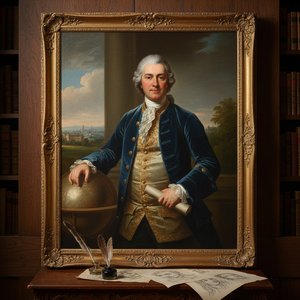
Thomas Hudson: A Study in 18th-Century Portraiture & British Artistic Identity
Explore the life & work of Thomas Hudson, a leading 18th-century British portraitist. Discover his mastery of the 'Grand Manner,' influential style, and lasting impact on British art. Learn about his notable portraits like Judge William Noel & Alexander Van Aken.
A 18. Század Mesterei: 10 Képi Gyöngyem a Történelemből | OriginalUniqueArt
Fedezze fel a 18. század legikonikusabb műalkotásait! Jacques-Louis David, Fragonard és más mesterek remekművei rokokó stílusban, barokk eleganciával. Művészeti reprodukciók prémium minőségben – inspirálja otthonát a OriginalUniqueArt.com kínálatával! Explore the full collection online.
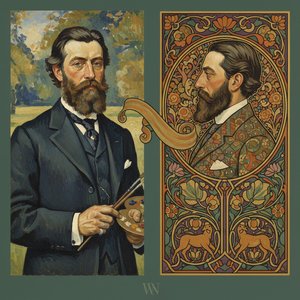
Sir William Nicholson: A Study in Post-Impressionist Portraiture & Decorative Modernism
Explore the life & work of Sir William Nicholson, a pivotal British Post-Impressionist painter. Discover his striking portraits, innovative woodcuts, and lasting influence on early 20th-century art. Expert insights for collectors.

William Hogarth: Satire, Social Commentary & the Birth of Modern British Art
Explore the satirical world of William Hogarth, pioneering British painter & engraver. Discover his iconic works like *A Rake's Progress* and insightful social commentary on 18th-century London life.


