
 Megtekintés
 Küldés
 Megosztás
 Részletek
 Útmutató

 Letöltés
 Hasonló darabok
 X-ray felvétel
 Diavetítés
 Q&A
Q&A Statisztika
Landscape

- 29.0 x 33.0 cm


 Összes részlet megjelenítése
Giclée / Műnyomat
Múzeumi minőségű giclée vagy vászonnyomat, gyors gyártással és rugalmas finomítási lehetőségekkel. ( Kézzel festett másolat rendelése Áttérés digitális képre)




P118B Ft10

P118H Ft10

P118W Ft10

P438Z Ft10

P508JH Ft12

P508YH Ft12

P805H Ft10

P805Z Ft10

P919BZ Ft10

P919G Ft10

P919XJ Ft10

P959ZH Ft10

P968JZ Ft12

W106C Ft8

W218G Ft10

W218JH Ft8

W218Y Ft10

W307PJ Ft10

W316G Ft10

W316PJ Ft8

W316Y Ft10

W398PJ Ft8

W4111J Ft10

W500HY Ft15

W500JH Ft15

W692G Ft12

W849H Ft8

W940BG Ft15

W953PJ Ft8




Válasszon előre meghatározott méreteink közül, amelyek megfelelnek a műalkotás eredeti arányainak.

Írja be a keretének vagy a falának megfelelő szélességet és magasságot. A nyomatot csak le lehet vágni, soha nem tehető nagyobbá, mint az eredeti kép, így egy eltérő alakú méretnél a kép egy része elveszik. Mielőtt bármit kinyatintanánk, küldünk egy digitális próbamodellt jóváhagyásra. Az oldalon látható kép nem tartalmazza a valós levágást — ezt csak a próbamodell mutatja meg.
Világszerte történő kiszállítás területére mindössze 2 hét alatt, a szokásos 4-5 hét helyett. (31 október)

Ingyenes globális expressz szállítás

Prémium minőségű len vászon

Teljes körű szállítási biztosítás

Vámvisszatérítési Garancia

Hiteles színarányosság garancia

100 napos visszaküldési lehetőség (csak hibás termékek esetén)

100% pénzvisszatérítési garancia

Több darab vásárlásakor kedvezmény
 Az üvegkeretes opció csak 110 cm alatti méretben érhető el

Landscape
Giclée / Műnyomat
Reprodukció mérete
-


Összesített ár
Ft 26198
A Vision of Rural Tranquility: The Early Mastery of Thomas Gainsborough
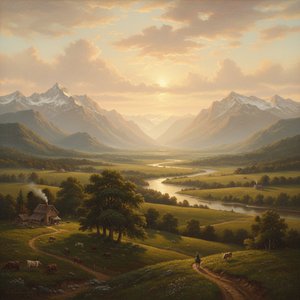
In the quiet, rolling landscapes of the Suffolk countryside, a profound artistic journey began. Long before he became a titan of the Georgian era, a young Thomas Gainsborough was already translating the textures of his world onto canvas. His early work, such as the evocative Landscape with Sandpit, serves as a breathtaking window into the genesis of a master. Painted around 1746-1747, this piece captures a moment of serene coastal beauty, where the soft, autumnal glow of an evening sky meets the rugged, tactile reality of the dunes. It is not merely a depiction of scenery; it is an invitation to step into a world where time seems to slow, and the boundaries between the observer and the natural world begin to dissolve.
The composition is a masterclass in balance and atmospheric depth. At its heart, a solitary figure—perhaps a reflection of the artist himself—rests peacefully beneath the protective shade of a tree, nestled near a prominent sandpit. This placement creates a poignant focal point that anchors the viewer's gaze amidst the sweeping elements of the landscape. Above, a sky filled with soft, drifting clouds adds a layer of movement and drama, while the distant flight of two birds introduces a sense of life and freedom to the stillness. For the discerning collector or interior designer, this painting offers a perfect equilibrium of weight and lightness, making it an ideal centerpiece for spaces that demand both presence and peace.
Technique and the Language of Light
Gainsborough’s technical prowess is evident in his sophisticated use of atmospheric perspective, a technique he refined by studying the great Dutch masters. Through subtle gradations of color and delicate tonal variations, he creates an illusion of immense depth, pulling the viewer's eye from the immediate textures of the foreground sand and foliage toward the hazy, infinite horizon. His brushwork is both meticulous and expressive; one can almost feel the grit of the sand and the rustle of the leaves through his masterful application of oil on canvas.
The palette is a sophisticated arrangement of earthy browns, muted greens, and the warm, golden hues of twilight. This restrained color scheme does not overwhelm the senses but rather fosters an atmosphere of quiet contemplation. For those looking to enhance a room with art, this piece provides a neutral yet emotionally resonant foundation, capable of complementing both classical and contemporary decor through its timeless aesthetic and organic warmth.
Symbolism and the Romantic Spirit
Beyond its surface beauty, the painting vibrates with symbolic significance. The solitary figure serves as a powerful emblem of introspection and the human connection to the earth—themes that would later become central to the burgeoning Romantic movement. This sense of communion with nature suggests a deeper, spiritual resonance, where the landscape is not just a backdrop but a living, breathing entity capable of reflecting the human soul.
To possess a reproduction of such a work is to bring more than just decoration into a home; it is to invite a legacy of British artistic heritage. Whether placed in a sunlit library or a sophisticated study, this landscape acts as a window to a lost era of pastoral grace, offering a perennial sense of calm and an enduring connection to the sublime beauty of the natural world.
Kérdések és válaszok
Hogyan szerezhető be „Landscape”, Gainsborough Thomas alkotása digitális fájlja?
A „Landscape”, Gainsborough Thomas alkotása digitális képét a következő oldalon vásárolhatja meg: Digitális alkotás: magas felbontású digitális kép letöltése.
Maradt-e a "Landscape" mű a művész hon országában?
Nem – a műtárgy külföldön található. A „Landscape” mű United Kingdom múzeumának gyűjteményében található, míg Gainsborough Thomas Egyesült Királyföld országban született.
Mennyire harmonikusak „Landscape”, Gainsborough Thomas alkotása színei?
A „Landscape”, Gainsborough Thomas alkotása egy Strong Color Unity színharmóniát mutat be.
A művész életrajza
A Suffolk Beginning: The Early Life and Artistic Awakening
The story of Thomas Gainsborough, one of Britain’s most celebrated artists, unfolds not within the confines of a grand academy or bustling metropolis, but in the tranquil market town of Sudbury, Suffolk. Born in 1727, the youngest son of John Gainsborough, a weaver and wool merchant, young Thomas displayed an innate artistic sensibility from a remarkably early age. While his siblings pursued more conventional paths, Thomas’s world rapidly became consumed by drawing and painting – miniature self-portraits and delicate landscapes blossoming from his hand even before he reached ten years old. This precocious talent wasn't merely a childhood pastime; it was the burgeoning of a vision that would reshape British art. His father, recognizing this unique gift, encouraged its development, setting young Thomas on a path diverging sharply from the family trade. The Suffolk countryside itself became his first studio, imbuing his later works with a deep and abiding love for the natural world – a characteristic that would distinguish him throughout his career. This early immersion in landscape wasn’t simply about replicating what he saw; it was about *feeling* the essence of the English countryside, an emotional resonance that would permeate his canvases for decades to come.London and the Shaping of a Style: Influences and Early Commissions
In 1740, at the age of thirteen, Gainsborough journeyed to London, embarking on formal artistic training under Hubert Gravelot, a French engraver renowned for his elegant rococo style. This exposure proved pivotal, introducing him to refined techniques and fashionable aesthetics. However, it was his association with William Hogarth and the St Martin’s Lane Academy that truly began to mold his artistic identity. Initially influenced by Hogarth's narrative approach – his detailed depictions of London life and social commentary – Gainsborough soon charted his own course, developing a distinctive style characterized by its lightness of touch, fluid brushwork, and subtle color palettes. He absorbed lessons from various masters, yet resisted strict adherence to any single school, forging a path that blended observation with imagination. Returning to Sudbury after marrying Margaret Burr in 1746, Gainsborough established himself as a portraitist for the local gentry. This period honed his skills in capturing likenesses and character, but it was during his subsequent move to Ipswich, and later Bath, that he began attracting a more sophisticated clientele – individuals who appreciated not just accurate representation, but also artistic flair and emotional depth.Bath and Beyond: Portraiture, Landscape, and Royal Patronage
The years spent in Bath (1759-1774) marked a significant turning point in Gainsborough’s career. The city was a hub of fashionable society, providing him with ample opportunities to paint portraits of the wealthy and influential. He quickly gained renown for his ability to capture not only physical resemblance but also the personality and social standing of his sitters. His portraits weren't merely depictions; they were statements about identity and status. He experimented with different lighting techniques and compositions, moving away from the stiff formality of earlier portraiture towards a more relaxed and engaging style. However, even amidst the demands of portraiture, Gainsborough never abandoned his passion for landscape painting. In fact, he often seamlessly integrated landscapes into his portraits, creating compositions that celebrated both human subjects and the beauty of the natural world. This innovative approach – a hallmark of his style – set him apart from many of his contemporaries. The culmination of his success came with his move to London in 1774, where he established a studio on Pall Mall and became a founding member of the Royal Academy. He also secured royal patronage, becoming a favorite painter of King George III and Queen Charlotte, further solidifying his position as one of Britain’s leading artists. *Mrs. Thomas Gainsborough*, painted in 1785, exemplifies this period – an elegant portrait showcasing rococo style and muted tones.A Legacy of Innovation: Enduring Appeal and Influence
Thomas Gainsborough died in 1788, leaving behind a body of work that continues to captivate audiences today. His influence on subsequent generations of British artists is undeniable. He liberated portraiture from rigid formality, infusing it with spontaneity and emotional resonance. His loose brushwork and atmospheric effects paved the way for the Impressionists, while his lyrical landscapes inspired artists like John Constable, who deeply admired Gainsborough’s ability to capture the spirit of the English countryside. Gainsborough's legacy extends beyond technique; it lies in his profound understanding of human character and his unwavering commitment to artistic expression. He wasn’t simply a painter of portraits or landscapes; he was a storyteller, a poet of light and color, and a visionary who transformed British art. His paintings are a testament to the power of observation, imagination, and the enduring allure of the English landscape.Exploring Gainsborough's World Today
Fortunately, the opportunity to experience Gainsborough’s genius firsthand remains readily available. Gainsborough’s House, in his birthplace of Sudbury, stands as a testament to his life and work, offering visitors an intimate glimpse into his early influences and artistic development. Christchurch Mansion in Ipswich houses a significant collection of Gainsborough paintings alongside works by Constable and other masters. Numerous museums across the United Kingdom and internationally display his masterpieces, including the National Gallery in London and the Metropolitan Museum of Art in New York. His work continues to be studied, analyzed, and celebrated, ensuring that his artistic vision will endure for generations to come.
Gainsborough Thomas
1727 - 1788 , Egyesült Királyföld
Rövid információk
- Artistic Movement Or Style: Rococo, portréfestés
- Artists Or Movements Influenced By This Artist:
- Constable
- Impressionisták
- Artists Who Influenced This Artist:
- Hogarth
- Gravelot
- Date Of Birth: 1727. május 14.
- Date Of Death: 1788. augusztus 2.
- Full Name: Thomas Gainsborough
- Nationality: Angol
- Notable Artworks:
- Mrs. Thomas Gainsborough
- Mr és Mrs Andrews
- Place Of Birth (City And Country): Sudbury, Anglia
Kapcsolódó cikkek
Thomas Hill: Luminosity, Landscape & the American Pastoral Ideal
Explore the luminous landscapes of Thomas Hill, a pivotal figure in the Hudson River School & Luminism movements. Discover his artistic journey, philosophical depth, and enduring legacy with OriginalUniqueArt.

Evocations of Place: A Historical Journey Through Landscape Art
Explore the rich history of landscape art with OriginalUniqueArt. Discover renowned artists, movements like Impressionism & Romanticism, and expert guidance for collecting timeless pieces. Find your perfect serene escape today!

A Rokoko Mesterek: 10 alkotás, mely meghatározta a művészetet | OriginalUniqueArt.com
Fedezze fel a Rokoko művészet 10 legikonikusabb remekművét! Ismerje meg Watteau, Boucher és Fragonard festményeinek történetét. Elegáns dekorációk inspirációja – OriginalUniqueArt.com kínálatában megtalálható minden művészi nyomat. Explore the full collection online!

John Constable 25 Mesterműve: A Természet Lényege Vászonon – OriginalUniqueArt.com
Fedezze fel John Constable 25 legszebb művészeti alkotását! Ismerje meg a romantika ikonikus tájképeit, Dedham Vale szépségét és a természet lenyűgöző ábrázolásait. Vászonkép reprodukcióinkkal eleganciát csempészhet otthonába – OriginalUniqueArt.com

A Romantikus Tájképfestészet 10 Legikonikusabb Műalkotása – OriginalUniqueArt.com
Fedezze fel a romantikus tájképfestészet 10 legikonikusabb műalkotását! Caspar David Friedrich, J.M.W. Turner és más mesterek festményeinek története – inspiráló olajfestmények otthonába. OriginalUniqueArt.com: múzeumi minőségű reprodukciók és egyedi dekorációk online.


