Contemporary Realism · 1898
Taking the Count (Thomas Eakins, 1898)
Thomas Eakins (1844–1916) megalkotta: Taking the Count. 1898-ből származik. A Contemporary Realism irányzathoz tartozik. Oil On Canvas anyagból készült. A műtárgyat a Hartford, Amerikai Egyesült Államok-i Yale University Art Gallery-ben őrzik.
- 1898
- Oil On Canvas
- Yale University Art Gallery, Hartford

 Megtekintés

 Kézzel festett olajfestmény
 Küldés
 Megosztás
 Információs lap


 Letöltés
 Hasonló darabok
 X-ray felvétel
 Diavetítés
 Kérdések és válaszok

 Statisztika
Taking the Count röviden
- Cím
- Taking the Count
- Művész
- Thomas Eakins (1844–1916)
- A művész születési helye
- Philadelphia, Amerikai Egyesült Államok
- Dátum
- 1898
- Műszaki adatok
- Oil On Canvas
- Megtekinthető helyszín
- Yale University Art Gallery, Hartford, Amerikai Egyesült Államok
- Mozgalom
- Contemporary Realism
- Időszak
- 19th Century
- Téma
- boxing match, anatomy, crowd spectators, referee, philadelphia, realism
Mit ábrázol a Taking the Count?
The Raw Pulse of Philadelphia: A Masterclass in Realism
In the dim, electric atmosphere of Philadelphia’s Arena in 1898, a moment of profound human vulnerability is frozen in time. Thomas Eakins, a titan of American Realism, does not merely paint a boxing match; he dissects the very essence of endurance and physical struggle. In Taking the Count, we are thrust into the center of the ring, where the sweat, the tension, and the heavy breathing of the combatants feel almost palpable. This is not the romanticized, heroic athleticism often found in sporting art; instead, Eakins presents a gritty, unvarnished truth. The scene captures a fallen fighter at his most precarious moment, caught in the agonizing interval between a devastating blow and the referee's decisive count. It is a study of the human body under duress, rendered with a scientific precision that reflects Eakins’ lifelong obsession with anatomy.
The composition draws the eye through a complex web of gazes and physical postures. At the heart of the drama, the kneeling figure embodies a desperate struggle for recovery, his muscles taut and his spirit tested. Surrounding him, the referee and the standing opponent create a triangular tension that anchors the viewer within the ring. Beyond the immediate combatants, the presence of the crowd—a shadowy, watchful collective—adds a layer of psychological depth, reminding us that this private agony is being consumed as public spectacle. For the collector or the lover of fine art, this painting offers more than just a depiction of sport; it provides a window into the late 19th-century urban experience, where the boundaries between physical prowess and human frailty are perpetually blurred.
Anatomy of a Masterpiece: Technique and Light
Eakins’s technical mastery is most evident in his ability to marry scientific rigor with emotional resonance. Having spent years studying the intricacies of musculature and bone structure through dissection, he approaches the canvas with the eye of an anatomist. Every sinew and strained limb in Taking the Count is rendered with an uncompromising accuracy that makes the figures appear to possess weight and volume. His use of light does not serve to beautify the scene but to illuminate its harsh realities. The lighting within the arena creates deep, dramatic shadows that sculpt the bodies of the boxers, emphasizing the physical toll of the fight and adding a sense of cinematic gravity to the composition.
The palette, while grounded in the earthy, somber tones characteristic of Eakins’s realism, is used to direct the viewer's emotional journey. The muted colors of the background allow the pale, strained skin of the athletes to emerge from the gloom, focusing our attention on the visceral reality of the struggle. For interior designers seeking a centerpiece for a sophisticated space, this work offers a profound sense of gravitas. A high-quality reproduction of this masterpiece brings with it an air of intellectual depth and historical weight, making it an ideal choice for galleries, studies, or living spaces that value art which challenges the eye and stirs the soul.
A Legacy of Unflinching Honesty
To understand Taking the Count is to understand the rebellious spirit of Thomas Eakins himself. At a time when many of his contemporaries were retreating into the soft, fleeting impressions of light or the idealized myths of history, Eakins stood firm in his commitment to the real. He found beauty not in perfection, but in the truth of the human condition—in the grit of the city, the precision of science, and the raw intensity of life lived on the edge. This painting remains a testament to that courage.
Owning or displaying a reproduction of this work is an invitation to contemplate the themes of resilience and the cyclical nature of struggle. It serves as a powerful reminder that even in moments of defeat, there is a profound dignity in the attempt to rise again. Whether viewed as a historical document of Philadelphia’s sporting culture or as a timeless exploration of human anatomy, Taking the Count continues to captivate, offering an enduring source of inspiration for those who find beauty in the authentic and the unadorned.
Melyik múzeumban található meg a Taking the Count?
Yale University Art Gallery
Hartford, Amerikai Egyesült Államok
A Legacy of Vision: Exploring the Yale University Art Gallery A Yale Egyetem Művészeti Galériája, a Hartford szívében, nem csupán egy múzeum, hanem egy időutazás, egy művészethez való mély elkötelezettség és évszázadok munkásságának gyümölcse. A hatalmas épületben, mely a Yale Egyetem történelmi campusán található, a látogatót azonnal magával ragadó atmoszférába nyomja – egy olyan helyre, ahol a forradalmi gondolatok és a csendes kontempláció harmonikusan keverednek Louis Kahn innovatív építészetének fényében. 1832-ben, John Trumbull ajándékát követően, amelyen az amerikai forradalomról készült festmények gyűlt össze, a galéria egy vallásos művészeti központként indult – de hamarosan egy univerzális gyűjtemény lett, mely több mint 300 ezer darabot őriz, és átöleli a világ minden táján található művészeti hagyományokat.


Taking the Count nagy felbontású képei
Felfüggesztett szerzői jogok: a művész 1916-ben halt meg.
Thomas Eakins, Taking the Count (1898), Yale University Art Gallery. Felfüggeszthető jogforrás
Taking the Count kapcsán felmerülő kérdések megválaszolva
Hol tekinthető meg az eredeti „Taking the Count”, Thomas Eakins alkotása?
A „Taking the Count”, Thomas Eakins alkotása kiállítva található a Yale University Art Gallery, Hartford, Amerikai Egyesült Államok-ben. A múzeumi hivatkozás az eredeti műre vonatkozik, nem a reprodukciókra.
Mikor készült a(z) „Taking the Count”, Thomas Eakins alkotása?
A "Taking the Count" 1898-ban készült. Ez az időpont meghatározó jelentőséggel bír Thomas Eakins pályájában és az adott korszak kontextusában is.
Milyen technikával készült a „Taking the Count”, Thomas Eakins alkotása?
Thomas Eakins a Oil On Canvas technikát alkalmazta a "Taking the Count" alkotáshoz. A technika határozza meg az eredeti mű anyagösszetételt.
Mit ábrázol a "Taking the Count"?
„Taking the Count”, Thomas Eakins alkotása a következőket ábrázolja: boxing match, anatomy, crowd spectators, referee, philadelphia, realism, athlete.
A „Taking the Count” művészeti alkotás mentes a szerzői jogoktól?
A „Taking the Count”, Thomas Eakins alkotása szerzői jogi státusza: a mű közösségi tulajdon – a szerzői jog lejártt. Ez határozza meg, hogy a kép másolatai szabadon készíthetők-e.
Ki készítette a(t): "Taking the Count"?
A "Taking the Count" alkotását Thomas Eakins készítette. Az ezen az oldalon található információk Thomas Eakins eredeti művészetét mutatják be.
Mely művészeti irány része a „Taking the Count”, Thomas Eakins alkotása?
A „Taking the Count”, Thomas Eakins alkotása a Contemporary Realism irányzat része. Ez az irányzat adja a mű stilisztikai kontextusát.
Hová sorolható a Thomas Eakins pályájának mely szakaszába a "Taking the Count"?
Thomas Eakins pályaművében a „Taking the Count” a Mature Period korszakba tartozik. Ez az időszak segít összehasonlíthatóvá tenni a művet a művész többi alkotásával.
Hány éves volt Thomas Eakins, amikor megalkotta a "Taking the Count" című alkotást?
Thomas Eakins 54 éves volt, amikor 1898 évben megalkotta a "Taking the Count" alkotást. A korúsítás az alkotó születési évéből, 1844 fel основании került kiszámítva.
A művészről: Thomas Eakins

1844–1916, Amerikai Egyesült Államok
Thomas Eakins
The Life of Thomas Eakins Born in Philadelphia, Pennsylvania, on July 25, 1844, Thomas Eakins lived a life deeply rooted in the city of his birth. He was a man of many disciplines, working as a painter, photographer, sculptor, and fine arts educator. While his interests often led him abroad for study, the geography of his existence remained largely centered in Philadelphia. He moved through the city's intellectual and social circles, observing the people and the physical realities that defined the local landscape.
Thomas Eakins részletesen Thomas Eakins legkiemelkedőbb művei
Thomas Eakins további művei
 A Gross Klinika1875
 Úszás1885
 Max Schmitt egy vízije1871
 Portrait of Samuel Murray1889
Esszék a Taking the Count körül
 Precision in Portraiture: The Technical Rigor of Anatomical Mastery and Hyper-RealismMaster the technical rigor of hyper-realism and anatomical precision. Explore the evolution of portraiture mastery now.
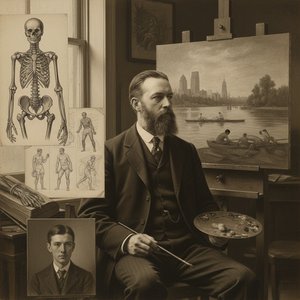 Thomas Eakins: Realism, Anatomy & the American Spirit – A Comprehensive Exploration of Life and LegacyExplore the life & legacy of Thomas Eakins, a pivotal American Realist painter. Discover his groundbreaking techniques, anatomical precisio…
 Romantic Realism's Finest: 10 Masterpieces for Your Home | OriginalUniqueArtExplore 10 defining masterpieces of Romantic Realism! Discover Courbet, Millet & Daumier's powerful paintings—capturing emotion and social …