A szöveg mérete

() ·

Egy Önnek készült, kézzel festett alkotás

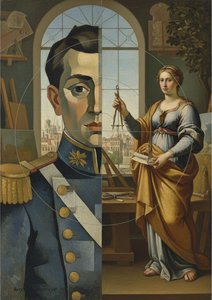
Etude de têtes (Titre d'usage)

Kézzel készített olajfestmény reprodukció

Kézzel festett olajvastú vászon, az Ön által választott méretben és keretben, művészeink készítik meglévőre. ( Váltás nyomtatványra Áttérés digitális képre)

A gyűjtemény leírása

Explore "Etude de têtes" by Thomas Couture – a captivating portrait reflecting Romanticism's influence and the artist’s innovative approach to painting. Discover its historical context and artistic significance.

A művész életrajza

Thomas Couture (1815-1879) volt egy jelentős francia romantikus és realizmus művész, aki ismertetőjele az európai művészetnek a „Romaföldre való hanyatlás” című nagy alkotása és számos más történelmi tájképe. Együtt dolgozott Édouard Manettel és más nagy művészekkel, és nagy hatással volt rájuk. Fedezd fel művészetét és örökségét!

előbb ·

1. fejezet

Mekkora méretű legyen?

Húzza a csúszkát a méret megváltoztatásához; a bal oldali kép a keret valós szélességét mutatja. Az eredeti arányok megmaradnak.

Standard méret
egyedi méretű
CM
INCH

Válasszon előre meghatározott méreteink közül, amelyek megfelelnek a műalkotás eredeti arányainak.

szélesség
magasság

Írja be a kívánt szélességet és magasságot, hogy illeszkedjen a keretéhez vagy a falához. Mivel ez kézzel festett alkotás, egy eltérő formájú méret esetén a művész akár festhet is valamivel többet a kép körül, vagy korolathat is belőle — az Ön döntésének megfelelően. A festés megkezdése előtt küldünk egy digitális tervezetet jóváhagyásra. Az oldalon látható kép nem tartalmazza a végeredményt — csak a tervezet mutatja meg a valódi eredményt.

2. fejezet

Hogyan érkezzen meg?

Válaszd ki a feszített vászon széleit

Válassza ki a keretet

Corner sample of the WhiteWrap canvas edge finish, stretched on tömörfa bars
Fehér Ft1
Corner sample of the BlurSideWrap canvas edge finish, stretched on tömörfa bars
Elmosódott szélek Ft1
Corner sample of the ExtendedWrap canvas edge finish, stretched on tömörfa bars
Kiterjesztett Ft1
Corner sample of the P118B picture frame: formázott polisztirol, 5 cm wide and 3 cm thick
P118B Ft10
Corner sample of the P118H picture frame: formázott polisztirol, 5 cm wide and 3 cm thick
P118H Ft10
Corner sample of the P118W picture frame: formázott polisztirol, 5 cm wide and 3 cm thick
P118W Ft10
Corner sample of the P438Z picture frame: formázott polisztirol, 5.5 cm wide and 3.5 cm thick
P438Z Ft10
Corner sample of the P508JH picture frame: formázott polisztirol, 7 cm wide and 3.5 cm thick
P508JH Ft12
Corner sample of the P508YH picture frame: formázott polisztirol, 7 cm wide and 3.5 cm thick
P508YH Ft12
Corner sample of the P805H picture frame: formázott polisztirol, 5 cm wide and 3.5 cm thick
P805H Ft10
Corner sample of the P805Z picture frame: formázott polisztirol, 5 cm wide and 3.5 cm thick
P805Z Ft10
Corner sample of the P919BZ picture frame: formázott polisztirol, 7 cm wide and 3.5 cm thick
P919BZ Ft10
Corner sample of the P919G picture frame: formázott polisztirol, 7 cm wide and 3.5 cm thick
P919G Ft10
Corner sample of the P919XJ picture frame: formázott polisztirol, 7 cm wide and 3.5 cm thick
P919XJ Ft10
Corner sample of the P959ZH picture frame: formázott polisztirol, 5 cm wide and 3 cm thick
P959ZH Ft10
Corner sample of the P968JZ picture frame: formázott polisztirol, 6 cm wide and 4 cm thick
P968JZ Ft12
Corner sample of the W106C picture frame: tömörfa, 5 cm wide and 3 cm thick
W106C Ft8
Corner sample of the W218G picture frame: tömörfa, 5 cm wide and 3 cm thick
W218G Ft10
Corner sample of the W218JH picture frame: tömörfa, 5 cm wide and 3 cm thick
W218JH Ft8
Corner sample of the W218Y picture frame: tömörfa, 5 cm wide and 3 cm thick
W218Y Ft10
Corner sample of the W307PJ picture frame: tömörfa, 6 cm wide and 3 cm thick
W307PJ Ft10
Corner sample of the W316G picture frame: tömörfa, 6 cm wide and 3 cm thick
W316G Ft10
Corner sample of the W316PJ picture frame: tömörfa, 6 cm wide and 3 cm thick
W316PJ Ft8
Corner sample of the W316Y picture frame: tömörfa, 6 cm wide and 3 cm thick
W316Y Ft10
Corner sample of the W398PJ picture frame: tömörfa, 5 cm wide and 3 cm thick
W398PJ Ft8
Corner sample of the W4111J picture frame: tömörfa, 6.5 cm wide and 3.5 cm thick
W4111J Ft10
Corner sample of the W500HY picture frame: tömörfa, 7 cm wide and 5 cm thick
W500HY Ft15
Corner sample of the W500JH picture frame: tömörfa, 7 cm wide and 5 cm thick
W500JH Ft15
Corner sample of the W692G picture frame: tömörfa, 8 cm wide and 4 cm thick
W692G Ft12
Corner sample of the W849H picture frame: tömörfa, 5 cm wide and 3 cm thick
W849H Ft8
Corner sample of the W940BG picture frame: tömörfa, 7.5 cm wide and 4.5 cm thick
W940BG Ft15
Corner sample of the W953PJ picture frame: tömörfa, 6 cm wide and 3.5 cm thick
W953PJ Ft8
Corner sample of the H24-GOLD picture frame: faragott fa gesszóval, 10 cm wide and 6 cm thick
H24-GOLD Ft30
Corner sample of the H24-SILVER picture frame: faragott fa gesszóval, 10 cm wide and 6 cm thick
H24-SILVER Ft30
Corner sample of the H36-GOLD picture frame: faragott fa gesszóval, 15 cm wide and 6.5 cm thick
H36-GOLD Ft45
Corner sample of the H36-SILVER picture frame: faragott fa gesszóval, 15 cm wide and 6.5 cm thick
H36-SILVER Ft45

Keretprofil: . A kerettel együtt vett teljes méret: .

3. fejezet

Ki festi, és változtatni kellene-e bármit?

Példák a módosíthatóságra: Az arc kicserélése a vásárló fotójára; háziállat hozzáadása (pl. macska kicserélése kutyára); rejtett üzenet elhelyezése a háttérben; a háttér tájéképének vagy elemeinek megváltoztatása.
A megrendelést követően a OriginalUniqueArt.com csapat e-mailt küld a vásárlónak az instrukciókkal, és biztosítja a tervezeti előnézetet

Világszerte elérhető szállítás () 3-4 hét alatt a szokásos 5 hét helyett. (3 november). A minőség nem kérdőjelezhető.

4. fejezet

Az utolsó finomhangolás

Egy felirat, mint egy múzeumban?

A gravírozott bronztábla részletei

This elegant plaque features the artist's name and the title of the artwork, finely engraved for a timeless presentation.

It is made from bronze with a refined, elegant finish. The text is precisely laser-engraved for a sharp and permanent result. Measuring 9x2 cm, the plaque is compact yet easy to read. It's built to be durable and scratch-resistant, offering a professional, museum-quality look. Mounting is simple thanks to the included adhesive backing.

Átlátszó akril tábla részletei

The plaque includes essential engraved details such as the artist's name, the title of the artwork, the date it was created, the type of media used-like oil on canvas or watercolor-a brief description of the piece, and a QR code that links to the complete artwork information.

It is crafted from clear acrylic, offering a sleek, modern appearance. The text is UV-engraved in black to ensure strong visual contrast. With a size of 10x15 cm, it ensures optimal readability. It comes equipped with two metal hooks for secure wall mounting. The plaque is designed to be weather-resistant, making it suitable for various environments, and it includes interactive features that work seamlessly with smartphone scanning.

Fekete akril tábla részletei

This elegant plaque includes engraved information such as the artist's name, the title of the artwork, the date it was created, the type of media used (like oil on canvas or watercolor), a short description of the artwork, and a QR code for quick access to more information.

The plaque itself is made from refined black acrylic with a premium finish. The text is laser-engraved in white for high contrast and readability. Its size is 10x15 cm, designed to be easy to read. It comes with two metal hooks for professional mounting. The design is sleek and fits any interior style. It is also weather-resistant and durable, with built-in digital integration for mobile compatibility.

Egy védőréteg?

Mikor lenne szüksége rá?

5. fejezet

Az Ön által megrendelt festmény

Etude de têtes (Titre d'usage)

Reprodukciós technika

Reprodukció mérete

-

Kiváló mesterművész

Nagyobb részletesség, finomság és bővített gyártási idő

-

Reprodukció keretezése

-

-

A bármely oldalsó méretét túlszálaló 105 cm (kb. 41 hüvelyk) meghaladó műalkotások vagy reprodukciók esetében a keret összeszerelhető készletként, szétszerelve kerül szállításra. Ez a módszer biztosítja a biztonságos szállítást, és megakadályozza a szállítás során fellépő sérüléseket.

Szakmész összeszerelést igényel – ez nem DIY (önösszeszerelhető) termék.
A készletet egy tapasztalt keretező szakembernek kell összeszerelnie és a vásznat feszítenie kell, fa ragasztó (nem tartalmazza a csomag), vásznfeszítő fogó és szorítók használatával, amelyek a ragasztó száradásáig a keretrészeket egymáshoz vuôngjba tartják. A helytelen összeszerelés vagy a nem egyenletes vásznfeszítés maradandó károsíthatja a műalkotást, és ez nem része a garanciánknak.

  • A készlet tartalmazza az összes tömörfa rudat, pontosan méretre vágva.

  • A mellékelt csavarokkal, valamint a sarokszerekhez szükséges faütő ragasztóval kell összeszerelnie (ez nem tartalmazható a csomagban), így a keretrendezőnek külön kell beszereznie.

  • A csomag nem tartalmazza a szükséges professzionális eszközöket: egy vászonfeszítőt és klipseket a rácsok vízszintes tartásához a ragasztó megszáradásáig.

Fontos:
A sarokcsatlakozásokhoz fánylagra van szükség, a keretrudakat szorítókapcsokkal kell rögzíteni, amíg a rag teljesen meg nem szárad, a kész keretre feszített vászonhoz pedig vászonfeszítő fogat szükséges. Ezek egyike sem található meg a készletben. Kérjük, rendelés előtt győződjön meg róla, hogy rendelkezik tapasztalt keretező szakemberrel.

Névtábla

-

-

Védőréteg (Lakk)

Fényes lakk (intenzívabb színek, védelem a fény és a nedvesség hatása ellen)

-

Műalkotásom egyedi igényre szabása

Példák a módosíthatóságra: az arc kicserélése az ügyfél fotójára; háziállat hozzáadása (pl. macska helyett kutya); rejtett üzenet elhelyezése a háttérben; a háttér tájainak vagy elemeinek megváltoztatása.

-

Sürgős

Világszerte szóló szállítás () mindössze 3-4 hét alatt, a szokásos 5 hét helyett. (3 november). A minőség nem kérdőjelezhető.

-

Express szállítás

Világszerte elérhető szállítás területre 5 héten belül. (10 november).

A szállítás díja tartalmazza

Összesített ár

Ft 98290

Összesített ár Ft 98290

Az üvegkeretes opció csak 110 cm alatti méretben érhető el

Minden rendelés mellé tartalmazva

  • Ingyenes globális expressz szállítás
  • Prémium minőségű len vászon
  • Teljes körű szállítási biztosítás
  • Vámvisszatérítési Garancia
  • Hiteles színarányosság garancia
  • 100 napos visszaküldési lehetőség (csak hibás termékek esetén)
  • 100% pénzvisszatérítési garancia
  • Több darab vásárlásakor kedvezmény

A Portrait of Contemplation: Unveiling the Layers of “Etude de têtes”

Thomas Couture’s “Etude de têtes,” a captivating study in portraiture, transcends mere likeness to become a profound meditation on identity and the complexities of human interaction. Painted circa 1850-1855 during the twilight years of the French Empire, this work embodies the burgeoning Realism that was challenging the dominance of Romanticism within the Parisian art world. It’s not simply a depiction of two men; it's an exploration of gaze, gesture, and the subtle dance between subject and observer – a visual poem brimming with quiet intensity.

The painting immediately draws the eye to the pair seated before us. Dressed in meticulously rendered 17th-century costumes—a rich velvet doublet for one man, a more subdued brocade robe for the other—they are presented as figures emerging from a bygone era. Their attire isn’t merely decorative; it's a deliberate choice that anchors them within a specific historical context, hinting at courtly intrigue and perhaps even a shared secret. The details of their clothing – the lace collars, the elaborate hats, the carefully positioned swords – speak volumes about status, profession, and the conventions of their time.

The Brushstroke and the Atelier: Couture’s Innovative Technique

Couture was a revolutionary figure in 19th-century painting. He deliberately rejected the rigid rules of the École des Beaux-Arts, establishing his own independent atelier—a space dedicated to fostering artistic freedom and experimentation. This commitment is vividly reflected in “Etude de têtes.” Couture’s brushwork is remarkably fluid and expressive, eschewing the smooth, polished surfaces favored by academic painters. Notice the loose, gestural strokes that define the contours of their faces, particularly the subtle shifts in light and shadow that capture the nuances of their expressions. He employed a technique he called “pointillé,” using small, distinct brushstrokes to build up color and texture—a method borrowed from Japanese prints, reflecting his fascination with Eastern art.

The composition itself is carefully constructed. The figures are positioned in a triangular arrangement, creating a sense of balance and stability while simultaneously suggesting a dynamic tension. Their eyes meet across the canvas, establishing a direct connection between the viewer and the subjects—a deliberate invitation to contemplate their shared moment. Couture’s use of color is equally restrained yet effective. He favors muted earth tones – browns, ochres, and grays – which lend the painting an air of solemnity and timelessness.

Symbolism and the Weight of Conversation

Beyond its technical merits, “Etude de têtes” resonates with layers of symbolic meaning. The act of conversation itself is laden with significance. What are these men discussing? Are they sharing a secret, debating an important matter, or simply enjoying each other’s company? Couture deliberately leaves the narrative ambiguous, allowing the viewer to project their own interpretations onto the scene. The slight furrow in one man's brow and the subtle turn of his head suggest a moment of contemplation—a pause within the flow of dialogue.

The painting can also be interpreted as an exploration of masculinity and social roles. The two men represent different facets of male identity – perhaps representing intellect and action, or formality and intimacy. Their attire and posture subtly reinforce these distinctions, inviting us to consider the complexities of gender dynamics within 19th-century society.

A Legacy of Innovation: Couture’s Enduring Influence

Thomas Couture's “Etude de têtes” stands as a testament to his artistic vision and his willingness to challenge convention. His work paved the way for later Realist painters, such as Manet, and helped to usher in a new era of artistic expression. Today, this captivating portrait continues to fascinate viewers with its quiet intensity, masterful technique, and profound exploration of human nature. It’s a piece that rewards careful observation and invites us to lose ourselves in the subtle nuances of a timeless conversation.

Kérdések és válaszok

Hol vásárolható „Etude de têtes (Titre d'usage)”, Thomas Couture alkotása képmű kézzel festett másolata?

A "Etude de têtes (Titre d'usage)" kézzel festett olajfesték reprodukció lino vászonon formátumban is elérhető. A rendelés a Kézzel festett másolat oldalon adható le, különböző méretválasztékban.

Hol találhatok olyan műalkotásokat, amelyek hasonlóak a(z) „Etude de têtes (Titre d'usage)”, Thomas Couture alkotása alkotáshoz?

A "Etude de têtes (Titre d'usage)" alkotással hasonló művek a festmény Hasonló alkotások oldalán találhatók.

Mennyire erős a kontraszt a(z) „Etude de têtes (Titre d'usage)”, Thomas Couture alkotása alkotásban?

A "Etude de têtes (Titre d'usage)" fény-sötét kontrasztja Balanced értéket mutat. A kontraszt azt írja le, mennyire térnek el egymástól a világos és sötét részek.

Több információ erről a festményről

Megtekintés AR előnézet Váltás nyomtatványra Áttérés digitális képre Küldés
Részletek Útmutató Kedvencekhez ad Letöltés Hasonló darabok X-ray felvétel Diavetítés Kérdések és válaszok Statisztika

Számokban kifejezve

  • 29választható keretek
  • standard méretek, saját arányokkal
  • 5hetek a festésre és a kézbesítésre
Thomas Couture

Thomas Couture

1815 - 1879, Franciaország

Gyors információk Thomas Couture művészről

  • Artistic Movement Or Style: Romanticizmus és Realizmus
  • Artists Or Movements Influenced By This Artist: ['Édouard Manet']
  • Artists Who Influenced This Artist:
    • Antoine-Jean Gros
    • Paul Delaroche
  • Date Of Birth: 1815. december 21.
  • Date Of Death: március 30., 1879.
  • Full Name: Thomas Couture
  • Nationality: Francia
  • Notable Artworks:
    • Az arany szeretete
    • Romans During the Decadence
    • A törvényelőadó
  • Place Of Birth: Senlis, Francia

A művész életrajza

A Rebel in the Atelier: The Life and Legacy of Thomas Couture

Thomas Couture, born in Senlis in 1815, stands as a fascinating bridge between the Romanticism of the early 19th century and the burgeoning Realism that would follow. His journey wasn’t one of immediate acclaim; instead, it was marked by persistent rejection from the prestigious Prix de Rome competition – an obstacle he skillfully transformed into fuel for his artistic independence. This determination ultimately led him to establish his own atelier, a sanctuary for artists seeking alternatives to the rigid structures of the École des Beaux-Arts, and profoundly shaped his unique approach to painting.

The Decadence of Empires and a New Artistic Vision

Couture’s career truly ignited with *Romans During the Decadence* (1847), a monumental work that caused a sensation at the Paris Salon. Far from a simple historical depiction, this painting served as a biting social commentary, drawing inspiration from the satirical writings of Juvenal. It presented a stark portrayal of Roman society’s moral decay and opulent excess, juxtaposing luxurious fabrics and classical ruins with figures embodying unrestrained indulgence. Couture masterfully employed tonal contrasts – rich dark hues punctuated by dramatic highlights – to amplify the painting's emotional impact and symbolic weight. This deliberate choice wasn’t merely about technical skill; it was a bold declaration about the state of civilization itself, resonating powerfully with contemporary audiences grappling with the changes sweeping across France. The success of *Romans During the Decadence* firmly established Couture as a leading artist and a formidable force within the art world.

A Teacher of Titans: Shaping Future Generations

Beyond his own artistic achievements, Couture’s influence extended profoundly through his role as an educator. He opened his atelier to a diverse group of aspiring artists, rejecting the rigid constraints of the École des Beaux-Arts and fostering an environment of experimentation and critical thinking. Among his most celebrated pupils were names that would become synonymous with modern art: Édouard Manet, whose revolutionary approach to painting owed much to Couture’s emphasis on tonal values and expressive brushwork; Henri Fantin-Latour, renowned for his still lifes and portraits of fellow artists; Pierre Puvis de Chavannes, a pioneer of Symbolism; and John La Farge, an innovator in stained glass. Couture's teaching methods were unconventional, encouraging students to develop their individual voices while grounding them in the fundamentals of draftsmanship and composition. He championed “quick painting,” anticipating techniques later embraced by the Impressionists, and stressed the importance of direct observation from life.

Later Years and Enduring Influence

In 1860, disillusioned with the Parisian art scene, Couture retreated to his hometown of Senlis, where he continued to teach and paint. He codified his artistic philosophy in *Méthode et entretiens d'atelier* (Method and Workshop Interviews), published in 1867—a treatise that offered a radical critique of academic dogma and advocated for a more intuitive and expressive approach to art-making. This work, later translated into English as *Conversations on Art Methods*, provided invaluable insights into his pedagogical principles and artistic beliefs. Though he faced criticism throughout his career for challenging established norms, Couture’s impact on the development of modern art is undeniable. He fostered a generation of artists who dared to break free from convention, paving the way for the radical innovations that would define the late 19th and early 20th centuries. His legacy endures not only through his own compelling paintings but also through the enduring influence he exerted on some of the most important figures in art history.

Key Works

  • Romans During the Decadence (1847): Couture’s masterpiece, a searing critique of Roman society.
  • The Duel After Masked Ball: A dramatic depiction of violence and intrigue.
  • A Lawyer Going to Court: An example of his historical genre paintings.

Additional Information

* Born: Senlis, France (1815) * Died: Villiers-le-Bel, France (1879) * Notable Pupils: Édouard Manet, Henri Fantin-Latour, Pierre Puvis de Chavannes, John La Farge. * Key Influences: Antoine-Jean Gros, Paul Delaroche.

Gyors információk

  • Influences: Couture
  • Title: Etude de têtes
  • Artist: Thomas Couture
  • Subject or theme: Portraiture
  • Location: Musée d'Orsay

Művészeti kvíz

Minden kérdésre csak egy helyes válasz létezik.

Kérdés 1:
What is the primary subject matter depicted in ‘Etude de têtes’?
Kérdés 2:
Which artistic movement is Thomas Couture most associated with?
Kérdés 3:
What historical period are the two men in ‘Etude de têtes’ depicted as representing?
Kérdés 4:
What is a notable characteristic of Thomas Couture's artistic approach, as highlighted in the provided text?
Kérdés 5:
Based on the image description, what is a prominent feature of the painting’s presentation?