Romanticism · 1838
The Return (Thomas Cole, 1838)
Thomas Cole (1801–1848) megalkotta: The Return. 1838-ből származik. A Romanticism irányzathoz tartozik. Oil On Canvas anyagból készült.
- 1838
- Oil On Canvas

 Megtekintés

 Kézzel festett olajfestmény
 Küldés
 Megosztás
 Információs lap


 Letöltés
 Hasonló darabok
 X-ray felvétel
 Diavetítés
 Kérdések és válaszok

 Statisztika
The Return röviden
- Cím
- The Return
- Művész
- Thomas Cole (1801–1848)
- A művész születési helye
- Bolton, Egyesült Királyság
- Dátum
- 1838
- Műszaki adatok
- Oil On Canvas
- Mozgalom
- Romanticism
- Időszak
- 19th Century
- Téma
- landscape, church tower, people walking, horses, nature scene, hudson river school
Mit ábrázol a The Return?
The Enduring Spirit of American Landscape
To gaze upon Thomas Cole's magnificent canvas, The Return, is to step directly into the heart of 19th-century American aspiration. Painted in 1838, this work transcends a mere depiction of scenery; it is an eloquent meditation on homecoming, community, and the sublime power of nature reclaiming its rightful place alongside human endeavor. Cole, a pivotal figure whose career coincided with America's burgeoning sense of self-discovery, masterfully captured that unique tension between civilization and wilderness. The scene unfolds with a palpable serenity, yet beneath this calm surface lies the vibrant energy of life continuing—a journey concluded, or perhaps, one beautifully recommenced.
Compositional Harmony: People, Place, and Promise
The eye is immediately drawn into the depth of the composition, guided by the gentle procession of figures. In the background, the stately presence of a church with its tall tower anchors the scene, suggesting established community and spiritual grounding. Yet, this architectural permanence is beautifully balanced by the foreground activity: people walking with purpose, some bearing the weight or promise carried on their backpacks, and horses scattered across the verdant ground. These elements do not feel randomly placed; rather, they are orchestrated to create a narrative flow. The surrounding trees frame the action, lending a sense of enclosure that is both protective and expansive, inviting the viewer into its peaceful embrace.
The Romantic Echo: Style and Symbolism
This painting stands as a quintessential example of the Hudson River School movement, an artistic current deeply rooted in Romantic ideals. For Cole, landscape was never just about pretty views; it was allegorical. The untamed beauty of the American wilderness became a spiritual mirror for the nation itself—a place where man could reconnect with something grander than daily life. The very act depicted—the return—is imbued with symbolism: it speaks to cycles, to belonging, and to the enduring human need for connection to both community (represented by the church) and nature (represented by the sweeping landscape). Cole uses rich oil on canvas to achieve textures that feel almost tangible, allowing the viewer to sense the cool air and the dust kicked up by passing hooves.
Bringing the Sublime Home: For Your Space
For those who seek to infuse a room with the grandeur of American history or the tranquility of a pastoral ideal, The Return offers profound visual depth. Reproducing this masterpiece allows one to curate an atmosphere that is both historically resonant and deeply calming. Imagine this scene rendered in your drawing-room or study; it becomes a focal point that encourages contemplation. It whispers tales of pioneering spirit while enveloping you in the rich, saturated colors characteristic of Cole’s finest work. Owning a reproduction of this piece is not merely decorating; it is curating an emotional landscape—a permanent reminder of beauty's enduring power.
The Return nagy felbontású képei
Felfüggesztett szerzői jogok: a művész 1848-ben halt meg.
Thomas Cole, The Return (1838). Felfüggeszthető jogforrás
The Return kapcsán felmerülő kérdések megválaszolva
Mikor készült a "The Return"?
A "The Return" 1838-ban készült. Ez az időpont meghatározó jelentőséggel bír Thomas Cole pályájában és az adott korszak kontextusában is.
Milyen technikával készült a(z) „The Return”, Thomas Cole alkotása?
A "The Return" alkotás Oil On Canvas technikával készült.
Mit ábrázol a "The Return"?
„The Return”, Thomas Cole alkotása a következőket ábrázolja: landscape, church tower, people walking, horses, nature scene, hudson river school, romanticism.
A „The Return”, Thomas Cole alkotása jogtalanul védett (public domain)?
A „The Return”, Thomas Cole alkotása közösségi tulajdon – a szerzői jog lejártt státuszú mű. Ez a jogi státusz határozza meg, hogy a mű képmásolata hogyan reproduzható.
Ki a "The Return" mögött álló művész?
A "The Return" alkotását Thomas Cole készítette. Az ezen az oldalon található információk Thomas Cole eredeti művészetét mutatják be.
Mely művészeti irány része a „The Return”, Thomas Cole alkotása?
A "The Return" a Romanticism egyik alkotása. A művészeti irány meghatározza azt a művészeti hagyományt, amelybe a mű beágyazódik.
Hová sorolható a Thomas Cole pályájának mely szakaszába a "The Return"?
Thomas Cole pályaművében a „The Return” a Mid-career period korszakba tartozik. Ez az időszak segít összehasonlíthatóvá tenni a művet a művész többi alkotásával.
Mennyi éves volt Thomas Cole, amikor 1838 évben megalkotta a "The Return" alkotást?
Amikor a "The Return" alkotása 1838-ben készült, Thomas Cole – aki 1801-ben született – 37 éves volt.
A Thomas Cole alkotása, a "The Return", a jogi szabadhasználatban (public domain) áll-e, és miért?
Thomas Cole alkotása, a "The Return", közösségi tulajdon – a szerzői jog lejártt státuszban van. A szerzői jogi védelem a művész halálától számítod, Thomas Cole pedig 1848 évben hunyt meg.
A művészről: Thomas Cole

1801–1848, Egyesült Királyság
Thomas Cole
The Life and Art of Thomas Cole Born on February 1, 1801, in Bolton le Moors, Lancashire, England, Thomas Cole began his life far from the landscapes that would eventually define his name. His family emigrated to the United States in 1818, seeking a new beginning in a land of vast, unmapped territories. In those early years, he was a man of many trades, working as an engraver and later finding steady work as a portrait painter starting in 1822. He was largely self-taught, developing his eye through observation and the study of books rather than formal academic training.
Thomas Cole további művei
 Az Oxbow
 Az építész álma1840
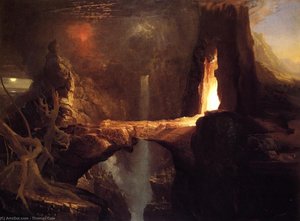 Úmlásolás. Holdfény és tűzfény1828
 Florencia kilátása San Miniatóból1837
Esszék a The Return körül
 Romantic Realism's Finest: 10 Masterpieces for Your Home | OriginalUniqueArtExplore 10 defining masterpieces of Romantic Realism! Discover Courbet, Millet & Daumier's powerful paintings—capturing emotion and social …
 Beyond the City: The Timeless Allure of Pastoral Landscape Art and the Arcadian IdealExplore the evolution of pastoral art from Arcadian myths to modern landscapes. Discover the timeless allure of nature through masterworks.
 Wilderness and Wonder: An Exploration of the Sublime in American Romantic Landscape PaintingExplore the power of the sublime through Thomas Cole and the Hudson River School. Discover the majesty of American Romantic landscapes now.