
 Előnézet
 Megosztás
 Megosztás
 Részletek

 Letöltés
 Hasonló alkotások
 X-ray felvétel
 Diavetítés
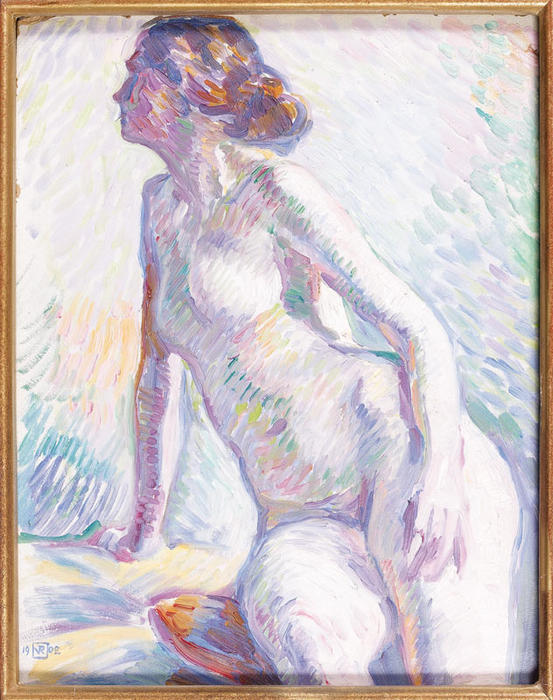
Nude


 Tovább olvasom
Vásároljon egy nagy felbontású, javított digitális képet, amely sokkal jobb minőségű, mint az online előnézet.
Minden fájlt szakembereink a legmodernebb eszközök és precíz, kézi retusálás segítségével készítenek el aprólékosan. Gondoskodunk arról, hogy minden kép kivételes tisztasággal, pontos színhelyességgel és részletgazdag finomsággal rendelkezzen.
A végleges fájl 72 órán belül e-mailben megérkezik, professzionális, szerkesztői és nyomtatási környezetbe optimalizálva az azonnali használathoz. Ez ugyanaz a minőség, amelyben a legmeghatározóbb tervezőstúdiók, kiadók és galériák is megbízhatnak.
Digitális alkotás
Töltsön le nagy felbontású fájlt személyes kiállításokhoz, nyomtatáshoz és kreatív projektekhez. ( Váltás nyomtatványra Áttérés a kézzel festett másolatra)
Minden digitális kép rendeléséhez tartozó extrák
Szakértői digitális kézbesítés, garantáltan
Amikor a OriginalUniqueArt.com weboldalt választja, nem csupán egy képet kap – professzionálisan felmagasított digitális műalkotást kap, amely precizitással készült, és amelyet megelégsedési gwarancia tesz biztoslássá. Az alábbiakban automatikusan minden benne 】

Gyors e-mail teslimítés
A nagy felbontású digitális képmásolatát a megrendelést követő 72 órán belül e-mailben elküldjük Önnek – azonnal használható formátumban.

MI-alapú digitális feldolgozású fájl
Műve professzionális módon kerül optimalizálásra fejlett mesterséges intelligencia eszközök és manuális szerkesztés segítségével, biztosítva a maximális részletességet, tisztaságot és színpontosságot.

Örök életű ingyenes újradelivery
Véletlenül törölted vagy elvesztetted a fájlodat? Ne aggódj – bármikor ingyenesen újra megküldjük neked.

Nincs importköltség – soha
Élvezze műalkotásait azonnal, vám, illeték vagy szállítási költség nélkül – a digitális letöltések mindig adamentesek.

Színpontosság Garancia
Professzionális eszközök és színkezelés segítségével garantáljuk, hogy digitális képe a lehető legpontosabban tükrözze az eredeti színeket.

60 napos elégedettségi garancia
Ha nemມີ elégedett a digitális képpel, 60 napon belül átmunkáljuk azt, vagy 100% visszatérítjük az amountot – kérdés nélkül.

100% Pénzvisszatérítési garancia
Nem érheted el a teljes elégedettséget? 60 napon belül teljes visszatérítést kapsz a digitális fájlod megérkezése után – kérdés बिना.

Tömegrendelési kedvezmények
Vásároljon 3 képet, spóroljon 10%-et - Vásároljon 5-öt, spóroljon 15%-et - Vásároljon 10+ képet, spóroljon 20%-at. Kiváló kreatív projektekhez, galériákhoz és ügynökségekhez.
Művész életrajza
A Pioneer of Light: The Life and Art of Théo van Rysselberghe
Théophile “Théo” van Rysselberghe, born in Ghent, Belgium, in 1862, stands as a pivotal figure bridging the gap between Impressionism and Neo-Impressionism. His artistic journey wasn’t one of immediate stylistic conformity but rather an evolving exploration fueled by travel, intellectual exchange, and a profound dedication to capturing the essence of light itself. Rooted in a comfortably bourgeois French-speaking family, van Rysselberghe's initial artistic training unfolded at the Ghent Academy under Theo Canneel, followed by rigorous studies at the prestigious Académie Royale des Beaux-Arts in Brussels – institutions that instilled within him a foundational understanding of traditional realism, vividly reflected in early works such as *Self-Portrait with Pipe* (1880). Even within these formative pieces, subtle hints of burgeoning sensitivity to light and color began to emerge, foreshadowing the vibrant, luminous style he would later cultivate. A particularly significant work from this period, *Child in an Open Spot of the Forest* (1880), marked a nascent departure, suggesting a shift towards brighter palettes and looser brushwork—a prelude to his future artistic trajectory.Moroccan Impressions: The Birth of a New Vision
A transformative chapter unfolded during van Rysselberghe’s extended sojourns in Morocco between 1882 and 1888. These prolonged immersions plunged him into a world saturated with intense sunlight, vibrant colors, and exotic landscapes—a stark contrast to the subdued tones of his earlier Belgian work. Paintings like *Arabian Street Cobbler* (1882), *Arabian Boy* (1882), and *Resting Guard* (1883) vividly demonstrate a burgeoning fascination with capturing the effects of light upon form, moving away from strict realism towards a more impressionistic sensibility. This wasn’t merely an act of visual observation; it was a profound cultural immersion that broadened his artistic horizons and instilled in him a lifelong appreciation for travel. The Moroccan experience fundamentally reshaped his perception of color and composition, laying the groundwork for his later innovations. These paintings, imbued with the warmth and intensity of the North African sun, became cornerstones of his evolving style.The Formation of Les XX: A Crucible of Innovation
Returning to Brussels in 1888, van Rysselberghe played a crucial role in establishing *Les XX* (Les Vingt), an influential group of artists and writers dedicated to challenging the conservative norms of the Belgian art establishment. Founded alongside Octave Maus and Émile Verhaeren, *Les XX* represented a radical departure from academic traditions, embracing avant-garde movements like Impressionism and Symbolism. The group’s exhibitions served as vital platforms for showcasing these new trends, introducing them to a Belgian audience largely unfamiliar with such innovations. Van Rysselberghe's involvement in *Les XX* was instrumental in shaping his artistic development, exposing him to the work of leading European artists—including Claude Monet, Pierre-Auguste Renoir, and James McNeill Whistler—and fostering a spirit of experimentation and intellectual exchange. The group’s emphasis on dialogue and collaboration created an environment where artistic boundaries were constantly being pushed and redefined.Embracing Neo-Impressionism: A Scientific Approach to Color
The true turning point in van Rysselberghe's artistic evolution arrived with his encounter with Georges Seurat's *A Sunday on La Grande Jatte* at the eighth Impressionist exhibition in Paris in 1886. Initially skeptical of Seurat’s meticulous “pointillist” technique—the systematic application of tiny dots of pure color—van Rysselberghe gradually came to appreciate its scientific basis and potential for achieving luminous effects. He began experimenting with divisionism, the Neo-Impressionist method of separating colors into their constituent parts and allowing the viewer’s eye to blend them optically. This wasn't simply a technical shift; it represented a fundamental change in his approach to painting—a move towards a more analytical and objective representation of light and color. He forged close friendships with other Neo-Impressionist painters like Paul Signac, traveling with him along the French Riviera and exchanging ideas about technique and theory. Van Rysselberghe distinguished himself within the movement by applying pointillism not only to landscapes but also to portraiture, creating strikingly vibrant and psychologically insightful likenesses of his family and friends—works such as *Madame Charles Maus* (1890) are prime examples.A Lasting Legacy: Beyond Pointillism
While deeply committed to Neo-Impressionism for a significant period, van Rysselberghe eventually moved beyond its strict tenets in the late 1890s. He sought greater freedom in his brushwork and compositions, exploring new ways to express emotion and atmosphere. He continued to be a prolific artist, working in various media including furniture design, book illustration, and decorative arts. His influence extended far beyond Belgium, impacting artists like Piet Mondrian and Jan Toorop who were inspired by his innovative use of color and light. Van Rysselberghe’s legacy lies not only in his beautiful paintings but also in his role as a catalyst for artistic change—a champion of modernism who helped introduce new ideas and techniques to the Belgian art world. His works are now held in prominent museum collections worldwide, including the Musée du Luxembourg in Paris and the Museum voor Schone Kunsten in Ghent, ensuring that his contribution to the history of art continues to be celebrated and appreciated by generations to come. His dedication to exploring the interplay of light, color, and form cemented his place as a true pioneer of modern painting.
Théo van Rysselberghe
1862 - 1926 , Belgium
Rövid tények
- Artistic Movement Or Style: Neo-Impressionista
- Artists Or Movements Influenced By This Artist:
- Mondrian
- Toorop
- Artists Who Influenced This Artist:
- Portaels
- Seurat
- Signac
- Date Of Birth: 1862. nov. 23.
- Date Of Death: 1926. dec. 14.
- Full Name: Théophile van Rysselberghe
- Nationality: Belgiumi
- Notable Artworks:
- Arabian Phantasia
- Sevillan Nő
- A szülőhazai gyermek
- Place Of Birth: Ghent, Belgium

