Olajfestmény vásárlása
 Minden, ami a Model kapcsán







































 A bármely oldalsó méretét túlszálaló 105 cm (kb. 41 hüvelyk) meghaladó műalkotások vagy reprodukciók esetében a keret összeszerelhető készletként, szétszerelve kerül szállításra. Ez a módszer biztosítja a biztonságos szállítást, és megakadályozza a szállítás során fellépő sérüléseket.


The Form and Composition of Model
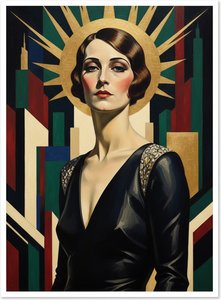
The painting presents a nude female figure positioned centrally, though her body is angled diagonally across the canvas. This orientation creates a sense of movement within the frame. A draped cloth covers the lower portion of her body, introducing a layer of white fabric that contrasts with the skin tones. The figure's anatomy is defined by sharp, clean lines and a focus on the curves of the torso and limbs. The background consists of geometric planes and muted tones, including earthy browns, beiges, and hints of green and red. Lighting is directional, casting shadows that define the volume of the body and create depth through overlapping planes rather than traditional atmospheric perspective.
Technical Execution and Style
The work is executed in a style characterized by the geometric precision of the Art Deco movement. The surface appears smooth and polished, suggesting the use of oil on canvas or panel. The artist employs a technique of precise brushwork to achieve tonal variations and a sculptural quality in the rendering of the human form. The interaction between organic shapes, such as the curves of the model, and the rigid geometric shapes of the background defines the visual structure. The following elements characterize the technical approach:
- Use of streamlined forms and polished textures.
- A palette dominated by muted, earthy tones with localized color accents.
- A flattened perspective typical of early 20th-century modernism.
- Strong, clean outlines that emphasize anatomical contours.
Historical Context and Artistic Intent
Created in 1925, this work emerged during a period of significant stylistic shifts in Paris. The piece reflects the aesthetic of the 1925 International Exhibition of Modern Decorative and Industrial Arts, a period that emphasized luxury and machine-age precision. The composition blends elements of neoclassical precision with the fragmented language of Cubism. This approach results in a depiction of the female form that is both stylized and architectural. The subject matter reflects a modern sensibility, moving away from traditional academic rendering toward a more controlled and polished representation of the human figure.
Kérdések és válaszok
Model képe kézzel festett vagy nyomtatott?
Kézzel festve: egy képzett festő az Model című műet alkotást olajfestékkel vászonra másolja.
Mekkora méretet válasszak a Model című műhöz?
A méretek 40.0 x 25.0 cm (Ft64564)-től 244.3 x 152.8 cm (Ft454854)-ig terjednek; az oldalon található táblázat tartalmazza a különböző átméretű lehetőségeket és azok árait.
Mennyi ideig tart a szállítás?
A szállítás 4-5 hetet vesz igénybe, ingyenes világszinten történő expressz szállítással; ezen az oldalon sürgősségi gyártási lehetőség is rendelkezésre áll. A termék 100 napon belül, bármely feltétel nélkül visszaküldhető a teljes összeg visszatérítéséért.
Milyen technikát/anyagot használt Tamara De Lempicka a(z) Model című műhöz?
Oil On Canvas
Több információ erről a festményről
 Megtekintés

 Küldés
 Megosztás
 Részletek
 Információs lap


 Letöltés
 Hasonló darabok
 X-ray felvétel
 Diavetítés
 Kérdések és válaszok

 Statisztika