
 Megtekintés
 Küldés
 Megosztás
 Részletek
 Útmutató

 Letöltés
 Hasonló darabok
 X-ray felvétel
 Diavetítés
 Kérdések és válaszok
 Statisztika
The North-West Passage

- 222.0 x 176.0 cm


 Összes részlet megjelenítése
Giclée / Műnyomat
Múzeumi minőségű giclée vagy vászonnyomat, gyors gyártással és rugalmas finomítási lehetőségekkel. ( Kézzel festett másolat rendelése Áttérés digitális képre)




P118B Ft10

P118H Ft10

P118W Ft10

P438Z Ft10

P508JH Ft12

P508YH Ft12

P805H Ft10

P805Z Ft10

P919BZ Ft10

P919G Ft10

P919XJ Ft10

P959ZH Ft10

P968JZ Ft12

W106C Ft8

W218G Ft10

W218JH Ft8

W218Y Ft10

W307PJ Ft10

W316G Ft10

W316PJ Ft8

W316Y Ft10

W398PJ Ft8

W4111J Ft10

W500HY Ft15

W500JH Ft15

W692G Ft12

W849H Ft8

W940BG Ft15

W953PJ Ft8




Válasszon előre meghatározott méreteink közül, amelyek megfelelnek a műalkotás eredeti arányainak.

Írja be a keretének vagy a falának megfelelő szélességet és magasságot. A nyomatot csak le lehet vágni, soha nem tehető nagyobbá, mint az eredeti kép, így egy eltérő alakú méretnél a kép egy része elveszik. Mielőtt bármit kinyatintanánk, küldünk egy digitális próbamodellt jóváhagyásra. Az oldalon látható kép nem tartalmazza a valós levágást — ezt csak a próbamodell mutatja meg.
Világszerte történő kiszállítás területére mindössze 2 hét alatt, a szokásos 4-5 hét helyett. (4 november)

Ingyenes globális expressz szállítás

Prémium minőségű len vászon

Teljes körű szállítási biztosítás

Vámvisszatérítési Garancia

Hiteles színarányosság garancia

100 napos visszaküldési lehetőség (csak hibás termékek esetén)

100% pénzvisszatérítési garancia

Több darab vásárlásakor kedvezmény
 Az üvegkeretes opció csak 110 cm alatti méretben érhető el

The North-West Passage
Giclée / Műnyomat
Reprodukció mérete
-


Összesített ár
Ft 26301
A Portrait of Loss and Remembrance: Sir John Everett Millais’s ‘The North-West Passage’
Sir John Everett Millais’s “The North-West Passage,” completed in 1874, stands as a cornerstone of the Pre-Raphaelite Brotherhood’s artistic vision—a movement that vehemently rejected academic conventions and championed meticulous observation alongside profound emotional resonance. More than just a depiction of a landscape, it's an exquisitely crafted tableau conveying grief, remembrance, and the enduring power of familial love against the backdrop of Victorian anxieties surrounding exploration and mortality.
- Subject Matter: The painting portrays a grieving mother holding her deceased infant son—a poignant meditation on bereavement rendered with unparalleled realism. Millais deliberately chose this subject matter to explore themes of maternal sorrow and the fragility of life, aligning powerfully with Victorian sensibilities regarding death and mourning rituals.
- Style & Technique: Characteristic of Pre-Raphaelite art, “The North-West Passage” employs a technique rooted in detailed botanical illustration—a hallmark of Millais’s scientific pursuits. He painstakingly recreated the interior of a cottage, capturing every nuance of texture and color with painstaking accuracy. The muted palette—dominated by earthy browns and greens—contributes to the painting's melancholic atmosphere.
- Historical Context: Created during an era obsessed with imperial expansion and scientific discovery, “The North-West Passage” reflects anxieties about venturing into uncharted territories. However, Millais subtly subverts this narrative of heroic ambition by portraying a scene of quiet domesticity—a deliberate rejection of the grandiose depictions favored by academic artists.
- Symbolism: The infant’s pallid skin symbolizes death and decay, while the mother's sorrowful gaze embodies universal grief. Millais utilizes symbolic imagery to elevate the painting beyond mere representation, inviting viewers to contemplate profound philosophical questions about life, loss, and the enduring bonds of family.
- Emotional Impact: “The North-West Passage” achieves its remarkable emotional impact through Millais’s masterful manipulation of light and shadow—creating a sense of intimacy and vulnerability. The painting compels contemplation on themes of mortality and remembrance, leaving an indelible impression on the viewer's psyche.
Displayed prominently at Tate Britain since its unveiling, “The North-West Passage” continues to captivate audiences with its breathtaking realism and evocative storytelling—a testament to Millais’s artistic genius and the enduring legacy of the Pre-Raphaelite Brotherhood. Its serene composition and subtle symbolism offer a poignant reflection on human experience, making it an invaluable addition to any discerning collection.
Kérdések és válaszok
Milyen hangulatot áraszt egy enteriőrben „The North-West Passage”, Millais, John Everett alkotása?
A „The North-West Passage”, Millais, John Everett alkotása Romantic hangulatot áraszt, és egy Living Room helyiségbe ajánlott. A hangulat az az érzés, amelyet a mű közvetít a környezetében lévő tér felé.
Melyik évben készült a „The North-West Passage”, Millais, John Everett alkotása?
A „The North-West Passage”, Millais, John Everett alkotása alkotásának éve 1874.
Van-e útmutató a(z) „The North-West Passage”, Millais, John Everett alkotása alkotáshoz?
A "The North-West Passage" útmutatója a mű Útmutató oldala – egy kinyomtatható adatlap, amely bemutatja a művet a leírással, a szerzői megjegyzéssel és az azonosító táblázattal (művész, dátumok, technika, eredeti méret, gyűjtemény) együtt.
A művész életrajza
A Prodigy of the Pre-Raphaelites: The Life and Art of Sir John Everett Millais
Born in Southampton in 1829, John Everett Millais entered the Royal Academy Schools at the astonishing age of eleven—the youngest student ever admitted. This early demonstration of prodigious talent foreshadowed a career that would not only define an artistic movement but also capture the Victorian imagination with its breathtaking realism and emotional depth. From his earliest days, Millais possessed a remarkable gift for observation, a quality that would become the cornerstone of his artistic style. He wasn’t merely painting what he saw; he was meticulously recreating it, imbuing each brushstroke with an almost photographic fidelity. This dedication to truth in representation set him apart and ultimately led him to challenge the established conventions of British art.The Birth of a Brotherhood and Artistic Rebellion
Millais’s artistic trajectory took a pivotal turn in 1848 when, alongside Dante Gabriel Rossetti and William Holman Hunt, he founded the Pre-Raphaelite Brotherhood. This wasn't simply an aesthetic choice; it was a deliberate rebellion against what they perceived as the artificiality of academic art—art that had strayed too far from the natural world and the sincerity of early Renaissance masters, those working *before* Raphael. The Pre-Raphaelites sought to revive the clarity, detail, and vibrant color palettes of artists like Jan van Eyck and Fra Angelico. Their manifesto was one of truth to nature, a rejection of idealized forms, and an embrace of subjects drawn from literature, mythology, and everyday life. Millais’s early works, such as *Isabella*, immediately showcased this new approach—a meticulous attention to detail combined with a narrative intensity that captivated and often provoked audiences. His most controversial work during this period, Christ in the House of His Parents (1849-50), depicted the Holy Family not as ethereal beings but as ordinary working-class people, sparking outrage among critics who found its realism unsettling and even blasphemous. The painting’s depiction of a young boy bathing in a stream, with his mother unaware, was considered shockingly unidealized for religious art at the time.Evolving Styles and Victorian Sensibilities
The mid-1850s marked a period of significant change for Millais, both personally and artistically. His marriage to Effie Gray, following the annulment of her marriage to John Ruskin, profoundly influenced his work. He moved away from the intensely detailed, symbolic style of his early Pre-Raphaelite paintings towards a broader, more atmospheric realism. This shift wasn’t simply a matter of stylistic preference; it reflected a growing engagement with contemporary life and a desire to capture the fleeting beauty of the natural world. Paintings like *Autumn Leaves* exemplify this new direction—a serene depiction of a group of young women drifting leaves on a river, imbued with a sense of melancholy and nostalgia. He also found considerable success as a portraitist, capturing the likenesses of prominent Victorian figures, including John Gladstone and Benjamin Disraeli. This period saw Millais achieve widespread popularity and financial security, but it also drew criticism from some who felt he had compromised his artistic principles.Major Works & Collections
- Christ in the House of His Parents (1849-1850): Tate Britain, London – A controversial masterpiece that exemplifies early Pre-Raphaelite realism.
- Ophelia (1851-1852): Tate Britain, London – Perhaps his most famous work, renowned for its haunting beauty and symbolic depth.
- A Huguenot (1851-1852): Private Collection – A dramatic depiction of religious conflict and forbidden love.
- Mariana (1850-1851): Manchester Art Gallery – Inspired by Shakespeare and Tennyson, showcasing Millais’s skill in capturing mood and atmosphere.
- Autumn Leaves (1855-1856): City of Manchester Art Galleries – A serene and evocative painting that reflects his evolving style.
Legacy and Lasting Influence
Despite these criticisms, Sir John Everett Millais remains one of the most important figures in 19th-century British art. His influence extends far beyond the Pre-Raphaelite Brotherhood; he helped to redefine the standards of realism and narrative painting, inspiring generations of artists. His iconic images—*Ophelia*, with its haunting beauty and symbolic richness, A Huguenot, depicting a moment of poignant drama, and countless others—continue to resonate with audiences today. Millais’s ability to blend meticulous observation with emotional depth, his mastery of color and composition, and his willingness to challenge artistic conventions cemented his place as a true innovator. In 1896, he was elected President of the Royal Academy, a testament to his enduring legacy—though sadly, he passed away only months later. His work continues to be celebrated in museums and collections worldwide, ensuring that the beauty and power of his art will endure for generations to come.
Millais, John Everett
1829 - 1896 , Egyesült Királyföld
Rövid információk
- Artistic Movement Or Style: Pre-Raffaello
- Artists Or Movements Influenced By This Artist: ['Pre-Raffaello']
- Artists Who Influenced This Artist: ['Raffaello']
- Date Of Birth: 8 czerwca 1829
- Date Of Death: 13 augusztus 1896
- Full Name: Sir John Everett Millais
- Nationality: Angol
- Notable Artworks:
- Ophelia
- Christ...
- A Huguenot
- Place Of Birth: Southampton, Anglia
Kapcsolódó cikkek

Oil on Canvas: A Historical & Technical Exploration of a Timeless Artistic Medium
Explore the rich history & enduring techniques of oil painting on canvas. Discover the science behind its longevity, conservation practices, and contemporary relevance. Expert insights for art enthusiasts.

Romantic Realism's Finest: 10 Masterpieces for Your Home | OriginalUniqueArt
Explore 10 defining masterpieces of Romantic Realism! Discover Courbet, Millet & Daumier's powerful paintings—capturing emotion and social realities. Find museum-quality reproductions for your home at OriginalUniqueArt.com.
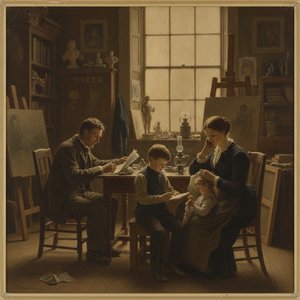
Victorian Realism: Capturing the Soul and Intricate Detail of a Golden Era
Explore the exquisite world of Victorian Realism. Discover how 19th-century masters captured unparalleled detail and emotion through oil painting, and learn to curate these timeless masterpieces for your luxury interior collection.

Sir John Everett Millais: Pre-Raphaelite Rebellion & Victorian Narrative Detail
Explore the revolutionary art of Sir John Everett Millais & the Pre-Raphaelite Brotherhood. Discover their radical realism, symbolic narratives, and lasting impact on Victorian aesthetics. A deep dive into 19th-century masterpieces.
Marianne North legszebb festményei: 25 műalkotás a természet szépségéről | OriginalUniqueArt
Fedezze fel Marianne North 25 legszebb festményét! Ismerje meg a viktoriánus kor virágfestőjének lenyűgöző tájképeit és botanikai illusztrációit. Műalkotások vásárlása, faliképek otthonába – OriginalUniqueArt.com.


