

 Megtekintés
 Küldés
 Megosztás
 Részletek
 Útmutató

 Letöltés
 Hasonló darabok
 X-ray felvétel
 Diavetítés
 Statisztika
War
 Oil On Canvas
- WallArt
- Romanticism
 1845
1845- 19th Century
 31.0 x 41.0 cm
 Walker Art Gallery
 Összes részlet megjelenítése
Kézzel készített olajfestmény reprodukció
Kézzel festett olajvastú vászon, az Ön által választott méretben és keretben, művészeink készítik meglévőre. ( Váltás nyomtatványra Áttérés digitális képre)




P118B Ft10

P118H Ft10

P118W Ft10

P438Z Ft10

P508JH Ft12

P508YH Ft12

P805H Ft10

P805Z Ft10

P919BZ Ft10

P919G Ft10

P919XJ Ft10

P959ZH Ft10

P968JZ Ft12

W106C Ft8

W218G Ft10

W218JH Ft8

W218Y Ft10

W307PJ Ft10

W316G Ft10

W316PJ Ft8

W316Y Ft10

W398PJ Ft8

W4111J Ft10

W500HY Ft15

W500JH Ft15

W692G Ft12

W849H Ft8

W940BG Ft15

W953PJ Ft8




Válasszon előre meghatározott méreteink közül, amelyek megfelelnek a műalkotás eredeti arányainak.

Írja be a kívánt szélességet és magasságot, hogy illeszkedjen a keretéhez vagy a falához. Mivel ez kézzel festett alkotás, egy eltérő formájú méret esetén a művész akár festhet is valamivel többet a kép körül, vagy korolathat is belőle — az Ön döntésének megfelelően. A festés megkezdése előtt küldünk egy digitális tervezetet jóváhagyásra. Az oldalon látható kép nem tartalmazza a végeredményt — csak a tervezet mutatja meg a valódi eredményt.
A rendelést követően a OriginalUniqueArt.com csapata e-mailt küld az ügyfélnek az instrukciókért, és biztosít egy előnézeti képet (mockup).
Világszerte elérhető szállítás () 3-4 hét alatt a szokásos 5 hét helyett. (28 október). A minőség nem kérdőjelezhető.

Ingyenes globális expressz szállítás

Prémium minőségű len vászon

Teljes körű szállítási biztosítás

Vámvisszatérítési Garancia

Hiteles színarányosság garancia

100 napos visszaküldési lehetőség (csak hibás termékek esetén)

100% pénzvisszatérítési garancia

Több darab vásárlásakor kedvezmény
 Az üvegkeretes opció csak 110 cm alatti méretben érhető el

War
Reprodukciós technika
Reprodukció mérete
-


Összesített ár
Ft 97055
Artistic Style and Technique
Sir Edwin Henry Landseer was a renowned British artist known for his exceptional skill in painting animals and capturing their emotions. In War, he uses a range of techniques to convey the distress and concern for the horse's well-being amidst the chaos. The use of warm colors and bold brushstrokes adds to the overall sense of tension and urgency in the scene. Key Features of the Painting:- The horse is depicted lying on the ground, surrounded by rubble and debris
- Several people are scattered throughout the scene, observing or trying to help the horse
- The painting captures a moment of distress and concern for the horse's well-being
Artist and Museum Information
Sir Edwin Henry Landseer was a prominent figure in British art, and his works can be found in various museums and galleries. The Walker Art Gallery is one such institution that houses an impressive collection of fine and decorative arts, including works by Frederick Samuel Beaumont and Charles Landseer. For more information on the gallery and its collections, visit /art/list/?Filter=A@D3C883-The-Walker-Art-Gallery:-A-Premier-Destination-for-Art-Enthusiasts-in-Liverp..To view more paintings by Sir Edwin Henry Landseer and other artists, visit /art/list/?Filter=AQRJA2-Sir-Edwin-Henry-Landseer-War.
Conclusion
The painting War by Sir Edwin Henry Landseer is a captivating artwork that showcases the artist's skill in capturing emotions and intensity. With its thought-provoking scene and exceptional technique, this piece is a must-see for art enthusiasts. For handmade oil painting reproductions of War and other artworks, visit https://OriginalUniqueArt.com.Kérdések és válaszok
A „War” 1845-es dátuma Landseer pályájának mely szakaszára tekintthető?
A 1845 évszám a "War" alkotást Landseer fejlődésének Mature Period szakaszába helyezi.
A „War”, Landseer alkotása jogtalanul védett (public domain)?
A szerzői jogokkal kapcsolatban a "War" mű közösségi tulajdon – a szerzői jog lejártt.
Milyen érzést kelt „War”, Landseer alkotása színe?
A "War" alkotásban a Earthy színek Dramatic érzetet kölcsönöznek.
A művész életrajza
A Life Etched in Animal Form: The World of Sir Edwin Landseer
Sir Edwin Henry Landseer, born in London on March 7, 1802, was more than merely a painter of animals; he became a visual chronicler of the Victorian soul as reflected through them. His father, John Landseer, an accomplished engraver, instilled in young Edwin an early appreciation for art and technique, but it was the boy’s innate talent – a prodigious gift for capturing the essence of living creatures – that truly set him on his path. From a tender age, he demonstrated remarkable skill, exhibiting at the Royal Academy at just thirteen, a feat unheard of for most aspiring artists. This early success wasn't simply luck; it was the culmination of dedicated study, initially under his father and later with history painter Benjamin Robert Haydon, who uniquely encouraged anatomical dissection to fully understand animal musculature – a practice that would profoundly influence Landseer’s realism. He absorbed knowledge like a sponge, mastering not only form but also the subtle nuances of expression that breathed life into his canvases. This dedication to understanding the very structure of his subjects set him apart, allowing for an unparalleled level of authenticity in his depictions.From Highland Stags to Royal Commissions: A Flourishing Career
Landseer’s artistic career blossomed with an exceptional focus on animals – horses, dogs, and stags becoming his signature subjects. However, to categorize him solely as an “animal painter” would be a disservice. His work transcended mere representation; it imbued these creatures with human-like qualities, often laden with symbolic meaning that resonated deeply with Victorian sensibilities. A pivotal moment came with his travels to Scotland in 1824, where he encountered the majestic landscapes and wildlife that would forever shape his artistic vision. This experience birthed iconic works like *Monarch of the Glen*, completed in 1851, a breathtaking depiction of a stag embodying nobility, power, and the untamed beauty of the Highlands. The sheer scale and dramatic lighting of this painting, combined with the stag’s proud posture and intense gaze, captured the spirit of the Scottish wilderness and cemented Landseer's reputation as a master landscape painter. He wasn’t simply rendering an animal; he was conveying a sense of wildness, strength, and connection to nature – values highly prized during the Victorian era. His ability to capture not just physical likeness but also character and emotion quickly garnered him widespread acclaim. This talent led to commissions from Queen Victoria herself, solidifying his position as a leading artist of the era. He painted portraits of the royal family alongside their beloved pets, further cementing his status within aristocratic circles. Perhaps his most enduring legacy are the lions that guard Nelson’s Column in Trafalgar Square – powerful testaments to his sculptural skill and national recognition; they were unveiled in 1867 after years of dedicated work. These monumental sculptures weren't simply decorative; they represented British strength and imperial power, further elevating Landseer to a position of national importance.A Master of Technique and Emotional Resonance
Landseer’s technical mastery was undeniable. He wasn’t simply replicating what he saw, but interpreting it through a lens of profound understanding. His paintings are characterized by meticulous detail, dramatic lighting, and a masterful use of color to evoke mood and atmosphere. He skillfully blended realism with romanticism, creating scenes that were both visually stunning and emotionally engaging. *Off to the Rescue*, painted in 1827, exemplifies this skill; the Newfoundland dog depicted isn’t just a canine rescuer but a symbol of loyalty, courage, and selfless devotion – qualities highly valued by Victorian society. The careful rendering of the dog's fur, its determined expression, and the turbulent waters surrounding it all contribute to a powerful narrative of heroism and compassion. Even his more satirical works, such as *Laying Down the Law* (1840), featuring a group of dogs engaged in human-like legal proceedings, reveal a keen observational wit and a subtle commentary on societal norms. He wasn’t afraid to inject humor into his art, demonstrating a versatility that extended beyond grand landscapes and noble animal portraits. His use of light and shadow was particularly noteworthy; he expertly manipulated these elements to create depth, drama, and a sense of realism that captivated viewers. This ability to convey complex narratives through animal subjects was a hallmark of his style, appealing to a broad audience while simultaneously offering layers of intellectual engagement.Shadows and Legacy: A Complex Artistic Journey
Despite his immense success, Landseer’s life was not without its struggles. In his later years, he battled recurring bouts of depression and ill health, exacerbated by alcohol and drug use. A nervous breakdown in 1840 marked a turning point, casting a shadow over his final decades. Despite these personal demons, he continued to produce remarkable work, but a sense of melancholy often permeated his paintings. His declining mental state eventually led to him being declared insane in 1872, a tragic end for such a brilliant mind. Yet, his legacy remains firmly etched in the annals of British art history. The “Landseer” variety of Newfoundland dog – characterized by its distinctive black and white markings – stands as a living tribute to his influence. His paintings continue to captivate audiences with their beauty, emotional depth, and masterful technique. He wasn’t just an artist who painted animals; he was an interpreter of the natural world, a storyteller who used brushstrokes to reveal the hidden emotions and symbolic meanings within it, leaving behind a body of work that continues to inspire and resonate today.Further Exploration
- Museums: Tate Britain, London; Victoria and Albert Museum, London; Kenwood House, London; The Wallace Collection, London.
- Online Resources: OriginalUniqueArt.com; Wikipedia (Sir Edwin Landseer).

Landseer
1802 - 1873 , Egyesült Királyföld
Rövid információk
- Artistic Movement Or Style: Angol realizmus
- Artists Or Movements Influenced By This Artist:
- Newfoundland tõjék
- Angol művészet
- Artists Who Influenced This Artist:
- John Landseer
- B.R. Haydon
- Date Of Birth: March 7, 1802
- Date Of Death: October 1, 1873
- Full Name: Sir Edwin Henry Landseer
- Nationality: Angol
- Notable Artworks:
- A régi pásztor főbűvölő
- Megmentés
- Alulról
- Place Of Birth: London, Anglia
Kapcsolódó cikkek
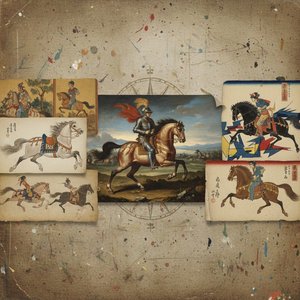
The Noble Steed on Canvas: A Historical & Artistic Exploration of Horse Painting Across Cultures
Explore the rich history of horse painting! Discover masterpieces from Stubbs to Munnings & learn about symbolism, techniques & artists. Find museum-quality reproductions at OriginalUniqueArt.
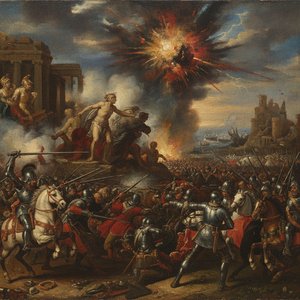
Epic Battles on Canvas: A Visual Journey Through Art History's Most Powerful War Paintings
Embark on a visual journey through history's most powerful war paintings. Explore the dramatic mastery of Romanticism and Realism through expert analysis of epic battle scenes on canvas, celebrating the profound emotion and artistry behind art history's greatest military masterpieces.

The Enduring Legacy of Oil on Canvas: Technique, History & Aesthetic Impact
Explore the rich history & techniques of oil painting – from Renaissance masters to Impressionism. Discover pigments, layering methods, and why this timeless medium endures. Expert insights for artists & art enthusiasts.

Oil on Canvas: A Historical & Technical Exploration of a Timeless Artistic Medium
Explore the rich history & enduring techniques of oil painting on canvas. Discover the science behind its longevity, conservation practices, and contemporary relevance. Expert insights for art enthusiasts.

Sir Edwin Landseer: Sentiment, Society & the Victorian Animalier Tradition
Explore the life & art of Sir Edwin Landseer, Victorian Britain's foremost animal painter. Discover his iconic works, societal impact, and collecting guide at OriginalUniqueArt.

