Text size

() ·

A painting made for you, by hand

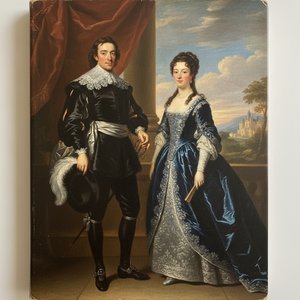
A married couple

Kézzel készített olajfestmény reprodukció

Kézzel festett olajvastú vászon, az Ön által választott méretben és keretben, művészeink készítik meglévőre. ( Váltás nyomtatványra Áttérés digitális képre)

A gyűjtemény leírása

Sir Anthony van Dyck's 'A Married Couple' captures an elegant 17th-century portrait of a man and woman, showcasing refined attire & intimacy. Explore this masterpiece’s rich details & historical context.

A művész életrajza

Van Dyck (1599-1641): Flamand festő, a barokk korszak egyik legkiemelkedőbb portréfestője. I. Károly angol király udvarában alkotott, elegáns és gazdag stílusával meghatározta az angol művészetet.

from ·

Chapter 1

How large should it be?

Slide to change the size; the picture on the left shows the frame at its real width. The proportions of the original are kept.

Standard méret
egyedi méretű
CM
INCH

Válasszon előre meghatározott méreteink közül, amelyek megfelelnek a műalkotás eredeti arányainak.

szélesség
magasság

Írja be a kívánt szélességet és magasságot, hogy illeszkedjen a keretéhez vagy a falához. Mivel ez kézzel festett alkotás, egy eltérő formájú méret esetén a művész akár festhet is valamivel többet a kép körül, vagy korolathat is belőle — az Ön döntésének megfelelően. A festés megkezdése előtt küldünk egy digitális tervezetet jóváhagyásra. Az oldalon látható kép nem tartalmazza a végeredményt — csak a tervezet mutatja meg a valódi eredményt.

Chapter 2

How should it arrive?

Choose the edges of the stretched canvas

Choose your frame

Corner sample of the WhiteWrap canvas edge finish, stretched on tömörfa bars
White Ft1
Corner sample of the BlurSideWrap canvas edge finish, stretched on tömörfa bars
Blurside Ft1
Corner sample of the ExtendedWrap canvas edge finish, stretched on tömörfa bars
Extended Ft1
Corner sample of the P118B picture frame: formázott polisztirol, 5 cm wide and 3 cm thick
P118B Ft10
Corner sample of the P118H picture frame: formázott polisztirol, 5 cm wide and 3 cm thick
P118H Ft10
Corner sample of the P118W picture frame: formázott polisztirol, 5 cm wide and 3 cm thick
P118W Ft10
Corner sample of the P438Z picture frame: formázott polisztirol, 5.5 cm wide and 3.5 cm thick
P438Z Ft10
Corner sample of the P508JH picture frame: formázott polisztirol, 7 cm wide and 3.5 cm thick
P508JH Ft12
Corner sample of the P508YH picture frame: formázott polisztirol, 7 cm wide and 3.5 cm thick
P508YH Ft12
Corner sample of the P805H picture frame: formázott polisztirol, 5 cm wide and 3.5 cm thick
P805H Ft10
Corner sample of the P805Z picture frame: formázott polisztirol, 5 cm wide and 3.5 cm thick
P805Z Ft10
Corner sample of the P919BZ picture frame: formázott polisztirol, 7 cm wide and 3.5 cm thick
P919BZ Ft10
Corner sample of the P919G picture frame: formázott polisztirol, 7 cm wide and 3.5 cm thick
P919G Ft10
Corner sample of the P919XJ picture frame: formázott polisztirol, 7 cm wide and 3.5 cm thick
P919XJ Ft10
Corner sample of the P959ZH picture frame: formázott polisztirol, 5 cm wide and 3 cm thick
P959ZH Ft10
Corner sample of the P968JZ picture frame: formázott polisztirol, 6 cm wide and 4 cm thick
P968JZ Ft12
Corner sample of the W106C picture frame: tömörfa, 5 cm wide and 3 cm thick
W106C Ft8
Corner sample of the W218G picture frame: tömörfa, 5 cm wide and 3 cm thick
W218G Ft10
Corner sample of the W218JH picture frame: tömörfa, 5 cm wide and 3 cm thick
W218JH Ft8
Corner sample of the W218Y picture frame: tömörfa, 5 cm wide and 3 cm thick
W218Y Ft10
Corner sample of the W307PJ picture frame: tömörfa, 6 cm wide and 3 cm thick
W307PJ Ft10
Corner sample of the W316G picture frame: tömörfa, 6 cm wide and 3 cm thick
W316G Ft10
Corner sample of the W316PJ picture frame: tömörfa, 6 cm wide and 3 cm thick
W316PJ Ft8
Corner sample of the W316Y picture frame: tömörfa, 6 cm wide and 3 cm thick
W316Y Ft10
Corner sample of the W398PJ picture frame: tömörfa, 5 cm wide and 3 cm thick
W398PJ Ft8
Corner sample of the W4111J picture frame: tömörfa, 6.5 cm wide and 3.5 cm thick
W4111J Ft10
Corner sample of the W500HY picture frame: tömörfa, 7 cm wide and 5 cm thick
W500HY Ft15
Corner sample of the W500JH picture frame: tömörfa, 7 cm wide and 5 cm thick
W500JH Ft15
Corner sample of the W692G picture frame: tömörfa, 8 cm wide and 4 cm thick
W692G Ft12
Corner sample of the W849H picture frame: tömörfa, 5 cm wide and 3 cm thick
W849H Ft8
Corner sample of the W940BG picture frame: tömörfa, 7.5 cm wide and 4.5 cm thick
W940BG Ft15
Corner sample of the W953PJ picture frame: tömörfa, 6 cm wide and 3.5 cm thick
W953PJ Ft8
Corner sample of the H24-GOLD picture frame: faragott fa gesszóval, 10 cm wide and 6 cm thick
H24-GOLD Ft30
Corner sample of the H24-SILVER picture frame: faragott fa gesszóval, 10 cm wide and 6 cm thick
H24-SILVER Ft30
Corner sample of the H36-GOLD picture frame: faragott fa gesszóval, 15 cm wide and 6.5 cm thick
H36-GOLD Ft45
Corner sample of the H36-SILVER picture frame: faragott fa gesszóval, 15 cm wide and 6.5 cm thick
H36-SILVER Ft45

Moulding: . Overall size with the frame: .

Chapter 3

Who paints it, and should anything change?

Examples of what can be changed: Replace face with customer photo; Add pet (e.g., replace cat with dog); Include hidden message in background; Change background landscape or elements.
After order, OriginalUniqueArt.com team will email client for instructions and provide a mockup preview

Világszerte elérhető szállítás () 3-4 hét alatt a szokásos 5 hét helyett. (2 november). A minőség nem kérdőjelezhető.

Chapter 4

The finishing touches

A nameplate, as in a museum?

A gravírozott bronztábla részletei

This elegant plaque features the artist's name and the title of the artwork, finely engraved for a timeless presentation.

It is made from bronze with a refined, elegant finish. The text is precisely laser-engraved for a sharp and permanent result. Measuring 9x2 cm, the plaque is compact yet easy to read. It's built to be durable and scratch-resistant, offering a professional, museum-quality look. Mounting is simple thanks to the included adhesive backing.

Átlátszó akril tábla részletei

The plaque includes essential engraved details such as the artist's name, the title of the artwork, the date it was created, the type of media used-like oil on canvas or watercolor-a brief description of the piece, and a QR code that links to the complete artwork information.

It is crafted from clear acrylic, offering a sleek, modern appearance. The text is UV-engraved in black to ensure strong visual contrast. With a size of 10x15 cm, it ensures optimal readability. It comes equipped with two metal hooks for secure wall mounting. The plaque is designed to be weather-resistant, making it suitable for various environments, and it includes interactive features that work seamlessly with smartphone scanning.

Fekete akril tábla részletei

This elegant plaque includes engraved information such as the artist's name, the title of the artwork, the date it was created, the type of media used (like oil on canvas or watercolor), a short description of the artwork, and a QR code for quick access to more information.

The plaque itself is made from refined black acrylic with a premium finish. The text is laser-engraved in white for high contrast and readability. Its size is 10x15 cm, designed to be easy to read. It comes with two metal hooks for professional mounting. The design is sleek and fits any interior style. It is also weather-resistant and durable, with built-in digital integration for mobile compatibility.

A protective varnish?

When do you need it?

Chapter 5

Your painting, as you ordered it

A married couple

Reprodukciós technika

Reprodukció mérete

-

Kiváló mesterművész

Nagyobb részletesség, finomság és bővített gyártási idő

-

Reprodukció keretezése

-

-

A bármely oldalsó méretét túlszálaló 105 cm (kb. 41 hüvelyk) meghaladó műalkotások vagy reprodukciók esetében a keret összeszerelhető készletként, szétszerelve kerül szállításra. Ez a módszer biztosítja a biztonságos szállítást, és megakadályozza a szállítás során fellépő sérüléseket.

Szakmész összeszerelést igényel – ez nem DIY (önösszeszerelhető) termék.
A készletet egy tapasztalt keretező szakembernek kell összeszerelnie és a vásznat feszítenie kell, fa ragasztó (nem tartalmazza a csomag), vásznfeszítő fogó és szorítók használatával, amelyek a ragasztó száradásáig a keretrészeket egymáshoz vuôngjba tartják. A helytelen összeszerelés vagy a nem egyenletes vásznfeszítés maradandó károsíthatja a műalkotást, és ez nem része a garanciánknak.

  • A készlet tartalmazza az összes tömörfa rudat, pontosan méretre vágva.

  • A mellékelt csavarokkal, valamint a sarokszerekhez szükséges faütő ragasztóval kell összeszerelnie (ez nem tartalmazható a csomagban), így a keretrendezőnek külön kell beszereznie.

  • A csomag nem tartalmazza a szükséges professzionális eszközöket: egy vászonfeszítőt és klipseket a rácsok vízszintes tartásához a ragasztó megszáradásáig.

Fontos:
A sarokcsatlakozásokhoz fánylagra van szükség, a keretrudakat szorítókapcsokkal kell rögzíteni, amíg a rag teljesen meg nem szárad, a kész keretre feszített vászonhoz pedig vászonfeszítő fogat szükséges. Ezek egyike sem található meg a készletben. Kérjük, rendelés előtt győződjön meg róla, hogy rendelkezik tapasztalt keretező szakemberrel.

Névtábla

-

-

Védőréteg (Lakk)

Fényes lakk (intenzívabb színek, védelem a fény és a nedvesség hatása ellen)

-

Műalkotásom egyedi igényre szabása

Példák a módosíthatóságra: az arc kicserélése az ügyfél fotójára; háziállat hozzáadása (pl. macska helyett kutya); rejtett üzenet elhelyezése a háttérben; a háttér tájainak vagy elemeinek megváltoztatása.

-

Sürgős

Világszerte szóló szállítás () mindössze 3-4 hét alatt, a szokásos 5 hét helyett. (2 november). A minőség nem kérdőjelezhető.

-

Express szállítás

Világszerte elérhető szállítás területre 5 héten belül. (9 november).

A szállítás díja tartalmazza

Összesített ár

Ft 98255

Összesített ár Ft 98255

Az üvegkeretes opció csak 110 cm alatti méretben érhető el

Included with every order

  • Ingyenes globális expressz szállítás
  • Prémium minőségű len vászon
  • Teljes körű szállítási biztosítás
  • Vámvisszatérítési Garancia
  • Hiteles színarányosság garancia
  • 100 napos visszaküldési lehetőség (csak hibás termékek esetén)
  • 100% pénzvisszatérítési garancia
  • Több darab vásárlásakor kedvezmény

The Intimate Portrait: A Study in Baroque Grace

Sir Anthony van Dyck’s “A Married Couple,” painted circa 1620, is more than a simple portrait; it's a carefully constructed tableau of domestic harmony and subtle emotional resonance. Executed during the artist’s formative years in Antwerp and later refined during his influential period at the English court, this work exemplifies the burgeoning Baroque style’s emphasis on naturalism, dramatic lighting, and an exploration of human psychology. The painting captures a moment of quiet intimacy – a man and woman seated together on a bench beneath a crimson curtain, their gazes meeting with a shared sense of contentment. It's a scene that feels both familiar and profoundly moving, inviting the viewer to step into this private world.

Van Dyck’s masterful technique is immediately apparent. He employs a loose, almost impasto brushstroke, particularly noticeable in the rendering of fabrics – the man’s ruffled collar, the woman's voluminous sleeves, and the rich velvet drapes behind them. This textural approach adds depth and vibrancy to the composition, while his use of chiaroscuro—the dramatic contrast between light and shadow—creates a sense of theatricality and draws attention to key elements within the scene. The subtle gradations of color, achieved through meticulous layering of glazes, contribute to an overall luminosity that is characteristic of the artist’s style.

Courtly Dignity and Royal Influence

The painting's creation coincided with a pivotal moment in Van Dyck’s career. Following his apprenticeship under Peter Paul Rubens in Antwerp, he quickly established himself as a leading portraitist, securing commissions from prominent figures across Europe. His work for Charles I of England, beginning in 1632, cemented his reputation and profoundly influenced the development of English portraiture. “A Married Couple” reflects this shift towards courtly formality, showcasing the refined elegance favored by the aristocracy. The couple’s attire—the man's elaborate doublet and hose, the woman’s richly embroidered gown—underscores their status and wealth, while their composed demeanor suggests a shared understanding and mutual respect.

Interestingly, the painting has been linked to Charles I and Henrietta Maria of France. While not definitively proven, many art historians believe this portrait served as a preparatory sketch for a larger, more elaborate depiction of the royal couple intended for Charles’s private collection. The composition—the seated figures, the curtain backdrop—mirrors elements found in later portraits commissioned by the King, suggesting Van Dyck meticulously planned his approach to capturing the essence of the royal family.

Symbolism and Emotional Resonance

Beyond its formal qualities, “A Married Couple” is rich in symbolic meaning. The crimson curtain, a recurring motif in Van Dyck’s work, represents passion, love, and domesticity—a safe haven from the outside world. The couple's direct gaze suggests intimacy and connection, while their relaxed posture conveys a sense of comfort and security. The subtle smile on the woman’s face hints at contentment and happiness, creating an emotional core that resonates with viewers even centuries later. It is not merely a depiction of two individuals; it’s a meditation on love, companionship, and the quiet beauty of everyday life.

Van Dyck's ability to capture such nuanced emotion within a formal portrait is a testament to his artistic skill and psychological insight. “A Married Couple” remains a powerful example of Baroque artistry—a timeless depiction of human connection that continues to captivate audiences today.

Kérdések és válaszok

Milyen más neveken ismert Van Dyck?

Van Dyck a következő más néven is ismert: Antony van Dyck, Antoon van Dyck.

Miért ajánlott ajándékként a „A married couple”, Van Dyck alkotása?

A "A married couple" Romantic érzetet áraszt, ajándékként pedig Wedding ajánljuk.

Mit ábrázol a "A married couple"?

A „A married couple”, Van Dyck alkotása alkotás témái közé tartozik a portrait, couple, elegance, fashion, red curtain, 17th century, royalty. Ezek együtt foglalják össze a mű tárgyát.

More about this painting

Megtekintés AR előnézet Váltás nyomtatványra Áttérés digitális képre Küldés
Részletek Útmutató Kedvencekhez ad Letöltés Hasonló darabok X-ray felvétel Diavetítés Q&A Statisztika

In numbers

  • 1620the year it was painted
  • 29frames to choose from
  • standard sizes, in its own proportions
  • 5weeks to paint and deliver it
Van Dyck

Van Dyck

1599 - 1641, Belgium

Quick facts about Van Dyck

  • Artistic Movement Or Style: Barokk
  • Artists Or Movements Influenced By This Artist: ['Angol portréfestészet']
  • Artists Who Influenced This Artist: ['Peter Paul Rubens']
  • Date Of Birth: 1599. március 22.
  • Date Of Death: 1641. december 9.
  • Full Name: Sir Anthony van Dyck
  • Nationality: Flamand
  • Notable Artworks:
    • Portrék
    • Királyi portrék
  • Place Of Birth: Antwerpen, Belgium

A művész életrajza

A Flemish Master at the Courts of Europe

Sir Anthony van Dyck, született Antwerpenben 1599-ben, a barokk kor egyik legkiemelkedőbb és legsokfélebb portréfestőjévé emelkedett. Élete, bár tragikus módon csak negyvenkét évesen ért véget, egy izgalmas művészi felfedezés és fényűző megbízások sorát jelentett, melyek Ausztriától kezdve Itáliaon keresztül a brit királyi udvarba vezették. Már fiatal korában mutatott kiváló tehetséget, és 1609-re bekapcsolódott Hendrick van Balen műhelyébe, gyorsan elsajátítva az idő folyamán kialakult stílusokat. Azonban a Peter Paul Rubensszal való kapcsolata – nem csupán mint tanuló, hanem mint kollégák is – igazán formálta a művész alapját, hiszen Rubens dinamikus kompozíciói, gazdag színpalettái és mestersége a fény és árnyék kezelésében nagy hatást gyakoroltak rá. Van Dyck hamarosan saját egyedi utat vett ki, melyet eleganciával és kifinomultsággal jellemeztek, melyek végül meghatározták a stílusát.

Olasz Szökőhelyek és Stílus születése

Van Dyck olaszországi évei, amelyek 1621-ben kezdődtek, kulcsfontosságúak voltak művészi fejlődésében. Elsősorban Génoában telekedett meg, ahol kedvvel volt fogadva a város nemesi családja által. Itt alakította ki a hírneve melletti kifinomult stílusát – egy olyan stílust, melyet elegáns pózok, luxus szövetek és szinte érezhető a hatalom ára jellemeztek. A Rubens energiájától eltérően Van Dyck olasz portréi nem a dinamikus energiával, hanem kifinomult kompozícióikkal és a személyiség mélyebb megértésével próbálják bemutatni a szülőket. Ezenkívül ikonográfiai sorozatot is készített, melyben részletesen ábrázolt portré-gravúrákat alkotott ki jelentős alakokról – művészekről, tudósokról és uralkodókról egyaránt. Ez a projekt mutatotta meg kiváló művészi képességeit és elismertette őt mint vezető nyomtatásművészt. Ezek az etskéisek nem csupán dokumentumok voltak, hanem gondosan megtervezett képek, melyek célja volt a szubjektumok megörökítése és státusuk, intellektusuk kifejezése.

A Királyi Festő: Van Dyck Angliaországban

1632-ben van Dyck kapott meghívást, ami végérvényesen megváltoztatta pályáját – egy felhívást I. Jakab angol királytól, hogy legyen a királyi udvar festője. Ez az állás elfogadásának köszönhetően Van Dyck nemcsak a művészet világában, hanem a brit művészet történelemben is fontos szerepet töltött be. Londonba érkezett jelentős hírneveivel és hamarosan elengedhetetlenévé vált a király számára, aki feladata volt olyan képeket létrehozni, melyek sugallnak hatalmat, nagyságot és Isten jogát. Van Dyck portréi I. Jakabot különösen kiemelkedőnek tartják; távol került a korábbi művészek által preferált szigorú, formális ábrázolásoktól, ehelyett a királyt dinamikus, vonzó vezetőként ábrázolta. Innovatív technikákat alkalmazott – drámai világítás, mozgó gesztusok és gondosan kiválasztott háttérképzetek – hogy olyan képeket hozzon létre, melyek vizuálisan lenyűgözőek és politikai szempontból is jelentős. A befolyása kiterjedt a királyi családra is, formálva az angol nemesség vizuális kultúráját több generációra. Nem csupán portrékat festett; egy hatalom és tekintély képmását teremtette meg, mely befolyásolta a királyi udvar képviseletét több mint száz évig.

Eredet és tartósság

Van Dyck halálának tragikus körülményei 1641-ben elvették a művészet világát egy kiváló tehetségtől, de öröksége ma is él. Hatása az angol portréfestészetre mérhetetlen – megteremtett egy elegancia és kifinomultság standardját, melyet a későbbi művészek követni próbáltak.
  • Technikai innováció: Képes volt olajfestésre és gravúrára is, folyamatosan kísérletezve új technikákkal.
  • Stílusos kifinomultság: Portréi elegáns pózok, luxus szövetek és mély pszichológiai betekintésekkel jellemezettek.
  • Udvari befolyás: Megváltoztatta a királyi udvar képviseletét, egy hatalom és tekintély képmását teremtve, mely befolyásolta a királyi udvar képviseletét több generációra.
Van Dyck kiválóan tudott a szubjektumok lényegét beolvasni – személyiségüket, társadalmi helyzetüket és vágyaikat. Művei ma is magunkba fogadnak közönségünknek szépségükkel, eleganciájukkal és örök pszichológiai mélységükkel. A *Balbi Gyermekek*, *I. Jakab király portréja* és számos más mesterdarab bizonyítékot szolgáltat a géniusza iránt. Van Dyck hatása ma is érezhető divatban, fotózásban és a mai napig aktuális portréfestészetben, ami bizonyítja művészét időtálló vonzerejét.

Gyors információk

  • Subject: Romantic couple
  • Notable elements: Red curtain, elegant attire
  • Movement: Baroque
  • Artist: Sir Anthony van Dyck
  • Influences: Rubens
  • Dimensions: 154 x 120 cm

Művészeti kvíz

Minden kérdésre csak egy helyes válasz létezik.

Kérdés 1:
What is the primary subject depicted in Sir Anthony van Dyck’s ‘A Married Couple’?
Kérdés 2:
In what historical period was ‘A Married Couple’ painted?
Kérdés 3:
Which of the following best describes Sir Anthony van Dyck’s artistic style?
Kérdés 4:
The red curtain in ‘A Married Couple’ serves what purpose?
Kérdés 5:
What can be inferred about the social context of this portrait based on the clothing and setting?