 Megtekintés
 Küldés
 Megosztás
 Részletek
 Útmutató

 Letöltés
 Hasonló darabok
 X-ray felvétel
 Diavetítés
 Kérdések és válaszok
 Statisztika
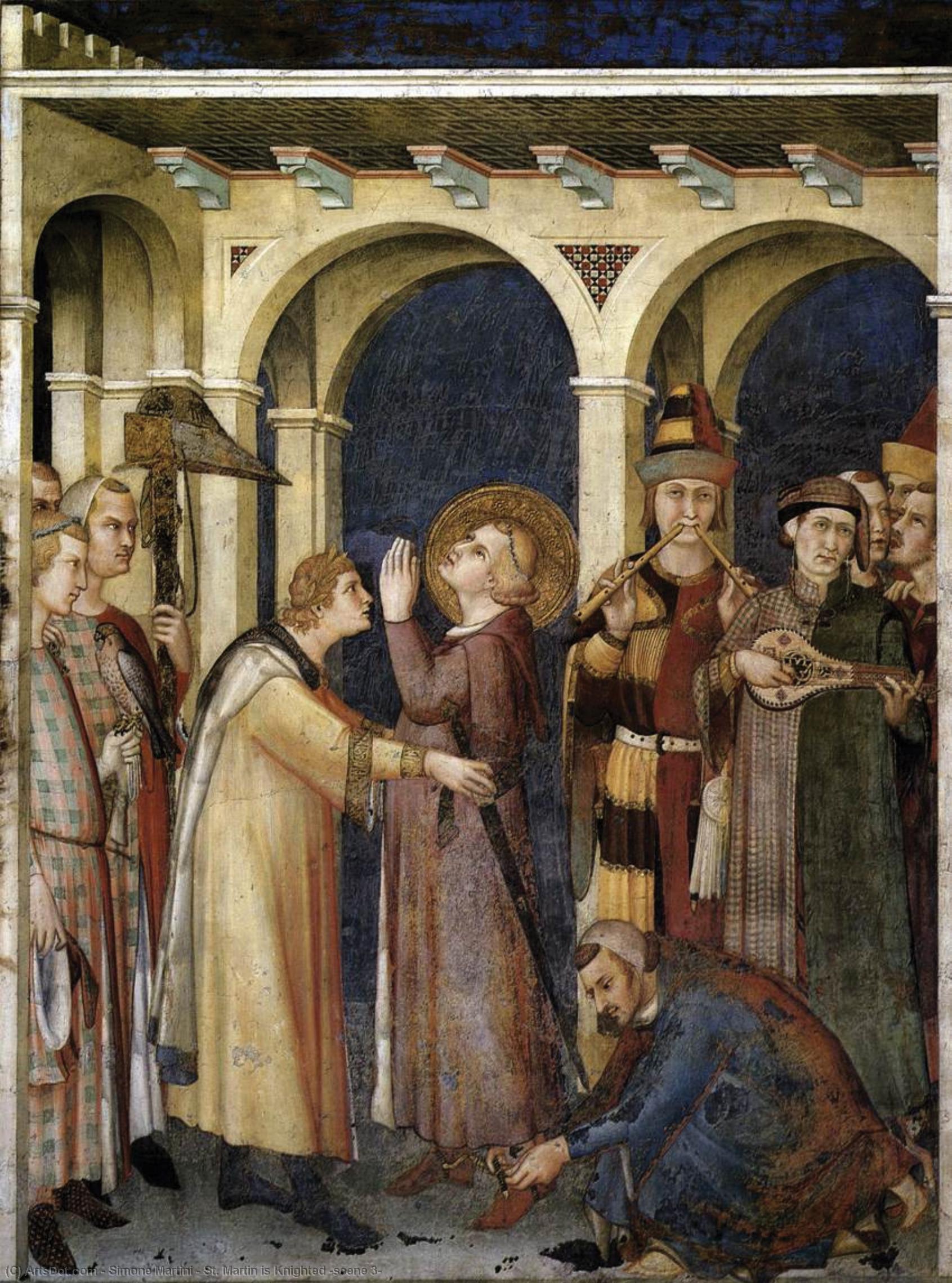
St. Martin is Knighted (scene 3)

- 265.0 x 200.0 cm


 Összes részlet megjelenítése
Szerezzen be nyomtatásra kész fájlt, amely messze túlmutat a webes előnézeten. Minden általunk értékesített digitális kép az adatbázisunkban található nagy felbontású mesterfájlból származik – általában 5 000 és 15 000 pixel szélességű –, így magabiztosan nyomtathat nagy méretben, sokat vághat a képen, vagy reprodukálhatja a legfinomabb részleteket is.
Stúdiómból egyetlen fájl sem távozik feltartózkodás nélkül. Egy digitális szakértő az eredeti festménnyel összehasonlítja a színeket, és szükség esetén korrigálja azokat, majd professzionális retusználó eszközökkel javítja a tisztaságot és a részletgazdagságot — miközben mindig hű marad a művész vonalvezetéséhez és stílusához. Az eredmény egy olyan kép, amely úgy néz ki, mint egy festmény, és nem úgy, mint egy szűrőzött szkenn.
A végső munka befejezése előtt jóvá kell hagynia a képet: szakértőnk 72 órán belül elküldi azt e-mailben ellenőrzésre. Nem tetszett? Kérhet javításokat vagy korrekciókat, illetve visszatérítést kérhet, amennyiben a minőség nem felel meg az elvárásoknak.
Ez az a minőség, amelyre a kiadók, a design stúdiók, a galériák és a nyomdaték megbízhatnak.
Digitális kép
Töltsön le nagy felbontású fájlt személyes kiállításokhoz, nyomtatáshoz és kreatív projektekhez. ( Váltás nyomtatványra Kézzel festett másolat rendelése)
Minden digitális kép rendeléséhez tartozó extrák
Szakértői digitális kézbesítés, garantáltan
Amikor a OriginalUniqueArt.com szolgáltatást választja, nem csupán egy képet kap – professzionálisan felmagasított digitális műalkotást kap, amely precizitással készült, és amelyet megelégsedési gwarancia tesz biztoslássá. Az alábbiakban automatikusan minden benne 】

Gyors e-mail teslimítés
A nagy felbontású digitális képmásolatát a megrendelést követő 72 órán belül e-mailben elküldjük Önnek – azonnal használható formátumban.

MI-alapú digitális fájljavítás
Műve professzionális módon kerül optimalizálásra fejlett mesterséges intelligencia eszközök és manuális szerkesztés segítségével, biztosítva a maximális részletességet, tisztaságot és színpontosságot.

Örök életű ingyenes újradelivery
Véletlenül törölted vagy elvesztetted a fájlodat? Ne aggódj – bármikor ingyen újra megküldjük neked.

Nincs importköltség – soha
Élvezze műalkotásait azonnal, vám, illeték vagy szállítási költség nélkül – a digitális letöltések mindig adamentesek.

Színpontosság garantálása
Professzionális eszközök és színkezelés segítségével garantáljuk, hogy digitális képe a lehető legpontosabban tükrözze az eredeti színeket.

100 napos elégedettségi garancia
Ha nemມີ elégedett a digitális képével, 100 napon belül felülvizsgáljuk vagy 100% visszatérítjük az amountot – kérdés बिना.

100% Pénzvisszatérítési garancia
Nem tetszett a vásárlás? 100 napon belül teljes visszatérítést garantálunk a digitális fájl megvételétől számítva – kérdés nélkül.

Tömegrendelési kedvezmények
Vásároljon 3 képet, spóroljon 10%-et - Vásároljon 5-öt, spóroljon 15%-et - Vásároljon 10+ képet, spóroljon 20%-at. Kiváló kreatív projektekhez, galériákhoz és ügynökségekhez.
A Sacred Encounter: The Grace of St. Martin
In the quiet, luminous world of Simone Martini’s St. Martin is Knighted (scene 3), we are invited to witness a moment that transcends the boundaries of mere historical record, entering instead the realm of divine encounter. Created around 1312, this masterpiece captures a pivotal chapter in the life of St. Martin, the Roman soldier whose legendary compassion—clothing a beggar in the biting winter cold—led to his spiritual recognition. Here, the scene focuses on the solemnity of the accolade, where Martini depicts the ceremonial crowning by Bishop Fulco degli Albizzi. It is a profound meditation on faith and humility, rendered with a delicate touch that makes the sacred feel intimately present.
The composition breathes with the refined elegance of the International Gothic style. Martini, a master of the Sienese school, eschews heavy, monumental forms in favor of a lyrical grace. The figures are characterized by flowing lines and exquisitely sculpted drapery that seems to move with a life of its own. As one observes the kneeling St. Martin, his posture of earnest petition conveys a palpable sense of vulnerability and devotion. This is balanced by the spiritual authority of Bishop Albizzi, whose presence radiates holiness through the subtle use of a halo and a commanding yet merciful gesture. The surrounding onlookers—a kneeling woman and figures engaged with books and vessels—weave a tapestry of communal piety, suggesting that this act of divine benediction is witnessed and shared by the entire faithful community.
Technique and the Radiance of Siena
The emotional depth of this work is inseparable from Martini’s technical brilliance. Utilizing tempera paint on panel, the artist achieved a level of luminosity that remains breathtaking centuries later. The medium allowed for a meticulous application of color, creating subtle gradations that lend volume to the heavy robes and a celestial glow to the skin tones. This technique enables a play of light that seems to emanate from within the painting itself, particularly noticeable in the brilliant highlights of the liturgical garments and the soft, atmospheric depth of the setting.
Beyond its visual splendor, the painting serves as a window into the cultural zenith of Siena, Italy. During this era, Siena was a thriving center of economic and artistic innovation, fueled by the prosperity of the wool trade. The patronage of influential families like the Albizzi clan provided the fertile ground necessary for such spiritual narratives to flourish. For the modern collector or interior designer, a reproduction of this work offers more than just decoration; it brings into a space a sense of historical continuity and refined ornamentation. The painting’s ability to evoke reverence and contemplation makes it an ideal centerpiece for those seeking to infuse their surroundings with an atmosphere of peace, sophistication, and timeless spiritual truth.
Kérdések és válaszok
Mennyire erős a kontraszt a(z) „St. Martin is Knighted (scene 3)”, Simone Martini alkotása alkotásban?
A „St. Martin is Knighted (scene 3)”, Simone Martini alkotása kontrasztját Bold teszi.
Ki készítette a "St. Martin is Knighted (scene 3)" alkotást, és milyen stílusú?
A "St. Martin is Knighted (scene 3)" mögött Simone Martini és a Late Gothic Style irányzat áll.
Mi a(z) domináns színe a(z) „St. Martin is Knighted (scene 3)”, Simone Martini alkotása alkotásnak?
A „St. Martin is Knighted (scene 3)”, Simone Martini alkotása domináns színe a Espresso (#624d39).
Művész életrajza
A Sienese Master of Elegance and Grace
Simone Martini, born around 1284 in the heart of Siena, Italy, stands as a pivotal figure in the transition from medieval to Renaissance art. He wasn’t merely a painter; he was an architect of elegance, a master of line and color who infused his works with a courtly refinement that distinguished him from contemporaries like Giotto. While historical accounts vary regarding his early training—some suggest apprenticeship under Duccio di Buoninsegna, the leading Sienese artist of the time, while others point to Florence and the influence of Giotto—Martini undeniably forged a unique artistic path. His brother-in-law, Lippo Memmi, was also an artist with whom he frequently collaborated, further enriching the vibrant artistic landscape of Siena. The city itself played a crucial role in shaping Martini’s aesthetic; Siena, a thriving center of commerce and culture, fostered an environment where art flourished, blending religious devotion with worldly sophistication.
The Flourishing of International Gothic
Martini's style is immediately recognizable for its departure from the more monumental forms favored in Florence. He embraced a delicate sensibility, characterized by flowing lines, soft decorative details, and an overall sense of grace. This aesthetic wasn’t born in isolation; it was profoundly influenced by external forces. The Via Francigena, a major pilgrimage route traversing Europe, brought with it artistic currents from France—particularly the refined elegance of French manuscript illumination and ivory carving. These influences are readily apparent in Martini's work, manifesting as intricate patterns, elongated figures, and a heightened attention to surface ornamentation. He didn’t simply copy these styles; he synthesized them with existing Sienese traditions, creating something entirely new. His paintings weren’t merely representations of religious scenes but rather elegant narratives imbued with emotional depth and visual poetry.
From Siena to Avignon: A Courtly Appointment
Martini's reputation extended beyond the borders of Italy, leading to a significant turning point in his career. In 1336, he accepted a commission from Pope Benedict XII to create frescoes for the Papal Palace in Avignon, France—a move that placed him at the heart of European power and patronage. This appointment wasn’t merely about artistic skill; it was a testament to Martini's ability to cater to the tastes of a sophisticated courtly audience. While in Avignon, he entered into a remarkable intellectual circle, befriending Francesco Petrarca—better known as Petrarch, the renowned humanist poet. The connection with Petrarch is particularly poignant, as Vasari and other sources suggest that Martini painted a portrait of Laura de Noves, Petrarch’s lifelong muse. Though the portrait itself is lost to time, its very existence speaks volumes about Martini's status as a celebrated artist capable of capturing not only physical likeness but also the essence of beauty and inspiration. The Annunciation with St. Margaret and St. Ansanus, created during his time in Florence before moving to Avignon, is a testament to this period, showcasing delicate beauty and refined aesthetic.
Major Works and Techniques
Martini’s oeuvre is characterized by a remarkable range of subjects and styles, reflecting the diverse commissions he received throughout his career. His most celebrated works include the *Maestà* fresco in the Palazzo Pubblico, Siena—a monumental depiction of the Virgin Mary enthroned with angels and saints that exemplifies his mastery of composition and color; the *Annunciation*, a delicate and exquisitely detailed portrayal of the angel Gabriel announcing to Mary that she will conceive Jesus; and the *St. Louis Crowning Robert* altarpiece in Naples, showcasing his ability to create complex narratives within a limited space. Martini’s technical skill is evident in his meticulous attention to detail, his use of vibrant colors—particularly blues and reds—and his innovative approach to perspective and spatial relationships. He was also a skilled draftsman, producing numerous drawings that served as studies for his paintings.
Legacy and Enduring Influence
Simone Martini’s impact on the development of European art cannot be overstated. He played a crucial role in disseminating the International Gothic style—a movement characterized by its elegance, refinement, and emphasis on decorative detail—across the continent. His influence extended to generations of artists who followed, shaping the course of late medieval and early Renaissance painting. Martini’s work wasn’t simply about technical skill; it was about creating a visual language that resonated with the sensibilities of his time—a language of beauty, grace, and spiritual devotion. Even today, his paintings continue to captivate viewers with their exquisite detail, harmonious compositions, and enduring sense of elegance. His frescoes in San Francesco d’Assisi demonstrate his mastery of large-scale decorative painting, while works like the Saint Catherine of Alexandria Polyptych showcase his unparalleled command of color and form. Simone Martini died in Avignon in 1344, leaving behind a legacy that continues to inspire awe and admiration centuries later—a testament to the enduring power of art to transcend time and touch the human spirit.

Simone Martini
1284 - 1344 , Olaszország
Érmeradatok
- Artistic Movement Or Style: Nemzetközi Gótika
- Artists Or Movements Influenced By This Artist: ['Nemzetközi Gótika stílus']
- Artists Who Influenced This Artist:
- Duccio di Buoninsegna
- Giotto di Bondone
- Date Of Birth: c. 1284
- Date Of Death: 1344
- Full Name: Simone Martini
- Nationality: Olasz
- Notable Artworks:
- Angyali Üdvözlet
- Maestà
- Szent János
- Place Of Birth: Siena, Olaszország