Text size

() ·

A painting made for you, by hand

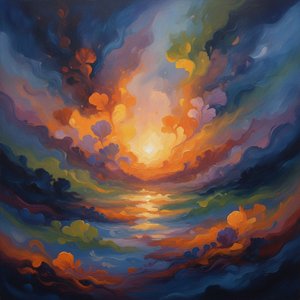
Abstract Composition

Kézzel készített olajfestmény reprodukció

Kézzel festett olajvastú vászon, az Ön által választott méretben és keretben, művészeink készítik meglévőre. ( Váltás nyomtatványra Áttérés digitális képre)

A gyűjtemény leírása

A vibrant symphony of geometric shapes and lyrical abstraction defines this 1954 masterpiece by Serge Poliakoff, offering a bold interplay of color that invites you to bring this iconic piece of the École de Paris home.

A művész életrajza

Explore Serge Poliakoff's abstract paintings & vibrant compositions. A key figure of Tachisme & the 'New' École de Paris, his work blends lyrical abstraction with bold color palettes. Discover museums showcasing Poliakoff's art.

from ·

Chapter 1

How large should it be?

Slide to change the size; the picture on the left shows the frame at its real width. The proportions of the original are kept.

Standard méret
egyedi méretű
CM
INCH

Válasszon előre meghatározott méreteink közül, amelyek megfelelnek a műalkotás eredeti arányainak.

szélesség
magasság

Írja be a kívánt szélességet és magasságot, hogy illeszkedjen a keretéhez vagy a falához. Mivel ez kézzel festett alkotás, egy eltérő formájú méret esetén a művész akár festhet is valamivel többet a kép körül, vagy korolathat is belőle — az Ön döntésének megfelelően. A festés megkezdése előtt küldünk egy digitális tervezetet jóváhagyásra. Az oldalon látható kép nem tartalmazza a végeredményt — csak a tervezet mutatja meg a valódi eredményt.

Chapter 2

How should it arrive?

Choose the edges of the stretched canvas

Choose your frame

Corner sample of the WhiteWrap canvas edge finish, stretched on tömörfa bars
White Ft1
Corner sample of the BlurSideWrap canvas edge finish, stretched on tömörfa bars
Blurside Ft1
Corner sample of the ExtendedWrap canvas edge finish, stretched on tömörfa bars
Extended Ft1
Corner sample of the P118B picture frame: formázott polisztirol, 5 cm wide and 3 cm thick
P118B Ft10
Corner sample of the P118H picture frame: formázott polisztirol, 5 cm wide and 3 cm thick
P118H Ft10
Corner sample of the P118W picture frame: formázott polisztirol, 5 cm wide and 3 cm thick
P118W Ft10
Corner sample of the P438Z picture frame: formázott polisztirol, 5.5 cm wide and 3.5 cm thick
P438Z Ft10
Corner sample of the P508JH picture frame: formázott polisztirol, 7 cm wide and 3.5 cm thick
P508JH Ft12
Corner sample of the P508YH picture frame: formázott polisztirol, 7 cm wide and 3.5 cm thick
P508YH Ft12
Corner sample of the P805H picture frame: formázott polisztirol, 5 cm wide and 3.5 cm thick
P805H Ft10
Corner sample of the P805Z picture frame: formázott polisztirol, 5 cm wide and 3.5 cm thick
P805Z Ft10
Corner sample of the P919BZ picture frame: formázott polisztirol, 7 cm wide and 3.5 cm thick
P919BZ Ft10
Corner sample of the P919G picture frame: formázott polisztirol, 7 cm wide and 3.5 cm thick
P919G Ft10
Corner sample of the P919XJ picture frame: formázott polisztirol, 7 cm wide and 3.5 cm thick
P919XJ Ft10
Corner sample of the P959ZH picture frame: formázott polisztirol, 5 cm wide and 3 cm thick
P959ZH Ft10
Corner sample of the P968JZ picture frame: formázott polisztirol, 6 cm wide and 4 cm thick
P968JZ Ft12
Corner sample of the W106C picture frame: tömörfa, 5 cm wide and 3 cm thick
W106C Ft8
Corner sample of the W218G picture frame: tömörfa, 5 cm wide and 3 cm thick
W218G Ft10
Corner sample of the W218JH picture frame: tömörfa, 5 cm wide and 3 cm thick
W218JH Ft8
Corner sample of the W218Y picture frame: tömörfa, 5 cm wide and 3 cm thick
W218Y Ft10
Corner sample of the W307PJ picture frame: tömörfa, 6 cm wide and 3 cm thick
W307PJ Ft10
Corner sample of the W316G picture frame: tömörfa, 6 cm wide and 3 cm thick
W316G Ft10
Corner sample of the W316PJ picture frame: tömörfa, 6 cm wide and 3 cm thick
W316PJ Ft8
Corner sample of the W316Y picture frame: tömörfa, 6 cm wide and 3 cm thick
W316Y Ft10
Corner sample of the W398PJ picture frame: tömörfa, 5 cm wide and 3 cm thick
W398PJ Ft8
Corner sample of the W4111J picture frame: tömörfa, 6.5 cm wide and 3.5 cm thick
W4111J Ft10
Corner sample of the W500HY picture frame: tömörfa, 7 cm wide and 5 cm thick
W500HY Ft15
Corner sample of the W500JH picture frame: tömörfa, 7 cm wide and 5 cm thick
W500JH Ft15
Corner sample of the W692G picture frame: tömörfa, 8 cm wide and 4 cm thick
W692G Ft12
Corner sample of the W849H picture frame: tömörfa, 5 cm wide and 3 cm thick
W849H Ft8
Corner sample of the W940BG picture frame: tömörfa, 7.5 cm wide and 4.5 cm thick
W940BG Ft15
Corner sample of the W953PJ picture frame: tömörfa, 6 cm wide and 3.5 cm thick
W953PJ Ft8
Corner sample of the H24-GOLD picture frame: faragott fa gesszóval, 10 cm wide and 6 cm thick
H24-GOLD Ft30
Corner sample of the H24-SILVER picture frame: faragott fa gesszóval, 10 cm wide and 6 cm thick
H24-SILVER Ft30
Corner sample of the H36-GOLD picture frame: faragott fa gesszóval, 15 cm wide and 6.5 cm thick
H36-GOLD Ft45
Corner sample of the H36-SILVER picture frame: faragott fa gesszóval, 15 cm wide and 6.5 cm thick
H36-SILVER Ft45

Moulding: . Overall size with the frame: .

Chapter 3

Who paints it, and should anything change?

Examples of what can be changed: Replace face with customer photo; Add pet (e.g., replace cat with dog); Include hidden message in background; Change background landscape or elements.
After order, OriginalUniqueArt.com team will email client for instructions and provide a mockup preview

Világszerte elérhető szállítás () 3-4 hét alatt a szokásos 5 hét helyett. (1 november). A minőség nem kérdőjelezhető.

Chapter 4

The finishing touches

A nameplate, as in a museum?

A gravírozott bronztábla részletei

This elegant plaque features the artist's name and the title of the artwork, finely engraved for a timeless presentation.

It is made from bronze with a refined, elegant finish. The text is precisely laser-engraved for a sharp and permanent result. Measuring 9x2 cm, the plaque is compact yet easy to read. It's built to be durable and scratch-resistant, offering a professional, museum-quality look. Mounting is simple thanks to the included adhesive backing.

Átlátszó akril tábla részletei

The plaque includes essential engraved details such as the artist's name, the title of the artwork, the date it was created, the type of media used-like oil on canvas or watercolor-a brief description of the piece, and a QR code that links to the complete artwork information.

It is crafted from clear acrylic, offering a sleek, modern appearance. The text is UV-engraved in black to ensure strong visual contrast. With a size of 10x15 cm, it ensures optimal readability. It comes equipped with two metal hooks for secure wall mounting. The plaque is designed to be weather-resistant, making it suitable for various environments, and it includes interactive features that work seamlessly with smartphone scanning.

Fekete akril tábla részletei

This elegant plaque includes engraved information such as the artist's name, the title of the artwork, the date it was created, the type of media used (like oil on canvas or watercolor), a short description of the artwork, and a QR code for quick access to more information.

The plaque itself is made from refined black acrylic with a premium finish. The text is laser-engraved in white for high contrast and readability. Its size is 10x15 cm, designed to be easy to read. It comes with two metal hooks for professional mounting. The design is sleek and fits any interior style. It is also weather-resistant and durable, with built-in digital integration for mobile compatibility.

A protective varnish?

When do you need it?

Chapter 5

Your painting, as you ordered it

Abstract Composition

Reprodukciós technika

Reprodukció mérete

-

Kiváló mesterművész

Nagyobb részletesség, finomság és bővített gyártási idő

-

Reprodukció keretezése

-

-

A bármely oldalsó méretét túlszálaló 105 cm (kb. 41 hüvelyk) meghaladó műalkotások vagy reprodukciók esetében a keret összeszerelhető készletként, szétszerelve kerül szállításra. Ez a módszer biztosítja a biztonságos szállítást, és megakadályozza a szállítás során fellépő sérüléseket.

Szakmész összeszerelést igényel – ez nem DIY (önösszeszerelhető) termék.
A készletet egy tapasztalt keretező szakembernek kell összeszerelnie és a vásznat feszítenie kell, fa ragasztó (nem tartalmazza a csomag), vásznfeszítő fogó és szorítók használatával, amelyek a ragasztó száradásáig a keretrészeket egymáshoz vuôngjba tartják. A helytelen összeszerelés vagy a nem egyenletes vásznfeszítés maradandó károsíthatja a műalkotást, és ez nem része a garanciánknak.

  • A készlet tartalmazza az összes tömörfa rudat, pontosan méretre vágva.

  • A mellékelt csavarokkal, valamint a sarokszerekhez szükséges faütő ragasztóval kell összeszerelnie (ez nem tartalmazható a csomagban), így a keretrendezőnek külön kell beszereznie.

  • A csomag nem tartalmazza a szükséges professzionális eszközöket: egy vászonfeszítőt és klipseket a rácsok vízszintes tartásához a ragasztó megszáradásáig.

Fontos:
A sarokcsatlakozásokhoz fánylagra van szükség, a keretrudakat szorítókapcsokkal kell rögzíteni, amíg a rag teljesen meg nem szárad, a kész keretre feszített vászonhoz pedig vászonfeszítő fogat szükséges. Ezek egyike sem található meg a készletben. Kérjük, rendelés előtt győződjön meg róla, hogy rendelkezik tapasztalt keretező szakemberrel.

Névtábla

-

-

Védőréteg (Lakk)

Fényes lakk (intenzívabb színek, védelem a fény és a nedvesség hatása ellen)

-

Műalkotásom egyedi igényre szabása

Példák a módosíthatóságra: az arc kicserélése az ügyfél fotójára; háziállat hozzáadása (pl. macska helyett kutya); rejtett üzenet elhelyezése a háttérben; a háttér tájainak vagy elemeinek megváltoztatása.

-

Sürgős

Világszerte szóló szállítás () mindössze 3-4 hét alatt, a szokásos 5 hét helyett. (1 november). A minőség nem kérdőjelezhető.

-

Express szállítás

Világszerte elérhető szállítás területre 5 héten belül. (8 november).

A szállítás díja tartalmazza

Összesített ár

Ft 98243

Összesített ár Ft 98243

Az üvegkeretes opció csak 110 cm alatti méretben érhető el

Included with every order

  • Ingyenes globális expressz szállítás
  • Prémium minőségű len vászon
  • Teljes körű szállítási biztosítás
  • Vámvisszatérítési Garancia
  • Hiteles színarányosság garancia
  • 100 napos visszaküldési lehetőség (csak hibás termékek esetén)
  • 100% pénzvisszatérítési garancia
  • Több darab vásárlásakor kedvezmény

A Symphony of Form and Color

In the vast landscape of mid-century abstraction, few works capture the rhythmic tension between structure and spontaneity as masterfully as Serge Poliakoff’s Abstract Composition. Created in 1954, this piece serves as a profound testament to the artist's ability to translate complex human emotions into a visual language of pure geometry and vibrant pigment. At first glance, the eye is immediately arrested by a commanding red square that anchors the center of the canvas, acting as a heartbeat for the entire arrangement. This central weight is balanced by a delicate dance of smaller rectangles, blue triangles, and golden circles, creating a composition that feels both meticulously planned and organically alive. It is not merely a collection of shapes, but a carefully orchestrated movement where each element breathes alongside its neighbor.

The technique employed in this work reflects the essence of the Tachisme movement and the 'New' École de Paris, where the texture of the paint itself becomes a character in the narrative. Poliakoff’s approach to color is nothing short of symphonic; he utilizes a palette that ranges from deep, somber blacks and earthy greens to brilliant yellows and piercing blues. The interplay between these hues creates a sense of depth that invites the viewer to linger. As light seems to shift across the different planes of the canvas, one perceives a layered complexity—a mosaic of color where the boundaries between geometric precision and fluid, organic forms blur into a singular, captivating experience.

Historical Resonance and Emotional Depth

To understand this masterpiece, one must look toward the soul of its creator. Born in Moscow amidst the grandeur of Russian tradition and the spiritual gravity of Orthodox iconography, Poliakoff brought a unique duality to his work. This 1954 composition embodies that very tension: the struggle between order and chaos, between the rigid lines of modernism and the fluid, unpredictable nature of human feeling. The painting does not seek to represent the physical world, but rather to evoke the internal landscapes of the psyche. The way the blue triangle pierces the upper corner or how the yellow circle provides a moment of warmth amidst more structured elements suggests a cosmic balance, much like the celestial movements Poliakoff often sought to capture through abstraction.

For the discerning collector or the interior designer, this artwork offers more than just aesthetic beauty; it provides a focal point of intellectual and emotional intrigue. Its large-scale presence (81 x 100 cm) allows it to command a room, transforming a contemporary space into a gallery of contemplative thought. Whether placed in a minimalist setting to provide a burst of energetic color or integrated into a classic study to add historical weight, this reproduction of Poliakoff’s vision brings a sense of timeless sophistication. It is an invitation to rediscover the joy of pure abstraction—a piece that continues to resonate with the same vigor and mystery it possessed decades ago.

Kérdések és válaszok

Mikor készült a "Abstract Composition"?

A "Abstract Composition" 1954-ban készült. Ez az időpont meghatározó jelentőséggel bír Serge Poliakoff pályájában és az adott korszak kontextusában is.

A dátum alapján Abstract Composition Serge Poliakoff pályájának melyik szakaszába tartozik?

A "Abstract Composition", amely 1954 évben készült, Serge Poliakoff pályájának Mature Period szakaszába tartozik.

Hogyan írható le „Abstract Composition”, Serge Poliakoff alkotása hangulata?

A „Abstract Composition”, Serge Poliakoff alkotása hangulata Bold, ami segíthet a mű megfelelő környezetbe illesztésében.

More about this painting

Megtekintés AR előnézet Váltás nyomtatványra Áttérés digitális képre Küldés
Részletek Útmutató Kedvencekhez ad Letöltés Hasonló darabok X-ray felvétel Diavetítés Q&A Statisztika

In numbers

  • 1954the year it was painted
  • 29frames to choose from
  • standard sizes, in its own proportions
  • 5weeks to paint and deliver it

About the original

Méretek
81.0 x 100.0 cm
Serge Poliakoff

Serge Poliakoff

1900 - 1969

Quick facts about Serge Poliakoff

  • Full Name: Serge Poliakoff
  • Nationality: Russian-French
  • Date Of Birth: 1900
  • Date Of Death: 1969
  • Place Of Birth: Moscow, Russia
  • Notable Artworks:
    • Untitled (727)
    • Abstract Composition
    • Untitled (478)
  • Artistic Movement Or Style: Tachisme, Abstract
  • Artists Who Influenced This Artist:
    • Wassily Kandinsky
    • Sonia Delaunay
    • Robert Delaunay
    • Otto Freundlich
  • Artists Or Movements Influenced By This Artist:
    • École de Paris
    • Tachisme

A művész életrajza

Serge Poliakoff: A Symphony of Color and Form

Serge Poliakoff, a name synonymous with lyrical abstraction and the vibrant energy of the ‘New’ École de Paris, was more than just a painter; he was a translator of emotion onto canvas. Born in Moscow in 1900 amidst a landscape of familial grandeur – his father a horse breeder supplying the Russian army, his mother deeply rooted in the Orthodox Church – Poliakoff's early life instilled within him a profound appreciation for both tradition and a restless spirit. This duality would profoundly shape his artistic journey, informing his distinctive approach to color, composition, and ultimately, the very essence of his art.

His childhood was a rich tapestry woven with threads of cultural contrasts: the austere formality of Moscow’s elite circles juxtaposed against the spiritual solace found in religious icons. This inherent tension fueled a lifelong exploration of balance – a delicate equilibrium between structure and spontaneity, order and chaos. A pivotal moment arrived in 1918 when, fleeing the upheaval of the Russian Revolution, he embarked on a nomadic existence, drifting through Constantinople, Sofia, Belgrade, Vienna, and Berlin, honing his skills as a guitarist to sustain himself while absorbing the diverse artistic currents flowing through Europe’s capitals. It was during this period of itinerant travel that Poliakoff began to develop his unique visual language, experimenting with color and form in a way that would later define his oeuvre.

Paris, arriving in 1923, proved to be the crucible where Poliakoff's artistic vision truly crystallized. Initially working as a musician, playing in Russian cabarets to earn a living, he gradually transitioned into painting, seeking guidance from influential figures like Wassily Kandinsky, Sonia and Robert Delaunay, and Otto Freundlich. These encounters were transformative, exposing him to the revolutionary possibilities of abstraction and influencing his exploration of luminous color fields and interlocking geometric forms. A crucial turning point occurred in 1935-37 during a sojourn in London, where he encountered the monumental Egyptian sarcophagi – their intricate patterns and vibrant hues ignited within him a deep fascination with rhythm, repetition, and the power of visual harmony.

The Development of Style: From Academic Roots to Abstract Expression

Early works reveal Poliakoff’s initial grounding in academic traditions. His paintings from the late 1920s and early 1930s demonstrate a clear adherence to classical techniques, characterized by meticulous draftsmanship and a focus on realistic representation. However, this foundational training served merely as a springboard for his subsequent artistic evolution. The influence of Kandinsky’s exploration of color theory, coupled with the dynamic compositions of Delaunay's Orphism, gradually led him away from representational forms towards increasingly abstract explorations.

The pivotal shift occurred in 1942, when Poliakoff began to embrace a purely abstract style. He abandoned traditional perspective and employed a system of interlocking geometric shapes – circles, squares, triangles – arranged within vibrant color fields. This technique, often described as “luminous abstraction,” created a sense of dynamic movement and visual excitement. His paintings became less about depicting objects or scenes and more about conveying emotions and sensations through the interplay of color and form. The use of contrasting hues—bold reds, yellows, blues—generated a powerful emotional resonance, inviting viewers to engage with the artwork on a deeply intuitive level.

The 1947 training at Gordes, under Jean Deyrolle, surrounded by fellow artists like Gérard Schneider, Victor Vasarely and others, solidified this approach. This environment fostered experimentation and collaboration, pushing Poliakoff’s artistic boundaries further. The resulting works are characterized by a remarkable sense of spontaneity and freedom, reflecting the artist's evolving understanding of color and composition.

Key Characteristics & Techniques

Poliakoff’s art is immediately recognizable through several key characteristics: his masterful use of color—often employing complementary hues to create dynamic contrasts—his distinctive interlocking geometric forms, and his exploration of rhythm and repetition. Unlike many abstract artists who relied solely on pure form, Poliakoff infused his compositions with a sense of lyricism and emotional depth.

His technique involved layering thin washes of color onto the canvas, creating a luminous effect that seemed to emanate from within the artwork itself. He frequently employed a “patchwork” approach, assembling fragments of color and form into complex, visually engaging arrangements. The artist’s meticulous attention to detail—particularly in the precise placement of each element—contributed to the overall sense of harmony and balance within his paintings.

Furthermore, Poliakoff's work is notable for its inherent dynamism. The interlocking shapes create a visual flow that draws the eye across the canvas, generating a sense of movement and energy. This dynamic quality is further enhanced by the use of contrasting colors and textures, which add depth and complexity to the compositions.

Legacy & Recognition

Serge Poliakoff’s contribution to the ‘New’ École de Paris and the broader development of abstract art is undeniable. His work bridged the gap between academic training and radical abstraction, demonstrating a remarkable ability to synthesize diverse influences into a uniquely personal style. His paintings are now held in prestigious collections worldwide, including the Museum of Modern Art in New York, the Tate Gallery in London, and the Musée National d’Art Moderne in Paris.

Despite facing challenges during his lifetime—including periods of financial instability and artistic uncertainty—Poliakoff remained a prolific and dedicated artist until his death in 1969. His legacy continues to inspire artists today, serving as a testament to the power of color, form, and emotion in the realm of abstract art. His work stands as a vibrant reminder of the enduring beauty and expressive potential of the human spirit.

Gyors információk

  • Dimensions: 81 x 100 cm
  • Year: 1954
  • Artist: Serge Poliakoff
  • Subject or theme: Color, form, and visual complexity