Előnézet
 Megosztás
 Megosztás
 Részletek
 Útmutató

 Letöltés
 Hasonló darabok
 X-ray felvétel
 Diavetítés
 Statisztika
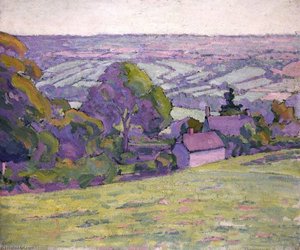
Devonshire Valley, No. 2
 Oil On Canvas
- WallArt
- Camden Town Group
 1913
1913- Modern
 48.0 x 58.0 cm
 Tovább olvasom
Kézzel készített olajfestmény reprodukció
Kézzel festett olajvastú vászon, az Ön által választott méretben és keretben, művészeink készítik meglévőre. ( Váltás nyomtatványra Áttérés digitális képre)




P118B Ft10

P118H Ft10

P118W Ft10

P438Z Ft10

P508JH Ft12

P508YH Ft12

P805H Ft10

P805Z Ft10

P919BZ Ft10

P919G Ft10

P919XJ Ft10

P959ZH Ft10

P968JZ Ft12

W106C Ft8

W218G Ft10

W218JH Ft8

W218Y Ft10

W307PJ Ft10

W316G Ft10

W316PJ Ft8

W316Y Ft10

W398PJ Ft8

W4111J Ft10

W500HY Ft15

W500JH Ft15

W692G Ft12

W849H Ft8

W940BG Ft15

W953PJ Ft8




Válasszon előre meghatározott méreteink közül, amelyek megfelelnek a műalkotás eredeti arányainak.

Ön megadhat saját méreteket egy adott kerethez vagy térhez igazításhoz. Ha a kiválasztott méret nem egyezik az eredeti kép arányával, akkor a műalkotást levágjuk, vagy további kézzel festett elemekkel meghosszabbítjuk a festményt. A gyártás megkezdése előtt küldünk Önnek egy digitális előnézetet jóváhagyásra.
Kérjük, vegye figyelembe, hogy a képernyőn megjelenő előnézet nem tükrözi a tényleges vágást vagy kiterjesztést. Csak az előnézet fog pontosan mutatni a végső kompozíciót.
Bár egyedi méretek állnak rendelkezésre, javasoljuk, hogy válasszon egy méretet az előre meghatározott listából az eredeti arányok megőrzése érdekében.
A rendelést követően a OriginalUniqueArt.com csapata e-mailt küld az ügyfélnek az instrukciókért, és biztosít egy előnézeti képet (mockup).
Világszerte elérhető szállítás () 3-4 hét alatt a szokásos 5 hét helyett. (14 október). A minőség nem kérdőjelezhető.

Ingyenes globális expressz szállítás

Prémium minőségű len vászon

Teljes körű szállítási biztosítás

Vámvisszatérítési Garancia

Tökéletes színarányosság garancia

100 napos visszaküldési garancia (csak gyártási hibás termékek esetén)

100% pénzvisszatérítési garancia

Több darab vásárlásakor kedvezmény
 Az üvegkeretes opció csak 110 cm alatti méretben érhető el

Devonshire Valley, No. 2
Reprodukciós technika
Reprodukció méretei
-


Összesített ár
Ft 94879
A Window into the English Pastoral: The Soul of Devonshire Valley
In the quietude of 1913, just before the world was irrevocably altered by the shadows of the Great War, Robert Polhill Bevan captured a moment of profound serenity in Devonshire Valley, No. 2. This exquisite oil on canvas serves as more than a mere landscape; it is an evocative portal into a lost era of English tranquility. The painting presents a sweeping, panoramic vista of a verdant valley, where rolling hills meet a sky painted in soft, atmospheric tones. At the heart of this pastoral dream lies a small stone cottage, its pink-hued roof nestled intimately among a cluster of dark, expressive trees. As the eye wanders through the composition, one encounters the gentle rhythm of the countryside—a church steeple rising subtly above the rooftops and the distant silhouette of a windmill, standing as a silent sentinel of rural industry and tradition.
The emotional resonance of the piece lies in its ability to balance solitude with a sense of warmth. While the vastness of the valley might suggest a lonely expanse, the presence of human habitation—the houses adorned with red roofs and the inviting glow of the cottage—infuses the scene with a comforting vitality. There is a palpable sense of peace, an invitation to pause and breathe in the stillness of the meadows. For the collector or the interior designer, this artwork offers a sanctuary of calm, making it an ideal centerpiece for spaces designed for reflection, relaxation, and the celebration of natural beauty.
Mastery of Color and the Modernist Touch
Technically, Devonshire Valley, No. 2 is a masterclass in the application of color and texture, reflecting Bevan’s pivotal role within the Camden Town Group. Moving away from the strictures of traditional representational art, Bevan embraced a more modernist, almost Fauvist approach to the landscape. The palette is strikingly bold; deep purelish blues and vibrant greens interweave to create an atmospheric depth that feels both tactile and dreamlike. The artist utilizes a heavy impasto technique, particularly in the foliage and the cottage walls, where thick, visible brushstrokes catch the light and lend a sculptural quality to the canvas.
This emphasis on texture and color over precise line work allows the landscape to breathe with an organic energy. The lighting appears diffused, as if filtered through a soft English mist, which softens the edges of the world and blends the distant hills into the pale sky. This technique creates a flattened perspective that is characteristic of plein air painting, drawing the viewer not just to look at the scene, but to feel the very atmosphere of the valley. The interplay between the intense, saturated hues and the more muted, atmospheric tones ensures that the painting remains visually dynamic from every angle.
A Legacy of Innovation and Timeless Appeal
To understand this work is to understand a turning point in British art history. As a pioneer of modernism, Bevan’s ability to synthesize the light-filled traditions of Impressionism with the bold, simplified forms of the early 20th century makes this piece a significant historical document. It captures the essence of a landscape untouched by the ravages of industrial upheaval or war, preserving a nostalgic vision of the English countryside that continues to captivate contemporary audiences.
For those seeking to adorn their homes with art that possesses both historical weight and aesthetic grace, a high-quality reproduction of this masterpiece offers an unparalleled opportunity. Whether placed in a sunlit library or a sophisticated modern living space, Devonshire Valley, No. 2 brings with it a sense of enduring elegance and a profound connection to the beauty of the natural world. It is an investment in atmosphere, a piece that does not merely decorate a wall but enriches the very spirit of a room.
Gyakran Ismételt Kérdések
Ki készítette a "Devonshire Valley, No. 2" alkotást, és milyen stílusú?
A "Devonshire Valley, No. 2" mögött Robert Polhill Bevan és a Camden Town Group irányzat áll.
Megtekinthető „Devonshire Valley, No. 2”, Robert Polhill Bevan alkotása a saját falamon vásárlás előtt?
A „Devonshire Valley, No. 2”, Robert Polhill Bevan alkotása AR előnézet oldala kiterjesztett valóságot használ, hogy az alkotást egy kompatibilis eszközön, az Ön saját környezetében is megmutassa.
Milyen formátumú és méretű a "Devonshire Valley, No. 2"?
A „Devonshire Valley, No. 2”, Robert Polhill Bevan alkotása egy Landscape kompozíció, amely az eredeti méretét tekintve 48 x 58 cm-es.
Megtekinthetném a(z) „Devonshire Valley, No. 2”, Robert Polhill Bevan alkotása röntgensugárzásos felvételét?
A „Devonshire Valley, No. 2”, Robert Polhill Bevan alkotása X-Ray felvétel oldala egy interaktív nézegető, amely lehetővé teszi a mű alkotásának eleven optikai rétegei közötti görgetést, beleértve az röntgenszerű felvételt is.
Milyen technika és milyen méret jellemzi az eredeti „Devonshire Valley, No. 2”, Robert Polhill Bevan alkotása alkotást?
A "Devonshire Valley, No. 2" alkotás Oil On Canvas technikával készült, eredeti mérete pedig 48 x 58 cm.
Hová sorolható a Robert Polhill Bevan pályájának mely szakaszába a "Devonshire Valley, No. 2"?
A "Devonshire Valley, No. 2" Robert Polhill Bevan alkotói pályájának Mature Period szakaszát képviseli.
Milyen színharmóniát mutat be „Devonshire Valley, No. 2”, Robert Polhill Bevan alkotása?
A "Devonshire Valley, No. 2" színharmóniája úgy van rögzítve, mint Discordant Palette.
Hogyan egyensúlyozza a fényt és a sötétséget a "Devonshire Valley, No. 2"?
A „Devonshire Valley, No. 2”, Robert Polhill Bevan alkotása rögzített értékei: brilliant fényerő, Bright Balance luminancia.
A művész életrajza
Robert Polhill Bevan (1865–1925): British painter & Camden Town Group founder
Robert Polhill Bevan, born in Hove in 1865, occupies a pivotal yet often understated position within the narrative of early 20th-century British art. Emerging from a Quaker background steeped in banking connections – his parents were Richard Alexander Bevan and Laura Maria Polhill – he defied conventional expectations to become a daring innovator, a key figure in the transition from Impressionism towards more radical explorations of color and form. His journey was one of constant experimentation, absorbing influences from across Europe while forging a distinctly personal artistic vision that would profoundly impact the development of modern art in Britain. Bevan’s early education at Westminster School of Art under Fred Brown provided a solid foundation, but it was his subsequent studies at the Académie Julian in Paris that truly ignited his creative spark. There, he encountered a constellation of rising stars – Paul Sérusier, Pierre Bonnard, Édouard Vuillard, and Maurice Denis – artists who were challenging academic conventions and embracing new approaches to painting. These encounters proved formative, exposing Bevan to the principles of synthetism and laying the groundwork for his future explorations.Brittany, Fauvism, and the Search for Pure Color
The impact of Brittany on Bevan’s artistic development cannot be overstated. Two significant journeys in 1890 and 1891 immersed him in the atmosphere of Pont-Aven, a small coastal town that had become a magnet for artists seeking an alternative to Parisian salon culture. The bold colors and simplified forms championed by artists like Gauguin resonated deeply with Bevan, influencing his early drawings and prints. He was particularly drawn to the luminous landscapes of Breton Brittany, where he sought inspiration from the Impressionists’ techniques. However, it was around 1904 that Bevan truly began to distinguish himself, embarking on a path of experimentation with pure color that anticipated the emergence of Fauvism on the continent. His painting “Courtyard” stands as a remarkable example of this proto-Fauvist approach, demonstrating a willingness to abandon naturalistic representation in favor of expressive chromatic intensity – a boldness that set him apart from many of his British contemporaries. This exploration didn’t remain static; Bevan subsequently adopted a divisionist or pointillist technique, evident in works like “Ploughing on the Downs” and “The Turn-Rice Plough,” showcasing his commitment to exploring different methods of applying color and capturing light. The influence of masters such as Velázquez and Goya remained palpable, alongside more immediate guidance from Renoir regarding the depiction of horses – a testament to Bevan’s broad artistic curiosity and willingness to learn from diverse sources.Collective Visions: The Camden Town Group and Beyond
Bevan was not an artist who worked in isolation. He actively sought connection with like-minded individuals, playing a crucial role in the formation of several influential art groups. As a founding member of the Camden Town Group, he joined forces with artists determined to depict modern urban life and challenge established artistic norms. This collective spirit extended to his involvement with the London Group and the Cumberland Market Group, further demonstrating his commitment to progressive artistic movements. He was particularly drawn to Walter Sickert’s Fitzroy Street group, where he collaborated on ambitious projects exploring social commentary and psychological depth. These affiliations were not merely social; they fostered a dynamic exchange of ideas that shaped Bevan's artistic trajectory and contributed to the broader evolution of British art.Landscapes, Urban Scenes, and Lasting Legacy
Bevan’s oeuvre is characterized by a profound engagement with both rural and urban environments. His landscapes – particularly those depicting the Blackdown Hills near Clayhidon in Devon – are imbued with an atmospheric sensitivity that captures the subtle nuances of light and color. Works like “In the Downs Near Lewes,” “The Chestnut Tree,” and “Landscape in the Blackdown Hills, Devon” exemplify this mastery, showcasing his ability to convey both the physical beauty and emotional resonance of the natural world. Simultaneously, Bevan documented the realities of modern life through urban scenes – notably “The Cab Horse,” which portrays a horse-drawn cab traversing London’s streets—demonstrating an awareness of social issues and a desire to engage viewers in contemplation. His artistic legacy extends far beyond his individual paintings; he is rightfully recognized as a pioneer of British Modernism, particularly for his early adoption of Fauvist principles and his unwavering dedication to exploring innovative techniques. Bevan's influence on subsequent generations of painters is undeniable, cementing his place as one of the most important figures in shaping the visual culture of Britain at the dawn of the twentieth century. He remains a vital figure for understanding the complex evolution of British painting in the early twentieth century
Robert Polhill Bevan
1865 - 1925 , Egyesült Királyság
Gyors információk
- Artistic Movement Or Style: Fauvizm, Szegénység
- Artists Or Movements Influenced By This Artist: ['Camden Town csoport']
- Artists Who Influenced This Artist:
- Paul Gauguin
- Velázquez
- Goya
- Date Of Birth: 1865
- Date Of Death: 1925
- Full Name: Robert Polhill Bevan
- Nationality: Brit
- Notable Artworks:
- A Falusi Háztartás
- Szántóföldi Szántó
- A Nagyvárosi Táblák
- Place Of Birth: Hove, Egyesült Királyság
Kapcsolódó cikkek
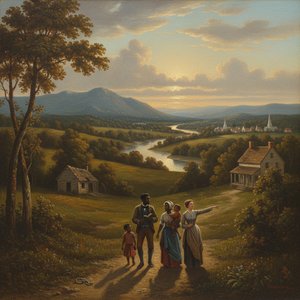
Robert Seldon Duncanson: Landscape, Abolitionism & Shaping American Identity
Discover Robert Seldon Duncanson, the first internationally acclaimed African American landscape artist. Explore his connection to the Hudson River School, abolitionism, and enduring legacy through serene vistas & powerful symbolism.
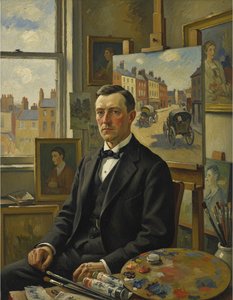
Robert Bevan: Pioneering British Post-Impressionism & the Camden Town Group's Intimate Vision
Explore the life & work of Robert Bevan, a pioneer of British Post-Impressionism and founding member of the Camden Town Group. Discover his vibrant landscapes and lasting impact on early 20th-century art.

Hubert Robert: Picturing Ruins, Preserving Memory – A Study of Romantic Antiquarianism & Artistic Innovation
Explore the captivating world of Hubert Robert, master of Romantic landscape painting & 'capriccio' ruins. Discover his historical context, artistic innovations, and collecting insights with OriginalUniqueArt.
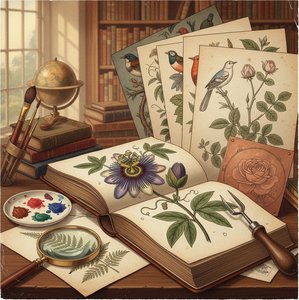
Robert Havell Sr.: Botanical Precision & the Rise of Colour Plate Publishing
Explore the life & work of Robert Havell Sr., a pioneer of botanical illustration and key collaborator with Audubon. Discover his stunning aquatint engravings, artistic techniques, and lasting impact on 19th-century art.

David Roberts: A Scottish Pioneer of Topographical Art & Orientalist Vision
Explore the captivating world of David Roberts, a pioneering Scottish painter renowned for his detailed Orientalist scenes & stunning Egyptian landscapes. Discover his legacy and find museum-quality reproductions at OriginalUniqueArt.