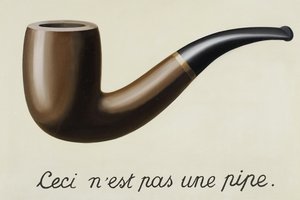
Előnézet
 Megosztás
 Megosztás
 Részletek
 Útmutató

 Letöltés
 Hasonló darabok
 X-ray felvétel
 Diavetítés
 Statisztika
Golconda
 Oil On Canvas
- WallArt
- Surrealism
 1953
1953- Modern
 100.0 x 81.0 cm
 Tovább olvasom
Az ezen az oldalon megjelenített műalkotások szerzői jogi védelem alatt állnak, ami azt jelenti, hogy törvényileg nem készíthetünk és nem adhatunk el belőlük pontos másolatokat. Ez a védelem olyan nemzetközi megállapodások alapján érvényesül, mint például a Berni Egyezmény és a nemzeti törvények által, beleértve azokat is, amelyeket meghatározott Az USA szerzői jogi törvénye – 17. cím.
Ez a módszer teljes mértékben megfelel a szerzői jogi szabályozásnak, mivel nem tartalmazza a védett műalkotás másolását vagy duplikálását. Ehelyett ez egy kreatív újinterpretáció – egy új festmény, amely az eredetivel való összefüggései miatt hatással van rá, de nem az az.
Giclée / Műnyomat
Múzeumi minőségű giclée vagy vászonnyomat, gyors gyártással és rugalmas finomítási lehetőségekkel. ( Kézzel festett másolat vásárlása Áttérés digitális képre)




P118B Ft10

P118H Ft10

P118W Ft10

P438Z Ft10

P508JH Ft12

P508YH Ft12

P805H Ft10

P805Z Ft10

P919BZ Ft10

P919G Ft10

P919XJ Ft10

P959ZH Ft10

P968JZ Ft12

W106C Ft8

W218G Ft10

W218JH Ft8

W218Y Ft10

W307PJ Ft10

W316G Ft10

W316PJ Ft8

W316Y Ft10

W398PJ Ft8

W4111J Ft10

W500HY Ft15

W500JH Ft15

W692G Ft12

W849H Ft8

W940BG Ft15

W953PJ Ft8




Válasszon előre meghatározott méreteink közül, amelyek megfelelnek a műalkotás eredeti arányainak.

Megadhat saját méreteket is egy konkrét kerethez vagy helyszínhez igazítva. Amennyiben a kiválasztott méret nem egyezik az eredeti kép arányokkal, a műalkotást le fogjuk vágni, vagy kiegészítjük a képet tükrözött vagy egyszínű szélekkel. A gyártás megkezdése előtt egy digitális tervezetet küldünk jóváhagyásra.
Kérjük, vegye figyelembe, hogy a képernyőn látható előnézet nem tükrözi a tényleges levágást vagy kiegészítést. Csak a tervezet mutatja pontosan a végső kompozíciót.
Bár az egyedi méretek is elérhetőek, az eredeti arányok megőrzése érdekében azt javasoljuk, hogy válasszon a előre meghatározott listából származó méretet.
Világszerte történő kiszállítás területére mindössze 2 hét alatt, a szokásos 4-5 hét helyett. (11 október)

Ingyenes globális expressz szállítás

Prémium minőségű len vászon

Teljes körű szállítási biztosítás

Vámvisszatérítési Garancia

Tökéletes színarányosság garancia

100 napos visszaküldési garancia (csak gyártási hibás termékek esetén)

100% pénzvisszatérítési garancia

Több darab vásárlásakor kedvezmény
 Az üvegkeretes opció csak 110 cm alatti méretben érhető el

Golconda
Giclée / Műnyomat
Reprodukció méretei
-


Összesített ár
Ft 25071
A Sky of Floating Men: The Enigma of Golconda
In the vast landscape of Surrealism, few images possess the haunting, quiet power of René Magritte’s Golconda. Painted in 1953, this masterpiece invites the viewer into a world where the laws of physics are politely suspended, replaced by a dreamlike logic that feels both deeply familiar and profoundly unsettling. The scene presents an urban tableau: a rain-drizzled street set against the backdrop of a stoic building, upon which a multitude of men in bowler hats appear to drift through the air like autumn leaves caught in a gentle updraft. Each figure carries an umbrella, a mundane object of protection that becomes a vessel for flight within this meticulously rendered illusion. It is a painting that does not merely depict a scene; it orchestrates a moment of profound ontological questioning, forcing us to look past the surface of the everyday to find the extraordinary hidden within.
The brilliance of Magritte’s technique lies in his deceptive simplicity. Eschewing the chaotic brushwork often associated with emotional expressionism, Magritte employs a precise, almost academic clarity. This meticulous rendering of texture—the dampness of the pavement, the structural solidity of the architecture, and the soft sheen of the umbrellas—serves to ground the impossible event in a tangible reality. By painting the surreal with such hyper-realistic fidelity, he bridges the gap between the subconscious and the waking world. The repetition of the figures creates a rhythmic, almost hypnotic pattern across the canvas, suggesting an infinite procession of souls navigating a shared, yet solitary, experience. This visual cadence is central to the work's ability to captivate the eye and hold the viewer in a state of contemplative wonder.
Symbolism and the Weight of Abundance
To understand Golconda, one must look toward its namesake. The title refers to the legendary Indian city famed for its prodigious diamond mines, a place synonymous with unimaginable wealth and abundance. Through this lens, the raining men become a metaphor for a shower of riches—not necessarily material gold, but a deluge of ideas, perceptions, or perhaps the sheer density of human existence. Magritte’s collaboration with the poet Louis Scutenaire even allowed for personal echoes within the work, as the artist subtly integrated elements of his inner circle into the composition. This layering of meaning transforms the painting from a mere visual trick into a profound meditation on prosperity and the unseen connections that bind us all.
There is an inherent melancholy embedded in this abundance. The umbrellas, while shielding the men from the rain, also act as barriers, mirroring the way our own perceptions and social roles can isolate us from the true essence of reality. As these figures float through the urban mist, they embody a sense of detachment and quiet alienation. For the collector or the interior designer, this piece offers more than just aesthetic beauty; it provides a focal point for intellectual engagement. It is an artwork that demands presence, acting as a window into the mysteries of the human psyche and a reminder that even in the most ordinary settings, there exists a capacity for magic and transcendence.
A Timeless Addition to the Modern Interior
For those seeking to curate a space of depth and sophistication, a high-quality reproduction of Golconda serves as an incomparable centerpiece. Its muted palette and structured composition allow it to integrate seamlessly into diverse design aesthetics, from the minimalist rigor of contemporary galleries to the rich, textured layers of a classic study. The painting does not shout; rather, it whispers, inviting guests to linger and decode its many layers. It brings an atmosphere of intellectual curiosity and quiet elegance to any room, acting as a conversation starter that transcends time and culture. Owning such a piece is an invitation to inhabit a world where the boundaries of reality are forever expanded.
Gyakran Ismételt Kérdések
Milyen technika és milyen méret jellemzi az eredeti „Golconda”, Magritte alkotása alkotást?
Az eredeti „Golconda”, Magritte alkotása egy Oil On Canvas alkotás, amelynek mérete 100 x 81 cm. A technika és a méret az eredeti műre vonatkozik.
Mely művészhez köthető a "Golconda"?
A "Golconda" alkotását Magritte készítette. Az ezen az oldalon található információk Magritte eredeti művészetét mutatják be.
Melyik évben készült a „Golconda”, Magritte alkotása?
A "Golconda" művészeti alkotás 1953-ból származik. A dátum Magritte pályájának és az adott korszaknak is meghatározó pontjaként szolgál.
Hány éves volt Magritte, amikor megalkotta a "Golconda" című alkotást?
Magritte 55 éves korában festette a „Golconda” című művét. A művész 1898 született, a alkotás dátuma pedig 1953.
Hogyan egyensúlyozza a fényt és a sötétséget a "Golconda"?
A "Golconda" alkotás fényerisége összességében brilliant, luminanciája pedig Luminous.
Melyik helyiségbe illik jól a "Golconda" reprodukciója az otthonunkban?
A "Golconda" reprodukciója jól illik egy Living Room-be.
Mekkora a mérete az eredeti „Golconda”, Magritte alkotása alkotásnak?
A „Golconda”, Magritte alkotása eredeti mérete 100 x 81 cm.
A művész életrajza
Early Life and the Seeds of Surrealism
René Magritte, born René François Ghislain Magritte on November 21, 1898, in Lessines, Belgium, emerged into a world that would profoundly shape his enigmatic artistic vision. His early years were marked by an unsettling event – the suicide of his mother when he was just thirteen. The image of her body being recovered from the River Sambre, with her dress obscuring her face, became a haunting motif that would subtly permeate his later work, manifesting in veiled figures and a persistent exploration of hidden realities. This early trauma instilled within him a fascination with mystery, loss, and the unsettling power of what remains unseen. While details of his childhood remain somewhat elusive, it’s clear this formative experience laid the groundwork for his lifelong questioning of perception and representation. He began drawing lessons at age ten, revealing an innate inclination towards visual expression, but initially explored Impressionism before embarking on a path that would lead him to become one of the most significant figures in Surrealist art.Artistic Development and Influences
Magritte’s artistic journey was not immediate or straightforward. He studied at the Académie Royale des Beaux-Arts in Brussels, yet found its traditional methods stifling. His early work experimented with Futurism and Cubism, absorbing elements of these avant-garde movements but ultimately rejecting their purely formal concerns. It wasn't until encountering Giorgio de Chirico’s painting *The Song of Love* in 1922 that Magritte discovered a resonance that would irrevocably alter his artistic course. De Chirico’s dreamlike landscapes and unsettling juxtapositions unlocked within Magritte a new way of seeing – a world where the familiar could be rendered strange, and the ordinary imbued with profound mystery. This encounter sparked his commitment to Surrealism, though he often maintained a unique distance from its more overtly psychological or automatic approaches. He preferred a meticulous, almost clinical precision in his painting, using realistic techniques to depict illogical scenarios.The Heart of Surrealism: Challenging Reality
By 1926, Magritte had fully embraced the tenets of Surrealism, producing *Le Jockey Perdu (The Lost Jockey)*, widely considered his first truly surrealist work. However, his brand of Surrealism was distinct. He wasn’t interested in exploring the subconscious through free association or dream imagery in the manner of some of his contemporaries. Instead, Magritte sought to challenge viewers' perceptions of reality by presenting ordinary objects in unexpected contexts, forcing them to question their assumptions about the world around them. Iconic works like *The Treachery of Images (This is not a pipe)* (1929) brilliantly deconstructs the relationship between image and object, reminding us that a representation is never the thing itself. *Les Amants (The Lovers)* (1927-1928), with its shrouded figures, echoes the trauma of his mother’s death while simultaneously exploring themes of concealment and intimacy. *Time Transfixed* (1938) presents a locomotive bursting through a brick wall, disrupting our sense of space and time. And *The Human Condition* (1933), a canvas within a canvas, blurs the boundaries between representation and reality, prompting us to consider how we perceive and interpret the world.Later Life, Recognition, and Enduring Legacy
Despite initial struggles for recognition, Magritte’s work gradually gained prominence, particularly in the United States with exhibitions in 1936 and later retrospective shows at the Museum of Modern Art (1965) and the Metropolitan Museum of Art (1992). He remained politically engaged throughout his life, advocating for artistic autonomy. He continued to refine his signature style, exploring themes of repetition, illusion, and the power of language in paintings that are both intellectually stimulating and visually arresting. Magritte died on August 15, 1967, leaving behind a body of work that continues to captivate and challenge audiences worldwide. His influence extends far beyond the realm of painting, impacting pop art, minimalist art, conceptual art, and even advertising and film. Today, his paintings are held in major museum collections around the globe, including the Musées royaux des beaux-arts de Belgique in Brussels, which houses the Magritte Museum – dedicated entirely to his work and boasting the world’s largest collection of his creations.- Museum Collections: Musées royaux des beaux-arts de Belgique, Brussels; Magritte Museum.
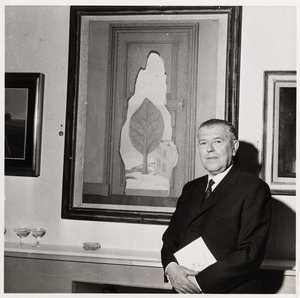
Magritte
1898 - 1967 , Belgium
Gyors információk
- Artistic Movement Or Style: Szürrealizmus
- Artists Or Movements Influenced By This Artist:
- Pop art
- Minimalista művészet
- Artists Who Influenced This Artist: ['Giorgio de Chirico']
- Date Of Birth: November 21, 1898
- Date Of Death: August 15, 1967
- Full Name: René François Ghislain Magritte
- Nationality: Belga
- Notable Artworks:
- Les Amants
- A kép árulása
- Idő vetve
- Place Of Birth: Lessines, Belgium
Kapcsolódó cikkek
10 Surrealist Masterpieces That Changed Art Forever
Step into a dreamscape of iconic surrealist paintings. From Dali to Magritte, explore the stories behind 10 timeless masterpieces that redefined art. Find museum-quality reproductions and curated decor inspiration at OriginalUniqueArt.com. Discover all masterpieces on OriginalUniqueArt.com.
Dreamscapes & Distortions: Top 10 Surrealist Masterpieces That Changed Art Forever
Step into a world of dreams with our guide to the top 10 Surrealist masterpieces. From Dali to Magritte, explore the stories behind these iconic works and find museum-quality art reproductions for your home. Discover all masterpieces on OriginalUniqueArt.com.

Dreamscapes Unveiled: Top 10 Surrealist Masterpieces to Explore
Step into a world of dreams with our curated guide to 10 iconic surrealist masterpieces. From Dali to Magritte, explore the stories behind these timeless works and find museum-quality art reproductions for your decor. Discover all masterpieces on OriginalUniqueArt.com.

Dreamscapes Unveiled: Top 10 Surrealist Masterpieces That Changed Art Forever
Step into a world of dreams with our guide to the 10 greatest Surrealist masterpieces. From Dali to Magritte, explore the stories behind these iconic works and find museum-quality art reproductions for your decor. Discover all masterpieces on OriginalUniqueArt.com.

10 Surrealist Masterpieces That Changed Art Forever
Step into a world of dreams with our guide to the 10 greatest Surrealist masterpieces. Explore the stories behind iconic works by Dali and Magritte. Find museum-quality art reproductions and decor inspiration at OriginalUniqueArt.com. Discover all masterpieces on OriginalUniqueArt.com