Érett reneszánsz
Disputa (Raffaello Sanzio)
Disputa művész Raffaello Sanzio (1483–1520) alkotása. A Érett reneszánsz irányzat részeglye. Freskó anyagból készült.
- Freskó

 Kézzel festett olajfestmény
 Küldés
 Megosztás
 Útmutató


 Letöltés
 Hasonló darabok
 Diavetítés
 Kérdések és válaszok

 Statisztika
Disputa: alapvető információk
- Cím
- Disputa
- Művész
- Raffaello Sanzio (1483–1520)
- A művész születési helye
- Urbino, Olaszország
- Műszerszínház
- Freskó
- Mozgalom
- Érett reneszánsz
- Időszak
- Reneszánsz
Disputa megtekintése
A Divine Dialogue: Unveiling Raphael’s *Disputa*
Raphael's *Disputa*, painted between 1509 and 1510, is a cornerstone of High Renaissance art, residing within the breathtaking Stanze di Raffaello in the Apostolic Palace at Vatican City. This monumental fresco isn’t merely a painting; it’s a theological statement rendered with unparalleled grace and intellectual depth, inviting viewers into a visual discourse on faith, reason, and divine truth.Subject & Composition: Heaven Meets Earth
The *Disputa* presents a complex yet harmonious composition divided into two distinct realms. The upper portion depicts a celestial gathering of theologians, saints, prophets, and martyrs arranged in a semi-circular formation around Christ and the Virgin Mary. They engage in animated discussion, their gestures conveying reverence and intellectual fervor. Below, on an architectural platform resembling a classical temple apse, earthly theologians – recognizable figures like Saint Augustine, Saint Thomas Aquinas, and Saint Gregory – continue the debate concerning the Holy Sacrament. This deliberate juxtaposition visually represents the convergence of heavenly wisdom and human inquiry. The composition is masterfully structured with a pyramidal form culminating in Christ, drawing the eye upwards towards the divine source.Style & Technique: The High Renaissance Ideal
*Disputa* exemplifies the hallmarks of the High Renaissance: balance, clarity, and idealized beauty. Raphael’s mastery of perspective creates a convincing sense of depth, while his use of *sfumato* – subtle gradations of light and shadow – lends an ethereal quality to the figures. Executed as a fresco, the painting demonstrates Raphael's technical brilliance in applying pigments to wet plaster, resulting in vibrant colors that have endured for centuries. The figures are not static; they possess dynamic poses and expressive faces, conveying a sense of lively intellectual exchange.Historical Context & Symbolism
Commissioned by Pope Julius II as part of the decoration of his private library (the *Stanza della Segnatura*), *Disputa* reflects the humanist spirit of the Renaissance – a renewed interest in classical learning and philosophical inquiry alongside religious faith. The room itself was intended to represent different branches of human knowledge: theology, law, poetry, and philosophy. The painting’s symbolism is rich and layered. The Holy Spirit, represented as a dove emanating light, signifies divine inspiration. The inclusion of prominent theologians underscores the importance of reason and scholarship in understanding religious doctrine. The architectural setting evokes the grandeur of ancient Rome, linking Christian theology to classical tradition.Emotional Impact & Lasting Legacy
*Disputa* transcends its theological subject matter to evoke a profound sense of awe, reverence, and intellectual curiosity. The painting’s harmonious composition and idealized figures inspire contemplation on the nature of truth, faith, and knowledge. It is not merely a depiction of a debate but an invitation to participate in it – to engage with the eternal questions that have occupied humanity for centuries. Raphael's *Disputa* remains a testament to his artistic genius and continues to captivate viewers with its beauty, intellectual depth, and enduring spiritual power.- Explore high-quality reproductions of *The Disputation of the Holy Sacrament* to bring Renaissance grandeur into your space.
- Discover more about Raphael’s life and artistic contributions within the context of the High Renaissance movement.
Disputa nagy felbontásban

Felfüggesztett szerzői jogok: a művész 1520-ben halt meg.
További méretek, kivágások és idézetforrás →Raffaello Sanzio, Disputa. Public domain
Disputa kapcsán felmerülő kérdések
Melyik tér harmonizál a „Disputa”, Raffaello Sanzio alkotása színeivel?
A Földszínek színei miatt a "Disputa" mű egy Nappali számára javasolt.
Mire ajánlott használni a „Disputa”, Raffaello Sanzio alkotása reprodukcióját?
A „Disputa”, Raffaello Sanzio alkotása reprodukcióját Kifejezésmód célokra javasoljuk. Ez a javaslat a mű témájából, hangulatából és színeiből adódik.
Mely művészeti irányba és mely korszakba sorolható a „Disputa”, Raffaello Sanzio alkotása?
A „Disputa” a Érett reneszánsz irányzat alkotása, készítője pedig a Reneszánsz korszakban tevékenykedett.
Erős fény-árnyék kontrasztot mutat-e a "Disputa"?
A „Disputa”, Raffaello Sanzio alkotása Kijelentés kontrasztot mutat a világos és sötét részek között.
Hogyan egyensúlyozza a fényt és a sötétséget a "Disputa"?
A „Disputa”, Raffaello Sanzio alkotása fényerősége világos, luminanciája pedig Érezhető fényesség.
Milyen érzelmet közvetít a Érett reneszánsz korszakból származó "Disputa" című alkotás?
A „Disputa” Szellemi hangulata kíséri a Érett reneszánsz stílusát.
Milyen elhelyezés illik „Disputa”, Raffaello Sanzio alkotása formátumához?
A formátum (Fenyőképi) és a javasolt helyiség (Nappali) a „Disputa”, Raffaello Sanzio alkotása alkotáshoz tartozó két elhelyezési adat.
Milyen technikával és milyen stílusban készült a "Disputa"?
A "Disputa" alkotás Freskó technikával készült, a Érett reneszánsz stílusban.
Kinek ajánlott ajándékba „Disputa”, Raffaello Sanzio alkotása?
A "Disputa" kiváló ajándékajánlat Évforduló számára.
A művészről: Raffaello Sanzio

1483–1520, Olaszország
Raffaello Sanzio
A Reneszánsz Fénye: Raffaello Sanzio élete és művészete Raffaello Sanzio da Urbino, a világ Raffaelloként ismerte, a reneszánsz egyik legkiemelkedőbb alakja volt. 1483-ban született Urbino falai között, egy kis, de intellektuálisan pezsgő itáliai városállamban. Korai éveit olyan légkörben töltötte, amely a művészi képességeket és a humanista tudást egyaránt értékelte. Apja, Giovanni Santi nem csupán Federico da Montefeltro herceg festője volt – hanem mélyen elmerült a reneszánsz gondolkodásának áramlataiban, költő, aki megörökítette a herceg életét és aktívan keresett innovatív művészeti ötleteket Itália szerte.
További művek: Raffaello Sanzio
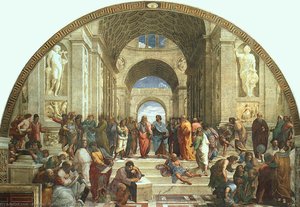 Az Athénai Iskola1511
 A Szisztine Madonna1513
 Raphael1520
 Észüremedett menyasszonyok összeolvasztása1504

Essays around Disputa
 Giotto di Bondone: Revolutionizing Late Medieval Painting through Narrative InnovationExplore the revolutionary art of Giotto di Bondone! Discover his groundbreaking techniques, iconic frescoes like those in the Arena Chapel,…
 Masterpieces of Light: The Top 25 Artworks by Duccio di BuoninsegnaJourney through the divine elegance of Duccio di Buoninsegna. Explore 25 iconic Sienese masterpieces, from the Maestà to the Rucellai Madon…
 Raphael 25 Mesterműve: A Reneszánsz Zsenialitása – Vásároljon Kiváló Minőségű Reprodukciókat!Fedezze fel Raphael 25 legpárásabb műalkotását! Olvasson a reneszánsz zsenialitásáról, festészeti technikáiról és ikonikus képeiről. Vásáro…