

 Megtekintés
 Küldés
 Megosztás
 Részletek

 Letöltés
 Hasonló darabok
 X-ray felvétel
 Diavetítés
 Statisztika
The Red Concert
 Oil On Canvas
- WallArt
- Fauvism
 1946
1946 33.0 x 41.0 cm
 Összes részlet megjelenítése
Giclée / Műnyomat
Múzeumi minőségű giclée vagy vászonnyomat, gyors gyártással és rugalmas finomítási lehetőségekkel. ( Kézzel festett másolat rendelése Áttérés digitális képre)




P118B $10

P118H $10

P118W $10

P438Z $10

P508JH $12

P508YH $12

P805H $10

P805Z $10

P919BZ $10

P919G $10

P919XJ $10

P959ZH $10

P968JZ $12

W106C $8

W218G $10

W218JH $8

W218Y $10

W307PJ $10

W316G $10

W316PJ $8

W316Y $10

W398PJ $8

W4111J $10

W500HY $15

W500JH $15

W692G $12

W849H $8

W940BG $15

W953PJ $8




Válasszon előre meghatározott méreteink közül, amelyek megfelelnek a műalkotás eredeti arányainak.

Megadhat saját méreteket is egy konkrét kerethez vagy helyszínhez igazítva. Amennyiben a kiválasztott méret nem egyezik az eredeti kép arányokkal, a műalkotást le fogjuk vágni, vagy kiegészítjük a képet tükrözött vagy egyszínű szélekkel. A gyártás megkezdése előtt egy digitális tervezetet küldünk jóváhagyásra.
Kérjük, vegye figyelembe, hogy a képernyőn látható előnézet nem tükrözi a tényleges levágást vagy kiegészítést. Csak a tervezet mutatja pontosan a végső kompozíciót.
Bár az egyedi méretek is elérhetőek, az eredeti arányok megőrzése érdekében azt javasoljuk, hogy válasszon a előre meghatározott listából származó méretet.
Világszerte történő kiszállítás területére mindössze 2 hét alatt, a szokásos 4-5 hét helyett. (17 szeptember)

Ingyenes globális expressz szállítás

Prémium minőségű len vászon

Teljes körű szállítási biztosítás

Vámvisszatérítési Garancia

Hiteles színpontosság garancia

100 napos visszaküldési lehetőség (csak hibás termékek esetén)

100% pénzvisszatérítési garancia

Több darab vásárlása esetén kedvezmény
 Az üvegkeretes opció csak 110 cm alatti méretben érhető el

The Red Concert
Giclée / Műnyomat
Reprodukció mérete
-


Összesített ár
$ 80
A Concert Scene Like No Other
The painting depicts a lively concert scene with a large orchestra playing in front of an audience. The musicians are arranged on the stage, some holding instruments such as violins and cellos, while others play pianos positioned at different angles. The crowd is seated in rows surrounding the stage, with some individuals standing near the edge, likely conductors or other performers.Colorful Harmony
Dufy's use of color is a defining feature of his work, and The Red Concert is no exception. The dominant red hue gives the painting its name and creates a sense of energy and vibrancy. The artist's bold brushstrokes and vivid colors bring the scene to life, capturing the excitement and joy of the concert.Influences and Style
Dufy's style was influenced by various art movements, including Fauvism and Cubism. His work often featured everyday subjects, such as orchestras, race tracks, and marine themes, which he depicted in a unique and decorative manner. The Red Concert showcases Dufy's ability to blend form and color, creating a visually striking piece that is both beautiful and captivating.Artistic Legacy
Raoul Dufy was a prolific artist who made significant contributions to the world of art. His work can be found in various museums and collections, including the Museen der Stadt (Vienna, Austria). Dufy's artistic legacy continues to inspire artists and art enthusiasts alike, with his unique style and vibrant colors remaining a hallmark of his oeuvre.Reproductions Available
For those who appreciate the beauty of The Red Concert, OriginalUniqueArt offers high-quality, handmade oil painting reproductions. These reproductions are created by skilled artists who carefully capture the essence and detail of Dufy's original work. Visit https://OriginalUniqueArt.com to explore our collection of Raoul Dufy's paintings, including The Red Concert.Other Notable Works
Some other notable works by Raoul Dufy include:- Musicians by Marc Chagall
- The Mexican Orchestra by Raoul Dufy
- Naked by Raoul Dufy
Conclusion
The Red Concert is a masterpiece that embodies the spirit of Naive Art and Primitivism. Raoul Dufy's unique style and use of color create a captivating piece that continues to inspire art enthusiasts today. OriginalUniqueArt's handmade oil painting reproductions offer a chance to own a piece of this artistic legacy, allowing you to bring the beauty of The Red Concert into your home.A művész életrajza
A Life Immersed in Color and Light
Raoul Dufy, born in the bustling port city of Le Havre, Normandy, on June 3, 1877, was an artist whose name became inextricably linked with joy, vibrant color, and a distinctly French *joie de vivre*. His artistic journey wasn’t forged amidst the traditional tools of a painter – palettes and easels – but rather within the practical realities of his early life. After leaving school at just fourteen, he found work in a coffee-importing company, a far cry from the world of art, yet it was during these years that the seeds of his passion were sown. Even amidst the daily grind, Dufy’s innate artistic sensibility refused to be suppressed; evening classes at Le Havre's École des Beaux-Arts ignited a flame within him, forging friendships with fellow artists Raimond Lecourt and Othon Friesz – companions who shared a studio in Montmartre and a mutual desire to explore new visual languages. These formative years were deeply influenced by the Impressionists, particularly the luminous landscapes of Claude Monet and Camille Pissarro, providing a foundational understanding of light, color, and composition that would inform his later artistic development. He was awarded a scholarship to study at the École Nationale supérieure des Beaux-Arts in Paris, further refining his skills and immersing himself in the dynamic artistic environment of the capital city.Embracing Fauvism and Finding His Voice
The early 20th century presented Dufy with a rapidly evolving art world. Initially, he experimented with Cubism, but it was Henri Matisse’s groundbreaking *Luxe, Calme et Volupté* at the 1905 Salon des Indépendants that proved to be a pivotal moment. The sheer audacity of color and expressive freedom unleashed by Matisse and his fellow “Fauves” – those wild beasts – resonated profoundly with Dufy, propelling him towards a style characterized by bold hues and liberated brushwork. However, Dufy didn’t simply mimic; he absorbed the energy of Fauvism and distilled it into something uniquely his own. He deliberately moved away from strict adherence to the movement's tenets, developing a more decorative and fluid approach. This period saw him experimenting with diverse mediums – illustration, textile design for Paul Poiret (a collaboration that brought vibrant color and pattern to fashion), even ceramics – demonstrating an impressive versatility that extended beyond the confines of traditional painting. His designs weren’t merely superficial ornamentation; they were integral expressions of his artistic vision, bringing a dynamic energy to everyday objects. Dufy's early engagement with the Fauves was documented in 1906 and 1907 at the Salon des Indépendants, solidifying his place within this revolutionary movement.A Stenographic Style: Capturing Modern Life
By the 1920s, Dufy had fully blossomed into a master of what became known as his “stenographic” style. This distinctive technique involved rapidly applying thin washes of color over skeletal structures – outlines that suggested form without detailed rendering – creating an impression of movement and spontaneity. It was a method perfectly suited to capturing the energy of modern life: yachting regattas, bustling city scenes, elegant social gatherings on the French Riviera, and the vibrant atmosphere of jazz clubs. Dufy wasn’t interested in meticulous detail; he sought to convey atmosphere, emotion, and the fleeting beauty of a moment. His paintings became celebrations of leisure, pleasure, and the spirited pulse of contemporary society. He painted orchestras, racecourses, and seascapes with an effervescent quality that captured the spirit of the Jazz Age. This period also saw him undertaking large-scale commissions, including the monumental *La Fée Electricité* for the 1937 Exposition Internationale in Paris – a vast work celebrating electricity’s impact on modern life, executed with remarkable speed and ingenuity using a new quick-drying medium. The sheer scale of this project showcased Dufy's ability to synthesize artistic vision with practical considerations.Influences and Artistic Development
Dufy’s artistic journey was shaped by a diverse range of influences. Initially, the Impressionists – Monet, Pissarro, and others – provided him with a foundational understanding of light, color, and landscape painting. The Fauves, particularly Matisse, liberated him from traditional constraints, encouraging him to embrace bold colors and expressive brushwork. Later, he found inspiration in Paul Cézanne’s emphasis on structure and form, incorporating these principles into his own style. Furthermore, the decorative arts – textile design and ceramics – profoundly influenced his approach, leading to a distinctive blend of artistic expression and functional design. Throughout his career, Dufy remained open to experimentation, constantly refining his technique and exploring new subjects. His work evolved organically, reflecting both his personal experiences and the changing cultural landscape of his time.Legacy and Enduring Appeal
Despite facing health challenges later in life due to rheumatoid arthritis, Raoul Dufy continued to paint with unwavering dedication until his death on March 23, 1953, in Forcalquier. His work is now held in prestigious collections worldwide – including the Musée d’Orsay in Paris, the Hermitage Museum in St. Petersburg, The Museum of Modern Art in New York, and the Art Institute of Chicago – a testament to his enduring artistic significance. Dufy's influence extends beyond painting; his designs continue to inspire textile and decorative arts. He left behind an impressive body of work – thousands of paintings, watercolors, drawings, prints, and applied art pieces – that collectively represent a vibrant celebration of life, color, and the beauty of the everyday. Raoul Dufy wasn’t merely a painter; he was a chronicler of his time, capturing the spirit of an era with a unique blend of Fauvist energy, decorative flair, and a distinctly optimistic vision. His art remains profoundly relevant today, offering a vibrant escape and a reminder to embrace the *joie de vivre* that permeated his life and work.Key Characteristics of Dufy’s Art
- Vibrant Color Palette: Dufy was renowned for his use of bright, saturated colors, often applied in thin washes.
- Dynamic Composition: His paintings frequently feature energetic compositions that convey a sense of movement and spontaneity.
- Decorative Style: A strong decorative element is present throughout his work, influenced by his designs for textiles and ceramics.
- Celebration of Modern Life: Dufy’s art often depicts scenes of leisure, social gatherings, and the pleasures of contemporary society.
- Stenographic Technique: His signature style involved rapidly applying thin washes of color over skeletal structures.

Dufy Raoul
1877 - 1953 , Franciaország
A művészről röviden
- Artistic Movement Or Style: Fauvizmus
- Artists Or Movements Influenced By This Artist:
- Textil design
- Ceramika
- Artists Who Influenced This Artist:
- Monet
- Matisse
- Cézanne
- Date Of Birth: 1877. 6. 3.
- Date Of Death: 1953. 3. 23.
- Full Name: Raoul Dufy
- Nationality: Francia
- Notable Artworks:
- La Fée Electricité
- The Thoroughbred
- Portrét Mme. Dufy
- Place Of Birth: Le Havre, Francia
Kapcsolódó cikkek

Crimson Threads of Narrative: Exploring Symbolism & Representation in Artworks Featuring the Red Dress
Explore the rich symbolism of the red dress in art history! From ancient power displays to iconic portraits like Cézanne’s 'Madame Cezanne', discover the cultural and artistic significance behind this captivating color. Expert analysis & insights.
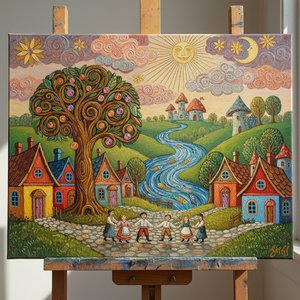
The Unconventional Vision: Exploring the Characteristics, History & Enduring Appeal of Naïve Art
Explore the captivating world of naïve art! Discover its history, characteristics, key artists & collecting tips from OriginalUniqueArt's experts. Find your perfect piece today.

The Untamed Vision: Exploring Naïve Art & Primitivism's Rejection of Convention
Explore the revolutionary world of Naïve Art & Primitivism! Discover how artists challenged academic traditions with raw emotion & unique styles. Learn about Picasso, Rousseau & more at OriginalUniqueArt.
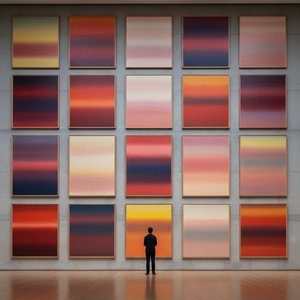
Mark Rothko 25 Mesterműve: Érzelmek és Színek a Modern Művészetben | OriginalUniqueArt
Fedezze fel Mark Rothko 25 legikonikusabb művét! Ismerje meg az absztrakt expresszionizmus mesterének érzelmi világát, színeit és technikáit. Múzeumi minőségű reprodukciók a OriginalUniqueArt-on – inspirálja otthonát egyedi faliképekkel! Explore the full collection online.

Henri Matisse 25 Mesterműve: Színek és Érzések Világa - OriginalUniqueArt
Fedezze fel Henri Matisse 25 legikonikusabb művét! Ismerje meg a fauvizmus színeit, az expresszionizmus formáit és a modern művészet mesterének életművét. Vászonképek, nyomatok – inspiráció otthonába a OriginalUniqueArt.com-on!