
 Megtekintés
 Küldés
 Megosztás
 Részletek
 Útmutató

 Letöltés
 Hasonló darabok
 X-ray felvétel
 Diavetítés
 Kérdések és válaszok
 Statisztika
Still Life with a Coffeepot

- 105.0 x 108.0 cm


 Összes részlet megjelenítése
Giclée / Műnyomat
Múzeumi minőségű giclée vagy vászonnyomat, gyors gyártással és rugalmas finomítási lehetőségekkel. ( Kézzel festett másolat rendelése Áttérés digitális képre)




P118B Ft10

P118H Ft10

P118W Ft10

P438Z Ft10

P508JH Ft12

P508YH Ft12

P805H Ft10

P805Z Ft10

P919BZ Ft10

P919G Ft10

P919XJ Ft10

P959ZH Ft10

P968JZ Ft12

W106C Ft8

W218G Ft10

W218JH Ft8

W218Y Ft10

W307PJ Ft10

W316G Ft10

W316PJ Ft8

W316Y Ft10

W398PJ Ft8

W4111J Ft10

W500HY Ft15

W500JH Ft15

W692G Ft12

W849H Ft8

W940BG Ft15

W953PJ Ft8




Válasszon előre meghatározott méreteink közül, amelyek megfelelnek a műalkotás eredeti arányainak.

Írja be a keretének vagy a falának megfelelő szélességet és magasságot. A nyomatot csak le lehet vágni, soha nem tehető nagyobbá, mint az eredeti kép, így egy eltérő alakú méretnél a kép egy része elveszik. Mielőtt bármit kinyatintanánk, küldünk egy digitális próbamodellt jóváhagyásra. Az oldalon látható kép nem tartalmazza a valós levágást — ezt csak a próbamodell mutatja meg.
Világszerte történő kiszállítás területére mindössze 2 hét alatt, a szokásos 4-5 hét helyett. (3 november)

Ingyenes globális expressz szállítás

Prémium minőségű len vászon

Teljes körű szállítási biztosítás

Vámvisszatérítési Garancia

Hiteles színarányosság garancia

100 napos visszaküldési lehetőség (csak hibás termékek esetén)

100% pénzvisszatérítési garancia

Több darab vásárlásakor kedvezmény
 Az üvegkeretes opció csak 110 cm alatti méretben érhető el

Still Life with a Coffeepot
Giclée / Műnyomat
Reprodukció mérete
-


Összesített ár
Ft 26538
Still Life with a Coffeepot: A Fauvist Celebration of Everyday Objects
Pyotr Konchalovsky’s Still Life with a Coffeepot, painted in 1919, is a vibrant and captivating example of the Fauvist movement. Measuring 105 x 108 cm, this artwork transcends a simple depiction of domestic items; it's an exploration of color, form, and the expressive potential of paint itself.
Composition and Subject Matter
The painting presents a carefully arranged still life set upon a table draped with a warm yellow cloth. The scene is populated with familiar objects: a blue vase brimming with flowers, a small white bowl holding green fruits (likely limes), and the titular yellow teapot. These elements are not rendered with photographic realism but rather simplified and stylized to emphasize their inherent shapes and colors. The background, painted in varying shades of blue, provides a cool counterpoint to the warmer tones dominating the foreground, creating visual balance and depth. The arrangement isn't haphazard; it demonstrates Konchalovsky’s skill in orchestrating a harmonious composition that guides the viewer's eye across the canvas.
Fauvist Style and Influences
Konchalovsky was deeply influenced by French Impressionism and, most notably, Fauvism. The term "Fauve" (meaning “wild beast”) was applied to artists who utilized bold, non-naturalistic colors and expressive brushstrokes. Still Life with a Coffeepot exemplifies these characteristics. The colors are not used to accurately represent the objects but rather to evoke emotion and create visual impact. The visible brushwork adds texture and dynamism to the painting, further distancing it from traditional realism. One can also detect echoes of Paul Cézanne’s influence in Konchalovsky's approach to form and structure, particularly in the way he simplifies shapes and explores spatial relationships.
Historical Context and Artistic Significance
Created in 1919, shortly after the Russian Revolution, this painting reflects a period of significant social and artistic upheaval. Konchalovsky was a member of the Jack of Diamonds group, a collective of artists who actively challenged traditional representational art forms. This group sought to introduce modern European trends – particularly Fauvism and Cubism – into the Russian art scene. Still Life with a Coffeepot stands as a testament to this artistic rebellion, showcasing Konchalovsky’s contribution to the development of Fauvism within the context of Russian art. It represents a move away from academic conventions towards a more expressive and subjective approach to painting.
Emotional Impact and Lasting Appeal
Beyond its historical significance, Still Life with a Coffeepot possesses an undeniable emotional appeal. The vibrant colors and dynamic brushstrokes create a sense of energy and vitality. While the subject matter is commonplace – everyday objects found in a home – Konchalovsky elevates it to something extraordinary through his artistic vision. The painting evokes feelings of warmth, comfort, and perhaps even a touch of nostalgia. It’s a celebration of the beauty that can be found in the ordinary, rendered with an exuberance that continues to captivate viewers today.
Kérdések és válaszok
Általánosságban inkább világos vagy sötét a "Still Life with a Coffeepot"?
A „Still Life with a Coffeepot”, Konchalovsky Pytor alkotása fényerősége bright, luminanciája pedig Gentle Luminance.
Hol vásárolható „Still Life with a Coffeepot”, Konchalovsky Pytor alkotása kézzel festett másolata?
A „Still Life with a Coffeepot”, Konchalovsky Pytor alkotása kézzel festett reprodukcióját közvetlenül a(z) Kézzel festett másolat oldalon is megrendelheti: kézzel festett olajfesték reprodukció lino vászonon, egyedi igény szerinti gyártással.
Milyen viszonyban áll egymáshoz a "Still Life with a Coffeepot" színei?
A „Still Life with a Coffeepot”, Konchalovsky Pytor alkotása egy Softly Mixed Palette színharmóniát mutat be.
A művész életrajza
A Life Immersed in the Russian Artistic Spirit
Pyotr Petrovich Konchalovsky, born February 21, 1876, in the village of Slavianka near Kharkiv, was more than just a painter; he was a visual chronicler of a Russia undergoing profound transformation. His artistic journey mirrored the nation’s own tumultuous passage through revolution and ideological shifts, marked by a relentless search for new forms of expression. Konchalovsky's upbringing steeped him in an atmosphere rich with intellectual and creative currents. His father, Petr Petrovich Konchalovsky, was a respected translator and art publisher whose Moscow home became a vibrant hub frequented by leading artists of the era—Valentin Serov, Mikhail Vrubel, Vasily Surikov all graced their residence after the family’s move to the capital in 1889. This early exposure wasn't merely observational; it instilled within young Pyotr a deep appreciation for artistic expression and laid the foundation for his future path. Weekends spent absorbing the masterpieces at the Tretyakov Gallery proved formative, shaping his aesthetic sensibilities with the power of Russian masters.From Parisian Influences to Avant-Garde Innovation
Konchalovsky’s formal training began at the Moscow School of Painting, Sculpture and Architecture, but a pivotal period followed in Paris from 1896 to 1898 at the Académie Julian. This immersion in the French art world proved transformative. He encountered the groundbreaking work of Paul Cézanne and Vincent van Gogh, artists who challenged conventional representation and explored new ways of perceiving form and color. A subsequent journey to Arles allowed him a deeper understanding of Van Gogh’s artistic vision—a pilgrimage into the heart of expressive intensity. Returning to Russia, he continued his studies at the Imperial Academy of Arts in Saint Petersburg, graduating in 1907. However, it was upon his return that Konchalovsky truly began to forge his own distinctive style. He became a central figure in the Russian avant-garde movement, co-founding the influential “Jack of Diamonds” (Knave of Diamonds) society in 1910. This group rejected academic traditions and championed experimentation, seeking inspiration not only from Western European modernism but also from Russia’s own folk art traditions—icons, tavern signs, and colorful popular prints known as *lubok*. He was a master of observation, capable of transforming the mundane into something extraordinary through the power of his vision.Navigating Shifting Ideologies: Style and Subject Matter
Konchalovsky’s artistic style evolved throughout his career, reflecting both personal exploration and the changing political climate of Russia. Initially influenced by Fauvism and Cézanne, his early works were characterized by bold colors, simplified forms, and a focus on structure. Paintings like “Still Life with a Coffeepot” exemplify this period, showcasing a vibrant palette and a dynamic composition. Following service in the Russian army during World War I, Konchalovsky’s style began to shift. The rise of Socialist Realism under the Soviet regime demanded art that served ideological purposes, celebrating socialist ideals and portraying prominent figures. While this represented a departure from his earlier avant-garde explorations, Konchalovsky adapted, becoming known for his ceremonial portraits. Despite these changes, he maintained a distinctive artistic voice, infusing even his more politically charged works with a sense of solidity and monumentality. He was not simply conforming; he was finding ways to express his artistic sensibility within the constraints of a new era.A Prolific Output: Key Themes & Subjects
Konchalovsky’s vast body of work reveals recurring themes and subjects that demonstrate his artistic preoccupations. Still lifes were a constant throughout his career, allowing him to explore form, color, and composition in a controlled environment. He often depicted everyday objects—fruits, flowers, dishes—imbuing them with a sense of weight and presence. Landscapes, particularly those inspired by his travels, also held a special place in his oeuvre, capturing the beauty and grandeur of the natural world. However, it was perhaps in portraiture that Konchalovsky truly excelled, creating compelling likenesses of his contemporaries, often imbued with psychological depth. His portraits ranged from intimate depictions of family members to grand ceremonial representations of Soviet officials. He also experimented with genre scenes and historical subjects, demonstrating a willingness to tackle diverse artistic challenges. The sheer volume of his work—over 5,000 pieces—is a testament to his tireless dedication and unwavering commitment to the art of painting.Legacy and Enduring Significance
Pyotr Konchalovsky’s contribution to Russian art is undeniable. He bridged the gap between early modernism and Socialist Realism, navigating complex political currents while remaining a significant artistic force. His first solo exhibition at the Tretyakov Gallery in 1922 solidified his reputation as one of Russia's leading artists. Beyond his own work, Konchalovsky fostered a family deeply involved in the arts; his son, Mikhail Petrovich Konchalovsky, became a renowned film director, and his daughter, Natalia Konchalovskaya, was an accomplished artist herself. His paintings are not merely aesthetically pleasing objects but historical documents, reflecting the tumultuous period in which they were created. They offer valuable insights into the evolution of Russian art and the challenges faced by artists operating within a rapidly changing society. Konchalovsky’s ability to adapt while maintaining a distinctive style cemented his place as a key figure in Russian art history, leaving behind a legacy that continues to inspire and captivate audiences today.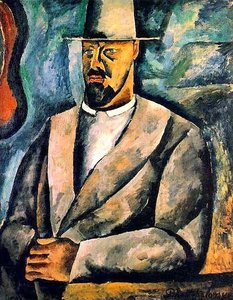
Konchalovsky Pytor
1876 - 1956 , Oroszország
Rövid információk
- Artistic Movement Or Style: Képzőművészet, Fauvizmus, Realizmus
- Artists Or Movements Influenced By This Artist: ['Orosz avantgárd']
- Artists Who Influenced This Artist:
- Paul Cézanne
- Van Gogh
- Date Of Birth: Feb 21, 1876
- Date Of Death: Feb 2, 1956
- Full Name: Pyotr Petrovich Konchalovsky
- Nationality: Orosz
- Notable Artworks:
- Kávéscsésze stillife
- Szablya
- Tengerpart
- Place Of Birth: Kharkiv, Oroszország
Kapcsolódó cikkek
Deconstructing Reality: A Comprehensive Exploration of Cubist Still Life
Explore the revolutionary world of Cubist Still Life with OriginalUniqueArt. Discover Picasso & Braque's groundbreaking techniques, its philosophical roots, and lasting impact on modern art. Expert insights for collectors.

Georges Braque Mesterek: A 25 Leglenyűgözőbb Kép, Ami Megváltoztatta a Modern Festészetet
Fedezze fel Georges Braque 25 legikonikusabb műalkotását! Ismerje meg a kubizmus történetét, Picasso hatását és a francia művész lenyűgöző festményeit. Múzeumi minőségű reprodukciók és inspiráló dekorációs ötletek a OriginalUniqueArt.com-on.

Ivan Bilibin: A Synthesis of Folklore, Modernism & National Identity in Russian Illustration
Explore the enchanting world of Ivan Bilibin, a master Russian illustrator who synthesized folklore, Art Nouveau & national identity. Discover his iconic fairy tale illustrations and legacy with OriginalUniqueArt.

Silent Narratives: Exploring the Enduring Appeal of Still Life Painting Across Centuries
Explore the rich history of still life painting with OriginalUniqueArt. Discover Dutch Masters, decode vanitas symbolism & learn about collecting timeless art. Expert insights and museum-quality reproductions.

Victor Vasnetsov: Myth, Nationalism & the Revival of Russian Fairy Tale Painting
Explore the captivating world of Victor Vasnetsov, a co-founder of Russian folklorist painting. Discover his iconic works, influence on national identity, and lasting legacy in this expert guide.
