

 Megtekintés
 Küldés
 Megosztás
 Részletek
 Útmutató

 Letöltés
 Hasonló darabok
 X-ray felvétel
 Diavetítés
 Statisztika
October Rose


 Összes részlet megjelenítése
Az ezen az oldalon megjelenített műalkotások szerzői jogi védelem alatt állnak, ami azt jelenti, hogy törvényileg nem készíthetünk és nem adhatunk el belőlük pontos másolatokat. Ez a védelem olyan nemzetközi megállapodások alapján érvényesül, mint például a Berni Egyezmény és a nemzeti jogszabályok által, beleértve azokat is, amelyeket meghatározott Az USA szerzői jogi törvénye – 17. cím.
Mint tiszteletes és törvényes alternatívát, olyan egyedi, kézzel festett alkotásokat kínálunk, amelyek az eredetiből merítnek inspirációt. Tapasztalt és professzionális művészeink alaposan tanulmányozzák az eredeti stílusát, hangulatát és művészeti esszenciáját, hogy egy olyan új, egyedi alkotást hozzunk létre, amely ugyanazt az érzést kelti – miközben önálló, eredeti alkotásként létezik.
Ez a módszer teljes mértékben megfelel a szerzői jogi szabályozásnak, mivel nem tartalmazza a védett műalkotás másolását vagy duplikálását. Ehelyett ez egy kreatív újinterpretáció – egy új festmény, amely az eredetivel való összefüggései miatt hatással van rá, de nem az az.
Kézzel készített olajfestmény reprodukció
Kézzel festett olajvastú vászon, az Ön által választott méretben és keretben, művészeink készítik meglévőre. ( Váltás nyomtatványra Áttérés digitális képre)




P118B Ft10

P118H Ft10

P118W Ft10

P438Z Ft10

P508JH Ft12

P508YH Ft12

P805H Ft10

P805Z Ft10

P919BZ Ft10

P919G Ft10

P919XJ Ft10

P959ZH Ft10

P968JZ Ft12

W106C Ft8

W218G Ft10

W218JH Ft8

W218Y Ft10

W307PJ Ft10

W316G Ft10

W316PJ Ft8

W316Y Ft10

W398PJ Ft8

W4111J Ft10

W500HY Ft15

W500JH Ft15

W692G Ft12

W849H Ft8

W940BG Ft15

W953PJ Ft8




Válasszon előre meghatározott méreteink közül, amelyek megfelelnek a műalkotás eredeti arányainak.

Írja be a kívánt szélességet és magasságot, hogy illeszkedjen a keretéhez vagy a falához. Mivel ez kézzel festett alkotás, egy eltérő formájú méret esetén a művész akár festhet is valamivel többet a kép körül, vagy korolathat is belőle — az Ön döntésének megfelelően. A festés megkezdése előtt küldünk egy digitális tervezetet jóváhagyásra. Az oldalon látható kép nem tartalmazza a végeredményt — csak a tervezet mutatja meg a valódi eredményt.
A rendelést követően a OriginalUniqueArt.com csapata e-mailt küld az ügyfélnek az instrukciókért, és biztosít egy előnézeti képet (mockup).
Világszerte elérhető szállítás () 3-4 hét alatt a szokásos 5 hét helyett. (28 október). A minőség nem kérdőjelezhető.

Ingyenes globális expressz szállítás

Prémium minőségű len vászon

Teljes körű szállítási biztosítás

Vámvisszatérítési Garancia

Hiteles színarányosság garancia

100 napos visszaküldési lehetőség (csak hibás termékek esetén)

100% pénzvisszatérítési garancia

Több darab vásárlásakor kedvezmény
 Az üvegkeretes opció csak 110 cm alatti méretben érhető el

October Rose
Reprodukciós technika
Reprodukció mérete
-


Összesített ár
Ft 96851
A Symphony of Petals: The Intimacy of October Rose
In the quiet, evocative realm of Paraskeva Clark, nature is not merely observed but deeply felt. Her 1941 masterpiece, October Rose, serves as a breathtaking testament to the artist's ability to capture the fleeting essence of life through the lens of botanical beauty. At first glance, the viewer is drawn into an intimate encounter with a singular rose, cradled within a vase and surrounded by a lush tapestry of verdant leaves. The composition is masterfully tight, pulling the observer into a close-up view that celebrates the delicate architecture of each petal. This is not a mere study of flora; it is a profound exploration of texture and light, where the velvety softness of the rose stands in striking contrast to the intricate, shadowed depths of the surrounding blossoms.
The painting breathes with a sense of layered complexity. While the central rose commands the stage, Clark skillfully utilizes the background to create a rhythmic dance of shapes and sizes. These secondary flowers emerge from the periphery like whispered memories, adding a structural depth that prevents the composition from feeling static. The interplay between the primary subject and its supporting cast creates a visual tension—a balance between the singular focus of the foreground and the atmospheric mystery of the background. For the discerning collector or interior designer, this piece offers a sophisticated focal point, capable of anchoring a room with its quiet strength and organic elegance.
Technique and the Legacy of the Petrograd Academy
The technical prowess displayed in October Rose is deeply rooted in Clark’s rigorous training at the Petrograd Academy of Fine Arts. Her brushwork reflects a disciplined hand, capable of rendering the translucent quality of light as it filters through organic membranes. There is a palpable sense of tactile realism here; one can almost feel the moisture on the leaves and the fragile weight of the blooming head. The artist employs a nuanced palette that honors the transition of seasons, using tones that evoke the cooling air of an October afternoon. This mastery of light and shadow—the chiaroscuro of the natural world—imbues the work with a three-dimensional presence that transcends the flat surface of the canvas.
Beyond its aesthetic appeal, the painting carries a profound emotional resonance. Born from a life shaped by both the modest struggles of her Russian upbringing and an unyielding intellectual curiosity, Clark’s work often touches upon themes of resilience and beauty amidst change. The rose, a universal symbol of love and ephemeral grace, becomes a metaphor for the enduring spirit. To possess a reproduction of this work is to invite a sense of contemplative peace into a living space. It is an ideal selection for those seeking to infuse their interiors with art that speaks of timelessness, offering a sophisticated touch of classical beauty that remains strikingly modern in its emotional honesty.
Kérdések és válaszok
Mennyi volt Plistik, Paraskeva életkora, amikor a "October Rose" készült?
Amikor a "October Rose" alkotása 1941-ben készült, Plistik, Paraskeva – aki 1898-ben született – 43 éves volt.
Ki a szerzője és mikor készült a "October Rose"?
A "October Rose" alkotását Plistik, Paraskeva készítette 1941 évben.
Milyen összefüggésben áll a "October Rose" témája Plistik, Paraskeva megszokott motíveivel?
A "October Rose" a rose, still life, flowers, nature, floral, petals, vase ábrázol, míg Plistik, Paraskeva dokumentált témái a floral realism, nature study, still life tradition, detailed botanical focus. A kettő összevetése megmutatja, hogyan kapcsolódik ez a mű a művész megszokott motívumaihoz.
A művész életrajza
Early Life and Artistic Beginnings
Paraskeva Clark (née Plistik), born October 28, 1898, in Saint Petersburg, Russia, was the eldest daughter of Avdey Plistik and Olga Fedorevna—a peasant factory worker who instilled in her a deep appreciation for education and learning. Her family’s modest circumstances fostered an early awareness of societal challenges, shaping her artistic vision throughout her life. From a young age, Clark demonstrated a passion for literature and the arts, attending theatre performances whenever possible – a formative experience that would later inform her approach to visual storytelling. She received four years more schooling than most girls of her time due to her father’s dedication to fostering intellectual curiosity. Her mother's skill in crafting artificial flowers supplemented the family income, highlighting the resourceful spirit characteristic of her upbringing. Clark pursued formal artistic training at Petrograd Academy of Fine Arts from 1916 into 1918, where she studied under Savely Seidenberg and was exposed to influential movements like Impressionism and Cubism. The academy’s closure during the October Revolution necessitated a shift towards tuition-free studios—a pivotal moment that cemented Clark's commitment to socialist ideals and artistic engagement with social issues. She embraced the opportunity to collaborate with fellow students on theatrical productions, honing her skills in set design and furthering her understanding of visual communication. Notably, she met Oreste Allegri Jr., an Italian stage designer who would become her husband, initiating a relationship that spanned decades and profoundly impacted her life’s trajectory.Influence of Constructivism and Modernist Style
Clark's artistic sensibilities were deeply rooted in the Constructivist movement—a radical rejection of decorative embellishment in favor of industrial assemblage and functional materiality. This aesthetic philosophy directly informed her stylistic choices, prioritizing clarity of form and conveying ideas through geometric abstraction. She absorbed the lessons of Impressionism and Post-Impressionism, recognizing their expressive potential while simultaneously rejecting sentimentality. Artists like Picasso and Braque served as crucial mentors during her formative years at Petrograd Academy, exposing her to groundbreaking innovations in artistic technique and conceptual exploration. Her early works demonstrate a deliberate effort to distill visual experience into its essential elements—a hallmark of Constructivist principles that would persist throughout her career.Career Highlights: Painting Landscapes and Portraits
Following the Russian Revolution, Clark embarked on a prolific artistic journey, establishing herself as a respected painter in Paris during the 1920s and relocating to Toronto in 1931 with her husband, Oreste Allegri Jr. Initially hesitant about embracing the landscapes championed by the Group of Seven—a movement she deemed overly sentimental—Clark nevertheless found inspiration in the natural beauty of Ontario and Québec. Her canvases captured serene vistas of Georgian Bay and Algonquin Park, reflecting a contemplative engagement with the environment. She gained recognition for her self-portraits and still lifes, which explored themes of identity and introspection—often rendered with meticulous detail and imbued with subtle psychological nuance. Clark’s work was exhibited extensively throughout the 1930s and 1940s, solidifying her reputation as a skilled artist and fostering connections within Toronto's burgeoning art community.Recognition and Legacy
Clark’s artistic achievements were formally acknowledged by the Royal Canadian Academy of Arts in 1966—a testament to her unwavering dedication to her craft and her commitment to social engagement. Her paintings gained prominence at institutions like the National Gallery of Canada and Art Gallery of Ontario, securing her place as a cornerstone of Canadian art history. Particularly noteworthy is “October Rose” (1941), which resides in Oshawa’s Robert McLaughlin Gallery—a poignant depiction of resilience amidst adversity—and “Design for a Puppet Show ‘The Young Devil’” (1937), commissioned by the Kramskoy Museum of Fine Arts in Voronezh, Russia—a bold exploration of theatrical symbolism. Clark's enduring influence extends beyond her artistic output; she championed social justice and actively participated in organizations dedicated to promoting art education and fostering cultural dialogue. Her legacy continues to inspire artists and scholars alike, ensuring that Paraskeva Clark’s contribution to Canadian visual culture remains vividly remembered.
Plistik, Paraskeva
1898 - 1986 , Russia
Rövid információk
- Full Name: Paraskeva Avdeyevna Clark
- Nationality: Canadian
- Date Of Birth: 1898
- Date Of Death: 1986
- Place Of Birth: Saint Petersburg, Russia
- Notable Artworks:
- October Rose
- Design for a puppet show "The Young Devil"
- Artistic Movement Or Style: Constructivism, Modernist Art
- Artists Who Influenced This Artist: ['Savely Seidenberg']
- Artists Or Movements Influenced By This Artist: ['Group of Painters']
Kapcsolódó cikkek

Silent Narratives: Exploring the Enduring Appeal of Still Life Painting Across Centuries
Explore the rich history of still life painting with OriginalUniqueArt. Discover Dutch Masters, decode vanitas symbolism & learn about collecting timeless art. Expert insights and museum-quality reproductions.
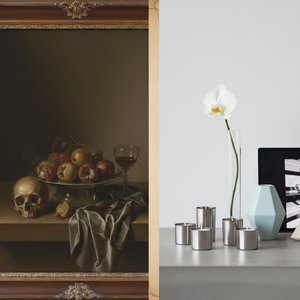
The Enduring Appeal of Still Life: A Historical & Contemporary Exploration
Explore the rich history & symbolism of still life painting with OriginalUniqueArt. Discover masterpieces from the Dutch Golden Age, learn about vanitas art, and find expert guidance for collecting timeless artworks.
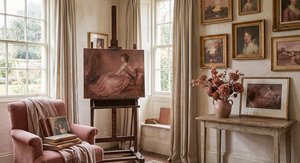
A 'Poros Rózsaszín' Bűvölete: 10 Meseműtészeti Festmény a Ház Falain
Fedezze fel a 'poros rózsaszín' árnyalatok lenyűgöző világát! 10 híres festmény – Monet, Renoir és más mesterek alkotásai – inspiráló történetekkel. Vászonképek, reprodukciók és otthon dekoráció tippek a OriginalUniqueArt.com-on. Explore the full collection online!
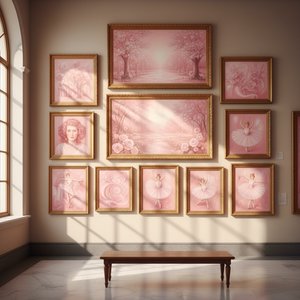
A fényrózsaszín varázsa: 10 ikonikus festmény a művészettörténetből
Fedezze fel a 10 legikonikusabb festményt, melyeket a fényrózsaszín varázsa jellemez! Monet-tól Renoir-ig, ismerje meg a művészettörténet e gyönyörű árnyalatainak szerepét. Vászonképek és reprodukciók prémium minőségben – OriginalUniqueArt.com
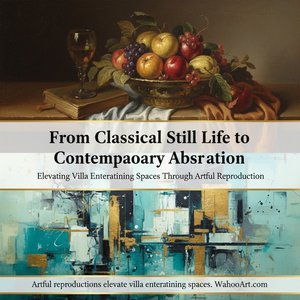
A klasszikus természetélettől a kortárs absztrakcióig: A művészeti reprodukcióval emelt villák vendéglátótereinek stílusa
Említse meg luxusvillája vendéglátótereit klasszikus és kortárs művészeti reprodukciókkal! Szakértői tanácsadás, prémium minőségű képmásolatok. Fedezze fel a tökéletes stílust a OriginalUniqueArt-tal!