

 Megtekintés
 Küldés
 Megosztás
 Részletek
 Útmutató

 Letöltés
 Hasonló darabok
 X-ray felvétel
 Diavetítés
 Statisztika
The Tickle
 Oil
Oil- WallArt
- Rococo
 1755
1755- Early Modern
 61.0 x 48.0 cm
 Thyssen-Bornemisza Múzeum
 Összes részlet megjelenítése
Kézzel készített olajfestmény reprodukció
Kézzel festett olajvastú vászon, az Ön által választott méretben és keretben, művészeink készítik meglévőre. ( Váltás nyomtatványra Áttérés digitális képre)




P118B Ft10

P118H Ft10

P118W Ft10

P438Z Ft10

P508JH Ft12

P508YH Ft12

P805H Ft10

P805Z Ft10

P919BZ Ft10

P919G Ft10

P919XJ Ft10

P959ZH Ft10

P968JZ Ft12

W106C Ft8

W218G Ft10

W218JH Ft8

W218Y Ft10

W307PJ Ft10

W316G Ft10

W316PJ Ft8

W316Y Ft10

W398PJ Ft8

W4111J Ft10

W500HY Ft15

W500JH Ft15

W692G Ft12

W849H Ft8

W940BG Ft15

W953PJ Ft8




Válasszon előre meghatározott méreteink közül, amelyek megfelelnek a műalkotás eredeti arányainak.

Írja be a kívánt szélességet és magasságot, hogy illeszkedjen a keretéhez vagy a falához. Mivel ez kézzel festett alkotás, egy eltérő formájú méret esetén a művész akár festhet is valamivel többet a kép körül, vagy korolathat is belőle — az Ön döntésének megfelelően. A festés megkezdése előtt küldünk egy digitális tervezetet jóváhagyásra. Az oldalon látható kép nem tartalmazza a végeredményt — csak a tervezet mutatja meg a valódi eredményt.
A rendelést követően a OriginalUniqueArt.com csapata e-mailt küld az ügyfélnek az instrukciókért, és biztosít egy előnézeti képet (mockup).
Világszerte elérhető szállítás () 3-4 hét alatt a szokásos 5 hét helyett. (25 október). A minőség nem kérdőjelezhető.

Ingyenes globális expressz szállítás

Prémium minőségű len vászon

Teljes körű szállítási biztosítás

Vámvisszatérítési Garancia

Hiteles színarányosság garancia

100 napos visszaküldési lehetőség (csak hibás termékek esetén)

100% pénzvisszatérítési garancia

Több darab vásárlásakor kedvezmény
 Az üvegkeretes opció csak 110 cm alatti méretben érhető el

The Tickle
Reprodukciós technika
Reprodukció mérete
-


Összesített ár
Ft 96158
A Glimpse into Venetian Intimacy
In the quiet, candlelit corners of eighteenth-century Venice, Pietro Longhi captured moments that history books often overlook. The Tickle is a masterful example of his ability to transform a domestic scene into a captivating narrative of social nuance and private emotion. The painting presents us with an intimate tableau: a woman reclines upon a plush couch, appearing caught in a moment of profound relaxation or perhaps a gentle, playful vulnerability. Surrounding her, two women stand in attentive postures, their presence suggesting a shared secret or a lighthearted moment of levity amidst the formal etiquette of the era. This is not a grand historical epic, but rather a "genre painting" that invites the viewer to eavesdrop on the subtle rhythms of aristocratic life.
Longhi, often referred to as the Venetian Hogarth, possessed a unique talent for observing the bourgeois society of his time with both affection and a sharp, satirical wit. In this work, the composition breathes with the lived-in atmosphere of a Venetian interior. Beyond the central trio, the artist populates the periphery with secondary figures—shadowy observers that add depth to the room's social fabric—and even a delicate bird perched near the upper corner, a subtle nod to the fleeting nature of pleasure and the domesticity of the setting. The arrangement of furniture, from the inviting couch to the solitary chair in the foreground, creates a stage where every element contributes to a sense of staged reality.
Technique and the Art of Observation
The technical execution of The Tickle reflects Longhi’s mastery of light and texture. His brushwork, while precise enough to render the sheen of silk and the weight of velvet, maintains a soft, atmospheric quality that mimics the hazy, romantic glow of Venetian twilight. The artist utilizes a sophisticated palette of muted tones, allowing the warmth of skin tones and the richness of the interior fabrics to command the viewer's attention. This delicate handling of light creates a sense of three-dimensionality, making the room feel as though one could step directly into the scene.
For the discerning collector or interior designer, this piece offers more than mere decoration; it provides an emotional anchor for a room. The painting’s ability to evoke nostalgia and a sense of refined elegance makes it a timeless addition to any curated space. Whether placed in a formal study or a contemporary living area, a high-quality reproduction of this work brings with it the sophisticated charm of the 1750s. It serves as a conversation piece that celebrates the beauty of the mundane and the enduring allure of human connection, making it an exquisite choice for those who appreciate art that tells a story through subtle gestures and masterful light.
Kérdések és válaszok
A "The Tickle" jellemző arra, amit Pietro Longhi általában alkotott?
Pietro Longhi ismétlődő témái közé tartozik a venetian genre scenes, 18th-century bourgeois life, daily social interactions, satirical charm, intimate domestic interiors; a „The Tickle” fókuszál a portrait, venetian life, genre painting, 18th century, women, interior scene, social interaction témakörre.
Milyen méretben ajánlott a "The Tickle" nyomtatása?
A "The Tickle" alkotáshoz a Medium nyomtatási méret ajánlott. Ugyanakkor ugyanazon arányokban elérhető egyéb méretű változat is.
Milyen színek jellemzik a(z) „The Tickle”, Pietro Longhi alkotása alkotást?
A „The Tickle”, Pietro Longhi alkotása egy Earthy színpalettát használ, melynek domináns színe a Phthalo Green (#21191a).
A művész életrajza
Pietro Longhi (Pietro Falca) – A Venetian Chronicler of Daily Life
Pietro Longhi, born Pietro Falca in Venice on November 5th, 1701, wasn’t painting grand historical narratives or mythological scenes; he was capturing the quiet dramas unfolding within the city's elegant homes and bustling streets. He became renowned for his witty genre paintings – intimate glimpses into the lives of 18th-century Venetians, a departure from the prevailing artistic trends of his time. The son of Alessandro Falca, a silversmith, Longhi’s early training began under the Veronese painter Antonio Balestra, who recognized and nurtured the young artist's talent. This foundation in traditional technique would later serve as a subtle counterpoint to the innovative spirit he brought to his chosen subject matter – a spirit that anticipated the groundbreaking work of William Hogarth, cementing Longhi’s place as “the Venetian Hogarth.”Early Influences and Artistic Training
Antonio Balestra's mentorship proved invaluable, instilling in Longhi a mastery of Venetian painting traditions. Balestra championed broken brushwork and vibrant color glazes—techniques that would become hallmarks of Longhi’s distinctive style. Recognizing Longhi’s exceptional aptitude, Balestra recommended him to Giuseppe Maria Crespi, Bolognese artist who was highly regarded for both religious and genre painting. This connection exposed Longhi to the burgeoning social and cultural shifts of his era – a fascination with the private lives of the bourgeoisie and a growing appreciation for domestic rituals. Crespi's influence encouraged Longhi to explore new artistic avenues while retaining the core principles of Venetian art.Religious Beginnings and Transition Towards Genre Painting
Longhi’s initial artistic endeavors focused on religious commissions, producing altarpieces that demonstrated his technical skill and adherence to established conventions. His 1732 depiction of Saint Pellegrino for San Pellegrino church exemplifies this early period, showcasing the meticulous application of color glazes and a careful attention to detail—characteristics typical of Venetian painting at the time. However, around 1737 Longhi embarked on a transformative journey, decisively shifting his artistic focus towards genre scenes – small-scale depictions of everyday life that would define his legacy. This pivotal decision wasn’t merely stylistic; it represented a conscious engagement with the evolving sensibilities of the century and signaled a departure from the grand narratives favored by many of his contemporaries.The Venetian Hogarth: Observation, Wit, and Social Commentary
Longhi quickly earned the moniker “the Venetian William Hogarth,” reflecting his remarkable ability to infuse seemingly mundane subjects with astute social commentary—a skill that distinguished him from other artists of his time. Like Hogarth, Longhi eschewed moralizing pronouncements, preferring instead to present observations of human behavior with a subtle irony and an unwavering commitment to truth. He didn’t simply record what he saw; he interrogated it, prompting viewers to consider the complexities and contradictions inherent in Venetian society. His canvases are populated by figures engaged in various activities—gambling parlors (*Ridotti*) teeming with patrons, masked balls celebrating Carnival, and intimate interiors capturing domestic life—each scene imbued with a nuanced perspective that anticipates Hogarth’s groundbreaking approach.Notable Works and Lasting Legacy
Longhi's oeuvre comprises approximately 150 paintings, many of which are celebrated for their exquisite detail and psychological insight. Among his most iconic creations are *The Tailor*, *The Baptism*, *Painter in His Studio*, *The Concert*, *The Charlatan*, and *Exhibition of a Rhinoceros*—each piece offering a captivating glimpse into Venetian life and culture. The *Exhibition of a Rhinoceros*, commissioned by the Dutch sea captain Douvemont van der Meer, stands out as particularly noteworthy – Longhi’s depiction captures the spectacle of the rhinoceros's arrival in Venice with remarkable accuracy and understated humor. His masterful technique—characterized by broken brushwork, luminous color glazes, and meticulous attention to texture—established him as a cornerstone of Venetian painting and cemented his reputation as “the Venetian Hogarth.” Pietro Longhi died peacefully in Venice on May 8th, 1785, leaving behind an enduring artistic legacy that continues to inspire admiration and scholarly study.
Pietro Longhi
1701 - 1785 , Olaszország
Rövid információk
- Artistic Movement Or Style: Venetian painting, Rococo
- Artists Or Movements Influenced By This Artist: ['William Hogarth']
- Artists Who Influenced This Artist:
- Antonio Balestra
- Giuseppe Maria Crespi
- Date Of Birth: November 5, 1701
- Date Of Death: May 8, 1785
- Full Name: Pietro Longhi
- Nationality: Italian
- Notable Artworks:
- The Tailor
- The Baptism
- Painter in his studio
- Place Of Birth: Venice, Italy
Kapcsolódó cikkek

Venetian Renaissance: The Mastery of Color, Light, and the Art of Colorito
Explore the luminous mastery of the Venetian Renaissance. Discover how masters like Titian and Giorgione revolutionized art through colorito, light, and atmosphere. An expert guide to the golden age of Italian painting for collectors and enthusiasts.

Pietro Longhi's Venetian Scenes: A Study of Rococo Society & Domestic Life
Explore the captivating world of Pietro Longhi's Venetian scenes! Discover insightful analysis of his Rococo masterpieces & social commentary on 18th-century life. Learn about this 'Venetian Hogarth' and his lasting artistic legacy.

The Golden Light of Innovation: Exploring the Venetian Renaissance Art Movement (1430–1580)
Explore the Golden Age of Venetian art (1430–1580). Discover Giorgione, Titian & Tintoretto's techniques, the 'colorito' revolution, and lasting influence. Expert insights for collectors & enthusiasts.
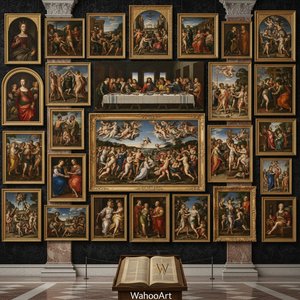
Jacopo Tintoretto 25 Mesterműve: A Velencei Dráma és Fény Világa | OriginalUniqueArt
Fedezze fel Jacopo Tintoretto 25 legpárásabb műalkotását! A velencei reneszánsz drámája és a barokk fények világa. Vásároljon luxus minőségű reprodukciókat, inspirálja otthonát OriginalUniqueArt-on. Explore the full collection online!

Michelangelo Morlaiter: Venetian Landscapes & the Pursuit of Atmospheric Realism
Explore the captivating landscapes of Michelangelo Morlaiter, a key figure in 18th-century Venetian painting. Discover his mastery of atmospheric perspective and lasting influence on Italian art history. Learn more at OriginalUniqueArt.