

 Megtekintés
 Küldés
 Megosztás
 Részletek
 Útmutató

 Letöltés
 Hasonló darabok
 X-ray felvétel
 Diavetítés
 Statisztika
Extreme Unction
 Etching
- Rococo
 1755
1755- Early Modern
 57.0 x 44.0 cm
 Los Angeles County Museum of Art
 Összes részlet megjelenítése
Giclée / Műnyomat
Múzeumi minőségű giclée vagy vászonnyomat, gyors gyártással és rugalmas finomítási lehetőségekkel. ( Kézzel festett másolat rendelése Áttérés digitális képre)




P118B Ft10

P118H Ft10

P118W Ft10

P438Z Ft10

P508JH Ft12

P508YH Ft12

P805H Ft10

P805Z Ft10

P919BZ Ft10

P919G Ft10

P919XJ Ft10

P959ZH Ft10

P968JZ Ft12

W106C Ft8

W218G Ft10

W218JH Ft8

W218Y Ft10

W307PJ Ft10

W316G Ft10

W316PJ Ft8

W316Y Ft10

W398PJ Ft8

W4111J Ft10

W500HY Ft15

W500JH Ft15

W692G Ft12

W849H Ft8

W940BG Ft15

W953PJ Ft8




Válasszon előre meghatározott méreteink közül, amelyek megfelelnek a műalkotás eredeti arányainak.

Írja be a keretének vagy a falának megfelelő szélességet és magasságot. A nyomatot csak le lehet vágni, soha nem tehető nagyobbá, mint az eredeti kép, így egy eltérő alakú méretnél a kép egy része elveszik. Mielőtt bármit kinyatintanánk, küldünk egy digitális próbamodellt jóváhagyásra. Az oldalon látható kép nem tartalmazza a valós levágást — ezt csak a próbamodell mutatja meg.
Világszerte történő kiszállítás területére mindössze 2 hét alatt, a szokásos 4-5 hét helyett. (25 október)

Ingyenes globális expressz szállítás

Prémium minőségű len vászon

Teljes körű szállítási biztosítás

Vámvisszatérítési Garancia

Hiteles színarányosság garancia

100 napos visszaküldési lehetőség (csak hibás termékek esetén)

100% pénzvisszatérítési garancia

Több darab vásárlásakor kedvezmény
 Az üvegkeretes opció csak 110 cm alatti méretben érhető el

Extreme Unction
Giclée / Műnyomat
Reprodukció mérete
-


Összesített ár
Ft 25642
A Somber Glimpse into Venetian Devotion
In the quiet, shadowed corners of eighteenth-century Venice, life was often defined by its most profound transitions. Pietro Longhi’s 1755 etching, Extreme Unction, serves as a hauntingly beautiful window into these private moments of mortality and faith. Unlike the grand, sweeping canvases of his contemporaries that celebrated the triumphs of gods and heroes, Longhi turned his gaze toward the intimate, often heavy atmosphere of the Venetian domestic sphere. This particular work captures the solemnity of the Last Rites, a sacred ritual where a priest administers the final sacraments to the departing soul. Through the delicate medium of etching, Longhi masterfully orchestrates a scene that is as much about the presence of the divine as it is about the palpable weight of human grief.
The composition draws the viewer into a room thick with tension and reverence. At the heart of the narrative lies the bed, where the patient rests in a state of vulnerability, surrounded by the witnesses of their final journey. The priest, an elder figure draped in heavy, traditional robes, stands as the bridge between the earthly and the eternal. Longhi’s ability to render texture through fine, etched lines allows us to feel the weight of the liturgical garments and the stillness of the air. Scattered throughout the room are the humble artifacts of daily life—cups, bowls, and vases—which, in this context, take on a symbolic significance. These objects, mundane in any other setting, become silent participants in the ritual, grounding the spiritual event in the tangible reality of a Venetian household.
Mastery of Line and Emotional Resonance
Technically, this etching showcases Longhi’s profound command over light and shadow, a skill honed during his early training under Antonio Balestra. The monochromatic palette of the etching does not strip the scene of its depth; rather, it enhances the dramatic chiaroscuro effect, pulling focus to the central figures while allowing the periphery to recede into a mysterious, atmospheric gloom. The interplay of light hitting the surfaces of the ceramic bowls and the metallic glint of a cup creates a sense of three-dimensional space that invites the collector to step directly into the room. For the discerning eye, the precision of the linework reveals a master who understood that the smallest detail—the fold of a sleeve or the tilt of a head—could communicate the deepest complexities of human emotion.
For art lovers and interior designers alike, Extreme Unction offers more than just historical interest; it provides a profound emotional anchor for a curated space. The piece possesses a timeless, melancholic elegance that complements sophisticated, classical interiors. It is a work that demands contemplation, making it an ideal centerpiece for a study, a library, or a gallery wall dedicated to the mastery of printmaking. Owning a high-quality reproduction of this etching allows one to preserve the somber beauty of Longhi’s vision, bringing a sense of historical gravity and quiet, reflective grace into the modern home.
Kérdések és válaszok
Milyen színharmóniát mutat be „Extreme Unction”, Pietro Longhi alkotása?
A „Extreme Unction”, Pietro Longhi alkotása színei Unified Palette harmóniát mutatnak be. A harmónia azt írja le, hogyan kapcsolódnak egymáshoz a színek.
Milyen kontraszt jellemzi a „Extreme Unction”, Pietro Longhi alkotása alkotást?
A "Extreme Unction" fény-sötét kontrasztja Bold értéket mutat. A kontraszt azt írja le, mennyire térnek el egymástól a világos és sötét részek.
Hol vásárolható „Extreme Unction”, Pietro Longhi alkotása kézzel festett másolata?
A „Extreme Unction”, Pietro Longhi alkotása kézzel festett másolataival a ez a weboldal oldalon találkozhat, kézzel festett olajfesték reprodukció lino vászonon formában, melyet a(z) Kézzel festett másolat oldalon lehet megrendelni.
A művész életrajza
Pietro Longhi (Pietro Falca) – A Venetian Chronicler of Daily Life
Pietro Longhi, born Pietro Falca in Venice on November 5th, 1701, wasn’t painting grand historical narratives or mythological scenes; he was capturing the quiet dramas unfolding within the city's elegant homes and bustling streets. He became renowned for his witty genre paintings – intimate glimpses into the lives of 18th-century Venetians, a departure from the prevailing artistic trends of his time. The son of Alessandro Falca, a silversmith, Longhi’s early training began under the Veronese painter Antonio Balestra, who recognized and nurtured the young artist's talent. This foundation in traditional technique would later serve as a subtle counterpoint to the innovative spirit he brought to his chosen subject matter – a spirit that anticipated the groundbreaking work of William Hogarth, cementing Longhi’s place as “the Venetian Hogarth.”Early Influences and Artistic Training
Antonio Balestra's mentorship proved invaluable, instilling in Longhi a mastery of Venetian painting traditions. Balestra championed broken brushwork and vibrant color glazes—techniques that would become hallmarks of Longhi’s distinctive style. Recognizing Longhi’s exceptional aptitude, Balestra recommended him to Giuseppe Maria Crespi, Bolognese artist who was highly regarded for both religious and genre painting. This connection exposed Longhi to the burgeoning social and cultural shifts of his era – a fascination with the private lives of the bourgeoisie and a growing appreciation for domestic rituals. Crespi's influence encouraged Longhi to explore new artistic avenues while retaining the core principles of Venetian art.Religious Beginnings and Transition Towards Genre Painting
Longhi’s initial artistic endeavors focused on religious commissions, producing altarpieces that demonstrated his technical skill and adherence to established conventions. His 1732 depiction of Saint Pellegrino for San Pellegrino church exemplifies this early period, showcasing the meticulous application of color glazes and a careful attention to detail—characteristics typical of Venetian painting at the time. However, around 1737 Longhi embarked on a transformative journey, decisively shifting his artistic focus towards genre scenes – small-scale depictions of everyday life that would define his legacy. This pivotal decision wasn’t merely stylistic; it represented a conscious engagement with the evolving sensibilities of the century and signaled a departure from the grand narratives favored by many of his contemporaries.The Venetian Hogarth: Observation, Wit, and Social Commentary
Longhi quickly earned the moniker “the Venetian William Hogarth,” reflecting his remarkable ability to infuse seemingly mundane subjects with astute social commentary—a skill that distinguished him from other artists of his time. Like Hogarth, Longhi eschewed moralizing pronouncements, preferring instead to present observations of human behavior with a subtle irony and an unwavering commitment to truth. He didn’t simply record what he saw; he interrogated it, prompting viewers to consider the complexities and contradictions inherent in Venetian society. His canvases are populated by figures engaged in various activities—gambling parlors (*Ridotti*) teeming with patrons, masked balls celebrating Carnival, and intimate interiors capturing domestic life—each scene imbued with a nuanced perspective that anticipates Hogarth’s groundbreaking approach.Notable Works and Lasting Legacy
Longhi's oeuvre comprises approximately 150 paintings, many of which are celebrated for their exquisite detail and psychological insight. Among his most iconic creations are *The Tailor*, *The Baptism*, *Painter in His Studio*, *The Concert*, *The Charlatan*, and *Exhibition of a Rhinoceros*—each piece offering a captivating glimpse into Venetian life and culture. The *Exhibition of a Rhinoceros*, commissioned by the Dutch sea captain Douvemont van der Meer, stands out as particularly noteworthy – Longhi’s depiction captures the spectacle of the rhinoceros's arrival in Venice with remarkable accuracy and understated humor. His masterful technique—characterized by broken brushwork, luminous color glazes, and meticulous attention to texture—established him as a cornerstone of Venetian painting and cemented his reputation as “the Venetian Hogarth.” Pietro Longhi died peacefully in Venice on May 8th, 1785, leaving behind an enduring artistic legacy that continues to inspire admiration and scholarly study.
Pietro Longhi
1701 - 1785 , Olaszország
Rövid információk
- Artistic Movement Or Style: Venetian painting, Rococo
- Artists Or Movements Influenced By This Artist: ['William Hogarth']
- Artists Who Influenced This Artist:
- Antonio Balestra
- Giuseppe Maria Crespi
- Date Of Birth: November 5, 1701
- Date Of Death: May 8, 1785
- Full Name: Pietro Longhi
- Nationality: Italian
- Notable Artworks:
- The Tailor
- The Baptism
- Painter in his studio
- Place Of Birth: Venice, Italy
Kapcsolódó cikkek

The Intricate World of Etching: A Historical Survey of Technique, Aesthetic Evolution, and Enduring Artistic Impact
Explore the rich history of etching, from its origins to modern practice. Discover techniques, key artists like Rembrandt, and insights for collectors. A comprehensive guide by OriginalUniqueArt.

Pietro Longhi's Venetian Scenes: A Study of Rococo Society & Domestic Life
Explore the captivating world of Pietro Longhi's Venetian scenes! Discover insightful analysis of his Rococo masterpieces & social commentary on 18th-century life. Learn about this 'Venetian Hogarth' and his lasting artistic legacy.

Etching: A Historical Survey of Technique, Aesthetic Qualities & Enduring Artistic Significance
Explore the rich history of etching, from its origins to Rembrandt's masterful innovations. Discover the technique, aesthetic qualities & enduring legacy of this captivating art form. Expert insights for collectors and enthusiasts.
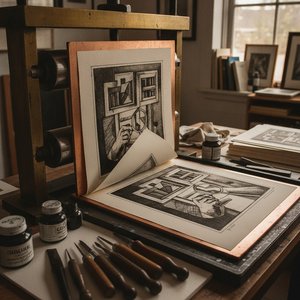
Etching Unlocked: The Sharp, High-Impact Art of Line and Shadow for the Modern Collector
Master the high-impact world of etching. Explore the transformative power of line and shadow through the intaglio tradition, from its armor-making origins to modern collecting strategies for the sophisticated art enthusiast.
A művészettörténet 10 legikonikusabb rézkarcai: Mesterművek, melyek örökre megváltoztatták a látásmódot
Fedezze fel a művészettörténet 10 legikonikusabb rézkarcát! Rembrandt, Goya és más mesterek munkáival gazdagítsa otthonát. Művészeti reprodukciók prémium minőségben – inspirációt és luxus dekorációt kínálunk. Nézze meg a teljes gyűjteményünket a OriginalUniqueArt.com-on!