
 Megtekintés
 Küldés
 Megosztás
 Részletek
 Útmutató

 Letöltés
 Hasonló darabok
 X-ray felvétel
 Diavetítés
 Kérdések és válaszok
 Statisztika
Market Scene

- 91.0 x 112.0 cm


 Összes részlet megjelenítése
Giclée / Műnyomat
Múzeumi minőségű giclée vagy vászonnyomat, gyors gyártással és rugalmas finomítási lehetőségekkel. ( Kézzel festett másolat rendelése Áttérés digitális képre)




P118B Ft10

P118H Ft10

P118W Ft10

P438Z Ft10

P508JH Ft12

P508YH Ft12

P805H Ft10

P805Z Ft10

P919BZ Ft10

P919G Ft10

P919XJ Ft10

P959ZH Ft10

P968JZ Ft12

W106C Ft8

W218G Ft10

W218JH Ft8

W218Y Ft10

W307PJ Ft10

W316G Ft10

W316PJ Ft8

W316Y Ft10

W398PJ Ft8

W4111J Ft10

W500HY Ft15

W500JH Ft15

W692G Ft12

W849H Ft8

W940BG Ft15

W953PJ Ft8




Válasszon előre meghatározott méreteink közül, amelyek megfelelnek a műalkotás eredeti arányainak.

Írja be a keretének vagy a falának megfelelő szélességet és magasságot. A nyomatot csak le lehet vágni, soha nem tehető nagyobbá, mint az eredeti kép, így egy eltérő alakú méretnél a kép egy része elveszik. Mielőtt bármit kinyatintanánk, küldünk egy digitális próbamodellt jóváhagyásra. Az oldalon látható kép nem tartalmazza a valós levágást — ezt csak a próbamodell mutatja meg.
Világszerte történő kiszállítás területére mindössze 2 hét alatt, a szokásos 4-5 hét helyett. (3 november)

Ingyenes globális expressz szállítás

Prémium minőségű len vászon

Teljes körű szállítási biztosítás

Vámvisszatérítési Garancia

Hiteles színarányosság garancia

100 napos visszaküldési lehetőség (csak hibás termékek esetén)

100% pénzvisszatérítési garancia

Több darab vásárlásakor kedvezmény
 Az üvegkeretes opció csak 110 cm alatti méretben érhető el

Market Scene
Giclée / Műnyomat
Reprodukció mérete
-


Összesített ár
Ft 26538
A Symphony of Everyday Life: The World of Pieter Aertsen
In the bustling heart of a sixteenth-century marketplace, where the scent of fresh produce meets the vibrant energy of human commerce, lies the soul of Pieter Aertsen’s Market Scene. This masterpiece serves as more than a mere depiction of trade; it is a profound window into the Northern Renaissance, capturing a moment where the mundane and the monumental collide. As viewers gaze upon the crowded stalls and the focused figures navigating the square, they are invited into a meticulously constructed miniature world. Aertseb, often referred to as "Lange Piet," possessed an unparalleled ability to elevate the domestic narrative, transforming a simple gathering of merchants and peasants into a complex tapestry of human existence that resonates with timeless vitality.
The composition is anchored by a striking central figure—a man seated with a quiet, contemplative gravity, cradling a birdcage filled with life. This focal point acts as an emotional anchor amidst the surrounding movement. Around him, the marketplace breathes; figures lean into conversation, others tend to their wares, and the subtle presence of a hat-clad onlooker adds layers of social depth. The scene is rich with the tactile delights of the era: the smooth sheen of polished metal, the rustic texture of wooden bowls, and the delicate glint of glass bottles. For the discerning collector or interior designer, this painting offers a sense of grounded luxury, bringing an atmosphere of historical richness and organic warmth to any curated space.
Mastery of Technique and the Art of Realism
Aertsen’s technical prowess is nothing shortable of extraordinary, representing a pivotal bridge between the stylized elegance of Mannerism and the burgeoning observational truth of Realism. Utilizing oil on canvas, the artist employed a sophisticated method of applying thin, translucent glazes to achieve a luminous color palette. This technique allows light to appear as if it is emanating from within the objects themselves, lending a breathtaking glow to the fruits, vegetables, and utensils scattered throughout the scene. His command over texture is particularly noteworthy; one can almost feel the rough grain of the market stalls and the cool weight of the ceramic cups.
This dedication to accuracy was revolutionary for his time. While his predecessors often favored exaggerated proportions and artificiality, Aertsen embraced the beauty of the tangible. He pioneered a style where the "lower" subject matter—the food, the tools, and the people—takes center stage with such incredible detail that it demands reverence. This approach does not merely document a scene; it celebrates the sensory experience of living. For those seeking to adorn a home with art that inspires a connection to the physical world, Aertsen’s work provides an unparalleled sense of presence and substance.
Symbolism and the Legacy of the Northern Renaissance
Beyond its surface beauty, the Market Scene is steeped in the symbolic language characteristic of the Flemish tradition. In the works of Aertsen, every object carries a potential weight of meaning. The abundance of food and the lively birds within the cage can be interpreted as metaphors for fertility, the fleeting nature of life, or even hidden religious allegories that were common in the Antwerp school. He was a master of "inversion," a technique where he would place a grander, often biblical narrative in the distant background, forcing the viewer to first confront the reality of the material world before discovering the spiritual truth hidden within it.
This layering of meaning ensures that the painting remains intellectually stimulating long after the initial visual impact has faded. It is an artwork that rewards slow looking and deep contemplation. As a high-quality reproduction, this piece serves as a magnificent conversation starter, offering both aesthetic splendor and historical depth. Whether placed in a sunlit gallery or a sophisticated study, Aertsen’s vision of the marketplace continues to enchant, reminding us that there is profound beauty and infinite complexity to be found in the simplest moments of our daily lives.
Kérdések és válaszok
Milyen színek jellemzik a "Market Scene" alkotást?
A „Market Scene”, Pieter Aertsen alkotása egy Earthy színpalettát használ, amely összefoglalja a mű egészében megnyilvánuló színes karakterét.
Mit ábrázol a "Market Scene"?
„Market Scene”, Pieter Aertsen alkotása a következőket ábrázolja: man, birds, bird cage, people, marketplace, buildings, bowl, cup.
Milyen méretű „Market Scene”, Pieter Aertsen alkotása nyomatás illik a javasolt szobához?
A „Market Scene”, Pieter Aertsen alkotása javasolt nyomtatási mérete Large egy Living Room számára.
A művész életrajza
Pieter Aertsen: The Architect of Domestic Narrative
Pieter Aertsen, a name often whispered in the halls of art history, stands as a pivotal figure bridging the gap between Northern Mannerism and the burgeoning realism of the Dutch Golden Age. Born in Amsterdam around 1508 and tragically dying in the same city in 1575, Aertsen’s legacy isn’t defined by grand religious commissions or heroic portraits, but rather by his revolutionary approach to genre painting – a deliberate elevation of everyday life, imbued with layers of symbolism and narrative depth. He wasn’t merely depicting scenes; he was constructing miniature worlds, inviting viewers into a complex tapestry of human experience.
Aertsen's early training under Allaert Claesz provided him with a solid foundation in traditional Flemish techniques. However, it was his relocation to Antwerp, the vibrant heart of artistic innovation during the mid-16th century, that truly shaped his distinctive style. Antwerp’s bustling atmosphere, its diverse population, and its position as a crossroads of European trade fostered an environment ripe for experimentation – a stark contrast to the more rigidly defined religious conventions of the time. Here, he joined the esteemed Guild of Saint Luke, earning the moniker “Langhe Peter,” or Tall Peter, reflecting his imposing stature, a detail often incorporated into his portraits.
The Invention of Monumental Genre
Aertsen’s most significant contribution to art lies in his pioneering work – the creation of what is now recognized as monumental genre scenes. Unlike earlier depictions of domestic life that were relegated to smaller, secondary spaces within religious compositions, Aertsen placed everyday activities – market scenes, butcher shops, still lifes – squarely at the forefront of his canvases. This wasn’t simply a shift in subject matter; it represented a fundamental change in artistic priorities. He deliberately blurred the lines between different genres – still life, landscape, and narrative – creating complex compositions that demanded active engagement from the viewer.
His most famous example, the *Butcher’s Shop with the Flight into Egypt* (1551), exemplifies this revolutionary approach. The scene is dominated by a meticulously rendered butcher’s stall overflowing with meat, vegetables, and tools – an astonishingly detailed still life that immediately grabs the viewer’s attention. Yet, subtly interwoven within this seemingly mundane setting are elements of biblical narrative: the Holy Family fleeing into Egypt, depicted in miniature on a small panel above the counter. This layering of realities – the tangible world of commerce juxtaposed with the spiritual realm of faith – became a hallmark of Aertsen's work and profoundly influenced generations of artists to come.
Symbolism and the Language of Objects
Aertsen’s scenes are not merely visually arresting; they are rich in symbolic meaning. Each object, each gesture, carries weight and contributes to a larger narrative or moral commentary. The arrangement of items within a still life, for instance, could represent earthly pleasures versus spiritual rewards, wealth versus poverty, or even the fleeting nature of time. The *Butcher’s Shop* is particularly laden with symbolism: the abundance of food represents worldly prosperity, while the presence of oysters and mussels – associated with lust – serves as a cautionary tale.
Furthermore, Aertsen drew inspiration from earlier artists like Joachim Patinir, who had pioneered the use of landscape elements within religious scenes to create atmospheric depth and visual interest. Aertsen adopted this technique, integrating miniature landscapes – a church window, a pastoral scene – into his genre compositions, further expanding the scope of his narratives and inviting viewers to contemplate multiple realities simultaneously.
Influences and Artistic Development
Initially trained in the traditional Flemish style under Allaert Claesz, Aertsen’s work underwent a significant transformation during his time in Antwerp. He absorbed the influences of the burgeoning Renaissance humanist movement, particularly the emphasis on realism and observation. This shift is evident in his meticulous attention to detail, his use of perspective, and his ability to capture the textures and colors of everyday objects. His early works often featured religious subjects rendered with a heightened sense of naturalism, foreshadowing his later genre paintings.
Aertsen’s style evolved over time, becoming increasingly complex and layered. He experimented with different compositional techniques, incorporating elements of landscape, portraiture, and still life into his scenes. His later works are characterized by a greater degree of emotional depth and psychological insight, reflecting the changing social and cultural climate of the Netherlands.
Legacy and Historical Significance
Pieter Aertsen’s influence on subsequent generations of artists is undeniable. His innovative approach to genre painting paved the way for the rise of Dutch still life as a distinct artistic genre, influencing figures like Jan Sanders van Hemessen and, crucially, his son, Pieter Pietersz the Elder. Aertsen's emphasis on realistic detail, combined with his masterful use of symbolism and narrative layering, set a precedent for later artists who sought to capture the complexities of everyday life.
Even more remarkably, Aertsen’s work anticipated developments in Italian painting. The Renaissance humanist Hadrianus Junius (Adriaen de Jonghe) compared Aertsen to Peiraikos, an ancient Greek painter celebrated for his ability to depict ordinary subjects with extraordinary realism and symbolic depth. This comparison underscored Aertsen's pioneering role in challenging traditional artistic conventions and elevating the status of genre painting.
Despite the destruction of many of his works during the iconoclasm of the Beeldenstorm (the Protestant Reformation’s icon-smashing movement) in Amsterdam, Aertsen’s legacy endures. His paintings continue to fascinate art historians and viewers alike, offering a glimpse into a world where the mundane becomes profound and everyday life is transformed into a rich tapestry of meaning.

Pieter Aertsen
1508 - 1575 , Holland
Rövid információk
- Artistic Movement Or Style: Mannerizmus
- Artists Or Movements Influenced By This Artist: ['Joachim Patinir']
- Artists Who Influenced This Artist: ['Allaert Claesz']
- Date Of Birth: 1508, Amsterdam
- Date Of Death: 1575, Amsterdam
- Full Name: Pieter Aertsen
- Nationality: Hollandi
- Notable Artworks:
- Butcher's Shop
- Népünnepély
- Place Of Birth: Amsterdam, Holland
Kapcsolódó cikkek

Chiaroscuro and Character: A Definitive Guide to Light and Shadow in the Dutch Baroque Era
Explore the dramatic mastery of the Dutch Baroque era. Discover how masters like Rembrandt used chiaroscuro to transform everyday life into timeless art. An expert guide for collectors and enthusiasts seeking to understand the profound interplay of light and shadow.

Northern Mannerism: The Dramatic Evolution of European Art through Elegant Distortion and Tension
Explore the dramatic evolution of Northern Mannerism. Discover how 16th-century artists moved from Renaissance harmony to elegant distortion, tension, and complex symbolism in European art history.

25 Must-See Masterpieces at the Mauritshuis: A Journey Through Dutch Golden Age Art
Step into the Dutch Golden Age with our curated guide to the 25 greatest masterpieces at the Mauritshuis. From Vermeer’s luminous light to Rembrandt’s drama, explore the stories behind these iconic works and find museum-quality art inspiration. Discover all masterpieces on OriginalUniqueArt.com.

Elegance & Distortion: A Cultural Reflection on the Captivating World of Northern Mannerism
Embark on a cultural journey through Northern Mannerism. Discover how artists moved from Renaissance harmony to an era of elegant distortion, psychological depth, and exquisite tension in the 16th-century European art landscape.
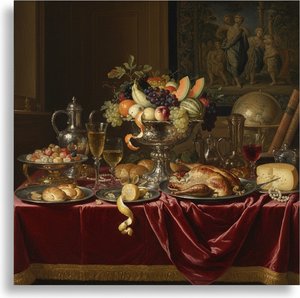
Abraham Hendricksz van Beyeren: Pioneering Dutch Still Life & the Banquet Tradition
Explore the captivating world of Dutch Golden Age still life with Abraham van Beyeren. Discover his innovative techniques, symbolic banquet scenes & lasting influence on art history. Learn about collecting these masterpieces.

