

 Megtekintés
 Küldés
 Megosztás
 Részletek
 Útmutató

 Letöltés
 Hasonló darabok
 X-ray felvétel
 Diavetítés
 Statisztika
Apostles Peter and John
 Oil On Canvas
- WallArt
- Northern Mannerism
 1575
1575 55.0 x 76.0 cm
 Hermitázsmúzeum
 Összes részlet megjelenítése
Giclée / Műnyomat
Múzeumi minőségű giclée vagy vászonnyomat, gyors gyártással és rugalmas finomítási lehetőségekkel. ( Kézzel festett másolat rendelése Áttérés digitális képre)




P118B Ft10

P118H Ft10

P118W Ft10

P438Z Ft10

P508JH Ft12

P508YH Ft12

P805H Ft10

P805Z Ft10

P919BZ Ft10

P919G Ft10

P919XJ Ft10

P959ZH Ft10

P968JZ Ft12

W106C Ft8

W218G Ft10

W218JH Ft8

W218Y Ft10

W307PJ Ft10

W316G Ft10

W316PJ Ft8

W316Y Ft10

W398PJ Ft8

W4111J Ft10

W500HY Ft15

W500JH Ft15

W692G Ft12

W849H Ft8

W940BG Ft15

W953PJ Ft8




Válasszon előre meghatározott méreteink közül, amelyek megfelelnek a műalkotás eredeti arányainak.

Írja be a keretének vagy a falának megfelelő szélességet és magasságot. A nyomatot csak le lehet vágni, soha nem tehető nagyobbá, mint az eredeti kép, így egy eltérő alakú méretnél a kép egy része elveszik. Mielőtt bármit kinyatintanánk, küldünk egy digitális próbamodellt jóváhagyásra. Az oldalon látható kép nem tartalmazza a valós levágást — ezt csak a próbamodell mutatja meg.
Világszerte történő kiszállítás területére mindössze 2 hét alatt, a szokásos 4-5 hét helyett. (28 október)

Ingyenes globális expressz szállítás

Prémium minőségű len vászon

Teljes körű szállítási biztosítás

Vámvisszatérítési Garancia

Hiteles színarányosság garancia

100 napos visszaküldési lehetőség (csak hibás termékek esetén)

100% pénzvisszatérítési garancia

Több darab vásárlásakor kedvezmény
 Az üvegkeretes opció csak 110 cm alatti méretben érhető el

Apostles Peter and John
Giclée / Műnyomat
Reprodukció mérete
-


Összesített ár
Ft 25881
A Window into 16th-Century Life: Pieter Aertsen’s “Apostles Peter and John”
Pieter Aertsen's "Apostles Peter and John," painted in 1575, isn’t merely a depiction of a town square; it’s a meticulously constructed microcosm of 16th-century Dutch society – a vibrant tableau brimming with narrative depth and subtle symbolism. Born in Amsterdam during a period of immense artistic ferment, Aertsen skillfully bridged the gap between the rigid formality of Flemish Mannerism and the burgeoning realism that would define the Golden Age of the Netherlands. This painting offers a rare glimpse into daily life, not through grand portraits or religious iconography, but by focusing on the ordinary – a bustling marketplace, conversations amongst neighbors, and the simple routines of everyday existence. The scene unfolds within a carefully rendered town square, its architecture echoing the styles prevalent in Antwerp, where Aertsen spent much of his career, absorbing the city’s dynamic atmosphere and innovative artistic spirit. Notice the attention to detail: the worn cobblestones, the varied clothing reflecting social status, and the modest dwellings all contribute to an incredibly convincing sense of place and time.The Master of Genre Painting – A Revolutionary Approach
Pieter Aertsen is rightfully considered a pioneer in genre painting—a revolutionary approach at the time that elevated everyday life to the level of artistic significance. Unlike traditional historical or religious paintings, which often prioritized heroic narratives and idealized figures, Aertsen chose to depict scenes from ordinary life with remarkable realism and psychological insight. He wasn’t simply recording events; he was constructing miniature worlds, inviting viewers into a complex tapestry of human experience. This is evident in the painting's composition: a seemingly random assortment of individuals engaged in various activities – bartering for goods, sharing gossip, tending to livestock – all interwoven within a larger, more ambiguous narrative. The inclusion of biblical elements—the apostles themselves—is not overtly religious but rather serves as a subtle backdrop, adding layers of meaning and prompting contemplation about faith, morality, and the relationship between the sacred and the secular.Symbolism Woven into the Fabric of Daily Life
Beyond its realistic portrayal of daily life, “Apostles Peter and John” is rich in symbolic detail. The presence of horses and dogs, commonplace sights in 16th-century towns, carries significance. Horses represent wealth, status, and power, while dogs often symbolized loyalty and companionship – yet also, potentially, deceit and temptation. Observe the interactions between the figures: a merchant haggling with a customer, a group of men engaged in animated conversation, a woman tending to her children. Each interaction hints at broader social dynamics—the tensions between rich and poor, the importance of community, and the complexities of human relationships. The inclusion of a partially obscured religious scene – likely referencing the healing of a lame man – subtly underscores the painting’s thematic concerns about faith, charity, and the role of miracles in everyday life.Technique and Artistic Influence
Aertsen's masterful technique is immediately apparent in the painting’s remarkable detail and atmospheric depth. He employs a meticulous approach to rendering textures—the rough surface of wood, the folds of fabric, the sheen of metal—creating a sense of tactile realism that draws the viewer into the scene. The use of chiaroscuro – the dramatic interplay of light and shadow – adds volume and dimension to the figures and objects, further enhancing the painting’s visual impact. Aertsen's work was profoundly influential on subsequent generations of Flemish artists, particularly in the development of Baroque genre painting. His focus on everyday life and his ability to imbue ordinary scenes with psychological depth paved the way for artists like Jan Bruegel the Elder, who continued to explore the complexities of human experience through their paintings. The painting’s composition also echoes the work of Joachim Patinir, another Antwerp artist known for his innovative use of landscape as a backdrop to narrative scenes.OriginalUniqueArt offers meticulously hand-painted reproductions of “Apostles Peter and John,” capturing the essence of Aertsen's masterpiece with unparalleled fidelity. Each reproduction is created by skilled artists using traditional techniques, ensuring that you receive an authentic work of art that will grace your home or office for generations to come.
Kérdések és válaszok
Szabadon reprodukálható-e a/az „Apostles Peter and John”, Pieter Aertsen alkotása képe?
A „Apostles Peter and John”, Pieter Aertsen alkotása közösségi tulajdon – a szerzői jog lejártt státuszú mű. Ez a jogi státusz határozza meg, hogy a mű képmásolata hogyan reproduzható.
Megtekinthető a „Apostles Peter and John”, Pieter Aertsen alkotása alkotás rendelés előtt?
A „Apostles Peter and John”, Pieter Aertsen alkotása előnézete megtekinthető a mű Előnézet oldalán.
Apostles Peter and John színei erőteljesnek vagy lágynak tűnnek?
A „Apostles Peter and John”, Pieter Aertsen alkotása színei Balanced intenzitásúak.
A művész életrajza
Pieter Aertsen: The Architect of Domestic Narrative
Pieter Aertsen, a name often whispered in the halls of art history, stands as a pivotal figure bridging the gap between Northern Mannerism and the burgeoning realism of the Dutch Golden Age. Born in Amsterdam around 1508 and tragically dying in the same city in 1575, Aertsen’s legacy isn’t defined by grand religious commissions or heroic portraits, but rather by his revolutionary approach to genre painting – a deliberate elevation of everyday life, imbued with layers of symbolism and narrative depth. He wasn’t merely depicting scenes; he was constructing miniature worlds, inviting viewers into a complex tapestry of human experience.
Aertsen's early training under Allaert Claesz provided him with a solid foundation in traditional Flemish techniques. However, it was his relocation to Antwerp, the vibrant heart of artistic innovation during the mid-16th century, that truly shaped his distinctive style. Antwerp’s bustling atmosphere, its diverse population, and its position as a crossroads of European trade fostered an environment ripe for experimentation – a stark contrast to the more rigidly defined religious conventions of the time. Here, he joined the esteemed Guild of Saint Luke, earning the moniker “Langhe Peter,” or Tall Peter, reflecting his imposing stature, a detail often incorporated into his portraits.
The Invention of Monumental Genre
Aertsen’s most significant contribution to art lies in his pioneering work – the creation of what is now recognized as monumental genre scenes. Unlike earlier depictions of domestic life that were relegated to smaller, secondary spaces within religious compositions, Aertsen placed everyday activities – market scenes, butcher shops, still lifes – squarely at the forefront of his canvases. This wasn’t simply a shift in subject matter; it represented a fundamental change in artistic priorities. He deliberately blurred the lines between different genres – still life, landscape, and narrative – creating complex compositions that demanded active engagement from the viewer.
His most famous example, the *Butcher’s Shop with the Flight into Egypt* (1551), exemplifies this revolutionary approach. The scene is dominated by a meticulously rendered butcher’s stall overflowing with meat, vegetables, and tools – an astonishingly detailed still life that immediately grabs the viewer’s attention. Yet, subtly interwoven within this seemingly mundane setting are elements of biblical narrative: the Holy Family fleeing into Egypt, depicted in miniature on a small panel above the counter. This layering of realities – the tangible world of commerce juxtaposed with the spiritual realm of faith – became a hallmark of Aertsen's work and profoundly influenced generations of artists to come.
Symbolism and the Language of Objects
Aertsen’s scenes are not merely visually arresting; they are rich in symbolic meaning. Each object, each gesture, carries weight and contributes to a larger narrative or moral commentary. The arrangement of items within a still life, for instance, could represent earthly pleasures versus spiritual rewards, wealth versus poverty, or even the fleeting nature of time. The *Butcher’s Shop* is particularly laden with symbolism: the abundance of food represents worldly prosperity, while the presence of oysters and mussels – associated with lust – serves as a cautionary tale.
Furthermore, Aertsen drew inspiration from earlier artists like Joachim Patinir, who had pioneered the use of landscape elements within religious scenes to create atmospheric depth and visual interest. Aertsen adopted this technique, integrating miniature landscapes – a church window, a pastoral scene – into his genre compositions, further expanding the scope of his narratives and inviting viewers to contemplate multiple realities simultaneously.
Influences and Artistic Development
Initially trained in the traditional Flemish style under Allaert Claesz, Aertsen’s work underwent a significant transformation during his time in Antwerp. He absorbed the influences of the burgeoning Renaissance humanist movement, particularly the emphasis on realism and observation. This shift is evident in his meticulous attention to detail, his use of perspective, and his ability to capture the textures and colors of everyday objects. His early works often featured religious subjects rendered with a heightened sense of naturalism, foreshadowing his later genre paintings.
Aertsen’s style evolved over time, becoming increasingly complex and layered. He experimented with different compositional techniques, incorporating elements of landscape, portraiture, and still life into his scenes. His later works are characterized by a greater degree of emotional depth and psychological insight, reflecting the changing social and cultural climate of the Netherlands.
Legacy and Historical Significance
Pieter Aertsen’s influence on subsequent generations of artists is undeniable. His innovative approach to genre painting paved the way for the rise of Dutch still life as a distinct artistic genre, influencing figures like Jan Sanders van Hemessen and, crucially, his son, Pieter Pietersz the Elder. Aertsen's emphasis on realistic detail, combined with his masterful use of symbolism and narrative layering, set a precedent for later artists who sought to capture the complexities of everyday life.
Even more remarkably, Aertsen’s work anticipated developments in Italian painting. The Renaissance humanist Hadrianus Junius (Adriaen de Jonghe) compared Aertsen to Peiraikos, an ancient Greek painter celebrated for his ability to depict ordinary subjects with extraordinary realism and symbolic depth. This comparison underscored Aertsen's pioneering role in challenging traditional artistic conventions and elevating the status of genre painting.
Despite the destruction of many of his works during the iconoclasm of the Beeldenstorm (the Protestant Reformation’s icon-smashing movement) in Amsterdam, Aertsen’s legacy endures. His paintings continue to fascinate art historians and viewers alike, offering a glimpse into a world where the mundane becomes profound and everyday life is transformed into a rich tapestry of meaning.

Pieter Aertsen
1508 - 1575 , Holland
Rövid információk
- Artistic Movement Or Style: Mannerizmus
- Artists Or Movements Influenced By This Artist: ['Joachim Patinir']
- Artists Who Influenced This Artist: ['Allaert Claesz']
- Date Of Birth: 1508, Amsterdam
- Date Of Death: 1575, Amsterdam
- Full Name: Pieter Aertsen
- Nationality: Hollandi
- Notable Artworks:
- Butcher's Shop
- Népünnepély
- Place Of Birth: Amsterdam, Holland
Kapcsolódó cikkek

John Augustus Atkinson: Romantic Visions of Rural England & Genre Painting's Evolution
Explore the captivating world of John Augustus Atkinson (1775-1830), a key figure in British Romanticism and genre painting. Discover his stunning Russian history scenes, naval art & delicate watercolors. Learn about his legacy at OriginalUniqueArt.
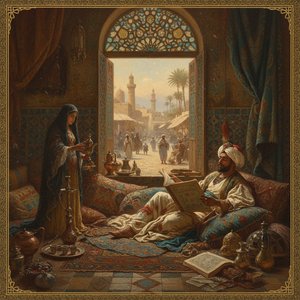
John Frederick Lewis: Orientalism, Detail & Genre Painting in 19th-Century British Art
Explore the captivating Orientalist paintings of John Frederick Lewis! Discover his mastery of detail, genre scenes & influence on 19th-century British art. Learn about his life, techniques & legacy at OriginalUniqueArt.

John Constable 25 Mesterműve: A Természet Lényege Vászonon – OriginalUniqueArt.com
Fedezze fel John Constable 25 legszebb művészeti alkotását! Ismerje meg a romantika ikonikus tájképeit, Dedham Vale szépségét és a természet lenyűgöző ábrázolásait. Vászonkép reprodukcióinkkal eleganciát csempészhet otthonába – OriginalUniqueArt.com
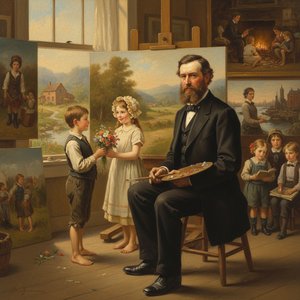
John George Brown: Capturing American Life & Sentiment in 19th-Century Genre Painting
Explore the captivating genre paintings of John George Brown, celebrated for his realistic depictions of 19th-century American life. Discover his legacy & find museum-quality reproductions at OriginalUniqueArt.

John Singer Sargent 25 Mesterműve: Elegancia és Portrék a OriginalUniqueArt Galériában
Fedezze fel John Singer Sargent 25 legikonikusabb művészeti alkotását! Portrék, impresszionista stílus és a fény játéka – inspirálódjon Sargent életrajzából és vászonképeiből. Művészeti reprodukciók otthonába a OriginalUniqueArt-on!

