Text size

() ·

A painting made for you, by hand

Self-Portrait

Kézzel készített olajfestmény reprodukció

Kézzel festett olajvastú vászon, az Ön által választott méretben és keretben, művészeink készítik meglévőre. ( Váltás nyomtatványra Áttérés digitális képre)

A gyűjtemény leírása

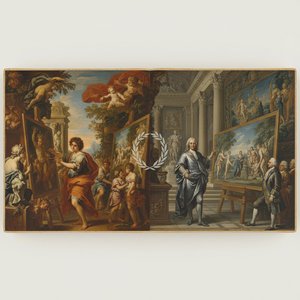
Magnificent Baroque self-portrait by Pierre Mignard (1690). Admire the opulent details & classical grace of this French masterpiece. Hand-painted reproduction available.

A művész életrajza

Fedezze fel Pierre Mignard (1612-1695) munkásságát, a Francia Barokk korának neves festőjét, aki elegáns portréiról és lenyűgöző vallási és mitológiai jeleneteiről ismert. Ismerje meg örökségét!

from ·

Chapter 1

How large should it be?

Slide to change the size; the picture on the left shows the frame at its real width. The proportions of the original are kept.

Standard méret
egyedi méretű
CM
INCH

Válasszon előre meghatározott méreteink közül, amelyek megfelelnek a műalkotás eredeti arányainak.

szélesség
magasság

Írja be a kívánt szélességet és magasságot, hogy illeszkedjen a keretéhez vagy a falához. Mivel ez kézzel festett alkotás, egy eltérő formájú méret esetén a művész akár festhet is valamivel többet a kép körül, vagy korolathat is belőle — az Ön döntésének megfelelően. A festés megkezdése előtt küldünk egy digitális tervezetet jóváhagyásra. Az oldalon látható kép nem tartalmazza a végeredményt — csak a tervezet mutatja meg a valódi eredményt.

Chapter 2

How should it arrive?

Choose the edges of the stretched canvas

Choose your frame

Corner sample of the WhiteWrap canvas edge finish, stretched on tömörfa bars
White Ft1
Corner sample of the BlurSideWrap canvas edge finish, stretched on tömörfa bars
Blurside Ft1
Corner sample of the ExtendedWrap canvas edge finish, stretched on tömörfa bars
Extended Ft1
Corner sample of the P118B picture frame: formázott polisztirol, 5 cm wide and 3 cm thick
P118B Ft10
Corner sample of the P118H picture frame: formázott polisztirol, 5 cm wide and 3 cm thick
P118H Ft10
Corner sample of the P118W picture frame: formázott polisztirol, 5 cm wide and 3 cm thick
P118W Ft10
Corner sample of the P438Z picture frame: formázott polisztirol, 5.5 cm wide and 3.5 cm thick
P438Z Ft10
Corner sample of the P508JH picture frame: formázott polisztirol, 7 cm wide and 3.5 cm thick
P508JH Ft12
Corner sample of the P508YH picture frame: formázott polisztirol, 7 cm wide and 3.5 cm thick
P508YH Ft12
Corner sample of the P805H picture frame: formázott polisztirol, 5 cm wide and 3.5 cm thick
P805H Ft10
Corner sample of the P805Z picture frame: formázott polisztirol, 5 cm wide and 3.5 cm thick
P805Z Ft10
Corner sample of the P919BZ picture frame: formázott polisztirol, 7 cm wide and 3.5 cm thick
P919BZ Ft10
Corner sample of the P919G picture frame: formázott polisztirol, 7 cm wide and 3.5 cm thick
P919G Ft10
Corner sample of the P919XJ picture frame: formázott polisztirol, 7 cm wide and 3.5 cm thick
P919XJ Ft10
Corner sample of the P959ZH picture frame: formázott polisztirol, 5 cm wide and 3 cm thick
P959ZH Ft10
Corner sample of the P968JZ picture frame: formázott polisztirol, 6 cm wide and 4 cm thick
P968JZ Ft12
Corner sample of the W106C picture frame: tömörfa, 5 cm wide and 3 cm thick
W106C Ft8
Corner sample of the W218G picture frame: tömörfa, 5 cm wide and 3 cm thick
W218G Ft10
Corner sample of the W218JH picture frame: tömörfa, 5 cm wide and 3 cm thick
W218JH Ft8
Corner sample of the W218Y picture frame: tömörfa, 5 cm wide and 3 cm thick
W218Y Ft10
Corner sample of the W307PJ picture frame: tömörfa, 6 cm wide and 3 cm thick
W307PJ Ft10
Corner sample of the W316G picture frame: tömörfa, 6 cm wide and 3 cm thick
W316G Ft10
Corner sample of the W316PJ picture frame: tömörfa, 6 cm wide and 3 cm thick
W316PJ Ft8
Corner sample of the W316Y picture frame: tömörfa, 6 cm wide and 3 cm thick
W316Y Ft10
Corner sample of the W398PJ picture frame: tömörfa, 5 cm wide and 3 cm thick
W398PJ Ft8
Corner sample of the W4111J picture frame: tömörfa, 6.5 cm wide and 3.5 cm thick
W4111J Ft10
Corner sample of the W500HY picture frame: tömörfa, 7 cm wide and 5 cm thick
W500HY Ft15
Corner sample of the W500JH picture frame: tömörfa, 7 cm wide and 5 cm thick
W500JH Ft15
Corner sample of the W692G picture frame: tömörfa, 8 cm wide and 4 cm thick
W692G Ft12
Corner sample of the W849H picture frame: tömörfa, 5 cm wide and 3 cm thick
W849H Ft8
Corner sample of the W940BG picture frame: tömörfa, 7.5 cm wide and 4.5 cm thick
W940BG Ft15
Corner sample of the W953PJ picture frame: tömörfa, 6 cm wide and 3.5 cm thick
W953PJ Ft8
Corner sample of the H24-GOLD picture frame: faragott fa gesszóval, 10 cm wide and 6 cm thick
H24-GOLD Ft30
Corner sample of the H24-SILVER picture frame: faragott fa gesszóval, 10 cm wide and 6 cm thick
H24-SILVER Ft30
Corner sample of the H36-GOLD picture frame: faragott fa gesszóval, 15 cm wide and 6.5 cm thick
H36-GOLD Ft45
Corner sample of the H36-SILVER picture frame: faragott fa gesszóval, 15 cm wide and 6.5 cm thick
H36-SILVER Ft45

Moulding: . Overall size with the frame: .

Chapter 3

Who paints it, and should anything change?

Examples of what can be changed: Replace face with customer photo; Add pet (e.g., replace cat with dog); Include hidden message in background; Change background landscape or elements.
After order, OriginalUniqueArt.com team will email client for instructions and provide a mockup preview

Világszerte elérhető szállítás () 3-4 hét alatt a szokásos 5 hét helyett. (2 november). A minőség nem kérdőjelezhető.

Chapter 4

The finishing touches

A nameplate, as in a museum?

A gravírozott bronztábla részletei

This elegant plaque features the artist's name and the title of the artwork, finely engraved for a timeless presentation.

It is made from bronze with a refined, elegant finish. The text is precisely laser-engraved for a sharp and permanent result. Measuring 9x2 cm, the plaque is compact yet easy to read. It's built to be durable and scratch-resistant, offering a professional, museum-quality look. Mounting is simple thanks to the included adhesive backing.

Átlátszó akril tábla részletei

The plaque includes essential engraved details such as the artist's name, the title of the artwork, the date it was created, the type of media used-like oil on canvas or watercolor-a brief description of the piece, and a QR code that links to the complete artwork information.

It is crafted from clear acrylic, offering a sleek, modern appearance. The text is UV-engraved in black to ensure strong visual contrast. With a size of 10x15 cm, it ensures optimal readability. It comes equipped with two metal hooks for secure wall mounting. The plaque is designed to be weather-resistant, making it suitable for various environments, and it includes interactive features that work seamlessly with smartphone scanning.

Fekete akril tábla részletei

This elegant plaque includes engraved information such as the artist's name, the title of the artwork, the date it was created, the type of media used (like oil on canvas or watercolor), a short description of the artwork, and a QR code for quick access to more information.

The plaque itself is made from refined black acrylic with a premium finish. The text is laser-engraved in white for high contrast and readability. Its size is 10x15 cm, designed to be easy to read. It comes with two metal hooks for professional mounting. The design is sleek and fits any interior style. It is also weather-resistant and durable, with built-in digital integration for mobile compatibility.

A protective varnish?

When do you need it?

Chapter 5

Your painting, as you ordered it

Self-Portrait

Reprodukciós technika

Reprodukció mérete

-

Kiváló mesterművész

Nagyobb részletesség, finomság és bővített gyártási idő

-

Reprodukció keretezése

-

-

A bármely oldalsó méretét túlszálaló 105 cm (kb. 41 hüvelyk) meghaladó műalkotások vagy reprodukciók esetében a keret összeszerelhető készletként, szétszerelve kerül szállításra. Ez a módszer biztosítja a biztonságos szállítást, és megakadályozza a szállítás során fellépő sérüléseket.

Szakmész összeszerelést igényel – ez nem DIY (önösszeszerelhető) termék.
A készletet egy tapasztalt keretező szakembernek kell összeszerelnie és a vásznat feszítenie kell, fa ragasztó (nem tartalmazza a csomag), vásznfeszítő fogó és szorítók használatával, amelyek a ragasztó száradásáig a keretrészeket egymáshoz vuôngjba tartják. A helytelen összeszerelés vagy a nem egyenletes vásznfeszítés maradandó károsíthatja a műalkotást, és ez nem része a garanciánknak.

  • A készlet tartalmazza az összes tömörfa rudat, pontosan méretre vágva.

  • A mellékelt csavarokkal, valamint a sarokszerekhez szükséges faütő ragasztóval kell összeszerelnie (ez nem tartalmazható a csomagban), így a keretrendezőnek külön kell beszereznie.

  • A csomag nem tartalmazza a szükséges professzionális eszközöket: egy vászonfeszítőt és klipseket a rácsok vízszintes tartásához a ragasztó megszáradásáig.

Fontos:
A sarokcsatlakozásokhoz fánylagra van szükség, a keretrudakat szorítókapcsokkal kell rögzíteni, amíg a rag teljesen meg nem szárad, a kész keretre feszített vászonhoz pedig vászonfeszítő fogat szükséges. Ezek egyike sem található meg a készletben. Kérjük, rendelés előtt győződjön meg róla, hogy rendelkezik tapasztalt keretező szakemberrel.

Névtábla

-

-

Védőréteg (Lakk)

Fényes lakk (intenzívabb színek, védelem a fény és a nedvesség hatása ellen)

-

Műalkotásom egyedi igényre szabása

Példák a módosíthatóságra: az arc kicserélése az ügyfél fotójára; háziállat hozzáadása (pl. macska helyett kutya); rejtett üzenet elhelyezése a háttérben; a háttér tájainak vagy elemeinek megváltoztatása.

-

Sürgős

Világszerte szóló szállítás () mindössze 3-4 hét alatt, a szokásos 5 hét helyett. (2 november). A minőség nem kérdőjelezhető.

-

Express szállítás

Világszerte elérhető szállítás területre 5 héten belül. (9 november).

A szállítás díja tartalmazza

Összesített ár

Ft 98255

Összesített ár Ft 98255

Az üvegkeretes opció csak 110 cm alatti méretben érhető el

Included with every order

  • Ingyenes globális expressz szállítás
  • Prémium minőségű len vászon
  • Teljes körű szállítási biztosítás
  • Vámvisszatérítési Garancia
  • Hiteles színarányosság garancia
  • 100 napos visszaküldési lehetőség (csak hibás termékek esetén)
  • 100% pénzvisszatérítési garancia
  • Több darab vásárlásakor kedvezmény

A Glimpse of Baroque Grandeur: Self-Portrait by Pierre Mignard

Pierre Mignard’s 1690 “Self-Portrait” is more than just a likeness; it's a meticulously crafted tableau vivant, a window into the world of a prominent figure in 17th-century French art. This painting, measuring a substantial 235 x 188 cm, immediately commands attention with its opulent details and carefully orchestrated composition. It’s a testament to Mignard's skill as a portraitist and his deep understanding of Baroque aesthetics – a style characterized by dramatic lighting, rich textures, and an emphasis on theatricality.

The subject himself is presented in a pose of studied elegance, seated within a richly appointed interior. He’s dressed in a flamboyant gown, complete with a sweeping cape and a gleaming gold sash, indicative of the status and wealth he commanded. A carefully styled wig frames his face, while a meticulously groomed mustache adds to the air of sophistication. The details are exquisite: the velvet of the chair, the sheen of the fabrics, the subtle play of light on polished surfaces – all contribute to an overwhelming sense of luxury and refinement. Notably, Mignard’s gaze is direct and engaging, inviting the viewer into his world.

The Setting: A Stage for Self-Representation

Beyond the central figure, the background subtly enhances the portrait's narrative. Two chairs – one occupied by Mignard himself, the other positioned to his left – create a sense of intimacy and contemplation. A dining table, adorned with a simple bowl, suggests an appreciation for the finer things in life, while three scattered vases introduce a touch of decorative flourish, echoing the Baroque love of ornamentation. These elements aren’t merely decorative; they contribute to a carefully constructed atmosphere that reinforces Mignard's position as a man of taste and refinement.

The painting’s palette is rich and warm, dominated by deep reds, golds, and browns – colors associated with wealth, power, and religious devotion. Mignard masterfully employs chiaroscuro, the dramatic contrast between light and shadow, to sculpt the forms of his subject and create a sense of depth and volume. This technique, characteristic of the Baroque period, draws attention to key features and adds an element of theatricality to the scene.

A Master’s Hand: Technique and Influences

Mignard's style is a fascinating blend of influences. His early training under Jean Boucher instilled in him a foundational understanding of Mannerist principles, particularly his sensitivity to form and composition. However, his subsequent studies with Simon Vouet exposed him to the classical ideals championed by the Venetian master, influencing his use of perspective and idealized forms. Crucially, his time in Rome allowed him to absorb the grandeur of Italianate art, which he then skillfully integrated into his own distinctive style.

The painting’s resemblance to Largillère's portrait of Charles Le Brun is particularly noteworthy. This suggests a conscious effort on Mignard’s part to establish himself within the Parisian artistic circles and perhaps even subtly engage in a rivalry with his contemporary. It’s a deliberate gesture, highlighting both his technical skill and his awareness of the prevailing artistic landscape.

A Legacy of Elegance: Historical Context

Created in 1690, “Self-Portrait” reflects the flourishing Baroque period in France – an era marked by royal patronage, religious fervor, and a fascination with luxury. Mignard’s success as a portraitist was directly linked to his ability to capture the status and personality of his subjects, often members of the aristocracy and clergy. His work served not only as a visual record but also as a powerful statement of social standing.

As an art historian, it's important to note that Mignard’s life was intertwined with political intrigue and artistic competition. His rivalry with Charles Le Brun, the Premier Peintre du Roi, shaped his career and ultimately led to his appointment as director of the Académie royale de peinture et de sculpture. This painting, therefore, offers a glimpse into not only the artist's personal ambitions but also the complex dynamics of the French art world during this pivotal period.

OriginalUniqueArt is proud to offer high-quality hand-painted reproductions of Pierre Mignard’s “Self-Portrait,” allowing you to experience the beauty and artistry of this remarkable masterpiece in your own home or studio. Explore our collection today and bring a touch of Baroque grandeur into your space.

Kérdések és válaszok

Erős fény-árnyék kontrasztot mutat-e a "Self-Portrait"?

A „Self-Portrait”, Pierre Mignard alkotása Serene kontrasztot mutat a világos és sötét részek között.

Milyen technikával készült a „Self-Portrait”, Pierre Mignard alkotása?

A „Self-Portrait”, Pierre Mignard alkotása technikája Oil On Canvas. A reprodukciók célja ezen technika megjelenítésének hiteles återadása.

Milyen típusú műalkotás „Self-Portrait”, Pierre Mignard alkotása?

A "Self-Portrait" egy WallArt alkotás.

More about this painting

Megtekintés AR előnézet Váltás nyomtatványra Áttérés digitális képre Küldés
Részletek Útmutató Kedvencekhez ad Letöltés Hasonló darabok X-ray felvétel Diavetítés Q&A Statisztika

In numbers

  • 1690the year it was painted
  • 29frames to choose from
  • standard sizes, in its own proportions
  • 5weeks to paint and deliver it
Pierre Mignard

Pierre Mignard

1612 - 1695, Franciaország

Quick facts about Pierre Mignard

  • Artistic Movement Or Style: Barokk
  • Artists Or Movements Influenced By This Artist: ['Francia portréfestők']
  • Artists Who Influenced This Artist:
    • Simon Vouet
    • Annibale Carracci
  • Date Of Birth: 1612
  • Date Of Death: 1695
  • Full Name: Pierre Mignard
  • Nationality: Francia
  • Notable Artworks:
    • Isten Atya
    • A szőlő Madonna
    • La Fortune
  • Place Of Birth: Troyes, Franciaország

A művész életrajza

Egy élet a barokk pompájában

Pierre Mignard, aki 1612-ben született Troyes városában, Franciaországban, a francia barokk festészet kulcsfontosságú alakja volt, bár gyakran árnyékba került kortársával és riválisával, Charles Le Brunnal. Mignard egy kézműves család egyszerű körülményei közül emelkedett ki, korai művészeti hajlama Bourges felé terelte, ahol Jean Boucher, a manierista hagyományokban gyökerező festő tanítása alatt kapta meg első alapjai. Ez az alapozó időszak formálta meg benne a formák és a kompozíció iránti érzékenységet, amelyet később a Fontainebleau kastély műveinek gondos másolgatásával finomított – ez a helyszín hiszen a bevált művészeti elvek igazi tanterme volt számára. Elsődleges jelentőségű volt, hogy tanulmányai a párizsi Simon Vouet műtermében folytatódhattak, aki a klasszikus hatások védelmezője volt és hatalmas nemzetközi kapcsolatokkal rendelkezett. Ezek a formálódó élmények fektették le Mignató egyedi stílusának alapjait, amely az olasz grandiózus stílust ötvözte a francia eleganciával.

Római álmosság és a „mignardises” születése

Mignard művészeti utazásának meghatározó fejezete 1635-ben kezdődött, amikor Rómába költözött. Körülbelül huszonkét évig az olasz barokk művészet vibráló szívében merült el. Itt virágzott fel igazán, hírnevet szerzett a Madonna és a Gyermek gyengéd, lenyűgöző ábrázolása révén – ezek a képek oly bájosak és finomak voltak, hogy szeretetteljesen „mignardises”-ként ismerték őket, ami alkotásaik édes és kifinomult minőségét igazolta. Az olasz mesterek hatása érezhető római műveiben; drámai kompozíciók, a fény és árnyék mesteri használata, valamint az egész alkotásokból áradó teatralitás jellemzi ezt az időszakot. A vallási megrendeléseken túl Mignard technikai tudását a reprodukciós metszetekkel fejlesztette, aprólékosan másolva Annibale Carracci műveit, ezzel mélyítve művészeti elismeréseit. Tehetsége a portretálást is elérte, számos római tekintély – pápiak, kardinálisok és az elit tagjai – megrendelője lett, ezzel olyan hírnevet szerezve, hogy nemcsak a hasonlságot, hanem a karaktert is képes volt ügyesen és kegyességgel lefesteni. A párizsi visszatérés és a művészeti feszültség Mignard körülbelül 1657-ben, Kardinális Mazarin hívására tért vissza Párizsba, ami a francia udvari festészet versenyző világába való belépését jelezte. Gyorsan meglehetőséget szerzett befolyos személyek protekcióját megszerjezni, köztük ίδen magát XIV. Lajos királyt is, azonban felemelkedése egyaránt együttesen zajlott Charles Le Brun dominanciájával, aki a *peintre du roi* (a király festője) tekintélyes címét viselte. Ez elkerülhetetlenül hosszas és gyakran keserű rivalizációhoz vezetett a két művész között. Mignard aktívan szembeszállt az Académie Royale de Peinture et Sculpture tekintélyével, távol tartva magát annak établi hierarchiájától, és a művészeti függetlenségért agitált. Ennek a konfliktusnak ellenére portréfestőként virágzott, vászonra örökítve Turenne, Molière, Bossuet és Madame de Maintenon olyan neves személyiségeket, akik kortársai voltak. Portréit nem csupán pontos ábrázolásuk miatt ünneplik, hanem azért is, amely pszichológiai mélységet fednek fel – képességgel képes ragadni alanyai lényegét rendkívüli érzékességgel.

Örökség és maradandó hatás

Pierre Mignard művészeti öröksége elsősorban gyönyörű portréin nyugszik, amelyeket eleganciájukról, aprólék részletgazdagságukról és karakteralkotó képességükről csodálnak. Vallási alkotásai, különösen a római időszakban készült Madonna és Gyermek ábrázolások, szintén jelentős helyet foglalnak 차지 a művészettörténetben. Le Brun 1690-es halála után Mignard számos korábbi pozícióját átvette, demonstrálva azt a tiszteletet, amelyet művészeti körökben élvezett – ami tartós tehetségének bizonyítéka. Bár gyakran Le Brun nagyobb hírneve és hivatalos elismerése árnyékába került, Mignard a francia barokk festészet fontos alakja marad. Egy olyan egyedi stílusú megközelítést képvisel, amelyet klasszikus kecsesség, kifinomult technika és a részletek iránti aprólékos figyelme jellemez, ami megkülönböztette másoktól. Hatása látható a későbbi generációk francia portréfestői között is, akik törekedtek arra, hogy utánozzák képességét alanyaik fizikai hasonlságának és belső életének egyaránt megragadására. Mignard le Romain, ahogy ismerték, olyan alkotások halmazát hagyta hátra, amely ma is lenyűgöz és inspirál, átvilágot mutatva a 17. századi Franciaország pompás világába és egy mesteri portréfestő művészetébe.

Gyors információk

  • Subject or theme: Self-portraiture
  • Medium: Oil on canvas
  • Year: 1690
  • Dimensions: 235 x 188 cm
  • Artist: Pierre Mignard
  • Movement: Baroque

Művészeti kvíz

Minden kérdésre csak egy helyes válasz létezik.

Kérdés 1:
What is the primary subject depicted in Pierre Mignard’s ‘Self-Portrait’?
Kérdés 2:
The painting features several decorative elements. What is NOT depicted in the scene?
Kérdés 3:
Based on the description, what is a notable feature of Mignard’s attire?
Kérdés 4:
Pierre Mignard’s style is often described as blending which two influences?
Kérdés 5:
In what century was ‘Self-Portrait’ created?