
 Megtekintés
 Küldés
 Megosztás
 Részletek
 Útmutató

 Letöltés
 Hasonló darabok
 X-ray felvétel
 Diavetítés
 Kérdések és válaszok
 Statisztika
André-Marie Ampère


 Összes részlet megjelenítése
Giclée / Műnyomat
Múzeumi minőségű giclée vagy vászonnyomat, gyors gyártással és rugalmas finomítási lehetőségekkel. ( Kézzel festett másolat rendelése Áttérés digitális képre)




P118B Ft10

P118H Ft10

P118W Ft10

P438Z Ft10

P508JH Ft12

P508YH Ft12

P805H Ft10

P805Z Ft10

P919BZ Ft10

P919G Ft10

P919XJ Ft10

P959ZH Ft10

P968JZ Ft12

W106C Ft8

W218G Ft10

W218JH Ft8

W218Y Ft10

W307PJ Ft10

W316G Ft10

W316PJ Ft8

W316Y Ft10

W398PJ Ft8

W4111J Ft10

W500HY Ft15

W500JH Ft15

W692G Ft12

W849H Ft8

W940BG Ft15

W953PJ Ft8




Válasszon előre meghatározott méreteink közül, amelyek megfelelnek a műalkotás eredeti arányainak.

Írja be a keretének vagy a falának megfelelő szélességet és magasságot. A nyomatot csak le lehet vágni, soha nem tehető nagyobbá, mint az eredeti kép, így egy eltérő alakú méretnél a kép egy része elveszik. Mielőtt bármit kinyatintanánk, küldünk egy digitális próbamodellt jóváhagyásra. Az oldalon látható kép nem tartalmazza a valós levágást — ezt csak a próbamodell mutatja meg.
Világszerte történő kiszállítás területére mindössze 2 hét alatt, a szokásos 4-5 hét helyett. (7 november)

Ingyenes globális expressz szállítás

Prémium minőségű len vászon

Teljes körű szállítási biztosítás

Vámvisszatérítési Garancia

Hiteles színarányosság garancia

100 napos visszaküldési lehetőség (csak hibás termékek esetén)

100% pénzvisszatérítési garancia

Több darab vásárlásakor kedvezmény
 Az üvegkeretes opció csak 110 cm alatti méretben érhető el

André-Marie Ampère
Giclée / Műnyomat
Reprodukció mérete
-


Összesített ár
Ft 26396
The Enigmatic Face: Pierre-Jean David d’Angers and André-Marie Ampère
Pierre-Jean David d’Angers's portrait of André-Marie Ampère, completed in 1829, is more than a simple likeness; it’s a carefully constructed embodiment of the man behind one of science’s most foundational discoveries. The image, rendered with the meticulous detail characteristic of David d’Angers’s neoclassical style, captures Ampère not merely as a physicist, but as a figure of intellectual authority and quiet contemplation. The bronze coin-like composition—a deliberate choice by the artist—immediately establishes a sense of gravitas, elevating Ampère to the status of a revered scholar and public servant. The subject's severe features, framed by a carefully sculpted wig and a neatly trimmed mustache, project an air of dignified seriousness, reflecting the weight of his groundbreaking work in electromagnetism.
_-_Walters_54847.jpg)
A Scientific Icon: The Life and Times of André-Marie Ampère
Born in Lyon in 1775, André-Marie Ampère was a product of the Enlightenment, nurtured on the works of Buffon, Diderot, and Euler. His father’s radical republicanism, tragically culminating in his execution during the French Revolution, profoundly shaped Ampère's life, instilling within him a deep respect for knowledge and a commitment to rational thought. He pursued his education largely independently, devouring books and mastering mathematics with remarkable self-discipline. This autodidactic approach led him to become a leading figure in the burgeoning field of electromagnetism, building upon the foundational work of Ørsted’s discovery that electric currents create magnetic fields. Ampère's systematic investigations established the laws governing these relationships, forming the bedrock of modern electrical engineering and paving the way for technologies like the telegraph – a testament to his enduring legacy.
Neoclassical Precision: David d’Angers’s Artistic Vision
Pierre-Jean David d’Angers was a prominent sculptor and portraitist during the early 19th century, known for his ability to capture both the physical likeness and the inner character of his subjects. His style is characterized by its meticulous detail, balanced compositions, and a restrained emotionality—a hallmark of neoclassical art. He adopted the name “David d’Angers” as a deliberate assertion of lineage and artistic ambition, distinguishing himself from his celebrated master, Jacques-Louis David. In this portrait, David d’Angers skillfully employs chiaroscuro – the dramatic contrast between light and shadow – to sculpt Ampère's face, emphasizing his features and creating a sense of depth and volume. The coin-like format is not merely stylistic; it subtly elevates Ampère to the status of a revered figure, akin to a precious currency representing the value of knowledge.
Symbolism and Legacy: A Portrait Beyond Representation
The choice of a bronze coin as the medium for this portrait is particularly significant. Bronze, historically associated with antiquity and civic virtue, connects Ampère’s work to the foundations of scientific inquiry. The image itself speaks volumes about the era—a time of burgeoning industrialization, technological innovation, and a growing faith in reason and progress. Ampère's serious expression suggests not just intellectual prowess but also a profound sense of responsibility for his discoveries. This portrait is therefore more than a simple likeness; it’s a symbolic representation of Ampère as the architect of modern electromagnetism—a man whose work continues to shape our world today. It invites us to contemplate the intersection of science, art, and the enduring human quest for understanding.
Kérdések és válaszok
Hányan tekintik meg a(t): "André-Marie Ampère"?
A "André-Marie Ampère" számára létre van hozva egy Statisztikák oldal. Ez az oldal ábrázolja a mű és a művész többi alkotásának havi látogatottságát, országon és nyelvenként bontva.
Általánosságban inkább világos vagy sötét a "André-Marie Ampère"?
A „André-Marie Ampère”, David D’Angers alkotása rögzített értékei: brilliant fényerő és Luminous luminancia.
Milyen az „André-Marie Ampère”, David D’Angers alkotása általános hangulata?
A "André-Marie Ampère" Calm hangulatú.
A művész életrajza
A Legacy Forged in Stone: The Life and Art of Pierre-Jean David d’Angers
Born in Angers, France, in 1789, Pierre-Jean David embarked on his artistic journey steeped in the republican fervor that would characterize much of his life and work. Initially apprenticed to a local wood carver – his father – young David swiftly demonstrated an aptitude for sculpting that propelled him towards greater ambitions. He arrived in Paris in 1808, a city brimming with both classical tradition and revolutionary spirit, seeking tutelage under Philippe-Laurent Roland at the École des Beaux-Arts. This period was formative, grounding him in neoclassical principles while simultaneously exposing him to the burgeoning Romantic movement. A pivotal moment came in 1809 when he entered the studio of Jacques-Louis David, adopting the name “David d’Angers” not merely as a professional designation but as a conscious assertion of lineage and artistic ambition – a distinction from his celebrated master. This adoption signaled a desire to forge his own path while acknowledging the profound influence of the era's leading painter. Early struggles marked his Parisian years, yet he persevered, winning recognition with works like “Othryades” in 1810 and ultimately securing the prestigious Prix de Rome in 1811 for his sculpture "Epaminondas."From Roman Reverie to Neoclassical Mastery
The five years David d’Angers spent in Rome, from 1811 to 1816, proved transformative. Immersed in the world of classical antiquity and under the influence of masters like Antonio Canova, his artistic vision matured. He absorbed the ideals of Greek sculpture – its emphasis on idealized form, heroic narrative, and emotional restraint – yet began to infuse these principles with a distinctly personal sensibility. This period wasn’t solely about academic study; it was also one of political awakening. The restoration of the Bourbon monarchy in France cast a shadow over his return, prompting a brief sojourn in England where he encountered both admiration and scrutiny due to his association with Jacques-Louis David, who had been linked to the revolutionary regime. Back in Paris, however, his talent quickly found favor. He became renowned for his portrait medallions – remarkably detailed and psychologically insightful representations of prominent figures – as well as monumental sculptures that celebrated civic virtue and national heroes. His work on the Arc de Triomphe and the Louvre demonstrated an early mastery of large-scale projects, establishing him as a sculptor capable of tackling ambitious commissions.A Sculptor of Heroes and Ideals
David d’Angers' artistic output was remarkably diverse, encompassing statues, bas-reliefs, tombs, and, most notably, portrait medallions. He possessed an extraordinary ability to capture not just the physical likeness but also the inner character of his subjects. His portraits weren’t simply representations; they were interpretations – imbued with a sense of dignity, intelligence, and moral strength. Among his celebrated works are “Wounded Philopoemen,” housed in the Louvre, a poignant depiction of the Greek general's tragic fate, and "La Douleur," showcasing his mastery of emotional expression. However, it was his monumental commissions that truly cemented his reputation. The pediment sculpture for the Panthéon in Paris stands as perhaps his most significant achievement – a sweeping allegorical representation of French patriotism and intellectual heritage. Other notable works include the Gutenberg monument in Strasbourg and the equestrian statue of General Gobert in Père Lachaise Cemetery, both testaments to his skill in conveying power and dynamism through sculpted form. He also created a bust of Goethe for the poet’s library in Weimar – a gesture of profound respect and admiration for one of Europe's greatest thinkers.Political Engagement and Artistic Expression
David d’Angers was deeply committed to republican ideals, actively participating in political debates and advocating for social reform. This conviction fueled his artistic endeavors, inspiring him to depict figures who embodied courage, integrity, and dedication to the common good. His sculptures weren't merely aesthetically pleasing; they served as vehicles for conveying moral messages – reminding viewers of the importance of virtue and civic responsibility. He skillfully blended neoclassical formalism with Romantic emotional intensity, achieving a distinctive style that reflected the spirit of his time. Despite facing periods of hardship and exile due to political persecution, David persevered in his artistic pursuits, producing masterpieces that continue to captivate audiences today. His unwavering belief in liberty and justice shaped not only his worldview but also the very essence of his art.A Lasting Legacy: Influence and Recognition
Pierre-Jean David d’Angers' influence extended far beyond his own lifetime. He inspired generations of sculptors who sought to emulate his mastery of form and technique, establishing him as a cornerstone of French sculpture history. His works are housed in prominent museums across Europe – including The Louvre, The Metropolitan Museum of Art, and The Walters Art Museum – ensuring that his legacy will endure for centuries to come. More than just an artist, David d’Angers was a symbol of republican virtue and intellectual aspiration—a testament to the transformative power of art to shape culture and inspire humanity. His enduring fame testifies to the profound impact he had on the artistic landscape of the 19th century and beyond.
David D’Angers
1788 - 1856 , Francia
Rövid információk
- Artistic Movement Or Style: Neoclassicizmus
- Artists Or Movements Influenced By This Artist: ['Antonio Canova']
- Artists Who Influenced This Artist:
- Jacques-Louis David
- Philippe-Laurent Roland
- Date Of Birth: 1788
- Date Of Death: 1856
- Full Name: Pierre-Jean David d’Angers
- Nationality: Francia
- Notable Artworks:
- Wounded Philopoemen
- La Douleur
- Epaminondas
- Place Of Birth: Angers, Francia
Kapcsolódó cikkek

A művészettörténet 10 legikonikusabb bronzszobra – OriginalUniqueArt.com
Fedezze fel a művészettörténet 10 legikonikusabb bronzszobrát! Ismerje meg Rodin, Michelangelo és más mesterek alkotásait. Luxus minőségű reprodukciók otthonába – OriginalUniqueArt.com.

The Enduring Legacy of Bronze: History, Technique & Artistic Expression for the Collector
Explore the rich history & enduring appeal of bronze sculpture with expert insights for collectors at OriginalUniqueArt. Learn about casting techniques, iconic artists, and collecting tips.

The Enduring Legacy of Bronze: A Historical & Artistic Exploration for the Collector
Explore the rich history & enduring appeal of bronze sculpture with expert insights for collectors at OriginalUniqueArt. Learn about casting techniques, iconic artists, collecting tips & contemporary interpretations.

Timeless Strength: The Ultimate Guide to Bronze Art and Sculpture for the Discerning Collector
Discover the enduring elegance of bronze sculpture. Our expert guide explores lost-wax casting, patina mastery, and professional tips for collecting and commissioning museum-quality bronze art to create a lasting legacy in your private collection.
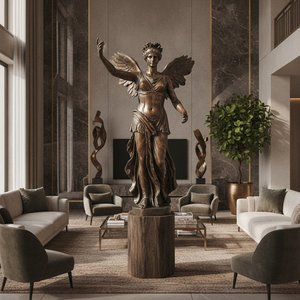
Timeless Bronze Sculptures: Elevate Your Space with Masterful Metal Artworks
Discover the enduring allure of bronze sculptures at OriginalUniqueArt.com. From classical lost-wax casting to modern metal masterpieces, explore museum-quality artworks designed to elevate luxury interiors. Expert curation, authenticity guaranteed, and worldwide shipping for discerning collectors.
