

 Előnézet
 Megosztás
 Megosztás
 Részletek
 Útmutató

 Letöltés
 Hasonló darabok
 X-ray felvétel
 Diavetítés
 Statisztika
Fantasy
 Oil On Canvas
- WallArt
- Symbolist Painting
 1866
1866 148.0 x 263.0 cm
 Ohara Museum of Art
 Tovább olvasom
Giclée / Műnyomat
Múzeumi minőségű giclée vagy vászonnyomat, gyors gyártással és rugalmas finomítási lehetőségekkel. ( Kézzel festett másolat vásárlása Áttérés digitális képre)




P118B $10

P118H $10

P118W $10

P438Z $10

P508JH $12

P508YH $12

P805H $10

P805Z $10

P919BZ $10

P919G $10

P919XJ $10

P959ZH $10

P968JZ $12

W106C $8

W218G $10

W218JH $8

W218Y $10

W307PJ $10

W316G $10

W316PJ $8

W316Y $10

W398PJ $8

W4111J $10

W500HY $15

W500JH $15

W692G $12

W849H $8

W940BG $15

W953PJ $8




Válasszon előre meghatározott méreteink közül, amelyek megfelelnek a műalkotás eredeti arányainak.

Megadhat saját méreteket is egy konkrét kerethez vagy helyszínhez igazítva. Amennyiben a kiválasztott méret nem egyezik az eredeti kép arányokkal, a műalkotást le fogjuk vágni, vagy kiegészítjük a képet tükrözött vagy egyszínű szélekkel. A gyártás megkezdése előtt egy digitális tervezetet küldünk jóváhagyásra.
Kérjük, vegye figyelembe, hogy a képernyőn látható előnézet nem tükrözi a tényleges levágást vagy kiegészítést. Csak a tervezet mutatja pontosan a végső kompozíciót.
Bár az egyedi méretek is elérhetőek, az eredeti arányok megőrzése érdekében azt javasoljuk, hogy válasszon a előre meghatározott listából származó méretet.
Világszerte történő kiszállítás területére mindössze 2 hét alatt, a szokásos 4-5 hét helyett. (26 szeptember)

Ingyenes globális expressz szállítás

Prémium minőségű len vászon

Teljes körű szállítási biztosítás

Vámvisszatérítési Garancia

Tökéletes színarányosság garancia

100 napos visszaküldési garancia (csak gyártási hibás termékek esetén)

100% pénzvisszatérítési garancia

Több darab vásárlásakor kedvezmény
 Az üvegkeretes opció csak 110 cm alatti méretben érhető el

Fantasy
Giclée / Műnyomat
Reprodukció méretei
-


Összesített ár
$ 80
A Dream Woven in Blue: Exploring ‘Fantasy’ by Pierre Puvis de Chavannes
Pierre Cécile Puvis de Chavannes's “Fantasy,” painted in 1866, isn’t merely a depiction of a mythological scene; it’s an invitation to step into a realm where imagination reigns supreme. This captivating work, currently housed within the Ohara Museum of Art in Kurashiki, Japan, transcends the boundaries of simple representation, offering instead a profound meditation on inspiration, innocence, and the allure of the fantastical. It's a piece that whispers of classical ideals blended with the nascent currents of Symbolism, marking a pivotal moment in French art history.
The painting immediately draws the eye to its central figures: a serene female figure seated upon a draped blue cloth, her gaze directed towards a magnificent winged horse – Pegasus – mid-flight. Beneath her, a small child kneels, seemingly reaching out with an expression of gentle curiosity or perhaps even playful engagement with the scene. The backdrop is a carefully constructed landscape of stylized trees and distant mountains, shrouded in atmospheric haze that lends an ethereal quality to the entire composition. Puvis de Chavannes masterfully employs a muted color palette dominated by blues, greens, and creams, creating a tranquil and almost dreamlike atmosphere—a deliberate choice that emphasizes mood over precise detail.
Composition and Technique: A Symphony of Softness
The painting’s pyramidal structure, anchored by the seated female figure, establishes a sense of stability and balance. Puvis de Chavannes skillfully utilizes lines to guide the viewer's eye through the scene; horizontal bands in the landscape create depth, while diagonal lines—particularly those formed by Pegasus’s flight path—inject movement and dynamism. Notably, the artist eschews sharp outlines, opting instead for a technique of soft blending and subtle tonal variations. This deliberate lack of definition contributes significantly to the painting's dreamlike quality, blurring the edges between figures and landscape, inviting the viewer to lose themselves within the scene.
The brushwork itself is remarkably understated—almost invisible. Puvis de Chavannes employed a layering technique, applying thin glazes of paint to achieve delicate gradations of color and texture. This meticulous approach results in a surface that appears smooth and luminous, further enhancing the painting’s ethereal atmosphere. The absence of pronounced impasto or heavy brushstrokes speaks volumes about the artist's commitment to capturing an elusive, almost intangible quality—the very essence of fantasy itself.
Symbolism and Narrative: Echoes of Myth and Imagination
“Fantasy” is rich in symbolic meaning, inviting multiple interpretations. The seated female figure is often seen as representing inspiration or the muse – a source of creative energy and artistic vision. The child beneath her could symbolize innocence, potential, or perhaps even the future generation inheriting this imaginative realm. Pegasus, the legendary winged horse, embodies poetic flight, aspiration, and the transcendence of earthly limitations. The wreath crafted by the child further reinforces the theme of creation and artistry.
Puvis de Chavannes’s work resonates deeply with the Symbolist movement, which sought to explore subjective experiences and emotions through art. The painting isn't simply a literal depiction; it’s an evocation—a suggestion of a world beyond the tangible, where dreams and fantasies take flight. It draws upon classical mythology – particularly the association of Pegasus with Apollo and poetry – while simultaneously forging its own unique visual language.
A Legacy of Vision: Puvis de Chavannes and the Art of Public Imagination
Pierre Cécile Puvis de Chavannes’s legacy extends far beyond this single masterpiece. He was a pivotal figure in shaping public art during the early years of the Third Republic, serving as co-founder and president of the Société Nationale des Beaux-Arts. His monumental murals, adorning buildings throughout Paris, aimed to embody national ideals and inspire civic pride. “Fantasy,” however, stands apart as a testament to his artistic vision—a deeply personal exploration of imagination and beauty that continues to captivate viewers today. It’s a reminder that art can not only reflect the world around us but also transport us to realms beyond our wildest dreams.
A művész életrajza
A Life Dedicated to Monumental Visions
Pierre Cécile Puvis de Chavannes, a name often simply rendered as Puvis de Chavannes, occupies a unique and pivotal position in 19th-century French art. Born in Lyon in 1824, he rose to become known as “the painter for France,” a testament to his profound impact on public art during the early years of the Third Republic. His legacy extends far beyond mere decoration; Puvis de Chavannes crafted visual narratives that embodied national ideals and resonated with a generation grappling with political and social transformation. He wasn’t merely illustrating history, but actively shaping its visual memory for the future. His influence on subsequent artists, particularly those aligned with Symbolism and Art Nouveau, is undeniable, and his collaborative spirit extended to working alongside medallists, offering designs and insightful suggestions.From Engineering Aspirations to Artistic Devotion
The early life of Pierre-Cécile Puvis was marked by a trajectory that initially diverged from the world of art. Born into a family of modest means – his father an engineer descended from Burgundy nobility – he received an education at Amiens College and Lycée Henri IV in Paris, preparing him for a career following in his father’s footsteps. However, a serious illness proved to be a turning point, forcing a period of convalescence that allowed space for introspection and the burgeoning of artistic inclinations. A transformative journey to Italy ignited within him a passion for painting, prompting a decisive shift away from engineering and towards a life dedicated to creative expression. He embraced his ancestral heritage by incorporating “de Chavannes” into his name, a subtle assertion of identity and lineage. His formal training included brief mentorships under luminaries like Eugène Delacroix, Henri Scheffer, and Thomas Couture, yet he ultimately favored independent study, establishing a spacious studio near the Gare de Lyon that became a hub for artistic exploration. He diligently honed his understanding of anatomy through classes at the Académie des Beaux Arts, laying a solid foundation for his later monumental works.The Genesis of a Symbolist Style
Puvis de Chavannes’s artistic style is generally categorized as Symbolist, though it evolved from roots in Romanticism. His work is instantly recognizable by its simplified forms, rhythmic linear compositions, and a distinctive, muted palette reminiscent of fresco painting. He wasn't interested in photographic realism; instead, he sought to distill essence, to capture the underlying spirit of his subjects. He frequently drew inspiration from classical antiquity and idealized landscapes, weaving allegorical themes into grand narratives. His early commissions, beginning in the 1860s at the Musée de Picardie in Amiens – including *Concordia*, *Bellum*, *Le Travail* (Work), and *Le Repos* (Rest) – established his reputation for large-scale mural paintings. These weren’t simply decorative elements; they were carefully considered statements about civic virtue, labor, and the pursuit of harmony. Later, a significant series of murals commissioned for the Museum of Fine Arts in Lyon further cemented his position as a leading figure in public art. Notable works like *The Woodcutters* (1873), currently housed at the San Antonio Museum of Art, demonstrate his ability to imbue everyday scenes with symbolic weight and poetic grace. Paintings such as *Massilia, Greek Colony*, and *Sacred Grove* exemplify his characteristic style and thematic interests, showcasing nude figures within evocative landscapes that invite contemplation.Collaborations and Artistic Circles
Puvis de Chavannes’s artistic practice was characterized by a remarkable openness to collaboration and engagement with the broader artistic community. He wasn't an isolated genius; rather, he actively sought out opportunities to work alongside other artists, medallists, and designers. His studio became a gathering place for young talents, including Émile Bernard and Maurice Utrillo, who benefited from his guidance and mentorship. He collaborated extensively with medallists, providing designs and insightful suggestions that enriched their work. Notably, he maintained a close relationship with the sculptor Robert Genin, exchanging ideas and influencing each other’s artistic development. Puvis de Chavannes was also deeply involved in the Parisian art scene, attending exhibitions and engaging in intellectual discussions with prominent figures such as Émile Zola and Théodore de Banville. His connections to Symbolist circles were particularly significant, fostering a vibrant exchange of ideas and contributing to the movement's evolution.Monumental Murals and Lasting Impact
The most enduring legacy of Puvis de Chavannes lies in his monumental murals, which adorn public buildings throughout France. These works – including those at the Panthéon in Paris, the Sorbonne University, and the Hôtel de Ville – are not merely decorative paintings; they are carefully crafted visual narratives that embody national ideals and reflect the spirit of their respective institutions. His commission for the Pantheon’s murals depicting the life of Saint Geneviève is particularly noteworthy, showcasing his ability to combine classical forms with Symbolist sensibilities. The scale and ambition of these projects demanded a unique approach to painting – one that prioritized atmosphere, mood, and symbolic meaning over precise detail or realistic representation. Puvis de Chavannes's murals served as powerful symbols of civic pride and cultural identity, shaping the visual landscape of Paris and inspiring generations of artists. His work continues to be studied and admired for its artistic merit and historical significance, solidifying his place as one of the most important figures in French art history.
Puvis de Chavannes
1824 - 1898 , Franciaország
Gyors információk
- Artistic Movement Or Style: Szimbolizmus
- Artists Or Movements Influenced By This Artist:
- Robert Genin
- Art Nouveau
- Modernizmus
- Artists Who Influenced This Artist:
- Delacroix
- Scheffer
- Couture
- Date Of Birth: 1824. december 14.
- Date Of Death: 1898. október 24.
- Full Name: Pierre Cécile Puvis de Chavannes
- Nationality: Francia
- Notable Artworks:
- A fafaragók
- Massilia
- Szentély
- Egyetértés
- Pihenés
- Place Of Birth: Lyon, Franciaország
Kapcsolódó cikkek
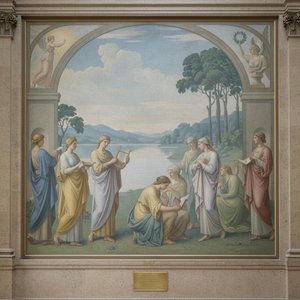
Pierre Puvis de Chavannes: Symbolism, Mural Painting, and the Pursuit of Ideal Beauty
Explore the life & work of Pierre Puvis de Chavannes, a pivotal Symbolist painter renowned for his monumental murals. Discover his aesthetic principles, key artworks like 'Hope,' and lasting influence on modern art. A deep dive into 19th-century French painting.

A dzsungel jelenetektől az aranylevél geometriáig: A mai legkeresettebb falfestési stílusok
Fedezze fel a legújabb falfestési trendeket! Szakértői útmutatókkal segítünk megtalálni a tökéletes faldekorációt otthonába vagy üzletébe. Prémium minőség, egyedi tervezés – inspirálódjon velünk!

Hogyan emelik a konyhák és fürdőszobák hangulatát a falfestmények – A funkcionális terek átalakítása művészettel
Emlékeztető: A konyha és fürdőszoba hangulatát falfestményekkel alakítsa át! Szakértői tanácsok, prémium minőségű kézzel festett műalkotások a -tól. Inspirációk és egyedi megoldások otthona számára.
Falfestmények mint belsőépítészeti alapkomponensek: Egy átfogó útmutató szállodatervezők számára
Fedezze fel, hogyan emelhetik a falfestmények szállodája hangulatát! Szakértői útmutató stílusokhoz, anyagokhoz és tervezéshez. Prémium minőség a -tól!

Goya Mesterművei: A Spanyol Lélek 25 Legikonikus Képe – OriginalUniqueArt
Fedezze fel Goya 25 leglenyűgözőbb mesterművét! Ismerje meg a spanyol festő életművét, portréit és ikonikus képeit. Vásároljon prémium minőségű reprodukciókat a OriginalUniqueArt.com-on, és teremtsen egyedi otthoni dekorációt klasszikus művészettel! Explore the full collection online.
