

 Előnézet
 Megosztás
 Megosztás
 Részletek
 Útmutató

 Letöltés
 Hasonló darabok
 X-ray felvétel
 Diavetítés
 Statisztika
Colour Spheres
 Acrylic On Canvas
- WallArt
- German Romanticism
 1809
1809- 19th Century
 225.0 x 189.0 cm
 Hamburger Kunsthalle
 Tovább olvasom
Giclée / Műnyomat
Múzeumi minőségű giclée vagy vászonnyomat, gyors gyártással és rugalmas finomítási lehetőségekkel. ( Kézzel festett másolat vásárlása Áttérés digitális képre)




P118B Ft10

P118H Ft10

P118W Ft10

P438Z Ft10

P508JH Ft12

P508YH Ft12

P805H Ft10

P805Z Ft10

P919BZ Ft10

P919G Ft10

P919XJ Ft10

P959ZH Ft10

P968JZ Ft12

W106C Ft8

W218G Ft10

W218JH Ft8

W218Y Ft10

W307PJ Ft10

W316G Ft10

W316PJ Ft8

W316Y Ft10

W398PJ Ft8

W4111J Ft10

W500HY Ft15

W500JH Ft15

W692G Ft12

W849H Ft8

W940BG Ft15

W953PJ Ft8




Válasszon előre meghatározott méreteink közül, amelyek megfelelnek a műalkotás eredeti arányainak.

Írja be a keretének vagy a falának megfelelő szélességet és magasságot. A nyomatot csak le lehet vágni, soha nem tehető nagyobbá, mint az eredeti kép, így egy eltérő alakú méretnél a kép egy része elveszik. Mielőtt bármit kinyatintanánk, küldünk egy digitális próbamodellt jóváhagyásra. Az oldalon látható kép nem tartalmazza a valós levágást — ezt csak a próbamodell mutatja meg.
Világszerte történő kiszállítás területére mindössze 2 hét alatt, a szokásos 4-5 hét helyett. (25 október)

Ingyenes globális expressz szállítás

Prémium minőségű len vászon

Teljes körű szállítási biztosítás

Vámvisszatérítési Garancia

Tökéletes színarányosság garancia

100 napos visszaküldési garancia (csak gyártási hibás termékek esetén)

100% pénzvisszatérítési garancia

Több darab vásárlásakor kedvezmény
 Az üvegkeretes opció csak 110 cm alatti méretben érhető el

Colour Spheres
Giclée / Műnyomat
Reprodukció méretei
-


Összesített ár
Ft 25605
A Symphony of Color: Philipp Otto Runge’s “Colour Spheres”
Philipp Otto Runge's "Colour Spheres," painted in 1809, isn’t merely a depiction of spheres; it’s an intensely personal and profoundly symbolic exploration of color theory, spirituality, and the very essence of perception. Created during a pivotal moment in German Romanticism – a period grappling with tradition versus innovation, reason versus emotion – Runge sought to move beyond the constraints of academic painting and forge a new visual language rooted in his own deeply felt inner world. The work, now housed within the Kunsthalle in Hamburg, Germany, is a testament to this ambition, radiating an almost palpable sense of contemplative energy.
The composition itself is deceptively simple: four distinct spheres dominate the canvas, each imbued with a unique chromatic harmony. These aren’t static objects; they appear to pulse with light and movement, their surfaces shimmering with subtle gradations of color. Runge masterfully employs a technique reminiscent of both pastel drawing and early Impressionism – delicate layering of translucent washes creates an ethereal quality, while careful attention to value and hue establishes a remarkable sense of depth and luminosity. The spheres aren’t rendered with photographic realism; instead, they are idealized forms, suggesting a connection to the divine or the abstract realms of consciousness. The choice of materials—engraving media—contributes to this luminous effect, allowing for a richness of tone rarely achieved with oil paint alone.
The Roots of Color Theory and Spiritual Symbolism
Runge’s fascination with color stemmed from his deep engagement with the philosophy of Jakob Böhme, a 17th-century German mystic who believed that colors possessed inherent spiritual significance. Böhme posited that each hue corresponded to a specific stage of human development or a particular aspect of the divine. Runge sought to translate these esoteric ideas into visual form, believing that color could be used to unlock deeper levels of understanding and experience. His work reflects this intellectual pursuit, moving beyond mere representation to become a vehicle for conveying complex philosophical concepts.
The arrangement of the spheres themselves is laden with symbolic meaning. The central sphere, predominantly red, often represents passion, energy, and earthly existence – the realm of the senses. The green sphere embodies growth, harmony, and connection to nature. Blue signifies intellect, contemplation, and the spiritual realm. Yellow, positioned furthest from the viewer, evokes joy, enlightenment, and divine grace. The circular arrangement suggests a cyclical process—a journey through different states of consciousness or stages of life. It’s important to note that Runge's color theory was radically different from prevailing scientific understanding at the time; he prioritized subjective experience over objective measurement.
A Dialogue with Goethe and the Romantic Spirit
Runge’s work resonated deeply with his contemporary, Johann Wolfgang von Goethe, who shared a profound interest in color theory. The two artists engaged in extensive correspondence, exchanging ideas about the nature of perception and the expressive potential of color. Indeed, Runge's exploration of color was heavily influenced by Goethe’s theories on optics and aesthetics. This intellectual exchange highlights the vibrant artistic and philosophical ferment of the early 19th century – a period marked by a renewed interest in spirituality, emotion, and the power of individual experience.
Furthermore, “Colour Spheres” embodies the core tenets of German Romanticism: an emphasis on intuition, imagination, and the sublime. It rejects the rationalism of the Enlightenment in favor of a more subjective and emotionally charged approach to art. The painting’s evocative atmosphere—its sense of mystery, wonder, and spiritual yearning—captures the essence of this artistic movement perfectly. It invites the viewer not simply to *see* the colors but to *feel* them, to connect with their own inner world.
Collecting a Timeless Masterpiece
Reproductions of “Colour Spheres” offer a remarkable opportunity to bring Runge’s visionary aesthetic into any interior space. The delicate layering and luminous quality of the original are faithfully reproduced in high-quality prints, allowing the painting's subtle nuances to shine through. Whether displayed as a statement piece or incorporated into a more restrained color scheme, this artwork will undoubtedly serve as a focal point, sparking conversation and inspiring contemplation. Consider commissioning a hand-painted reproduction – a truly unique and authentic representation of this seminal work of German Romantic art.
Gyakran Ismételt Kérdések
Hogyan kapcsolódnak „Colour Spheres”, Philipp Otto Runge alkotása színei a mű érzelmeitől?
A „Colour Spheres”, Philipp Otto Runge alkotása Neutrals palettája harmonikában van Mysterious érzelmi hangulatával. A szín az egyik módja annak, ahogyan egy mű érzelmeket közvetít.
Mit ábrázol a „Colour Spheres”, Philipp Otto Runge alkotása, és milyen hangulatot közvetít?
A „Colour Spheres”, Philipp Otto Runge alkotása color spheres, chromatic forms, geometric abstraction, visual harmony, runge's theory, symbolic art, circular composition-t ábrázol, Romantic hangulatban. A tárgy és a légkör együtt határozza meg a művet.
Ki készítette a "Colour Spheres" alkotást, és milyen stílusú?
Philipp Otto Runge a German Romanticism irányzatban alkototta meg a "Colour Spheres" című művét.
A művész életrajza
Philipp Otto Runge élete és látomásos világa
Philipp Otto Runge neve a német romantika hajnalának időszakával fonódik össze, egy olyan művészé, akinek tragikusan rövid élete belépett a mély gondolatvilág és eredetiség birodalmába. 1777-ben született Wolgastban, akkor még Svéd Pomerániában, egy hajóépítéssel foglalkozó családba, amely porosz nemesi gyökerekkel rendelkezett. Runge gyermekéveit betegségek kísérték, ami elmélyítette kontemplatív természetét, mely mélyen befolyásolta művészi törekvéseit. Ez a fizikai törékenység korai tehetséget ébresztett a *papírvágó sziluettek* készítésére, egy olyan gyakorlatra, amelyet egész életében folytatott – bizonyítva veleszületett képességét arra, hogy rendkívüli pontossággal tömörítse az alakokat és érzelmeket. Szakmai képzése a legtöbb művészhez képest későn kezdődött, először egy kereskedelmi tanulószerződéssel Hamburgban testvére, Daniel cégénél. Azonban a művészi kifejezés vágya túl erősnek bizonyult, ami 1800-ban Koppenhágába vezetett Jens Juel festőművészhez tanulni. Ez jelentette Runge útjának kezdetét, hogy Németország egyik leginnovatívabb és spirituálisabban motivált művésze legyen.A romantikus szimbolizmus hajnala
Runge művészi fejlődése mélyen formálódott 1801-ben történt költözésével Drezdába, ahol kulcsfontosságú alakokkal találkozott, mint Caspar David Friedrich és Ludwig Tieck. Itt ismerkedett meg Pauline Bassenge-vel is, akit 1804-ben vett feleségül. Ebben az időszakban növekvő érdeklődést mutatott Jakob Böhme misztikus írásai iránt, melyek filozófiai feltárásai a világegyetem rejtett harmóniáiról mélyen rezonáltak Runge saját spirituális hajlamaival. Kulcsfontosságú pillanat következett be 1803-ban, amikor váratlanul találkozott Johann Wolfgang von Goethe-val Weimarban, egy barátságot kovácsolva közös érdeklődési körök alapján a színelmélet és művészi kifejezés terén. Ez a találkozás átalakító erejűnek bizonyult, ösztönözve Runge-t, hogy mélyebben merüljön el a művészet szimbolikus nyelvén, és fedezze fel minden dolog összekapcsoltságát. Korai munkái ekkor kezdték tükrözni ezt a virágzó romantikus érzékenységet, eltávolodva a neoklasszikus visszafogottságtól az érzelmileg feltöltött tájak és személyes jelentéssel átitatott portrék felé. A *Hülsenbeck Gyermekek* (1805) például nem csupán egy portré, hanem egy megható ábrázolása a családi intimitásról és a gyermekkor ártatlanságáról, szinte éteri minőségben megfestve.A szín mint kozmikus nyelv
Runge legmaradandóbb öröksége úttörő munkája a színelmélet terén rejlik. Hitt abban, hogy a szín nem csupán egy vizuális jelenség, hanem egy alapvető erő, amely formálja érzékelésünket a valóságról és tükrözi az isteni rendet. Ez a meggyőződés vezetett el a *Farben-Kugel* (Szírgömb) kifejlesztéséhez, amelyet 1810-ben publikált, röviddel korai haláláig a tuberkulózis következtében harminchárom évesen. A Szírgömb nem csupán egy tudományos értekezés volt; ez egy kísérlet volt arra, hogy a szín teljes spektrumát egy háromdimenziós formára térképezze fel, ahol a fehér és a fekete ellentétes pólusokat képvisel, a primer színek – kék, sárga és piros – pedig a keresztény Szentháromságot szimbolizálják. A *Kék* az Istent és az éjszakát jelképezte, a *piros* a reggelt, estét és Jézust, míg a *sárga* a Szentlelket. Runge gondos lemez-szín keverési kísérletei egy kísérlet voltak elméleti kerete empirikus alátámasztásának, bemutatva, hogy a színeket harmonikusan kombinálva hogyan lehet létrehozni a színek széles skáláját. Ez a felfedezés nem izolált maradt; összefonódott művészi gyakorlatával, formálva a színek szimbolikus használatát festményein és rajzain.A ‘Nap Időszakainak’ befejezetlen szimfóniája
Runge egy *Gesamtkunstwerk*-et – egy teljes műalkotást – képzelt el, amely a festészetet, költészetet, zenét és építészetet egyesíti egy egységes érzékszervi élményben. Ez az ambíció legambiciózusabb kifejezését nyerte el *Tageszeiten* (Nap Időszakainak) sorozatában, amelyet 1803-ban kezdett. A projekt négy monumentális festményből állt a reggel, dél, este és éjszaka ábrázolásával, melyeket mindegyiket egy speciálisan épített épületben kellett megtekinteni zenével és költészettel kísérve. Bár csak két verzió készült el a “Reggel”-ből, a teljes ciklus rajzai Runge mély szimbolizmusértését és vágyát mutatják arra, hogy megragadja az idő spirituális esszenciáját. Ezek a művek eltávolodtak a hagyományos tájképfestészettől, vallási és érzelmi jelentőséggel átitatva a természetet. Nem csupán a külső világot akarta ábrázolni, hanem annak belső harmóniáját és isteni jelenlétét közvetíteni. A koncepció forradalmasínak bizonyult az akkori időszakban, előrevetítve a későbbi absztrakt művészet és multimédiás installációk fejlődését.Tartós hatás
Bár karrierjét betegség szakította meg, Philipp Otto Runge hatása a német romantikára és a modern művészet fejlődésére vitathatatlan. A színelmélet terén végzett felfedezései generációk művészeit inspirálták, beleértve a Bauhaus-mozgalomhoz tartozókat is. A szimbolizmusra és érzelmi kifejezésre való hangsúlyozása utat nyitott a későbbi expresszionista festők számára. Runge egyedülálló keveréke tudományos kutatásból, spirituális meggyőződésből és művészi innovációból továbbra is lenyűgöz és inspirál. Továbbra is kulcsfontosságú alak marad a művészettörténetben – egy látnokos művész, aki merte feltárni az emberi érzékelés rejtett mélységeit és a világegyetem titkait a szín, forma és szimbolizmus nyelvén keresztül. Művei nem csupán festmények; ablakok egy belső látomással megvilágított világba, meghívva bennünket arra, hogy elmélyedjünk minden dolog mély összekapcsoltságában.
Philipp Otto Runge
1777 - 1810 , Németország
Gyors információk
- Artistic Movement Or Style: Romantizmus
- Artists Or Movements Influenced By This Artist: ['Caspar David Friedrich']
- Artists Who Influenced This Artist:
- Jakob Böhme
- Goethe
- Date Of Birth: 1777
- Date Of Death: 1810
- Full Name: Philipp Otto Runge
- Nationality: Német
- Notable Artworks (List Of Titles):
- Hülsenbeck Gyerekek
- Nagy Reggel
- Színes gömb
- Place Of Birth (City And Country): Wolgast, Németország
Kapcsolódó cikkek
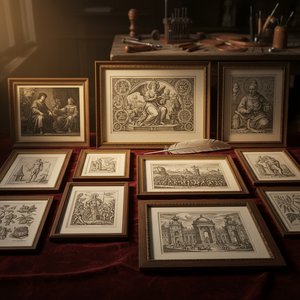
A művészet forradalmárai: 10 ikonikus metszet, melyek örökre megváltoztatták a világot
Fedezze fel a művészettörténet 10 legikonikusabb metszetét! Dürertől Goyáig, ismerje meg a barokk és reneszánsz mesterek lenyűgöző alkotásait. Vászonképek, poszterek – múzeumi minőségben a OriginalUniqueArt.com-on. Explore the full collection online!

The Precision of the Burin: An Expert Guide to the High-Impact World of Masterful Engraving Art
Discover the sharp, high-impact world of engraving art. Our expert guide explores intaglio techniques, the mastery of the burin, and how collectors can appreciate the precision and enduring legacy of this profound graphic art form.

Engraving: A Historical Survey of Technique, Artistic Expression & Enduring Legacy
Explore the rich history of engraving with OriginalUniqueArt. Discover techniques, iconic artists like Dürer & Callot, collecting tips, and expert guidance for preserving your art investment. Learn about intaglio printing & more!

The Intricate World of Engraving: A Historical Survey of Technique, Artistic Expression & Enduring Legacy
Explore the rich history of engraving with OriginalUniqueArt. Discover techniques, iconic artists like Dürer & Callot, collecting tips, and expert guidance for preserving your art investment. Learn about intaglio printing & more!

Paul Cézanne 25 Mesterműve: A Modern Művészet Úttörői | OriginalUniqueArt
Fedezze fel Paul Cézanne 25 legikonikusabb művét! Ismerje meg a posztimpresszionizmus úttörőjének festményeit, technikáját és inspirációit. Vászonképek, portrék, tájképfestmények – minden otthonba. Böngéssze gyűjteményünket a OriginalUniqueArt-on!

