

 Megtekintés
 Küldés
 Megosztás
 Részletek
 Útmutató

 Letöltés
 Hasonló darabok
 X-ray felvétel
 Diavetítés
 Statisztika
Caesar Dictates His Commentaries
 Oil On Canvas
- WallArt
- Neoclassical Revival
 1812
1812- 19th Century
 270.0 x 450.0 cm
 Quirinale Palota
 Összes részlet megjelenítése
Giclée / Műnyomat
Múzeumi minőségű giclée vagy vászonnyomat, gyors gyártással és rugalmas finomítási lehetőségekkel. ( Kézzel festett másolat rendelése Áttérés digitális képre)




P118B Ft10

P118H Ft10

P118W Ft10

P438Z Ft10

P508JH Ft12

P508YH Ft12

P805H Ft10

P805Z Ft10

P919BZ Ft10

P919G Ft10

P919XJ Ft10

P959ZH Ft10

P968JZ Ft12

W106C Ft8

W218G Ft10

W218JH Ft8

W218Y Ft10

W307PJ Ft10

W316G Ft10

W316PJ Ft8

W316Y Ft10

W398PJ Ft8

W4111J Ft10

W500HY Ft15

W500JH Ft15

W692G Ft12

W849H Ft8

W940BG Ft15

W953PJ Ft8




Válasszon előre meghatározott méreteink közül, amelyek megfelelnek a műalkotás eredeti arányainak.

Írja be a keretének vagy a falának megfelelő szélességet és magasságot. A nyomatot csak le lehet vágni, soha nem tehető nagyobbá, mint az eredeti kép, így egy eltérő alakú méretnél a kép egy része elveszik. Mielőtt bármit kinyatintanánk, küldünk egy digitális próbamodellt jóváhagyásra. Az oldalon látható kép nem tartalmazza a valós levágást — ezt csak a próbamodell mutatja meg.
Világszerte történő kiszállítás területére mindössze 2 hét alatt, a szokásos 4-5 hét helyett. (27 október)

Ingyenes globális expressz szállítás

Prémium minőségű len vászon

Teljes körű szállítási biztosítás

Vámvisszatérítési Garancia

Hiteles színarányosság garancia

100 napos visszaküldési lehetőség (csak hibás termékek esetén)

100% pénzvisszatérítési garancia

Több darab vásárlásakor kedvezmény
 Az üvegkeretes opció csak 110 cm alatti méretben érhető el

Caesar Dictates His Commentaries
Giclée / Műnyomat
Reprodukció mérete
-


Összesített ár
Ft 25827
The Grandeur of Empire: Caesar Dictates His Commentaries
To stand before this monumental canvas is to be transported across the centuries, into the very heart of Roman intellectual power. Depicting the scene inspired by Plutarch’s biography, Caesar Dictates His Commentaries captures a moment of profound historical weight—the mind of Julius Caesar at work. The setting itself speaks volumes; confined within the intimate yet grand space of a tent that opens dramatically onto the bustling energy of the military camp beyond. This contrast between focused scholarly endeavor and martial might is palpable, drawing the viewer into the gravity of empire-building thought.
A Study in Classical Authority and Technique
The composition centers on Caesar himself, rendered with an unmistakable air of luminous authority as he sits near a tripod adorned with zoomorphic legs. Clad in a brilliant white cloak, his posture suggests both deep contemplation and absolute command. He is surrounded by scribes, their bent forms illustrating the meticulous act of recording history onto tablets, while Caesar holds the stylus—the instrument through which immortal words are shaped. The artist masterfully employs oil on canvas to achieve rich textures, from the sumptuous folds of drapery to the polished wood of the furniture and the sheen of the parchment. The sheer scale of this work, measuring 270 x 450 cm, demands attention, allowing every detail—from scattered books suggesting vast libraries of knowledge to the distant boat visible in the background—to contribute to a tapestry of ancient Roman life.
Echoes of Power: Historical Context and Symbolism
The painting is more than just a portrait; it is an allegory of historical legacy. The likeness given to Caesar evokes parallels with Napoleon, suggesting that the themes of military genius intertwined with literary record have echoed through epochs. This connection subtly nods toward Giorgio Vasari’s earlier depiction in Florence, grounding the piece within a lineage of artistic commemoration of great leaders. Symbolically, the act of dictation itself represents the eternal struggle to document and interpret human action—the moment history is fixed into permanence by genius. The presence of the scribes underscores that even the greatest minds require diligent hands to translate vision into tangible record.
An Interior Statement for the Connoisseur
For the collector or designer whose taste leans toward narratives of enduring power and classical sophistication, this reproduction offers an unparalleled focal point. Its dramatic scale ensures it will anchor any grand hall or library, lending an air of cultivated erudition to the space. It is a piece that does not merely decorate; it narrates. Owning this work means embracing a dialogue with antiquity—a celebration of intellect, military prowess, and the enduring power of the written word.
Kérdések és válaszok
„Caesar Dictates His Commentaries”, Pelagio Palagi alkotása erős kontrasztokat vagy lágy harmóniákat használ?
A „Caesar Dictates His Commentaries”, Pelagio Palagi alkotása színelemzése Balanced kontrasztot és Unified Palette harmóniát mutat be.
Milyen nyomtatási méretet és vízszességet javasol a „Caesar Dictates His Commentaries”, Pelagio Palagi alkotása?
Large méret, Landscape elrendezés: ez a(z) „Caesar Dictates His Commentaries”, Pelagio Palagi alkotása alkotáshoz javasolt nyomtatási beállítás.
Milyen színpaletta jellemzi a(z) „Caesar Dictates His Commentaries”, Pelagio Palagi alkotása alkotást?
A „Caesar Dictates His Commentaries”, Pelagio Palagi alkotása színek palettáját úgy jellemzik, mint Earthy. Ez a mű színeinek tömör leírása.
A művész életrajza
Pelagio Palagi: A Neoclassical Visionary Bridging Worlds
A Bolognai születésű Pelagio Palagi (1775-1860) egy rendkívül sokoldalú művész volt, akinek pályája a neoklasszicizmus és a romantika határán mozgott, hídként kötve össze a múlt dicsőségét a modern kor igényeivel. Életútja tele volt változásokkal, tanulással és kitartó alkotói energiával, melynek eredményeként Itália egyik legjelentősebb művésze lett a 19. században. Palagi nem csupán festőként, szobrászként és építészként is jelentős szerepet játszott, emellett lelkes gyűjtője volt az ókori kultúráknak, ami mélyen áthatotta művészetét és gondolkodását. Fiatalon Carlo Filippo Aldrovandi gróf pátronálja lett, aki nem csupán anyagi támogatást nyújtott neki, hanem egy igazi művészeti akadémiát is teremtett otthonában, ahol Palagi a klasszikus formákra, perspektívára, építészetre és portréfestésre összpontosított. Ez az időszak alapvetően meghatározta későbbi munkásságát, hiszen megtanulta értékelni a régi mesterek örökségét és elsajátította a művészi tökéletesség elérésének fortélyait. A napóleoni hadjáratok Bolognába hozta a forradalmi eszméket, melyek Palagi munkáiban is megmutatkoztak – egyenruhák, érmék és címer tervezése révén fejezte ki szolidaritását a „Liberté, égalité, fraternité” ideálokkal.Római Tanulmányok és a Történelem Színterei
Palagi művészi fejlődése 1806-ban fordulatot vett, amikor Rómába költözött, hogy továbbfejlessze tudását az Accademia di San Luca falai között. A római időszak kulcsfontosságú volt számára, hiszen itt találkozott olyan mesterekkel, mint Vincenzo Camuccini, akinek a történelmi pontossághoz és aprólékos részletességhez való ragaszkodása mély benyomást gyakorolt rá. Ez az inspiráció tükröződik Palagi portréiban, történelmi festményeiben és tájképeiben is, melyekben a múltat alapos kutatásra és a természet megfigyelésére építve ábrázolta. A „Giuseppe Guizzardi antik ruhában” című portréja (1807) és az allegorikus „A Szerelem és a Lélek házassága” (1808) már ebben az időszakban is bizonyították tehetségét, de a legambiciózusabb alkotásai közé tartozik a „Mario a Minturno”, melyben lenyűgöző mesteri tudást mutatott a narratív kompozíciók terén. Palagi képességei nem csupán vászonra korlátozódtak; a Palazzo Venezia és a Palazzo Torlonia freskjainak tervezése is bizonyította, hogy képes harmonikusan ötvözni a művészi víziót az építészeti térrel.Milánói Évek és a Savoy-Dinasztia Patronázsa
1815-ben Palagi Milánóba költözött, ahol egy saját magántanfolyamot alapított, kihívást intézve ezzel a Brera Akadémia hagyományos hatalmával szemben. Ez a merész lépés hangsúlyozta önbizalmát és elkötelezettségét a független művészi kifejezés iránt. Milánóban elsősorban portréfestéssel foglalkozott, megörökítve a kor prominens alakjait, mint Giuseppe Bossi és Andrea Appiani. 1832-ben azonban új fejezet kezdődött Palagi életében, amikor Carlo Alberto Szárd Király udvari festőjévé nevezték ki. Ez a királyi patronázs jelentős megbízásokat eredményezett a Racconigi kastélyban és a Palazzo Reale torinói palotájában, ahol nem csupán festészeti készségeivel, hanem építészeti tervezési és belsőépítészeti tehetségével is bizonyította magát. A „The Dance of the Hours” című, a Palazzo Reale ballatermében található mennyezetfestmény az alkotásának csúcspontja, melyben a klasszikus elveket a feltörekvő romantikus érzékenységgel ötvözte, dinamikus és érzelmileg gazdag kompozíciót teremtve.Örökség és Gyűjtői Szenvedély
Pelagio Palagi művészi stílusa a neoklasszicizmus és a romantika szintézise, melyben a klasszikus formák tisztasága és rendje találkozik az érzelmi kifejezés dinamikájával. A „Gian Galeazzo Sforza” és a „Ratto delle Sabine” című művei jól példázzák ezt a kettősséget. Palagi lelkes gyűjtőként nem csupán festményekkel foglalkozott, hanem ókori görög, egyiptomi, etruszk és római szobrok, tárgyak és érmék hatalmas gyűjteményét is összeállított. Halála után ezt a rendkívüli kincset Bologna városának ajándékozta, melyet ma a Museo Civico Archeologico, Museo Civico Medievale és Biblioteca Comunale dell'Archiginnasio őriz. Palagi öröksége nem csupán művészeti alkotásai révén él tovább, hanem mint egy sokoldalú művész, gondolkodó és gyűjtő, aki mély nyomot hagyott a 19. századi olasz kultúra alakulásában. Ő volt valódi polihisztor, akinek hatása generációkon át érezhető.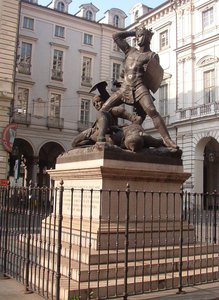
Pelagio Palagi
1775 - 1860 , Olaszország
Rövid információk
- Elhalálozás Dátuma: 1860. március 6.
- Jelentős Művek:
- Giuseppe Guizzardi portréja
- A szerelem és a psze felesége
- Mario a Minturno
- Órák tánca (mennyezetfestmény)
- Mely Művészek Befolyásolták:
- Vincenzo Camuccini
- Francesco Hayez
- Művészeti Irányzat: Neoklasszicizmus, Romantizmus
- Nemzetiség: Olasz
- Születési Dátum: 1775. május 25.
- Születési Hely: Bologna, Olaszország
- Teljes Név: Pelagio Palagi
Kapcsolódó cikkek
The Enduring Legacy of Classicism: Principles, Evolution & Influence in Western Art
Explore the enduring legacy of Classicism in Western art! Discover its historical context, key principles, iconic masterpieces & lasting influence. Learn about Renaissance and Neoclassical movements with OriginalUniqueArt.
The Enduring Legacy of Classical Portraiture: Tradition, Innovation & Identity
Explore the rich history of classical portraiture with OriginalUniqueArt. Discover symbolism, techniques & enduring influence on art collecting. Expert appraisals & custom reproductions available.
Timeless Resonance: Exploring Classic Vibe in Art – A Historical & Aesthetic Analysis
Explore the rich history & enduring aesthetic of Classicism art! Discover key movements, iconic artists like Raphael & David, and its lasting influence on Western art. Deepen your appreciation today.

The Enduring Legacy of Formal Portraiture: Power, Identity & Artistic Exploration
Explore the rich history of formal portraiture & its enduring power to capture identity and shape perception. Discover investment-worthy artworks, expert appraisals, and custom reproduction services at OriginalUniqueArt.
A Neoklasszicizmus 10 Mesterműve: Klasszikus Stílusú Festmények és Dekorációk a OriginalUniqueArt-on
Fedezze fel a neoklasszicizmus 10 legikonikusabb műalkotását! Jacques-Louis David, Ingres és más mesterek klasszikus festményeinek története. Vászonképek, faliképek - inspirálja otthonát OriginalUniqueArt.com kínálatával! Fedezze fel a teljes gyűjteményt online.