 Előnézet
 Megosztás
 Megosztás
 Részletek
 Útmutató

 Letöltés
 Hasonló darabok
 X-ray felvétel
 Diavetítés
 Statisztika
The Talisman
 Oil
Oil- WallArt
- Post-Impressionism
 1888
1888- 19th Century
 21.0 x 27.0 cm
 Tovább olvasom
Giclée / Műnyomat
Múzeumi minőségű giclée vagy vászonnyomat, gyors gyártással és rugalmas finomítási lehetőségekkel. ( Kézzel festett másolat vásárlása Áttérés digitális képre)




































Válasszon előre meghatározott méreteink közül, amelyek megfelelnek a műalkotás eredeti arányainak.

Írja be a keretének vagy a falának megfelelő szélességet és magasságot. A nyomatot csak le lehet vágni, soha nem tehető nagyobbá, mint az eredeti kép, így egy eltérő alakú méretnél a kép egy része elveszik. Mielőtt bármit kinyatintanánk, küldünk egy digitális próbamodellt jóváhagyásra. Az oldalon látható kép nem tartalmazza a valós levágást — ezt csak a próbamodell mutatja meg.
Világszerte történő kiszállítás területére mindössze 2 hét alatt, a szokásos 4-5 hét helyett. (25 október)

Ingyenes globális expressz szállítás

Prémium minőségű len vászon

Teljes körű szállítási biztosítás

Vámvisszatérítési Garancia

Tökéletes színarányosság garancia

100 napos visszaküldési garancia (csak gyártási hibás termékek esetén)

100% pénzvisszatérítési garancia

Több darab vásárlásakor kedvezmény
 Az üvegkeretes opció csak 110 cm alatti méretben érhető el

The Talisman
Giclée / Műnyomat
Reprodukció méretei
-


Összesített ár
Ft 25642
A Visionary Fragment: The Birth of Abstraction
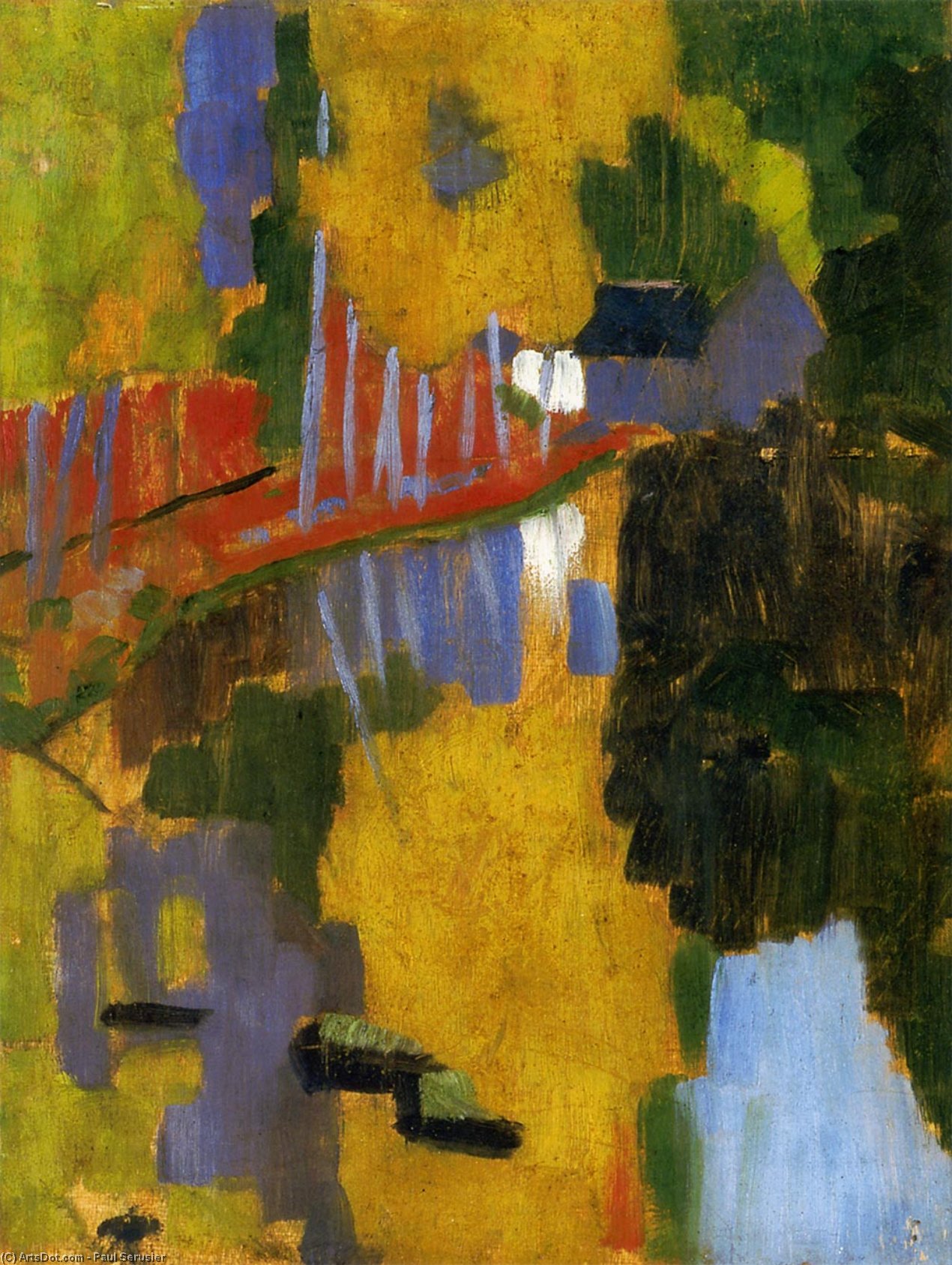
In the annals of modern art history, few small-scale works possess the seismic power of Paul Sérusier’s The Talisman. Painted in 1888, this miniature masterpiece serves as much more than a mere landscape; it is a manifesto captured in pigment. Created during a transformative summer in Pont-Aven, the painting emerged from a profound encounter between the young Sérusier and the seasoned Paul Gauguin. Under Gauguin’s rigorous guidance, Sérus deliberately moved away from the fleeting light of Impressionism toward a more structured, symbolic language. The result is a work that does not merely represent a bridge over water, but rather distills the very essence of nature into a rhythmic arrangement of pure color and form.
The composition invites the viewer to wander across a vibrant yellow archway that spans the canvas with architectural confidence. Below, the water reflects a kaleidoscope of hues, while the background is populated by lush, stylized trees that frame the scene in an embrace of verdant tones. The presence of small figures on the bridge and birds drifting through the sky adds a layer of lively, breathing energy to the piece, preventing the abstraction from feeling cold or detached. Instead, there is a palpable sense of movement and life, as if the viewer has stumbled upon a fleeting, magical moment in the French countryside.
The Mastery of Cloisonnism and Color
Technically, The Talisman is a triumph of Cloisonnism, a style characterized by bold, flat areas of color separated by dark, distinct outlines. This technique, reminiscent of medieval stained glass, allows Sérusier to experiment with the emotional weight of color rather than the literal accuracy of light and shadow. The palette is unapologetically bright and saturated; the brilliant yellows and deep greens work in harmony to create a visual vibration that captivates the eye. By reducing the landscape to its most essential geometric components, Sérusier paved the way for the Nabis movement and the eventual rise of pure abstraction.
For the discerning collector or interior designer, this painting offers an unparalleled opportunity to introduce a piece of art history into a contemporary space. The work’s compact dimensions—a mere 21 x 27 cm—make it an intimate jewel, perfect for a curated gallery wall or as a focal point in a sophisticated study. A high-quality reproduction of this masterpiece brings with it not just the aesthetic beauty of Post-Impressionism, but the intellectual weight of a painting that changed the course of Western art. It is a conversation starter, a burst of historical vitality, and a profound testament to the power of seeing the world through a lens of pure, unadulterated color.
Gyakran Ismételt Kérdések
Hány éves volt Paul Sérusier, amikor megalkotta a "The Talisman" című alkotást?
Paul Sérusier 24 éves volt, amikor 1888 évben megalkotta a "The Talisman" alkotást. A korúsítás az alkotó születési évéből, 1864 fel основании került kiszámítva.
„The Talisman” művészeti alkotás mentes a szerzői jogoktól?
A szerzői jogokkal kapcsolatban a "The Talisman" mű a joghallgatói schützenesség körébe tartozik – a szerzői jog lejártt.
Ki készítette a "The Talisman" alkotást, és milyen stílusú?
A "The Talisman" mögött Paul Sérusier és a Post-Impressionism irányzat áll.
A művész életrajza
Early Life and Artistic Beginnings
Paul Sérusier, a pivotal figure in the development of modern art, was born on November 9th, 1864, in the heart of Paris. His upbringing within a prosperous middle-class family provided him with an exceptional education, beginning at the Lycée Fontane – later known as Lycée Condorcet – where he immersed himself in classical philosophy, Greek and Latin studies, and the sciences. This rigorous foundation laid the groundwork for his future artistic explorations. Notably, Sérusier’s classmates included fellow artists who would profoundly influence his trajectory, including Maurice Denis, Édouard Vuillard, and Ker-Xavier Roussel. His father, a successful businessman involved in the perfume industry, ensured that Paul received an upbringing conducive to pursuing his passions, recognizing his innate talent and desire for artistic expression. This familial support allowed Sérusier to dedicate himself fully to his burgeoning career as a painter, free from the constraints of immediate financial concerns.The Pont-Aven Years: Gauguin’s Influence and Cloisonnism
Sérusier's artistic journey truly took shape during the summer of 1888 when he traveled to Pont-Aven in Brittany. This picturesque coastal village became a vibrant hub for artists seeking inspiration and camaraderie, drawing figures like Paul Gauguin, Emile Bernard, and many others. It was within this environment that Sérusier encountered Gauguin, whose artistic philosophy and techniques exerted a powerful influence on the young painter. Gauguin encouraged Sérusier to break free from traditional academic painting practices, urging him to embrace pure colors, simplified forms, and a more intuitive approach to representation. This guidance culminated in the creation of *Bois d’Amour* (1888), a seminal work that exemplifies Sérusier's pioneering use of cloisonnism – a technique characterized by bold, flat shapes delineated by dark outlines, creating an almost mosaic-like effect. This innovative approach marked a significant departure from conventional painting methods and foreshadowed the development of abstract art.The Nabis Movement: Synthesis and Symbolism
Building upon his experiences at Pont-Aven, Sérusier became a key figure in the formation of the *Nabis* (meaning “prophet”) group – a collective of artists united by their desire to synthesize diverse artistic influences. Alongside Paul Gauguin, Maurice Denis, Pierre Bonnard, and Édouard Vuillard, the Nabis sought to create a new visual language that blended elements of Post-Impressionism, Symbolism, and even hints of Japanese aesthetics. The group met regularly at Ranson’s studio in Paris, engaging in spirited discussions about art, philosophy, and spirituality. Sérusier's work during this period reflected the Nabis’ emphasis on subjective experience, emotional expression, and a rejection of purely representational painting. He explored themes of melancholy, solitude, and the beauty of the natural world, often employing muted colors and evocative compositions to convey his inner state.Notable Works and Lasting Legacy
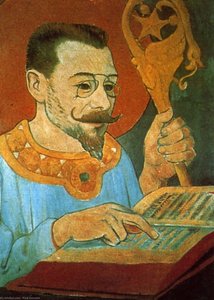
Throughout his career, Sérusier produced a remarkable body of work that continues to captivate viewers today. Key pieces include *L’Averse* (1893), a poignant depiction of a rainy day in Paris, which showcases his mastery of color and composition; the portrait of Paul Ranson (1890), offering a glimpse into the artist's personality; and *The Snake Eaters* (1894), a striking image that reflects the group’s interest in symbolism and mythology. Later in life, Sérusier taught at the École Ranson, further disseminating his artistic ideas and mentoring a new generation of artists. He also published “ABC de la peinture” in 1921, a seminal work exploring the fundamentals of painting. Paul Sérusier passed away on October 7th, 1927, in Morlaix, leaving behind a legacy as one of the most influential figures in the transition from Impressionism to modern art. His pioneering use of abstraction and his contributions to the Nabis movement continue to inspire artists today.
Paul Sérusier
1864 - 1927 , Franciaország
Gyors információk
- Artistic Movement Or Style: Post-Impressionista
- Artists Or Movements Influenced By This Artist:
- Les Nabis
- Synthetizmus
- Artists Who Influenced This Artist:
- Paul Gauguin
- Maurice Denis
- Date Of Birth: November 9, 1864
- Date Of Death: October 7, 1927
- Full Name: Louis-Paul-Henri Sérusier
- Nationality: Francia
- Notable Artworks:
- A Talisman
- L'averse
- Melancholy
- Place Of Birth: Párizs, Franciaország
Kapcsolódó cikkek

Absztrakt Expresszionizmus Mesterei: 10 alkotás, ami meghatározta a művészetet | OriginalUniqueArt.com
Fedezze fel a 10 legikonikusabb absztrakt expresszionista alkotást! Ismerje meg Jackson Pollock, Mark Rothko és más mesterek történetét. Művészeti reprodukciók prémium minőségben – OriginalUniqueArt.com.
Beyond Impressionism: The Emotional Depth and Vibrant Evolution of Post-Impressionist Landscapes
Explore the profound evolution of Post-Impressionist landscapes. From Van Gogh's emotional brushwork to Cézanne's structural mastery, discover how these visionaries redefined art history through color and form in this expert guide for fine art enthusiasts.

A 10 legikonikus impresszionista tájkép: Művészeti remekművek otthonába – OriginalUniqueArt.com
Fedezze fel a 10 legikonikus impresszionista tájkép festményt! Monet, Renoir és más mesterek alkotásainak története. Olajfestmények, vászonképek otthonába – OriginalUniqueArt.com kínálatából. Explore the full collection online!

Kandinsky Mesterművei: 25 Lenyűgöző Festmény a Modern Művészet Gyöngyszemeiből | OriginalUniqueArt
Fedezze fel Wassily Kandinsky 25 legikonikusabb művét! Merüljön el az absztrakt művészet világában, ismerje meg a színek és formák lenyűgöző történetét. Prémium minőségű reprodukciók és inspiráló dekorötletek a OriginalUniqueArt.com-on.

A 10 legikonikus impresszionista tájkép: művészeti remekművek otthonába | OriginalUniqueArt.com
Fedezze fel a 10 legikonikus impresszionista tájkép festményt! Monet, Renoir, Degas és más művészek remekművei. Vászonképek, faliképek otthonába – inspirálódjon OriginalUniqueArt.com-on! Explore the full collection online.