Megtekintés
 Küldés
 Megosztás
 Részletek
 Útmutató

 Letöltés
 Hasonló darabok
 X-ray felvétel
 Diavetítés
 Statisztika
Les Bretonnes


 Összes részlet megjelenítése
Giclée / Műnyomat
Múzeumi minőségű giclée vagy vászonnyomat, gyors gyártással és rugalmas finomítási lehetőségekkel. ( Kézzel festett másolat rendelése Áttérés digitális képre)




































Válasszon előre meghatározott méreteink közül, amelyek megfelelnek a műalkotás eredeti arányainak.

Írja be a keretének vagy a falának megfelelő szélességet és magasságot. A nyomatot csak le lehet vágni, soha nem tehető nagyobbá, mint az eredeti kép, így egy eltérő alakú méretnél a kép egy része elveszik. Mielőtt bármit kinyatintanánk, küldünk egy digitális próbamodellt jóváhagyásra. Az oldalon látható kép nem tartalmazza a valós levágást — ezt csak a próbamodell mutatja meg.
Világszerte történő kiszállítás területére mindössze 2 hét alatt, a szokásos 4-5 hét helyett. (27 október)

Ingyenes globális expressz szállítás

Prémium minőségű len vászon

Teljes körű szállítási biztosítás

Vámvisszatérítési Garancia

Hiteles színarányosság garancia

100 napos visszaküldési lehetőség (csak hibás termékek esetén)

100% pénzvisszatérítési garancia

Több darab vásárlásakor kedvezmény
 Az üvegkeretes opció csak 110 cm alatti méretben érhető el

Les Bretonnes
Giclée / Műnyomat
Reprodukció mérete
-


Összesített ár
Ft 25827
Post-Impressionist Style and Influences
The Post-Impressionist style, as seen in Les Bretonnes, is marked by a departure from traditional representation and a focus on expressive brushwork and vivid colors. This movement was influenced by various artists, including Vincent Van Gogh, whose works, such as Orchard with Peach Trees in Blossom, showcased the emotional and psychological depth of the artist. The Nabis Art Movement also drew inspiration from other styles, such as Symbolism and Cloisonism.Artistic Details and Composition
The painting Les Bretonnes features four women seated in a natural setting, surrounded by trees and bushes. The use of bold colors and distorted forms creates a sense of tension and emotional intensity. The composition is characterized by a sense of harmony and balance, with the figures arranged in a circular pattern. The artwork is also notable for its emphasis on capturing the spiritual and emotional essence of the subjects, rather than merely representing their physical appearance.- The painting is dominated by earthy tones, with touches of blue and green, creating a sense of naturalism and harmony.
- The brushwork is expressive and bold, with visible strokes and textures adding to the emotional intensity of the artwork.
- The composition is balanced and harmonious, with the figures arranged in a circular pattern, creating a sense of unity and cohesion.
The Kunsthistorisches Museum in Vienna, Austria, is also home to numerous notable artworks, including the Gipsy Madonna by Tiziano Vecellio (Titian).
Kérdések és válaszok
Hogyan épül fel a „Les Bretonnes”, Paul Sérusier alkotása színes kompozíciója?
A "Les Bretonnes" alkotásban egy Balanced kontraszt párosul egy Softly Mixed Palette harmóniával.
Milyen szín vezeti a „Les Bretonnes”, Paul Sérusier alkotása kompozícióját?
A „Les Bretonnes”, Paul Sérusier alkotása domináns színe a Yellow Green (#c0bd50).
Milyen színek jellemzik a(z) „Les Bretonnes”, Paul Sérusier alkotása alkotást?
A „Les Bretonnes”, Paul Sérusier alkotása egy Dark színpalettát használ, melynek domináns színe a Yellow Green (#c0bd50).
A művész életrajza
Early Life and Artistic Beginnings
Paul Sérusier, a pivotal figure in the development of modern art, was born on November 9th, 1864, in the heart of Paris. His upbringing within a prosperous middle-class family provided him with an exceptional education, beginning at the Lycée Fontane – later known as Lycée Condorcet – where he immersed himself in classical philosophy, Greek and Latin studies, and the sciences. This rigorous foundation laid the groundwork for his future artistic explorations. Notably, Sérusier’s classmates included fellow artists who would profoundly influence his trajectory, including Maurice Denis, Édouard Vuillard, and Ker-Xavier Roussel. His father, a successful businessman involved in the perfume industry, ensured that Paul received an upbringing conducive to pursuing his passions, recognizing his innate talent and desire for artistic expression. This familial support allowed Sérusier to dedicate himself fully to his burgeoning career as a painter, free from the constraints of immediate financial concerns.The Pont-Aven Years: Gauguin’s Influence and Cloisonnism
Sérusier's artistic journey truly took shape during the summer of 1888 when he traveled to Pont-Aven in Brittany. This picturesque coastal village became a vibrant hub for artists seeking inspiration and camaraderie, drawing figures like Paul Gauguin, Emile Bernard, and many others. It was within this environment that Sérusier encountered Gauguin, whose artistic philosophy and techniques exerted a powerful influence on the young painter. Gauguin encouraged Sérusier to break free from traditional academic painting practices, urging him to embrace pure colors, simplified forms, and a more intuitive approach to representation. This guidance culminated in the creation of *Bois d’Amour* (1888), a seminal work that exemplifies Sérusier's pioneering use of cloisonnism – a technique characterized by bold, flat shapes delineated by dark outlines, creating an almost mosaic-like effect. This innovative approach marked a significant departure from conventional painting methods and foreshadowed the development of abstract art.The Nabis Movement: Synthesis and Symbolism
Building upon his experiences at Pont-Aven, Sérusier became a key figure in the formation of the *Nabis* (meaning “prophet”) group – a collective of artists united by their desire to synthesize diverse artistic influences. Alongside Paul Gauguin, Maurice Denis, Pierre Bonnard, and Édouard Vuillard, the Nabis sought to create a new visual language that blended elements of Post-Impressionism, Symbolism, and even hints of Japanese aesthetics. The group met regularly at Ranson’s studio in Paris, engaging in spirited discussions about art, philosophy, and spirituality. Sérusier's work during this period reflected the Nabis’ emphasis on subjective experience, emotional expression, and a rejection of purely representational painting. He explored themes of melancholy, solitude, and the beauty of the natural world, often employing muted colors and evocative compositions to convey his inner state.Notable Works and Lasting Legacy
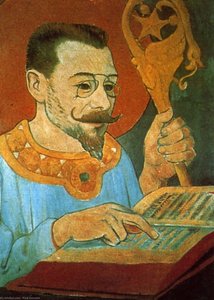
Throughout his career, Sérusier produced a remarkable body of work that continues to captivate viewers today. Key pieces include *L’Averse* (1893), a poignant depiction of a rainy day in Paris, which showcases his mastery of color and composition; the portrait of Paul Ranson (1890), offering a glimpse into the artist's personality; and *The Snake Eaters* (1894), a striking image that reflects the group’s interest in symbolism and mythology. Later in life, Sérusier taught at the École Ranson, further disseminating his artistic ideas and mentoring a new generation of artists. He also published “ABC de la peinture” in 1921, a seminal work exploring the fundamentals of painting. Paul Sérusier passed away on October 7th, 1927, in Morlaix, leaving behind a legacy as one of the most influential figures in the transition from Impressionism to modern art. His pioneering use of abstraction and his contributions to the Nabis movement continue to inspire artists today.
Paul Sérusier
1864 - 1927 , Franciaország
Rövid információk
- Artistic Movement Or Style: Post-Impressionista
- Artists Or Movements Influenced By This Artist:
- Les Nabis
- Synthetizmus
- Artists Who Influenced This Artist:
- Paul Gauguin
- Maurice Denis
- Date Of Birth: November 9, 1864
- Date Of Death: October 7, 1927
- Full Name: Louis-Paul-Henri Sérusier
- Nationality: Francia
- Notable Artworks:
- A Talisman
- L'averse
- Melancholy
- Place Of Birth: Párizs, Franciaország