
 Megtekintés
 Küldés
 Megosztás
 Részletek
 Útmutató

 Letöltés
 Hasonló darabok
 X-ray felvétel
 Diavetítés
 Statisztika
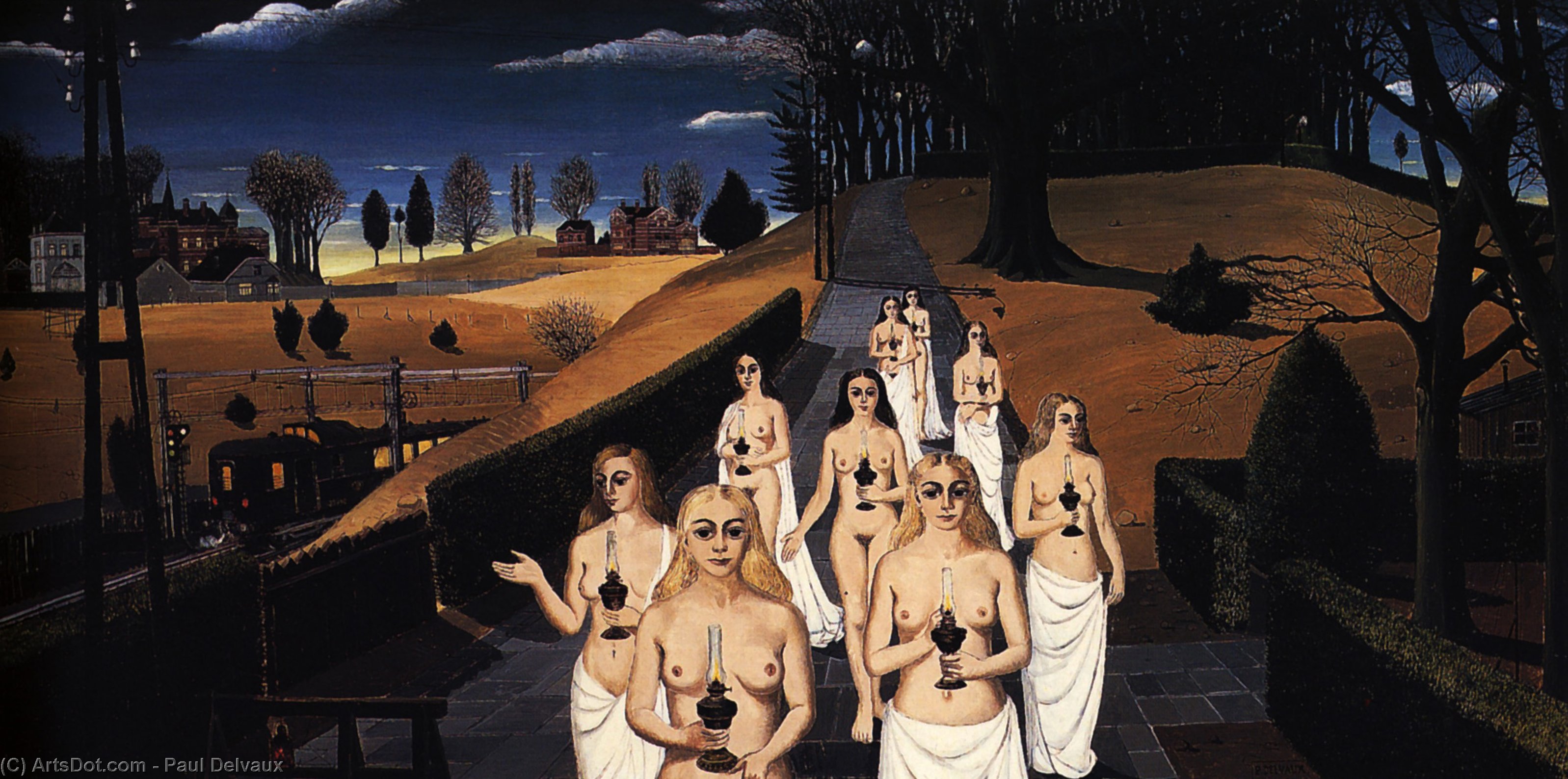
The Cortege
 Oil On Canvas
- WallArt
- Surrealism
 1963
1963 122.0 x 244.0 cm
 Összes részlet megjelenítése
Az ezen az oldalon megjelenített műalkotások szerzői jogi védelem alatt állnak, ami azt jelenti, hogy törvényileg nem készíthetünk és nem adhatunk el belőlük pontos másolatokat. Ez a védelem olyan nemzetközi megállapodások alapján érvényesül, mint például a Berni Egyezmény és a nemzeti jogszabályok által, beleértve azokat is, amelyeket meghatározott Az USA szerzői jogi törvénye – 17. cím.
Ez a módszer teljes mértékben megfelel a szerzői jogi szabályozásnak, mivel nem tartalmazza a védett műalkotás másolását vagy duplikálását. Ehelyett ez egy kreatív újinterpretáció – egy új festmény, amely az eredetivel való összefüggései miatt hatással van rá, de nem az az.
Giclée / Műnyomat
Múzeumi minőségű giclée vagy vászonnyomat, gyors gyártással és rugalmas finomítási lehetőségekkel. ( Kézzel festett másolat rendelése Áttérés digitális képre)




P118B Ft10

P118H Ft10

P118W Ft10

P438Z Ft10

P508JH Ft12

P508YH Ft12

P805H Ft10

P805Z Ft10

P919BZ Ft10

P919G Ft10

P919XJ Ft10

P959ZH Ft10

P968JZ Ft12

W106C Ft8

W218G Ft10

W218JH Ft8

W218Y Ft10

W307PJ Ft10

W316G Ft10

W316PJ Ft8

W316Y Ft10

W398PJ Ft8

W4111J Ft10

W500HY Ft15

W500JH Ft15

W692G Ft12

W849H Ft8

W940BG Ft15

W953PJ Ft8




Válasszon előre meghatározott méreteink közül, amelyek megfelelnek a műalkotás eredeti arányainak.

Írja be a keretének vagy a falának megfelelő szélességet és magasságot. A nyomatot csak le lehet vágni, soha nem tehető nagyobbá, mint az eredeti kép, így egy eltérő alakú méretnél a kép egy része elveszik. Mielőtt bármit kinyatintanánk, küldünk egy digitális próbamodellt jóváhagyásra. Az oldalon látható kép nem tartalmazza a valós levágást — ezt csak a próbamodell mutatja meg.
Világszerte történő kiszállítás területére mindössze 2 hét alatt, a szokásos 4-5 hét helyett. (27 október)

Ingyenes globális expressz szállítás

Prémium minőségű len vászon

Teljes körű szállítási biztosítás

Vámvisszatérítési Garancia

Hiteles színarányosság garancia

100 napos visszaküldési lehetőség (csak hibás termékek esetén)

100% pénzvisszatérítési garancia

Több darab vásárlásakor kedvezmény
 Az üvegkeretes opció csak 110 cm alatti méretben érhető el

The Cortege
Giclée / Műnyomat
Reprodukció mérete
-


Összesített ár
Ft 25827
The Enigmatic Procession: Delvaux's Surreal Dreamscape
To stand before Paul Delvaux’s The Cortege is to step across the threshold into a meticulously rendered dream. Painted in 1963, this monumental canvas captures the essence of Surrealism not through jarring shock, but through an almost unsettling, beautiful tranquility. The scene unfolds upon a brick path that cleaves through a pastoral landscape—a place simultaneously familiar and utterly unreal. Nine figures, nude women draped delicately with white towels, proceed in a measured line, each one bearing aloft a flickering candle. This procession is more than just a gathering; it feels like a ritual, a journey into the depths of the subconscious mind that Delvaux so masterfully illuminated.
Mastery of Form and Color in Surrealist Technique
Delvaux’s technique here showcases a breathtaking duality: an almost academic precision applied to utterly fantastic subject matter. His brushwork is both bold and remarkably controlled, allowing the viewer to appreciate every fold of the white towel and every leaf on the surrounding trees. The palette itself sings with contrasts; vibrant blues and deep greens populate the background sky and foliage, providing a vivid counterpoint to the warm, earthy tones of the brick path and the figures' skin. This technical brilliance elevates the painting beyond mere illustration; it becomes a study in light, shadow, and idealized human form, hallmarks of his enduring genius.
Symbolism Whispered by Candlelight
The symbolism woven into The Cortege is as rich as its visual tapestry. The candles held aloft are perhaps the most potent symbols, suggesting not just illumination in the physical sense, but the guiding light of knowledge, memory, or spiritual awakening. The women themselves, partially veiled by white fabric, evoke mystery and timeless femininity—they are guides, muses, or perhaps allegories for the arts themselves. As one contemplates the depth suggested by the receding houses and trees in the background, the piece invites deep introspection, suggesting that every journey, even a beautiful procession, requires both light to see and mystery to explore.
Bringing the Dream Home: Owning a Piece of Belgian Surrealism
For the collector or designer seeking an anchor of profound artistic resonance for their space, The Cortege offers unparalleled depth. Reproducing this work allows one to incorporate a piece of high art history into contemporary life. The sheer scale of the original (122 x 244 cm) speaks to its monumental presence, and owning a reproduction means curating an atmosphere steeped in intellectual romance. It is a conversation starter, a visual poem that whispers tales of Belgian artistic heritage and the enduring power of the dream state.
Kérdések és válaszok
Kinek ajánlott ajándékként a "The Cortege", és milyen célra alkalmas?
A „The Cortege”, Paul Delvaux alkotása ajándékajánlata ötvözi a Anniversary lehetőséget a Focal céljával.
The Cortege színei erőteljesnek vagy lágynak tűnnek?
A „The Cortege”, Paul Delvaux alkotása Monochromatic szín intenzitással rendelkezik.
Hol vásárolhatok egy nyomtatványt a(z) „The Cortege”, Paul Delvaux alkotása alkotásból?
A "The Cortege" minőségi giclée nyomat pamutvászonon vagy archiváló vászonpapíron formátumban is elérhető. A rendelést a Művészeti nyomtatvány oldalon lehet megtenni, a kívánt méretben.
A művész életrajza
A Dream Weaver: Paul Delvaux’s Enchanting World
Paul Delvaux, a name synonymous with haunting beauty and unsettling dreams, was born in 1897 in the small Belgian village of Wanze. His early life, steeped in both rigorous academic training – Greek and Latin studies were paramount – and the fantastical worlds conjured by Jules Verne and Homer’s *Odyssey*, laid the foundation for a uniquely captivating artistic vision. This inherent duality—the ordered discipline of classical education juxtaposed with the boundless imagination of childhood literature—would become a defining characteristic of his oeuvre. Initially, his parents steered him towards a career in architecture, a path he dutifully pursued at the Académie Royale des Beaux-Arts in Brussels. However, the structured demands of mathematics proved too restrictive for his artistic spirit, and he ultimately abandoned this ambition to dedicate himself fully to painting. This decision, though initially met with some resistance from his family, marked the beginning of his extraordinary journey into the realm of Surrealism, albeit one he resisted being rigidly categorized within.The Seeds of a Surrealist Style
Delvaux’s artistic transformation began with a profound encounter with the work of Giorgio de Chirico. De Chirico's paintings—characterized by stark, enigmatic scenes populated by shadows, classical architecture, and an unsettling sense of isolation—resonated deeply with Delvaux, unlocking a new pathway for his creativity. He was particularly drawn to the way de Chirico evoked a feeling of unease and disorientation through carefully constructed spaces and ambiguous figures. This influence is immediately apparent in his early works, which began to feature nude figures set against imposing architectural structures or within vast, desolate landscapes—a departure from the more traditional landscapes he had previously painted. Furthermore, Delvaux’s artistic development was also shaped by the work of Flemish Expressionists like Constant Permeke and Gustave De Smet, whose somber palettes and emotionally charged brushwork added a layer of intensity to his own style. These influences combined to create a distinctive visual language—one that balanced classical precision with dreamlike irrationality.The Language of Dreams: Recurring Motifs
Delvaux’s artistic language is rich in symbolism, yet he consistently resisted attempts at straightforward psychoanalytic interpretation. His paintings are populated by recurring motifs that contribute to the overall atmosphere of mystery and unease. The female nude, a central figure in many of his works, often appears passive or melancholic, embodying both desire and vulnerability—a poignant contrast against the often-sterile environments she inhabits. Trains and railway stations frequently appear as symbols of transition, displacement, and the anxieties of modernity; they represent journeys into the unknown, leaving behind familiar landscapes for uncertain destinations. Skeletons, far from being merely morbid emblems of death, are presented with a haunting beauty, serving as reminders of mortality that permeate even the most idyllic scenes—a subtle acknowledgment of the ephemeral nature of existence. Classical architecture provides a backdrop of order and permanence, yet it is often rendered strangely distorted or incomplete, suggesting a fragility beneath the surface. These elements – trains, nudes, skeletons, classical structures – are not merely decorative; they are integral to the emotional and psychological impact of his work, creating a complex tapestry of meaning.From Wanze to Recognition: A Career Shaped by Isolation
Delvaux’s artistic journey was marked by periods of isolation and self-doubt. Despite achieving some recognition in Belgium during the 1930s, he struggled to gain international acclaim until after World War II. The war years brought a period of travel through Italy, where he encountered the influence of early 16th-century Italian Mannerist painting—a style characterized by its dramatic use of perspective and elongated figures. This exposure further refined his artistic sensibilities, adding a layer of sophistication to his already distinctive style. Following the war, Delvaux continued to develop his unique vision, producing some of his most iconic works, including *Night Train* (1947), *Sleeping Venus* (1953), and *The Summer* (1962). These paintings—characterized by their haunting beauty, enigmatic atmosphere, and meticulous detail—established him as one of the leading Surrealist painters of his generation. He held teaching positions at the Académie Royale des Beaux-Arts in Brussels from 1950 to 1962, passing on his knowledge and inspiring a new generation of artists.A Lasting Legacy: The Enduring Power of Dreams
Paul Delvaux died in 1994 in Veurne, leaving behind a remarkable body of work that continues to captivate audiences worldwide. His paintings are exhibited in major museums across Europe and North America, including the Tate Gallery in London and the Musée d’Art Moderne de la Ville de Paris. Delvaux's influence can be seen in the work of numerous contemporary artists who explore themes of memory, desire, and the subconscious—a testament to the enduring power of his artistic vision. He demonstrated that Surrealism could exist beyond the confines of automatic writing and dream analysis, embracing instead a meticulous technique and a deeply personal exploration of the human psyche. The Paul Delvaux Museum in Saint-Idesbald, Belgium, houses the world’s largest collection of his work, offering visitors a unique opportunity to immerse themselves in the enchanting world of this extraordinary artist—a world where dreams and reality intertwine, creating images that are both unsettling and profoundly beautiful.
Paul Delvaux
1897 - 1994 , Belgium
Rövid információk
- Artistic Movement Or Style: Surrealista
- Artists Or Movements Influenced By This Artist: ['Klasszikus festészet']
- Artists Who Influenced This Artist:
- Giorgio de Chirico
- René Magritte
- Date Of Birth: 1897. szeptember 23.
- Date Of Death: 1994. július 20.
- Full Name: Paul Delvaux
- Nationality: Belgiumi
- Notable Artworks:
- Éjszakai vonat
- Alvó Vénusz
- Nyár
- Szürke Város
- Place Of Birth: Wanze, Belgium
Kapcsolódó cikkek
Paul Klee Mesterművei: A 25 Legikonikusabb Festmény, Amelyek Életet Színeznek – OriginalUniqueArt
Fedezze fel Paul Klee 25 legikonikusabb festményét! Merüljön el az absztrakt művészet, expresszionizmus és kubizmus világában. Művészi történetek, színes kompozíciók és inspiráló dekorációs ötletek várják Önt a OriginalUniqueArt-on. Explore the full collection online!

The Enigmatic Realm of Paul Delvaux: Surrealism, Memory & the Poetics of Disquiet
Explore the haunting dreamscapes of Paul Delvaux, a master of Surrealism. Discover his iconic motifs, classical influences & enduring legacy with OriginalUniqueArt.com.
Beyond Reality: A Curated Guide to the Dreamlike World of Surrealist Landscapes
Embark on a visual journey through the subconscious. Explore our expert guide to Surrealist landscapes, uncovering the dreamlike techniques of masters like Dalí to deepen your appreciation for this captivating art movement.

A Romantikus Tájképfestészet 10 Legikonikusabb Műalkotása – OriginalUniqueArt.com
Fedezze fel a romantikus tájképfestészet 10 legikonikusabb műalkotását! Caspar David Friedrich, J.M.W. Turner és más mesterek festményeinek története – inspiráló olajfestmények otthonába. OriginalUniqueArt.com: múzeumi minőségű reprodukciók és egyedi dekorációk online.

Paul Cézanne 25 Mesterműve: A Modern Művészet Úttörői | OriginalUniqueArt
Fedezze fel Paul Cézanne 25 legikonikusabb művét! Ismerje meg a posztimpresszionizmus úttörőjének festményeit, technikáját és inspirációit. Vászonképek, portrék, tájképfestmények – minden otthonba. Böngéssze gyűjteményünket a OriginalUniqueArt-on!


