A szöveg mérete

() ·

Egy Önnek készült, kézzel festett alkotás

Annunciation

Kézzel készített olajfestmény reprodukció

Kézzel festett olajvastú vászon, az Ön által választott méretben és keretben, művészeink készítik meglévőre. ( Váltás nyomtatványra Áttérés digitális képre)

A gyűjtemény leírása

Paolo Veronese’s monumental Annunciation captures Venetian grandeur with breathtaking color and intricate detail—a masterpiece of Mannerism reflecting the artist's masterful command of composition and opulent visual storytelling. Explore this iconic artwork and bring its timeless beauty into your home.

A művész életrajza

Paolo Veronese (1528-1588): Velencei reneszánsz nagykövete, csodálatos színpompával és pompás ünnepségekkel fémjelezte a 16. század művészetét. Fedezze fel a festőinek örökségét!

előbb ·

1. fejezet

Mekkora méretű legyen?

Húzza a csúszkát a méret megváltoztatásához; a bal oldali kép a keret valós szélességét mutatja. Az eredeti arányok megmaradnak.

Standard méret
egyedi méretű
CM
INCH

Válasszon előre meghatározott méreteink közül, amelyek megfelelnek a műalkotás eredeti arányainak.

szélesség
magasság

Írja be a kívánt szélességet és magasságot, hogy illeszkedjen a keretéhez vagy a falához. Mivel ez kézzel festett alkotás, egy eltérő formájú méret esetén a művész akár festhet is valamivel többet a kép körül, vagy korolathat is belőle — az Ön döntésének megfelelően. A festés megkezdése előtt küldünk egy digitális tervezetet jóváhagyásra. Az oldalon látható kép nem tartalmazza a végeredményt — csak a tervezet mutatja meg a valódi eredményt.

2. fejezet

Hogyan érkezzen meg?

Válaszd ki a feszített vászon széleit

Válassza ki a keretet

Corner sample of the WhiteWrap canvas edge finish, stretched on tömörfa bars
Fehér Ft1
Corner sample of the BlurSideWrap canvas edge finish, stretched on tömörfa bars
Elmosódott szélek Ft1
Corner sample of the ExtendedWrap canvas edge finish, stretched on tömörfa bars
Kiterjesztett Ft1
Corner sample of the P118B picture frame: formázott polisztirol, 5 cm wide and 3 cm thick
P118B Ft10
Corner sample of the P118H picture frame: formázott polisztirol, 5 cm wide and 3 cm thick
P118H Ft10
Corner sample of the P118W picture frame: formázott polisztirol, 5 cm wide and 3 cm thick
P118W Ft10
Corner sample of the P438Z picture frame: formázott polisztirol, 5.5 cm wide and 3.5 cm thick
P438Z Ft10
Corner sample of the P508JH picture frame: formázott polisztirol, 7 cm wide and 3.5 cm thick
P508JH Ft12
Corner sample of the P508YH picture frame: formázott polisztirol, 7 cm wide and 3.5 cm thick
P508YH Ft12
Corner sample of the P805H picture frame: formázott polisztirol, 5 cm wide and 3.5 cm thick
P805H Ft10
Corner sample of the P805Z picture frame: formázott polisztirol, 5 cm wide and 3.5 cm thick
P805Z Ft10
Corner sample of the P919BZ picture frame: formázott polisztirol, 7 cm wide and 3.5 cm thick
P919BZ Ft10
Corner sample of the P919G picture frame: formázott polisztirol, 7 cm wide and 3.5 cm thick
P919G Ft10
Corner sample of the P919XJ picture frame: formázott polisztirol, 7 cm wide and 3.5 cm thick
P919XJ Ft10
Corner sample of the P959ZH picture frame: formázott polisztirol, 5 cm wide and 3 cm thick
P959ZH Ft10
Corner sample of the P968JZ picture frame: formázott polisztirol, 6 cm wide and 4 cm thick
P968JZ Ft12
Corner sample of the W106C picture frame: tömörfa, 5 cm wide and 3 cm thick
W106C Ft8
Corner sample of the W218G picture frame: tömörfa, 5 cm wide and 3 cm thick
W218G Ft10
Corner sample of the W218JH picture frame: tömörfa, 5 cm wide and 3 cm thick
W218JH Ft8
Corner sample of the W218Y picture frame: tömörfa, 5 cm wide and 3 cm thick
W218Y Ft10
Corner sample of the W307PJ picture frame: tömörfa, 6 cm wide and 3 cm thick
W307PJ Ft10
Corner sample of the W316G picture frame: tömörfa, 6 cm wide and 3 cm thick
W316G Ft10
Corner sample of the W316PJ picture frame: tömörfa, 6 cm wide and 3 cm thick
W316PJ Ft8
Corner sample of the W316Y picture frame: tömörfa, 6 cm wide and 3 cm thick
W316Y Ft10
Corner sample of the W398PJ picture frame: tömörfa, 5 cm wide and 3 cm thick
W398PJ Ft8
Corner sample of the W4111J picture frame: tömörfa, 6.5 cm wide and 3.5 cm thick
W4111J Ft10
Corner sample of the W500HY picture frame: tömörfa, 7 cm wide and 5 cm thick
W500HY Ft15
Corner sample of the W500JH picture frame: tömörfa, 7 cm wide and 5 cm thick
W500JH Ft15
Corner sample of the W692G picture frame: tömörfa, 8 cm wide and 4 cm thick
W692G Ft12
Corner sample of the W849H picture frame: tömörfa, 5 cm wide and 3 cm thick
W849H Ft8
Corner sample of the W940BG picture frame: tömörfa, 7.5 cm wide and 4.5 cm thick
W940BG Ft15
Corner sample of the W953PJ picture frame: tömörfa, 6 cm wide and 3.5 cm thick
W953PJ Ft8
Corner sample of the H24-GOLD picture frame: faragott fa gesszóval, 10 cm wide and 6 cm thick
H24-GOLD Ft30
Corner sample of the H24-SILVER picture frame: faragott fa gesszóval, 10 cm wide and 6 cm thick
H24-SILVER Ft30
Corner sample of the H36-GOLD picture frame: faragott fa gesszóval, 15 cm wide and 6.5 cm thick
H36-GOLD Ft45
Corner sample of the H36-SILVER picture frame: faragott fa gesszóval, 15 cm wide and 6.5 cm thick
H36-SILVER Ft45

Keretprofil: . A kerettel együtt vett teljes méret: .

3. fejezet

Ki festi, és változtatni kellene-e bármit?

Példák a módosíthatóságra: Az arc kicserélése a vásárló fotójára; háziállat hozzáadása (pl. macska kicserélése kutyára); rejtett üzenet elhelyezése a háttérben; a háttér tájéképének vagy elemeinek megváltoztatása.
A megrendelést követően a OriginalUniqueArt.com csapat e-mailt küld a vásárlónak az instrukciókkal, és biztosítja a tervezeti előnézetet

Világszerte elérhető szállítás () 3-4 hét alatt a szokásos 5 hét helyett. (4 november). A minőség nem kérdőjelezhető.

4. fejezet

Az utolsó finomhangolás

Egy felirat, mint egy múzeumban?

A gravírozott bronztábla részletei

This elegant plaque features the artist's name and the title of the artwork, finely engraved for a timeless presentation.

It is made from bronze with a refined, elegant finish. The text is precisely laser-engraved for a sharp and permanent result. Measuring 9x2 cm, the plaque is compact yet easy to read. It's built to be durable and scratch-resistant, offering a professional, museum-quality look. Mounting is simple thanks to the included adhesive backing.

Átlátszó akril tábla részletei

The plaque includes essential engraved details such as the artist's name, the title of the artwork, the date it was created, the type of media used-like oil on canvas or watercolor-a brief description of the piece, and a QR code that links to the complete artwork information.

It is crafted from clear acrylic, offering a sleek, modern appearance. The text is UV-engraved in black to ensure strong visual contrast. With a size of 10x15 cm, it ensures optimal readability. It comes equipped with two metal hooks for secure wall mounting. The plaque is designed to be weather-resistant, making it suitable for various environments, and it includes interactive features that work seamlessly with smartphone scanning.

Fekete akril tábla részletei

This elegant plaque includes engraved information such as the artist's name, the title of the artwork, the date it was created, the type of media used (like oil on canvas or watercolor), a short description of the artwork, and a QR code for quick access to more information.

The plaque itself is made from refined black acrylic with a premium finish. The text is laser-engraved in white for high contrast and readability. Its size is 10x15 cm, designed to be easy to read. It comes with two metal hooks for professional mounting. The design is sleek and fits any interior style. It is also weather-resistant and durable, with built-in digital integration for mobile compatibility.

Egy védőréteg?

Mikor lenne szüksége rá?

5. fejezet

Az Ön által megrendelt festmény

Annunciation

Reprodukciós technika

Reprodukció mérete

-

Kiváló mesterművész

Nagyobb részletesség, finomság és bővített gyártási idő

-

Reprodukció keretezése

-

-

A bármely oldalsó méretét túlszálaló 105 cm (kb. 41 hüvelyk) meghaladó műalkotások vagy reprodukciók esetében a keret összeszerelhető készletként, szétszerelve kerül szállításra. Ez a módszer biztosítja a biztonságos szállítást, és megakadályozza a szállítás során fellépő sérüléseket.

Szakmész összeszerelést igényel – ez nem DIY (önösszeszerelhető) termék.
A készletet egy tapasztalt keretező szakembernek kell összeszerelnie és a vásznat feszítenie kell, fa ragasztó (nem tartalmazza a csomag), vásznfeszítő fogó és szorítók használatával, amelyek a ragasztó száradásáig a keretrészeket egymáshoz vuôngjba tartják. A helytelen összeszerelés vagy a nem egyenletes vásznfeszítés maradandó károsíthatja a műalkotást, és ez nem része a garanciánknak.

  • A készlet tartalmazza az összes tömörfa rudat, pontosan méretre vágva.

  • A mellékelt csavarokkal, valamint a sarokszerekhez szükséges faütő ragasztóval kell összeszerelnie (ez nem tartalmazható a csomagban), így a keretrendezőnek külön kell beszereznie.

  • A csomag nem tartalmazza a szükséges professzionális eszközöket: egy vászonfeszítőt és klipseket a rácsok vízszintes tartásához a ragasztó megszáradásáig.

Fontos:
A sarokcsatlakozásokhoz fánylagra van szükség, a keretrudakat szorítókapcsokkal kell rögzíteni, amíg a rag teljesen meg nem szárad, a kész keretre feszített vászonhoz pedig vászonfeszítő fogat szükséges. Ezek egyike sem található meg a készletben. Kérjük, rendelés előtt győződjön meg róla, hogy rendelkezik tapasztalt keretező szakemberrel.

Névtábla

-

-

Védőréteg (Lakk)

Fényes lakk (intenzívabb színek, védelem a fény és a nedvesség hatása ellen)

-

Műalkotásom egyedi igényre szabása

Példák a módosíthatóságra: az arc kicserélése az ügyfél fotójára; háziállat hozzáadása (pl. macska helyett kutya); rejtett üzenet elhelyezése a háttérben; a háttér tájainak vagy elemeinek megváltoztatása.

-

Sürgős

Világszerte szóló szállítás () mindössze 3-4 hét alatt, a szokásos 5 hét helyett. (4 november). A minőség nem kérdőjelezhető.

-

Express szállítás

Világszerte elérhető szállítás területre 5 héten belül. (11 november).

A szállítás díja tartalmazza

Összesített ár

Ft 97410

Összesített ár Ft 97410

Az üvegkeretes opció csak 110 cm alatti méretben érhető el

Minden rendelés mellé tartalmazva

  • Ingyenes globális expressz szállítás
  • Prémium minőségű len vászon
  • Teljes körű szállítási biztosítás
  • Vámvisszatérítési Garancia
  • Hiteles színarányosság garancia
  • 100 napos visszaküldési lehetőség (csak hibás termékek esetén)
  • 100% pénzvisszatérítési garancia
  • Több darab vásárlásakor kedvezmény

A Celestial Encounter in Venetian Splendor

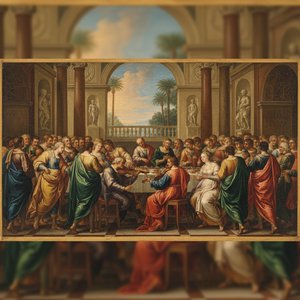
In the grand tapestry of the Italian Renaissance, few moments capture the intersection of the divine and the earthly as breathtakingly as Paolo Veronese’s Annunciation. Completed in 1558, this monumental masterpiece serves as a window into the golden age of Venice, a period where art was not merely decoration but a profound expression of spiritual devotion and aristocratic prestige. The scene unfolds with a dramatic, theatrical grace, depicting the pivotal moment when the Angel Gabriel descends to deliver the message of salvation to the Virgin Mary. Veronese does not simply paint a religious event; he orchestrates a symphony of light and movement that draws the viewer into a sacred dialogue, making the celestial encounter feel both intimately human and cosmically significant.

The composition is a masterclass in balance and narrative depth. As the angel occupies the left flank of the canvas, Mary stands at the heart of the drama, her posture reflecting a delicate blend of humility and awe. Veronese surrounds this central duo with a carefully curated cast of figures—an older man and woman, a watchful child, and observers peering from the periphery—each contributing to the layered emotional landscape of the piece. The setting, characterized by the soaring arches of a grand cathedral or palace, provides a sense of architectural permanence that contrasts beautifully with the ephemeral, spiritual energy of the angelic visitation. For the discerning collector, this painting offers more than just a subject; it offers a profound sense of presence that anchors any space with historical weight and grace.

The Mastery of Color and Venetian Light

To behold Veronese’s work is to witness the pinnacle of colorito, the Venetian tradition of prioritizing color and brushwork to define form. The artist employs a sophisticated use of atmospheric perspective, layering pigments in graduated shades to create an illusionistic depth that seems to pull the viewer into the very architecture of the scene. His palette is nothing short of opulent, utilizing rich, saturated tones that reflect the wealth and vibrancy of 16th-century Venice. Through the meticulous application of light, Veronese achieves a trompe-l'œil effect, where the textures of heavy fabrics, the cold stone of the arches, and the soft glow of divine radiance feel tangibly real.

This technical brilliance is deeply intertwined with the Mannerist influences of his era. While maintaining the classical dignity required for a religious commission, Veronese introduces subtle stylizations—elongated limbs and dramatic contrasts of light and shadow—that imbue the figures with a rhythmic, almost musical quality. This interplay of light and shadow, or chiaroscuro, does more than define shape; it directs the eye through the complex narrative, ensuring that the viewer’s gaze lingers on the emotional nuances of Mary’s expression and the ethereal lightness of Gabriel’s presence. For interior designers seeking to create a focal point of unparalleled elegance, the luminous quality of this work provides an enduring source of inspiration and sophistication.

A Legacy of Devotion and Grandeur

Beyond its technical merits, the Annunciation is a profound historical document. It reflects the ambitions of the Venetian elite, such as the Gonzaga family, who commissioned such works to bridge the gap between their earthly power and their spiritual aspirations. The painting embodies the humanist ideals of the time, celebrating human dignity within a divine framework. Every fold of drapery and every architectural detail serves to reinforce a sense of order, beauty, and eternal truth.

Owning a high-quality reproduction of this masterpiece allows one to invite this historical grandeur into a contemporary setting. Whether placed in a formal gallery, a stately library, or a curated living space, Veronese’s vision continues to resonate. It remains an evocative piece that speaks to the timeless human desire for connection with the sublime, offering a sense of peace, majesty, and intellectual depth that transcends the centuries.

Kérdések és válaszok

Ki készítette a(t) "Annunciation"-t, és mikor?

Paolo Veronese a "Annunciation" című művet 1558-ben készítette.

Van-e rozšíngtott valóság (AR) előnézete a(z) "Annunciation" alkotásnak?

A „Annunciation”, Paolo Veronese alkotása mű kiterjesztett valóság technológiával, egy kompatibilis eszközön keresztül, a mű Kiterjesztett valóság előnézet oldalán megtekinthető a saját falán is.

Mik a „Annunciation” mű másolati jogai a Szent János és Pál Bazilika gyűjteményében?

A „Annunciation”, Paolo Veronese alkotása szerzői jogi státusza egyértelmű: a mű közösségi tulajdon – a szerzői jog lejártt. A Szent János és Pál Bazilika gyűjteményében való szereplése nem változtat ezen a státuszon.

Több információ erről a festményről

Megtekintés AR előnézet Váltás nyomtatványra Áttérés digitális képre Küldés
Részletek Útmutató Kedvencekhez ad Letöltés Hasonló darabok X-ray felvétel Diavetítés Kérdések és válaszok Statisztika

Számokban kifejezve

  • 1558a festés éve
  • 29választható keretek
  • standard méretek, saját arányokkal
  • 5hetek a festésre és a kézbesítésre
Paolo Veronese

Paolo Veronese

1528 - 1588, Olaszország

Gyors információk Paolo Veronese művészről

  • Artistic Movement Or Style: Reneszánszi, Mannerista
  • Artists Or Movements Influenced By This Artist: ['Raphael']
  • Artists Who Influenced This Artist: ['Tiziano']
  • Date Of Birth: 1528
  • Date Of Death: 1588
  • Full Name: Paolo Veronese
  • Nationality: Olasz
  • Notable Artworks:
    • Kánaeki menyegző
    • Levi házában vacsora
  • Place Of Birth: Verona, Olaszország

A művész életrajza

A Venetian Visionary: The Life and Art of Paolo Veronese

Paolo Caliari, known to the world as Paolo Veronese, emerged from the vibrant artistic landscape of 16th-century Venice as a master of color, composition, and opulent spectacle. Born in Verona in 1528, the son of a stonecutter, his early life was steeped in the visual richness of his surroundings – the classical architecture, sculpted forms, and burgeoning humanist ideals that characterized the region. His initial training under Antonio Badile and Giovanni Francesco Caroto laid a foundation in traditional techniques, but it was his move to Venice in the 1550s that truly ignited his artistic genius. The city itself became his muse, its bustling marketplaces, grand palazzi, and shimmering waterways informing the scale and drama of his work. He quickly absorbed the influences of established Venetian masters like Titian, whose mastery of color profoundly impacted Veronese’s palette, yet he forged a distinct style characterized by an unparalleled sense of theatricality and grandeur.

The Painter of Feasts and Grand Narratives

Veronese's reputation rests upon his monumental paintings, particularly those depicting lavish feasts and biblical scenes transformed into dazzling displays of Venetian life. The Wedding at Cana, completed in 1563 for the Benedictine monastery of San Giorgio Maggiore, stands as a testament to his skill. This colossal canvas isn’t merely an illustration of the miracle; it's a vibrant panorama of 16th-century society, teeming with elegantly dressed figures, musicians, and architectural details rendered with breathtaking precision. The painting is not just about what happened at Cana but *how* it would have looked if it had occurred in Venice during Veronese’s time. He meticulously recreated the city's architecture, its canals, and its inhabitants, creating a believable and immersive scene that transports the viewer to another era. Similarly, The Feast in the House of Levi, originally titled The Last Supper, caused controversy with the Inquisition due to its inclusion of contemporary figures and a seemingly irreverent atmosphere. Veronese defended his artistic license, asserting that painters were entitled to the same creative freedom as poets and jesters – a bold statement reflecting his belief in art’s power to interpret and reimagine sacred narratives. These works weren't simply religious depictions; they were celebrations of life, wealth, and the splendor of Venice itself. He wasn’t interested in austere spirituality but rather in capturing the joy and abundance of existence. The figures are not idealized saints but recognizable members of Venetian society, adding a layer of realism and social commentary to the scene.

Influences and Artistic Development

While Titian’s influence on Veronese’s colorism is undeniable, his artistic development was a complex interplay of various influences. The architectural precision he brought to his compositions owes much to the classical tradition prevalent in Verona during his formative years, particularly the work of architects like Michele Sanmicheli. He also absorbed elements from Central Italian masters such as Raphael and Parmigianino, evident in the graceful lines and harmonious arrangements within his paintings. However, Veronese didn’t simply imitate these influences; he synthesized them into a uniquely Venetian style characterized by its dramatic use of light, vibrant color palettes, and meticulous attention to detail. He excelled at creating illusions of space and depth, employing perspective techniques to draw viewers into the heart of his elaborate scenes. His mastery of oil painting allowed him to achieve an unparalleled luminosity and richness of texture. He also ran a large workshop, with contributions from his brother Benedetto and sons Gabriele and Carlo, ensuring that his style continued to flourish even after his death in 1588.

Major Achievements and Notable Works

Veronese’s career was marked by numerous significant commissions and masterpieces. Beyond the monumental Wedding at Cana and Feast in the House of Levi, he created a series of altarpieces for Venetian churches, including works for the Scuola Grande di San Rocco and the Chiesa di Santa Maria Gloriosa dei Frari. His decoration of the library of S. Marco is considered one of his finest achievements, showcasing his mastery of illusionistic painting and architectural design. The Feast in the House of Levi, with its inclusion of contemporary figures and a playful depiction of the Last Supper, remains a particularly intriguing example of his artistic vision. His ability to seamlessly blend religious themes with secular elements—to portray biblical events within the context of Venetian life—established him as a truly unique and influential artist.
  • The Wedding at Cana (1563) – Louvre Museum
  • Feast in the House of Levi (1573) – Accademia Gallery, Venice
  • Decorations for the Library of S. Marco (1556–57) – Venice

Historical Significance and Legacy

Paolo Veronese’s impact extends far beyond the realm of Renaissance art. His work has resonated through centuries, inspiring artists across various disciplines. His dramatic compositions and vibrant color schemes have been cited as influences on everything from Baroque painting to modern cinema—even finding echoes in the visual aesthetics of Spaghetti Westerns. He was part of the “great trio” of Venetian painters—alongside Titian and Tintoretto—each contributing uniquely to the city’s artistic legacy, yet Veronese often stands apart for his sheer exuberance and celebration of earthly pleasures. His paintings continue to captivate audiences with their grandeur and spectacle, offering a glimpse into the opulent world of 16th-century Venice. Veronese's legacy is a testament to his artistic genius, his ability to capture the essence of an era, and his enduring contribution to the history of art.

Gyors információk

  • Medium: Oil on canvas
  • Subject or theme: Religious Narrative
  • Year: 1558
  • Influences: Titian
  • Location: Private Collection
  • Artist: Paolo Veronese