

 Előnézet
 Megosztás
 Megosztás
 Részletek
 Útmutató

 Letöltés
 Hasonló darabok
 X-ray felvétel
 Diavetítés
 Statisztika
Alter Mann (Vater Hirsch)


 Tovább olvasom
Az ezen az oldalon megjelenített műalkotások szerzői jogi védelem alatt állnak, ami azt jelenti, hogy törvényileg nem készíthetünk és nem adhatunk el belőlük pontos másolatokat. Ez a védelem olyan nemzetközi megállapodások alapján érvényesül, mint például a Berni Egyezmény és a nemzeti törvények által, beleértve azokat is, amelyeket meghatározott Az USA szerzői jogi törvénye – 17. cím.
Ez a módszer teljes mértékben megfelel a szerzői jogi szabályozásnak, mivel nem tartalmazza a védett műalkotás másolását vagy duplikálását. Ehelyett ez egy kreatív újinterpretáció – egy új festmény, amely az eredetivel való összefüggései miatt hatással van rá, de nem az az.
Giclée / Műnyomat
Múzeumi minőségű giclée vagy vászonnyomat, gyors gyártással és rugalmas finomítási lehetőségekkel. ( Kézzel festett másolat vásárlása Áttérés digitális képre)




P118B Ft10

P118H Ft10

P118W Ft10

P438Z Ft10

P508JH Ft12

P508YH Ft12

P805H Ft10

P805Z Ft10

P919BZ Ft10

P919G Ft10

P919XJ Ft10

P959ZH Ft10

P968JZ Ft12

W106C Ft8

W218G Ft10

W218JH Ft8

W218Y Ft10

W307PJ Ft10

W316G Ft10

W316PJ Ft8

W316Y Ft10

W398PJ Ft8

W4111J Ft10

W500HY Ft15

W500JH Ft15

W692G Ft12

W849H Ft8

W940BG Ft15

W953PJ Ft8




Válasszon előre meghatározott méreteink közül, amelyek megfelelnek a műalkotás eredeti arányainak.

Írja be a keretének vagy a falának megfelelő szélességet és magasságot. A nyomatot csak le lehet vágni, soha nem tehető nagyobbá, mint az eredeti kép, így egy eltérő alakú méretnél a kép egy része elveszik. Mielőtt bármit kinyatintanánk, küldünk egy digitális próbamodellt jóváhagyásra. Az oldalon látható kép nem tartalmazza a valós levágást — ezt csak a próbamodell mutatja meg.
Világszerte történő kiszállítás területére mindössze 2 hét alatt, a szokásos 4-5 hét helyett. (24 október)

Ingyenes globális expressz szállítás

Prémium minőségű len vászon

Teljes körű szállítási biztosítás

Vámvisszatérítési Garancia

Tökéletes színarányosság garancia

100 napos visszaküldési garancia (csak gyártási hibás termékek esetén)

100% pénzvisszatérítési garancia

Több darab vásárlásakor kedvezmény
 Az üvegkeretes opció csak 110 cm alatti méretben érhető el

Alter Mann (Vater Hirsch)
Giclée / Műnyomat
Reprodukció méretei
-


Összesített ár
Ft 25605
Alter Mann (Vater Hirsch) – Oskar Kokoschka – A Portrait of Psychological Depth
Oskar Kokoschka’s “Alter Mann (Vater Hirsch)” (“Old Man”), completed in 1909, stands as a cornerstone of Expressionism and a haunting testament to the artist's profound understanding of human psychology. More than just a likeness, it’s an exploration of inner turmoil rendered with breathtaking visual intensity.
- Subject Matter: The portrait depicts Ernst Reinhold, a fellow actor whom Kokoschka befriended during his time in Vienna. Reinhold served as a model for numerous works by Kokoschka, capturing the artist’s fascination with portraying individuals grappling with existential anxieties.
- Style & Technique: Kokoschka employed oil paint on canvas—a technique favored by Expressionists—to achieve an unsettlingly realistic depiction of Reinhold's face. The brushstrokes are agitated and restless, conveying a palpable sense of unease and mirroring the psychological state of the sitter.
- Historical Context: Painted during the height of Vienna’s artistic ferment at the turn of the century, “Alter Mann” reflects the anxieties prevalent in European society following the assassination of Archduke Franz Ferdinand. Kokoschka's work aligns with the broader Expressionist movement’s rejection of academic conventions and embrace of subjective experience.
- Symbolism: The painting is rife with symbolic elements. Reinhold’s gaze directs outwards, seemingly confronting an unseen force—perhaps representing mortality or the confrontation with one’s own inner demons. Kokoschka's masterful use of color contributes to this emotional resonance; dark hues dominate the palette, amplifying the sense of melancholy and apprehension.
- Emotional Impact: “Alter Mann” transcends mere representation; it compels viewers to contemplate the complexities of human emotion. The portrait’s unsettling gaze and turbulent brushstrokes evoke feelings of vulnerability, isolation, and psychological struggle—themes that continue to resonate with audiences today.
Currently housed at Lentos Kunstmuseum Linz, Austria, this artwork exemplifies Kokoschka's unwavering commitment to capturing the essence of human consciousness. Its enduring power lies in its ability to provoke contemplation and illuminate the profound depths of the human psyche.
Detailed Analysis – Kokoschka’s Visionary Approach
Kokoschka’s artistic philosophy centered on exploring the relationship between inner vision and optical sight—a concept he articulated in his seminal essay “Von der Natur der Gesichte.” He believed that true art should strive to penetrate beyond superficial appearances, delving into the subconscious realm where emotions and instincts reside. This conviction is vividly realized in “Alter Mann,” where Kokoschka abandons traditional artistic conventions to prioritize conveying psychological truth.
Color Palette & Brushwork – Expressions of Emotion
The painting’s dominant color palette—characterized by deep blacks, browns, and muted reds—serves as a conduit for emotional expression. Kokoschka’s deliberate use of dark hues amplifies the sense of melancholy and apprehension inherent in Reinhold's portrait. Furthermore, his agitated brushstrokes—a hallmark of Expressionist technique—capture the dynamism of Reinhold’s psychological state, mirroring the turbulent emotions beneath the surface.
Kokoschka’s Influence & Legacy
Oskar Kokoschka’s groundbreaking approach to portraiture profoundly impacted subsequent generations of artists. His insistence on portraying subjects with unflinching honesty and capturing their inner turmoil paved the way for a new era of psychological realism in art history. “Alter Mann” remains an iconic exemplar of Expressionism—a timeless masterpiece that continues to inspire admiration and provoke discussion about the nature of human experience.
Gyakran Ismételt Kérdések
A „Alter Mann (Vater Hirsch)”, Oskar Kokoschka alkotása jogtalanul védett (public domain)?
A szerzői jogokkal kapcsolatban a "Alter Mann (Vater Hirsch)" mű még szerzői jogにより védi.
Ki készítette a "Alter Mann (Vater Hirsch)" alkotást, és milyen stílusú?
A "Alter Mann (Vater Hirsch)" mögött Oskar Kokoschka és a Expressionism irányzat áll.
Milyen színtelítettséggel rendelkezik „Alter Mann (Vater Hirsch)”, Oskar Kokoschka alkotása?
A "Alter Mann (Vater Hirsch)" színpalettájának telítettsége Muted.
A művész életrajza
A Life Etched in Expression: The World of Oskar Kokoschka
Oskar Kokoschka, born on March 1, 1886, in Pöchlarn, Austria, was a figurehead of early Expressionism, an artist whose work pulsed with the anxieties and passions of a rapidly changing world. His life, marked by both intense personal drama and historical upheaval, became inextricably woven into the fabric of his art. From humble beginnings as the son of a goldsmith and a mother who fostered his artistic inclinations, Kokoschka’s path diverged from conventional expectations. He rejected a scientific career to pursue his calling at the Kunstgewerbeschule in Vienna, a decision that set him on a course toward becoming one of the most psychologically penetrating portraitists of his time. Even as a young student, he displayed an unusual sensitivity and a willingness to challenge artistic norms, traits that would define his entire oeuvre. His early education was steeped in the atmosphere of fin-de-siècle Vienna, a city brimming with intellectual ferment and artistic innovation, yet also shadowed by a growing sense of unease. This duality – beauty and anxiety, tradition and modernity – became a central theme in Kokoschka’s work.The Viennese Years: Portraits and Passion
Kokoschka quickly established himself as a daring portraitist within the vibrant artistic community of Vienna. He didn't aim for mere likeness; instead, he sought to capture the inner turmoil and psychological complexity of his sitters. His portraits were often unsettling, even confrontational, revealing vulnerabilities and hidden depths. This approach resonated with an audience increasingly fascinated by the burgeoning field of psychoanalysis pioneered by Sigmund Freud. The influence of Freud is palpable in Kokoschka’s work, as he delved into the subconscious and explored themes of desire, alienation, and identity. A pivotal moment in his life – and art – was his passionate affair with Alma Mahler, the widow of composer Gustav Mahler. This tumultuous relationship inspired some of his most iconic works, including *The Bride of the Wind (The Tempest)*, a monumental canvas that is both a tribute to Alma and a haunting depiction of their fraught connection. The painting’s swirling forms and intense colors convey a sense of emotional turbulence and impending doom, reflecting the instability of their love affair. It stands as a testament to Kokoschka's ability to translate personal experience into universal themes. He frequently depicted his subjects with exaggerated features and distorted perspectives, aiming not for objective representation but for an honest portrayal of their inner states.War, Exile, and Artistic Evolution
The outbreak of World War I dramatically altered Kokoschka’s life. He volunteered for service in the Austrian army, experiencing firsthand the horrors of trench warfare. Severely wounded in 1915, his experiences on the front lines left an indelible mark on his psyche and informed his later work. The war years saw a shift in his style, with landscapes becoming increasingly prominent alongside portraits. These landscapes were not idyllic depictions of nature but rather expressions of alienation and despair, reflecting the trauma he had endured. He often used dark colors and jagged forms to convey a sense of unease and disorientation. As political tensions escalated in Europe during the 1930s, Kokoschka found himself targeted by the Nazi regime due to his outspoken opposition to fascism and his association with avant-garde movements deemed “degenerate.” Forced into exile, he fled Austria in 1934, eventually settling in England in 1938. This period of displacement and uncertainty further deepened his sense of isolation but also fueled his artistic creativity. He became a British citizen in 1946, continuing to paint and exhibit internationally while remaining deeply committed to social justice and human rights.Kokoschka’s Enduring Influence
The impact of Kokoschka extends beyond his own artistic output, influencing subsequent generations of artists. Suzanne Sternberg, for example, directly studied under him, absorbing his expressive techniques and philosophical approach to art. His emphasis on emotional honesty and psychological insight resonated with Abstract Expressionists in the mid-20th century and later Neo-Expressionists. Kokoschka’s willingness to confront uncomfortable truths and challenge artistic conventions continues to inspire artists today. He demonstrated that art could be a powerful tool for social commentary, personal expression, and ultimately, a deeper understanding of ourselves and the world around us. His work remains a powerful testament to the enduring power of art to confront difficult truths and illuminate the depths of the human soul. Kokoschka’s legacy is not simply one of artistic innovation but also of unwavering commitment to expressing the complexities of the human condition through his unique and deeply personal vision.Kokoschka’s Key Works
- The Bride of the Wind (The Tempest): A monumental canvas capturing the intensity of his relationship with Alma Mahler, filled with swirling forms and emotional turmoil.
- Self-Portrait as Warrior: A powerful depiction of Kokoschka’s inner strength and resilience in the face of adversity.
- Thésée et Antiope: An allegorical work exploring themes of love, power, and fate, showcasing his masterful use of color and form.
- Numerous Portraits: His portraits are renowned for their psychological depth and ability to capture the essence of his subjects’ personalities.

Oskar Kokoschka
1886 - 1980 , Ausztria
Gyors információk
- Artistic Movement Or Style: Expresszionizmus
- Artists Or Movements Influenced By This Artist: ['Neo-expresszionisták']
- Date Of Birth: 1886. március 1.
- Date Of Death: 1980. február 22.
- Full Name: Oskar Kokoschka
- Nationality: Osztrák, Brit
- Notable Artworks:
- A Szellő Háza
- Önálló portré
- Place Of Birth: Pöchlarn, Ausztria
Kapcsolódó cikkek
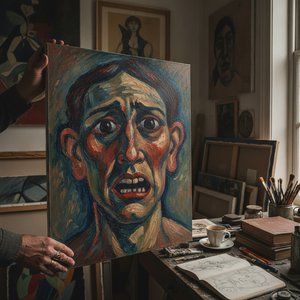
The Soul of Subjectivity: A Collector's Guide to the Raw Emotion and Lasting Power of Expressionist Art
Discover the profound power of Expressionist art. From the raw intensity of Edvard Munch to the visceral textures of Neo-Expressionism, explore how subjective emotion and distorted reality define this movement. An expert guide for discerning collectors seeking depth and soul in fine art.

Timeless Elegance: A Curated Guide to the Most Iconic Masterpieces of Austrian Art
Embark on a sophisticated journey through the splendor of Austrian art. From Gustav Klimt’s golden masterpieces to the elegance of the Viennese Secession, discover the history and symbolism behind Europe's most iconic works for the discerning collector.
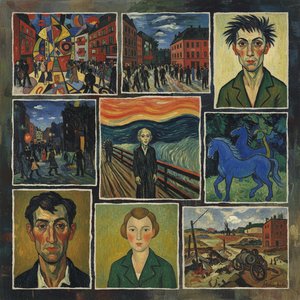
A kifejezésművészet 10 ikonikus remekműve – Vászonképek és inspiráció a OriginalUniqueArt-tól
Fedezze fel a kifejezésművészet 10 legikonikusabb remekművét! Munch, Kirchner, Kandinsky és mások alkotásainak története. Vászonképek, faliképek inspirációval a OriginalUniqueArt-tól – minőségi műalkotások otthonába. Explore the full collection online!
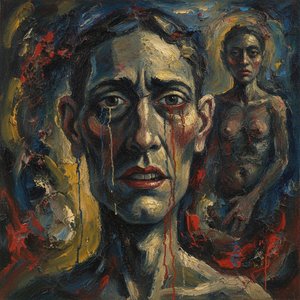
Beyond the Surface: The Raw Emotion and Subjective Truth of Expressionist Portraiture
Explore the profound emotional depth of Expressionist portraiture. From Edvard Munch to Francis Bacon, discover how masters used distortion and color to reveal inner truths. Learn about this pivotal movement and find museum-quality oil reproductions for your collection.
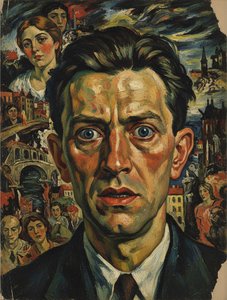
Oskar Kokoschka: A Turbulent Life Painted with Expressionist Intensity
Explore the intense expressionism of Oskar Kokoschka (1886-1980). Discover his psychologically charged portraits, landscapes & 'The Bride of the Wind'. A deep dive into a turbulent life and lasting artistic legacy.


