

 Megtekintés
 Küldés
 Megosztás
 Részletek
 Útmutató

 Letöltés
 Hasonló darabok
 X-ray felvétel
 Diavetítés
 Statisztika
Le Moulinet
 Acrylic On Canvas
- WallArt
- Rococo
 129.0 x 95.0 cm
 Schloss Charlottenburg
 Összes részlet megjelenítése
Giclée / Műnyomat
Múzeumi minőségű giclée vagy vászonnyomat, gyors gyártással és rugalmas finomítási lehetőségekkel. ( Kézzel festett másolat rendelése Áttérés digitális képre)




P118B Ft10

P118H Ft10

P118W Ft10

P438Z Ft10

P508JH Ft12

P508YH Ft12

P805H Ft10

P805Z Ft10

P919BZ Ft10

P919G Ft10

P919XJ Ft10

P959ZH Ft10

P968JZ Ft12

W106C Ft8

W218G Ft10

W218JH Ft8

W218Y Ft10

W307PJ Ft10

W316G Ft10

W316PJ Ft8

W316Y Ft10

W398PJ Ft8

W4111J Ft10

W500HY Ft15

W500JH Ft15

W692G Ft12

W849H Ft8

W940BG Ft15

W953PJ Ft8




Válasszon előre meghatározott méreteink közül, amelyek megfelelnek a műalkotás eredeti arányainak.

Írja be a keretének vagy a falának megfelelő szélességet és magasságot. A nyomatot csak le lehet vágni, soha nem tehető nagyobbá, mint az eredeti kép, így egy eltérő alakú méretnél a kép egy része elveszik. Mielőtt bármit kinyatintanánk, küldünk egy digitális próbamodellt jóváhagyásra. Az oldalon látható kép nem tartalmazza a valós levágást — ezt csak a próbamodell mutatja meg.
Világszerte történő kiszállítás területére mindössze 2 hét alatt, a szokásos 4-5 hét helyett. (28 október)

Ingyenes globális expressz szállítás

Prémium minőségű len vászon

Teljes körű szállítási biztosítás

Vámvisszatérítési Garancia

Hiteles színarányosság garancia

100 napos visszaküldési lehetőség (csak hibás termékek esetén)

100% pénzvisszatérítési garancia

Több darab vásárlásakor kedvezmény
 Az üvegkeretes opció csak 110 cm alatti méretben érhető el

Le Moulinet
Giclée / Műnyomat
Reprodukció mérete
-


Összesített ár
Ft 25827
Nicolas Lancret: A Life in Rococo Charm
Nicolas Lancret’s artistic journey began in Paris, where he was born in 1690. While detailed records of his early life are scarce, it is known that he received initial training under Pierre d’Ulin, a respected history painter. A pivotal moment arrived when he encountered the work of Antoine Watteau, whose influence profoundly shaped Lancret's artistic direction. He subsequently studied with Jean-Baptiste Gillot, who himself had been a student of Watteau, further solidifying his connection to this influential artistic lineage. This period of training laid the foundation for Lancret’s distinctive style, characterized by its lighthearted depictions of Parisian society and celebrations of *fêtes galantes*. Lancret became renowned as a brilliant portrayer of everyday life within French society during the regency of the Duke of Orleans and, later, early reign of King Louis XV. His canvases captured fleeting moments of aristocratic leisure—elegant gatherings in gardens, lively balls adorned with flowers and ribbons, and picnics amidst picturesque landscapes—reflecting the prevailing aesthetic sensibilities of the era. Unlike Watteau’s melancholic visions of Venetian fantasies, Lancret embraced a joyous optimism, imbuing his scenes with warmth and vibrancy. This stylistic divergence stemmed from Lancret's formative encounter with Gillot, who had championed Watteau's expressive approach to painting, resulting in a style that prioritized visual delight and harmonious composition.- Style: Rococo – Lancret’s oeuvre embodies the hallmark characteristics of Rococo art: delicate ornamentation, pastel hues, asymmetrical arrangements, and an emphasis on illusionistic effects. He skillfully employed techniques like *sfumato* to soften contours and create atmospheric depth, mirroring Watteau's masterful manipulation of light and shadow.
- Technique: Lancret excelled in oil painting on canvas, utilizing a loose brushstroke style that prioritized capturing the ephemeral beauty of his subjects. His meticulous attention to detail—particularly in rendering fabrics and floral decorations—demonstrated a mastery of artistic craftmanship.
- Historical Context: Lancret’s paintings flourished during a period marked by opulent court life and aristocratic patronage. The Château de Versailles served as a crucible for artistic innovation, fostering collaborations between artists like Jean Petitot the Elder and Louis Paradis de la Roche, who contributed to Vaux le Vicomte's artistic landscape.
- Symbolism: Lancret’s compositions frequently incorporated symbolic elements—such as statues of nude figures representing classical ideals—to convey moral lessons and elevate the viewer’s experience. The depiction of flowers and foliage served as emblems of fertility, beauty, and springtime, reflecting the Rococo fascination with nature's rejuvenating power.
- Emotional Impact: Lancret’s works evoke a sense of carefree elegance and sensual pleasure, transporting viewers to idealized worlds of aristocratic indulgence. His paintings capture not merely visual splendor but also the emotional resonance of social rituals and celebrations—a testament to his ability to communicate profound feelings through subtle artistic gestures.
Le Moulinet: A Masterpiece of Rococo Illusionism
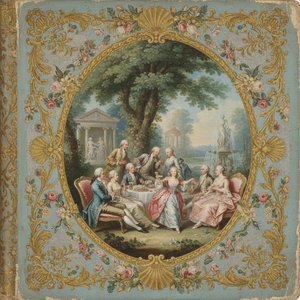
“Le Moulinet,” or “The Reel,” exemplifies Lancret’s signature style—a breathtaking depiction of a Parisian fête galante bathed in dappled sunlight. Executed with remarkable precision and infused with an irresistible charm, this oil painting captures the essence of Rococo artistry: delicate ornamentation, pastel hues, asymmetrical arrangements, and masterful illusionistic effects. The scene unfolds within a formal garden setting, populated by elegantly dressed aristocrats engaged in leisurely pursuits—dancing, conversing, and admiring a magnificent statue of Venus. Lancret’s skillful use of *sfumato* creates an ethereal atmosphere, blurring boundaries between reality and fantasy and immersing the viewer in a world of refined beauty.Detailed Analysis: Composition & Technique
Lancret's compositional brilliance is evident in the layering of planes and perspectives—a technique characteristic of Watteau’s influence—that draws the eye into the heart of the scene. The central group of dancers occupies a prominent position, framed by towering trees whose branches cast intricate shadows across the lawn. Lancret’s meticulous brushwork captures the textures of fabrics—silk gowns shimmering with sequins and embroidery—and floral decorations—bouquets overflowing with roses and lilies—adding to the painting's opulent sensory experience. The artist’s masterful blending of colors—primarily soft blues, pinks, and golds—creates a harmonious palette that enhances the overall mood of tranquility and delight.Beyond the Canvas: Lancret’s Legacy
Nicolas Lancret remains celebrated as one of France's foremost Rococo painters, whose works continue to inspire admiration for their elegance, artistry, and evocative portrayal of aristocratic life. His influence extended beyond his own time, foreshadowing the stylistic innovations of artists like Jean-Honoré Fragonard and Thomas Gainsborough—a testament to Lancret’s enduring contribution to European art history. The Château de Versailles, where Lancret adorned several halls with monumental paintings, stands as a tangible reminder of his artistic prowess and the grandeur of Louis XIV's reign. Explore Vaux le Vicomte’s artistic landscape and discover Jean Petitot the Elder, Louis Paradis de la Roche, and Jean-Baptiste Boulard’s contributions to Vaux le Vicomte's artistic landscape.Kérdések és válaszok
Le Moulinet színei erőteljesnek vagy lágynak tűnnek?
A „Le Moulinet”, Nicolas Lancret alkotása színei Monochromatic intenzitásúak.
Letölthető-e a(z) "Le Moulinet"?
A "Le Moulinet" letölthető változatként is elérhető: a mű Letöltés oldala magas felbontású digitális kép letöltése lehetőséget kínál.
Milyen formátumú és méretű a "Le Moulinet"?
A „Le Moulinet”, Nicolas Lancret alkotása egy 129 x 95 cm méretű, Portrait formátumú alkotás.
A művész életrajza
Nicolas Lancret: A Rokoko Bájának Világa
Nicolas Lancret, akit gyakran Watteau árnyékában emlegetnek, mégis egyedi hangon szólaltatott meg a 18. századi francia művészetben. Párizsban született 1690 januárjában, és 1743 szeptemberében itt is hunyt el, élete során lenyomatot hagyva a Rokoko kor eleganciáján és játékosságán. Bár az életéről kevesebb információ maradt fenn, mint munkáiról, Lancret művészpályája egyértelműen Pierre d’Ulin tanítványaként kezdődött, majd Antoine Watteau lenyűgöző hatása alatt állt, tanulmányai során Jean-Baptiste Gillot mester irányítása alatt is fejlődve, aki maga is Watteau diákja volt. Ez a képzési időszak alapozta meg Lancret jellegzetes stílusát, amely könnyed ábrázolásokat kínál a párizsi társadalomról és az *fêtes galantes* ünnepségeiről.A Rokoko Színtere: Életképek és Társadalmi Ábrázolások
Lancret neve hamarosan összeforrt a francia társadalom mindennapi életének ragyogó ábrázolásával, a Régence korában és a fiatalabb Károly király uralkodása alatt. Művészete a Rokoko eleganciájának és játékosságának megtestesítője lett, festményein bájos jeleneteket örökítve meg bálokról, vásárokról, falusi esküvésekről és más társadalmi összejövetelekről. A *Le Déjeuner de Jambon* (1735), a Musée Condé gyűjteményében található remekmű, tökéletes példa erre: egy vidám sonkahasítást ábrázol élénk figurákkal, mely a kor hangulatát sugallja. *La Servante Justifiée* (1735-1740) pedig Lancret képességét mutatja be arra, hogy humorral és szeretettel ábrázolja az otthoni élet apróbb pillanatait. A *Le Jeu des Quatre-Coins* játékos leképezése egy népszerű játéknak, a társas interakciók energiáját és szórakozását rögzítve. Emellett portréi is kiemelkednek, mint például a *Marie-Anne de Camargo* (1730), amely a kor divatos alakjait mutatja be mesteri módon.Watteau Öröksége és Saját Hang
Lancret művészetének szoros kapcsolata Watteauval vitathatatlan, gyakran összehasonlítják őket. Bár egyes kritikusok Lancret munkáit kevésbé mélynek tartották Watteauéhoz képest, képei a francia társadalom lényegét ragadják meg a 18. században, ami kiérdemelten biztosította számára a helyet a művészettörténetben. Lancret stílusa egyre kifejezőbb lett az évek során; bár kezdetben Watteau hatása erőteljes volt, hamarosan saját, élénkebb színekkel és harmonikusabb kompozíciókkal megkülönböztető stílust alakított ki. Későbbi alkotásai, mint a *Montreir de lanterne magique* és a *Family in a Garden*, művészetének csúcspontját jelentik, ahol egyre nagyobb mélységet és intimitást tudott elérni kompozícióiban.A Rokoko Kor Tükre: Művészi Fejlődés és Történelmi Jelentőség
Lancret munkássága nem csupán a Rokoko stílusának reprezentációja, hanem egyben fontos dokumentuma is a 18. századi francia társadalomnak és kultúrának. Képei betekintést engednek a kor divatjába, szórakozásába és társadalmi szokásaiba. Művészete François Boucher-t is inspirálta, bizonyítva Lancret jelentőségét a későbbi generációk számára. A művei ma világszerte elismert gyűjteményekben találhatók meg, mint például a Nemzeti Galériában és az Orsay Múzeumban, biztosítva, hogy Lancret öröksége továbbra is éljen és inspirálja a francia Rokoko művészet iránti tiszteletet.
Nicolas Lancret
1690 - 1743 , Franciaország
Rövid információk
- Elhalálozási Dátum: 1743. szeptember 14.
- Jelentős Művek:
- Le déjeuner de jambon
- La servante justifiée
- Le jeu des quatre-coins
- Marie-Anne de Camargo
- Művészek, Akik Hatással Voltak Rá:
- Pierre d’Ulin
- Jean-Baptiste Gillot
- Antoine Watteau
- Művészek/Mozgások, Amelyeket Befolyásolt: ['François Boucher']
- Művészeti Stílus: Rokoló
- Nemzetiség: Francia
- Születési Dátum: 1690. január 22.
- Születési Hely: Párizs, Franciaország
- Teljes Név: Nicolas Lancret
Kapcsolódó cikkek

A Rokoko Mesterek: 10 alkotás, mely meghatározta a művészetet | OriginalUniqueArt.com
Fedezze fel a Rokoko művészet 10 legikonikusabb remekművét! Ismerje meg Watteau, Boucher és Fragonard festményeinek történetét. Elegáns dekorációk inspirációja – OriginalUniqueArt.com kínálatában megtalálható minden művészi nyomat. Explore the full collection online!

Illuminating the Enlightenment: A Comprehensive Exploration of 18th-Century Painting
Explore the captivating world of 18th-century painting! Discover Rococo's playful elegance & Neoclassicism’s Enlightenment ideals with expert insights into Fragonard, David, and more. A comprehensive guide for art enthusiasts.

The Rococo Aesthetic: Opulence, Rebellion & the Pursuit of Pleasure in 18th-Century Art
Explore the opulent world of Rococo art! Discover its origins, key artists like Watteau & Boucher, and lasting influence on design. Expert insights for collectors & enthusiasts.

The Elegance of Rococo: A Journey Through Pastel Dreams and Ornate Splendor
Embark on an elegant journey through the Rococo era. Discover the delicate beauty of pastel masterpieces, the intricate artistry of 18th-century French masters, and how this era of ornate splendor continues to inspire timeless luxury in fine art collecting.
The Rococo Style: Aristocratic Leisure & the Pursuit of Delight in 18th-Century Art
Explore the opulent world of Rococo art! Discover Watteau, Boucher & Nattier's masterpieces. Expert insights for collectors seeking museum-quality reproductions and custom portraits at OriginalUniqueArt.

