

 Megtekintés
 Küldés
 Megosztás
 Részletek

 Letöltés
 Hasonló darabok
 X-ray felvétel
 Diavetítés
 Statisztika
Adam and Eve


 Összes részlet megjelenítése
Kézzel készített olajfestmény reprodukció
Kézzel festett olajvastú vászon, az Ön által választott méretben és keretben, művészeink készítik meglévőre. ( Áttérés Nyomtatványra Áttérés digitális képre)




P118B $10

P118H $10

P118W $10

P438Z $10

P508JH $12

P508YH $12

P805H $10

P805Z $10

P919BZ $10

P919G $10

P919XJ $10

P959ZH $10

P968JZ $12

W106C $8

W218G $10

W218JH $8

W218Y $10

W307PJ $10

W316G $10

W316PJ $8

W316Y $10

W398PJ $8

W4111J $10

W500HY $15

W500JH $15

W692G $12

W849H $8

W940BG $15

W953PJ $8




Válasszon előre meghatározott méreteink közül, amelyek megfelelnek a műalkotás eredeti arányainak.

Ön megadhat saját méreteket egy adott kerethez vagy térhez igazításhoz. Ha a kiválasztott méret nem egyezik az eredeti kép arányával, akkor a műalkotást levágjuk, vagy további kézzel festett elemekkel meghosszabbítjuk a festményt. A gyártás megkezdése előtt küldünk Önnek egy digitális előnézetet jóváhagyásra.
Kérjük, vegye figyelembe, hogy a képernyőn megjelenő előnézet nem tükrözi a tényleges vágást vagy kiterjesztést. Csak az előnézet fog pontosan mutatni a végső kompozíciót.
Bár egyedi méretek állnak rendelkezésre, javasoljuk, hogy válasszon egy méretet az előre meghatározott listából az eredeti arányok megőrzése érdekében.
A rendelést követően a OriginalUniqueArt.com csapata e-mailt küld az ügyfélnek az instrukciókért, és biztosít egy előnézeti képet (mockup).
Világszerte elérhető szállítás () 3-4 hét alatt a szokásos 5 hét helyett. (12 szeptember). A minőség nem kérdőjelezhető.

Ingyenes globális expressz szállítás

Prémium minőségű len vászon

Teljes körű szállítási biztosítás

Vámvisszatérítési Garancia

Hiteles színpontosság garancia

100 napos visszaküldési lehetőség (csak hibás termékek esetén)

100% pénzvisszatérítési garancia

Több darab vásárlása esetén kedvezmény
 Az üvegkeretes opció csak 110 cm alatti méretben érhető el

Adam and Eve
Reprodukciós technika
Reprodukció mérete
-


Összesített ár
$ 300
The Genesis of Grace: Nicolai Abildgaard’s “Adam and Eve”
Nicolai Abraham Abildgaard's "Adam and Eve," painted in 1780, isn’t merely a depiction of a biblical narrative; it’s a profound meditation on creation, temptation, and the nascent awareness of humanity. Emerging from the fertile ground of the Rococo period, yet firmly rooted in classical ideals, this engraving captures a pivotal moment – the very instant before transgression, brimming with an almost palpable sense of potential and innocence. Abildgaard masterfully balances the formality of Renaissance art with the burgeoning Romantic sensibility of his time, resulting in a work that is both exquisitely detailed and deeply emotionally resonant.
The scene unfolds within a meticulously rendered landscape, bathed in a soft, diffused light characteristic of the Rococo style. The artist’s attention to detail is breathtaking; observe the texture of Adam's muscular physique, the delicate folds of Eve’s gown, and the intricate foliage of the ancient tree that dominates the background. This isn’t a dramatic confrontation, but rather a quiet tableau – a pregnant pause before the fall. Abildgaard eschews overt theatricality, favoring instead a subtle choreography of gestures and expressions that convey a complex range of emotions: Adam's contemplative gaze towards Eve, her slightly averted attention to the fruit, and the overall atmosphere of serene contemplation.
Rococo Refinement and Classical Echoes
To understand “Adam and Eve,” one must appreciate the context of its creation. The Rococo movement, flourishing in Europe during the late 18th century, prioritized elegance, grace, and a celebration of nature. Abildgaard was deeply influenced by this aesthetic, evident in the painting’s flowing lines, pastel palette, and emphasis on decorative elements. However, he also drew heavily from classical art – particularly the works of Raphael and Michelangelo – incorporating principles of balanced composition, idealized forms, and a profound understanding of human anatomy. The engraving's structure mirrors classical compositions, creating a sense of stability and order within the narrative.
The choice of medium—engraving—further contributes to the work’s overall effect. Engravings possess a remarkable clarity and precision, allowing Abildgaard to capture minute details with astonishing accuracy. The monochrome palette enhances the dramatic contrast between light and shadow, intensifying the emotional impact of the scene. Furthermore, the process itself – meticulously transferring ink onto paper – reflects a dedication to craftsmanship and a reverence for artistic skill.
Symbolism and the Primordial Moment
Beyond its aesthetic qualities, “Adam and Eve” is rich in symbolic meaning. The ancient tree, laden with fruit, represents both knowledge and temptation. Eve’s slight hesitation as she looks down at the forbidden fruit speaks to the internal struggle between obedience and curiosity – a conflict that resonates deeply within the human experience. Adam's posture, turned towards her, symbolizes his role as protector and guide, yet also hints at his own vulnerability. The setting itself—a natural landscape—underscores the importance of humanity’s relationship with the world around them.
The signature “A. Abildgaard” and the date “1780” are not merely markers of authorship; they ground the work in a specific historical moment – a time of intellectual ferment, artistic innovation, and profound social change. Abildgaard’s "Adam and Eve" stands as a testament to the enduring power of classical art to illuminate fundamental questions about human nature and our place within the universe.
A művész életrajza
Early Life and Artistic Foundations
Nicolai Abraham Abildgaard, born in Copenhagen on September 11th, 1743, emerged from a family deeply immersed in the world of art and scholarship. His father, Søren Abildgaard, was a respected antiquarian draughtsman, instilling in young Nicolai an early appreciation for classical forms and meticulous observation. This familial influence proved foundational as Abildgaard embarked on his artistic journey, receiving initial training with a local painting master before formally enrolling at the New Royal Danish Academy of Fine Arts in 1764. His talent quickly became apparent; from 1764 to 1767, he consistently earned accolades and medallions recognizing his burgeoning skill. These early successes culminated in a travel stipend awarded in 1767 – a pivotal opportunity that would shape the course of his artistic development, though it was five years before he could finally utilize it. During these formative years at the Academy, Abildgaard benefited from the tutelage of Johan Edvard Mandelberg and Johannes Wiedewelt, absorbing their techniques and perspectives while simultaneously forging his own unique path.- Family Background: Søren Abildgaard’s antiquarian pursuits instilled in Nicolai a profound understanding of classical art and meticulous attention to detail.
- Early Training: He honed his skills under the guidance of a local painting master, establishing a solid artistic base before attending the Academy.
- Academy Recognition: From 1764 to 1767, Abildgaard received numerous awards and medallions acknowledging his exceptional talent.
The Roman Awakening: A Shift in Perspective
In 1772, Nicolai Abildgaard finally realized his long-awaited dream of traveling to Rome. This five-year sojourn proved transformative, marking a crucial turning point in his artistic evolution. Immersed in the heart of classical antiquity, he dedicated himself not only to studying sculpture but also architecture, decoration, and the magnificent frescoes adorning Palazzo Farnese. A visit to Naples in 1776 with fellow artist Jens Juel further broadened his horizons. Rome wasn’t merely a place for technical study; it was an intellectual awakening. Abildgaard delved into history painting, seeking to master its complexities and narrative power. He drew inspiration from the masters – Annibale Carracci, Raphael, Titian, and Michelangelo – absorbing their compositional strategies, dramatic use of light, and profound understanding of human anatomy. However, his exposure wasn’t limited to strict classicism. The influence of artists like Johan Tobias Sergel and Johann Heinrich Füssli began to subtly shift his aesthetic sensibilities, introducing a nascent Romantic sensibility into his work. Simultaneously, Abildgaard cultivated a deep appreciation for literature, finding inspiration in the works of Shakespeare, Homer, and Ossian – narratives that would later permeate his canvases with layers of meaning and emotional resonance.- Roman Studies: He meticulously examined sculpture, architecture, and frescoes at Palazzo Farnese, immersing himself in the visual language of antiquity.
- Naples Expedition: His journey to Naples alongside Jens Juel expanded his artistic horizons and exposed him to new influences.
- Historical Painting Inspiration: Abildgaard sought to emulate the masters’ techniques and narrative approaches, prioritizing dramatic composition and psychological depth.
Royal Commissions and National Narratives
Returning to Copenhagen in December 1777, Abildgaard was immediately recognized as a rising star. He swiftly secured a professorship at the Academy in 1778 and soon after, around 1780, ascended to the prestigious position of royal historical painter. This appointment brought with it a monumental commission from the Danish government: to create a series of paintings depicting the history of Denmark for the Knights’ Room (Riddersal) at Christiansborg Palace. This project became the defining undertaking of his career. These weren’t simply historical illustrations; they were carefully constructed narratives designed to glorify the monarchy and instill a sense of national pride. Abildgaard masterfully combined accurate historical depictions with allegorical elements and mythological references, creating visually stunning and intellectually stimulating compositions. He also collaborated with Johan Edvard Mandelberg on decorative schemes for Fredensborg Palace, further solidifying his position as Denmark’s leading artistic figure.- Royal Patronage: Abildgaard received the patronage of the Danish monarchy, securing a prominent role in shaping national identity through art.
- Christiansborg Project: He undertook the ambitious task of decorating Christiansborg Palace with monumental paintings conveying Denmark’s history and grandeur.
- Fredensborg Collaboration: His partnership with Mandelberg resulted in innovative decorative designs for Fredensborg Palace, reflecting his artistic vision.
A Synthesis of Styles: Neoclassicism and Romanticism
Nicolai Abildgaard's artistic style represents a fascinating synthesis of Neoclassical rigor and emerging Romantic sensibilities. While grounded in the principles of classical composition, clarity, and anatomical accuracy, his works are infused with dramatic lighting, rich color palettes, and meticulous attention to detail that hint at a deeper emotional undercurrent. Notable paintings such as “Christian I Elevates Holstein to a Duchy in 1474” exemplify this blend – a stately historical scene rendered with classical precision yet imbued with a sense of grandeur and theatricality. Other works, like the haunting “The Nightmare,” demonstrate his willingness to explore darker psychological themes, foreshadowing the full-blown Romanticism that would soon dominate European art. His exploration extended beyond history painting; "Culmin's Ghost Appears to his Mother" showcases his skill in portraying supernatural events with dramatic intensity, while pieces like “The Wounded Philoctetes” reveal a sensitivity to human suffering and vulnerability. He wasn’t merely replicating historical or mythological scenes; he was interpreting them through the lens of his own artistic vision, imbuing them with layers of symbolic meaning accessible to a refined audience. His pictorial allegory became a hallmark of his style, using symbols as visual shorthand for complex ideas and emotions.- Classical Precision & Romantic Emotion: Abildgaard blended classical compositional techniques with expressive color palettes and dramatic lighting—a defining characteristic of his oeuvre.
- Mythological Themes: He frequently employed mythological narratives to convey moral lessons and explore profound psychological themes.
- Symbolic Interpretation: Abildgaard’s paintings were laden with symbolic meaning, reflecting his intellectual engagement and artistic ambition.
- Mentorship & Artistic Legacy: Abildgaard mentored Bertel Thorvaldsen, shaping the trajectory of Danish sculpture and establishing Eckersberg as Denmark’s foremost painter.
- Cultural Impact: His work profoundly influenced the artistic sensibilities of his era, marking a crucial juncture between Neoclassicism and Romanticism.
- Enduring Recognition: Abildgaard's contribution to Danish art history continues to be celebrated today as a cornerstone of Nordic Romanticism.
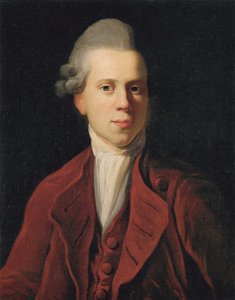
Nicolai Abraham Abildgaard
1743 - 1809 , Dánia
A művészről röviden
- Artistic Movement Or Style: Neoklasszicizmus és romantika
- Artists Who Influenced This Artist:
- Annibale Carracci
- Raphael
- Titian
- Michelangelo
- Date Of Birth: September 11, 1743
- Full Name: Nicolai Abraham Abildgaard
- Nationality: Dán
- Notable Artworks:
- Christian I Elevates Holstein to a Duchy in 1474
- A rémület
- Philocetes sérült
- Niels Klim jelenetei
- Place Of Birth: Copenhagen, Denmark
Kapcsolódó cikkek

The Intricate World of Engraving: A Historical Survey of Technique, Artistic Expression & Enduring Legacy
Explore the rich history of engraving with OriginalUniqueArt. Discover techniques, iconic artists like Dürer & Callot, collecting tips, and expert guidance for preserving your art investment. Learn about intaglio printing & more!

A Rokoko Mesterek: 10 alkotás, mely meghatározta a művészetet | OriginalUniqueArt.com
Fedezze fel a Rokoko művészet 10 legikonikusabb remekművét! Ismerje meg Watteau, Boucher és Fragonard festményeinek történetét. Elegáns dekorációk inspirációja – OriginalUniqueArt.com kínálatában megtalálható minden művészi nyomat. Explore the full collection online!

Engraving: A Historical Survey of Technique, Artistic Expression & Enduring Legacy
Explore the rich history of engraving with OriginalUniqueArt. Discover techniques, iconic artists like Dürer & Callot, collecting tips, and expert guidance for preserving your art investment. Learn about intaglio printing & more!

The Rococo Aesthetic: Opulence, Rebellion & the Pursuit of Pleasure in 18th-Century Art
Explore the opulent world of Rococo art! Discover its origins, key artists like Watteau & Boucher, and lasting influence on design. Expert insights for collectors & enthusiasts.

A művészet forradalmárai: 10 ikonikus metszet, melyek örökre megváltoztatták a világot
Fedezze fel a művészettörténet 10 legikonikusabb metszetét! Dürertől Goyáig, ismerje meg a barokk és reneszánsz mesterek lenyűgöző alkotásait. Vászonképek, poszterek – múzeumi minőségben a OriginalUniqueArt.com-on. Explore the full collection online!