() ·

A painting made for you, by hand

untitled (5257)

Kézzel készített olajfestmény reprodukció

Kézzel festett olajvastú vászon, az Ön által választott méretben és keretben, művészeink készítik meglévőre. ( Váltás nyomtatványra Áttérés digitális képre)

A gyűjtemény leírása

Michelangelo’s "Untitled (5257)" – a haunting Renaissance masterpiece! Explore its chaotic composition, earthy tones & powerful figures. Discover this iconic oil painting's rich symbolism and historical significance.

A művész életrajza

Michelangelo Buonarroti: A reneszánsz zseni, a Pietà, David és a Sistine-csarnok freskóival világsühmő alkotója. Szobrászat, festészet, építészet mestere! Élete és művei inspirálnak.

from ·

Chapter 1

How large should it be?

Slide to change the size; the picture on the left shows the frame at its real width. The proportions of the original are kept.

Standard méret
egyedi méretű
CM
INCH

Válasszon előre meghatározott méreteink közül, amelyek megfelelnek a műalkotás eredeti arányainak.

szélesség
magasság

Írja be a kívánt szélességet és magasságot, hogy illeszkedjen a keretéhez vagy a falához. Mivel ez kézzel festett alkotás, egy eltérő formájú méret esetén a művész akár festhet is valamivel többet a kép körül, vagy korolathat is belőle — az Ön döntésének megfelelően. A festés megkezdése előtt küldünk egy digitális tervezetet jóváhagyásra. Az oldalon látható kép nem tartalmazza a végeredményt — csak a tervezet mutatja meg a valódi eredményt.

Chapter 2

How should it arrive?

Choose the edges of the stretched canvas

Choose your frame

Corner sample of the WhiteWrap canvas edge finish, stretched on tömörfa bars
White Ft1
Corner sample of the BlurSideWrap canvas edge finish, stretched on tömörfa bars
Blurside Ft1
Corner sample of the ExtendedWrap canvas edge finish, stretched on tömörfa bars
Extended Ft1
Corner sample of the P118B picture frame: formázott polisztirol, 5 cm wide and 3 cm thick
P118B Ft10
Corner sample of the P118H picture frame: formázott polisztirol, 5 cm wide and 3 cm thick
P118H Ft10
Corner sample of the P118W picture frame: formázott polisztirol, 5 cm wide and 3 cm thick
P118W Ft10
Corner sample of the P438Z picture frame: formázott polisztirol, 5.5 cm wide and 3.5 cm thick
P438Z Ft10
Corner sample of the P508JH picture frame: formázott polisztirol, 7 cm wide and 3.5 cm thick
P508JH Ft12
Corner sample of the P508YH picture frame: formázott polisztirol, 7 cm wide and 3.5 cm thick
P508YH Ft12
Corner sample of the P805H picture frame: formázott polisztirol, 5 cm wide and 3.5 cm thick
P805H Ft10
Corner sample of the P805Z picture frame: formázott polisztirol, 5 cm wide and 3.5 cm thick
P805Z Ft10
Corner sample of the P919BZ picture frame: formázott polisztirol, 7 cm wide and 3.5 cm thick
P919BZ Ft10
Corner sample of the P919G picture frame: formázott polisztirol, 7 cm wide and 3.5 cm thick
P919G Ft10
Corner sample of the P919XJ picture frame: formázott polisztirol, 7 cm wide and 3.5 cm thick
P919XJ Ft10
Corner sample of the P959ZH picture frame: formázott polisztirol, 5 cm wide and 3 cm thick
P959ZH Ft10
Corner sample of the P968JZ picture frame: formázott polisztirol, 6 cm wide and 4 cm thick
P968JZ Ft12
Corner sample of the W106C picture frame: tömörfa, 5 cm wide and 3 cm thick
W106C Ft8
Corner sample of the W218G picture frame: tömörfa, 5 cm wide and 3 cm thick
W218G Ft10
Corner sample of the W218JH picture frame: tömörfa, 5 cm wide and 3 cm thick
W218JH Ft8
Corner sample of the W218Y picture frame: tömörfa, 5 cm wide and 3 cm thick
W218Y Ft10
Corner sample of the W307PJ picture frame: tömörfa, 6 cm wide and 3 cm thick
W307PJ Ft10
Corner sample of the W316G picture frame: tömörfa, 6 cm wide and 3 cm thick
W316G Ft10
Corner sample of the W316PJ picture frame: tömörfa, 6 cm wide and 3 cm thick
W316PJ Ft8
Corner sample of the W316Y picture frame: tömörfa, 6 cm wide and 3 cm thick
W316Y Ft10
Corner sample of the W398PJ picture frame: tömörfa, 5 cm wide and 3 cm thick
W398PJ Ft8
Corner sample of the W4111J picture frame: tömörfa, 6.5 cm wide and 3.5 cm thick
W4111J Ft10
Corner sample of the W500HY picture frame: tömörfa, 7 cm wide and 5 cm thick
W500HY Ft15
Corner sample of the W500JH picture frame: tömörfa, 7 cm wide and 5 cm thick
W500JH Ft15
Corner sample of the W692G picture frame: tömörfa, 8 cm wide and 4 cm thick
W692G Ft12
Corner sample of the W849H picture frame: tömörfa, 5 cm wide and 3 cm thick
W849H Ft8
Corner sample of the W940BG picture frame: tömörfa, 7.5 cm wide and 4.5 cm thick
W940BG Ft15
Corner sample of the W953PJ picture frame: tömörfa, 6 cm wide and 3.5 cm thick
W953PJ Ft8
Corner sample of the H24-GOLD picture frame: faragott fa gesszóval, 10 cm wide and 6 cm thick
H24-GOLD Ft30
Corner sample of the H24-SILVER picture frame: faragott fa gesszóval, 10 cm wide and 6 cm thick
H24-SILVER Ft30
Corner sample of the H36-GOLD picture frame: faragott fa gesszóval, 15 cm wide and 6.5 cm thick
H36-GOLD Ft45
Corner sample of the H36-SILVER picture frame: faragott fa gesszóval, 15 cm wide and 6.5 cm thick
H36-SILVER Ft45

Moulding: . Overall size with the frame: .

Chapter 3

Who paints it, and should anything change?

Examples of what can be changed: Replace face with customer photo; Add pet (e.g., replace cat with dog); Include hidden message in background; Change background landscape or elements.
After order, OriginalUniqueArt.com team will email client for instructions and provide a mockup preview

Világszerte elérhető szállítás () 3-4 hét alatt a szokásos 5 hét helyett. (1 november). A minőség nem kérdőjelezhető.

Chapter 4

The finishing touches

A nameplate, as in a museum?

A gravírozott bronztábla részletei

This elegant plaque features the artist's name and the title of the artwork, finely engraved for a timeless presentation.

It is made from bronze with a refined, elegant finish. The text is precisely laser-engraved for a sharp and permanent result. Measuring 9x2 cm, the plaque is compact yet easy to read. It's built to be durable and scratch-resistant, offering a professional, museum-quality look. Mounting is simple thanks to the included adhesive backing.

Átlátszó akril tábla részletei

The plaque includes essential engraved details such as the artist's name, the title of the artwork, the date it was created, the type of media used-like oil on canvas or watercolor-a brief description of the piece, and a QR code that links to the complete artwork information.

It is crafted from clear acrylic, offering a sleek, modern appearance. The text is UV-engraved in black to ensure strong visual contrast. With a size of 10x15 cm, it ensures optimal readability. It comes equipped with two metal hooks for secure wall mounting. The plaque is designed to be weather-resistant, making it suitable for various environments, and it includes interactive features that work seamlessly with smartphone scanning.

Fekete akril tábla részletei

This elegant plaque includes engraved information such as the artist's name, the title of the artwork, the date it was created, the type of media used (like oil on canvas or watercolor), a short description of the artwork, and a QR code for quick access to more information.

The plaque itself is made from refined black acrylic with a premium finish. The text is laser-engraved in white for high contrast and readability. Its size is 10x15 cm, designed to be easy to read. It comes with two metal hooks for professional mounting. The design is sleek and fits any interior style. It is also weather-resistant and durable, with built-in digital integration for mobile compatibility.

A protective varnish?

When do you need it?

Chapter 5

Your painting, as you ordered it

untitled (5257)

Reprodukciós technika

Reprodukció mérete

-

Kiváló mesterművész

Nagyobb részletesség, finomság és bővített gyártási idő

-

Reprodukció keretezése

-

-

A bármely oldalsó méretét túlszálaló 105 cm (kb. 41 hüvelyk) meghaladó műalkotások vagy reprodukciók esetében a keret összeszerelhető készletként, szétszerelve kerül szállításra. Ez a módszer biztosítja a biztonságos szállítást, és megakadályozza a szállítás során fellépő sérüléseket.

Szakmész összeszerelést igényel – ez nem DIY (önösszeszerelhető) termék.
A készletet egy tapasztalt keretező szakembernek kell összeszerelnie és a vásznat feszítenie kell, fa ragasztó (nem tartalmazza a csomag), vásznfeszítő fogó és szorítók használatával, amelyek a ragasztó száradásáig a keretrészeket egymáshoz vuôngjba tartják. A helytelen összeszerelés vagy a nem egyenletes vásznfeszítés maradandó károsíthatja a műalkotást, és ez nem része a garanciánknak.

  • A készlet tartalmazza az összes tömörfa rudat, pontosan méretre vágva.

  • A mellékelt csavarokkal, valamint a sarokszerekhez szükséges faütő ragasztóval kell összeszerelnie (ez nem tartalmazható a csomagban), így a keretrendezőnek külön kell beszereznie.

  • A csomag nem tartalmazza a szükséges professzionális eszközöket: egy vászonfeszítőt és klipseket a rácsok vízszintes tartásához a ragasztó megszáradásáig.

Fontos:
A sarokcsatlakozásokhoz fánylagra van szükség, a keretrudakat szorítókapcsokkal kell rögzíteni, amíg a rag teljesen meg nem szárad, a kész keretre feszített vászonhoz pedig vászonfeszítő fogat szükséges. Ezek egyike sem található meg a készletben. Kérjük, rendelés előtt győződjön meg róla, hogy rendelkezik tapasztalt keretező szakemberrel.

Névtábla

-

-

Védőréteg (Lakk)

Fényes lakk (intenzívabb színek, védelem a fény és a nedvesség hatása ellen)

-

Műalkotásom egyedi igényre szabása

Példák a módosíthatóságra: az arc kicserélése az ügyfél fotójára; háziállat hozzáadása (pl. macska helyett kutya); rejtett üzenet elhelyezése a háttérben; a háttér tájainak vagy elemeinek megváltoztatása.

-

Sürgős

Világszerte szóló szállítás () mindössze 3-4 hét alatt, a szokásos 5 hét helyett. (1 november). A minőség nem kérdőjelezhető.

-

Express szállítás

Világszerte elérhető szállítás területre 5 héten belül. (8 november).

A szállítás díja tartalmazza

Összesített ár

Ft 139178

Összesített ár Ft 139178

Az üvegkeretes opció csak 110 cm alatti méretben érhető el

Included with every order

  • Ingyenes globális expressz szállítás
  • Prémium minőségű len vászon
  • Teljes körű szállítási biztosítás
  • Vámvisszatérítési Garancia
  • Hiteles színarányosság garancia
  • 100 napos visszaküldési lehetőség (csak hibás termékek esetén)
  • 100% pénzvisszatérítési garancia
  • Több darab vásárlásakor kedvezmény

A Scene of Lamentation: Unveiling Michelangelo’s Emotional Depth

This powerful fragment offers a compelling glimpse into a larger composition – likely an altarpiece or monumental narrative painting – demonstrably influenced by the High Renaissance and early Baroque styles. The work immediately draws the viewer into a scene steeped in grief, mortality, and perhaps even societal critique. While currently untitled (designated as ‘5257’), its artistic qualities firmly place it within the orbit of Michelangelo Buonarroti’s oeuvre, reflecting his characteristic dramatic intensity and anatomical precision.

Subject Matter & Narrative

The central focus is a prone figure – undoubtedly deceased – surrounded by a throng of mourners. The presence of a skeletal figure immediately establishes death as a dominant theme, evoking the *memento mori* tradition prevalent in Renaissance art. Figures exhibit varied reactions: some are consumed by overt grief, others appear lost in contemplative sorrow, and still others seem engaged in ritualistic gestures. The densely packed composition suggests a chaotic emotional landscape, mirroring the overwhelming experience of loss. It’s plausible this scene depicts a biblical lamentation or a similarly significant moment of mourning within Christian iconography.

Style & Technique

The painting showcases a masterful command of oil painting techniques. Visible brushstrokes and layering create a rich texture – almost an *impasto* effect in certain areas – adding depth and physicality to the figures. While demonstrating a degree of realism, particularly in the rendering of musculature and drapery, the perspective is somewhat flattened, prioritizing narrative clarity over strict spatial accuracy. This stylistic choice aligns with Michelangelo’s tendency to prioritize emotional impact and symbolic meaning. The expressive use of line—bold strokes defining form, finer lines detailing fabric—further enhances the dramatic effect.

Color Palette & Lighting

A muted color palette dominates – earthy browns, ochres, and grays contribute significantly to the somber mood. This restrained chromatic scheme focuses attention on the figures’ expressions and gestures, amplifying their emotional weight. The diffused and uneven lighting creates dramatic shadows, heightening the sense of mystery and intensifying the overall feeling of despair. The chiaroscuro effect – a hallmark of Renaissance painting—adds volume and emphasizes key elements within the composition.

Historical Context & Symbolism

Created during a period marked by religious upheaval and societal change (roughly late 15th - early 16th century), this work reflects the anxieties surrounding mortality, faith, and human suffering. The skeletal figure is a potent symbol of death’s inevitability, while the mourners embody universal grief. The artist's skill in depicting anatomical detail—a direct result of Michelangelo’s own studies of the human form—elevates the scene beyond mere representation, imbuing it with a sense of profound realism and emotional resonance. The work echoes themes explored in Michelangelo’s *Pietà* and his frescoes within the Sistine Chapel, particularly those depicting scenes from Genesis and the Last Judgment.

Emotional Impact & Interpretation

This fragment evokes a powerful emotional response – a sense of profound sadness, empathy for the mourners, and contemplation on the fragility of life. The artist’s ability to convey such intense emotion through composition, color, and gesture is truly remarkable. Beyond its immediate depiction of grief, the work may also serve as a broader commentary on societal decay or the human condition. It invites viewers to confront their own mortality and reflect on the meaning of existence. The painting’s enduring power lies in its ability to transcend time and connect with audiences on a deeply personal level. It is a testament to Michelangelo's genius as a master storyteller and emotional communicator.

Kérdések és válaszok

„untitled (5257)”, Michelangelo Buonarroti alkotása egy világos vagy egy sötét tónusú alkotás?

Összességében a "untitled (5257)" alkotás shadow fényerőséget mutat. A tapasztalt fényerő azt írja le, hogy a mű mennyire tűnik világosnak vagy sötétnek.

Milyen anyagból készült a "untitled (5257)"?

A „untitled (5257)”, Michelangelo Buonarroti alkotása technikája Acrylic On Canvas. A reprodukciók célja ezen technika megjelenítésének hiteles återadása.

Milyen hangulatot kölcsönözne a "untitled (5257)" egy térnek?

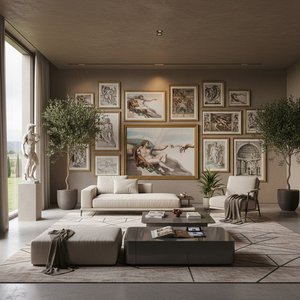
A „untitled (5257)”, Michelangelo Buonarroti alkotása Dramatic hangulata tökéletesen illeszkedik a javasolt helyszínhez: egy Living Room.

More about this painting

Megtekintés AR előnézet Váltás nyomtatványra Áttérés digitális képre Küldés
Részletek Útmutató Kedvencekhez ad Letöltés Hasonló darabok X-ray felvétel Diavetítés Q&A Statisztika

In numbers

  • 29frames to choose from
  • standard sizes, in its own proportions
  • 5weeks to paint and deliver it
Michelangelo Buonarroti

Michelangelo Buonarroti

1475 - 1564, Olaszország

Quick facts about Michelangelo Buonarroti

  • Artistic Movement Or Style: Magas-reneszánsz, manierizmus
  • Artists Or Movements Influenced By This Artist:
    • Magas-reneszánsz
    • Manierizmus
  • Artists Who Influenced This Artist:
    • Donatello
    • Masaccio
  • Date Of Birth: 1475. március 6.
  • Date Of Death: 1564. február 18.
  • Full Name: Michelangelo Buonarroti
  • Nationality: Olasz
  • Notable Artworks (List Of Titles):
    • Dávid
    • Pietà
    • Sistine Chapel
  • Place Of Birth (City And Country): Caprese, Olaszország

A művész életrajza

Egy reneszánsz zseni születése és korai évei

Michelangelo Buonarroti, a nevét a Reneszánsz csúcspontjával szinte egybeolvasztó művész, évszázadokon keresztül álló bizonyítéka az emberi alkotóképességnek. 1475. március 6-án született Caprese Michelangelo faluban, a toszkán dombok között, élete rendkívüli találkozása volt a tehetségnek, az ambíciónak és az isteni ihletnek. Bár apja kezdetben ellenállt művészi pályafutásának, ifjú Michelangelo természetes rajztehetsége megcáfolhatatlannak bizonyult, elindítva őt azon az úton, amelyen átalakítani fogja a szobrászat, a festészet és az építészet határait. Korai tanulmányait Domenico Ghirlandaio műhelyében kezdte, ahol alapvető freskó- és rajzkészségeket sajátított el, de a Medici-kertekben – a klasszikus antikvitás menedékében – ébredt fel igazán művészi lelke. A görög és római szobrok tanulmányozásával Michelangelo elsajátította az anatómia, a proporciók és az ideális szépség elveit, amelyek stílusának védjegyévé váltak. Ez a formatív időszak nem csupán technikai képzés volt; filozófiai elmerülés volt a Reneszánsz virágkorában kibontakozó humanista eszméikbe, az emberi méltóság és potenciál hangsúlyozásába, amely mélyen formálta művészi látásmódját.

A Pietà fájdalmától a Dávid erejéig

Michelangelo felemelkedése a művészvilágban figyelemre méltóan gyors volt. 1496-ra Rómába utazott, ahol első jelentős megbízatása érkezett: a *Pietà* szobor elkészítése. 1499-ben készült el Kardinál Jean de Bilhères számára ez a lélegzetelállító márványremekmű – ma a Szent Péter Bazilikában található –, azonnal megalapozta Michelangelo hírnevét páratlan ügyességű és érzelmi mélységű szobrászként. Mária arca nyugodt szépsége, Krisztus testének fájdalmas gondoskodása forradalmasinak bizonyult, demonstrálva a képességét arra, hogy hideg köveket mély emberi érzésekkel ruházzon fel. Ez a korai siker megnyitotta az utat következő monumentális vállalkozása előtt: a *Dávid* szobor elkészítése. 1501 és 1504 között egyetlen Carrarai márványtömbből faragva a több mint öt méter magas szobor Firence köztársasági eszméinek szimbólumává vált – egy bátran megtestesítő ereje, bátorsága és polgári erénye. A *Dávid* anatómiai pontossága, dinamikus póza és pszichológiai intenzitása példátlan volt, megerősítve Michelangelo hírnevét mester szobrászként, aki képes életre kelteni a követ. Nem csupán a mérete lenyűgözte; az érezhető benne rejtőző energia, a márványba fagyasztott cselekvés előtti várakozás volt az, ami akkor és ma is elvarázsolja a nézőket.

A szisztemai kápolna: egy isteni vászon

Talán Michelangelo legmaradandóbb öröksége a szisztemai kápolna falain rejlik. 1508-ban VIII. Julius pápa megbízta őt a kápolna mennyezetének festésével – feladat, amely négy évet vett igénybe és örökké megváltoztatta a nyugati művészet menetét. Kezdetben vonakodva, mivel elsősorban szobrásznak tartotta magát, Michelangelo mégis elfogadta a kihívást, monumentális freskóciklusba kezdve, amely a Teremtés jeleneteit ábrázolja. Nehéz körülmények között dolgozott, gyakran órákon át feküdt háton, több mint 300 figurát festett lélegzetelállító részlettel és kompozíciós zsenialitással. *Ádám teremtése*, a kápolna mennyezetének talán legismertebb képe megrázóan ábrázolja az isteni szikra átadását Isten és az emberiség között – a teremtés és a potenciál erőteljes szimbóluma. A híres panelen túl az egész ciklus tanúbítja Michelangelo narratív erejét, az anatómia elsajátítását és képességét arra, hogy komplex teológiai fogalmakat vizuális történetmesélésen keresztül közvetítsen. Ugyanakkor megkezdte VIII. Julius pápa sírboltjának munkáját – egy ambiciózus projektet, amely eredeti nagyságában befejezetlen maradt, de olyan erőteljes szobrokat eredményezett, mint *Mózes*.

Építészet, manierizmus és tartós hatás

Élete későbbi éveiben Michelangelo tehetsége az építészetre is kiterjedt. 1520-ban a Szent Péter Bazilika építészévé vált Rómában, jelentősen megváltoztatva Bramante eredeti tervét impozánsabb és szerkezetileg biztonságosabb tervekkel. Ez az átmenet a manierizmus felé való elmozdulást jelentette – egy stílust, amelyet a megnyúlt formák, a túlzó pózok és a drámai kompozíciók jellemeztek. Ez a stiláris fejlődés élénken látható *A végső ítélet* freskón, amelyet 1536 és 1541 között festett a szisztemai kápolna oltárfalán. A freskó Krisztus második eljövetelét ábrázolja lenyűgöző drámával és érzelmi intenzitással, tükrözve egy turbulensebb lelki légkört. Michelangelo hatása élete után is messze túlmutatott. Mélyen befolyásolta a reneszánsz és a manierista művészeti mozgalmakat, generációk inspirálta az anatómiai pontossággal, dinamikus kompozíciókkal és az emberi létezés mély feltárásával.

Egy időtlen örökség

Michelangelo 1564. február 18-án halt meg Rómában, páratlan életművet hagyva maga után, amely továbbra is elvarázsol és inspirál. Továbbra is a művészettörténet tornyos alakja – a kvintesszenciális „reneszánsz ember” –, akinek szobrai, festményei és építészeti tervei formálták szépségünk, hatalmunk és emberi potenciálunk megértését. Öröksége nem csupán művészi teljesítmény öröksége; tanúságtétel a kreativitás, az odaadás és a tökéletesség könyörtelen keresésének tartós erejéről. Megmutatta, hogy a művészet túlléphet a puszta ábrázoláson, mély lelki és érzelmi kifejezés eszközévé válhat. A géniusz visszhangja szerte a világ múzeumaiban és templomaiban csendül, biztosítva, hogy Michelangelo Buonarrotit örökké az egyik legnagyobb művésznek fogják emlékezni, aki valaha élt.
  • Hatások: Klasszikus antikvitás (görög és római szobrászat), reneszánsz humanizmus, firenzei művészeti hagyomány (Donatello, Masaccio).
  • Főbb alkotások: *Pietà*, *Dávid*, a szisztemai kápolna mennyezetének freskói (*Ádám teremtése*), *A végső ítélet*, VIII. Julius sírboltja.
  • Művészeti stílus: Kezdetben klasszikus idealizmus, fejlődve egy dinamikus és kifejező manierizmus felé.

Gyors információk

  • influences: Classical works (Michelangelo's biography)
  • medium: Oil on canvas/wood panel (presumed)
  • location: Unknown
  • dimensions: Unknown
  • title: untitled (5257)

Művészeti kvíz

Minden kérdésre csak egy helyes válasz létezik.

Kérdés 1:
Based on the description, what is a central theme explored in 'untitled (5257)'?
Kérdés 2:
The artwork's style is described as leaning towards which artistic period?
Kérdés 3:
What technique is explicitly mentioned as being evident in the painting, contributing to its texture?
Kérdés 4:
The presence of a skeleton prominently suggests what symbolic meaning within the artwork?
Kérdés 5:
Considering Michelangelo's known artistic strengths, as indicated in his biography, what type of emotional depth would one expect to find in this work?