

 Előnézet
 Megosztás
 Megosztás
 Részletek
 Útmutató

 Letöltés
 Hasonló darabok
 X-ray felvétel
 Diavetítés
 Statisztika
The Old Actress
 Oil On Canvas
- WallArt
- German Expressionism
 1926
1926- Modern
 101.0 x 71.0 cm
 Metropolitan Művészeti Múzeum
 Tovább olvasom
Giclée / Műnyomat
Múzeumi minőségű giclée vagy vászonnyomat, gyors gyártással és rugalmas finomítási lehetőségekkel. ( Kézzel festett másolat vásárlása Áttérés digitális képre)




P118B Ft10

P118H Ft10

P118W Ft10

P438Z Ft10

P508JH Ft12

P508YH Ft12

P805H Ft10

P805Z Ft10

P919BZ Ft10

P919G Ft10

P919XJ Ft10

P959ZH Ft10

P968JZ Ft12

W106C Ft8

W218G Ft10

W218JH Ft8

W218Y Ft10

W307PJ Ft10

W316G Ft10

W316PJ Ft8

W316Y Ft10

W398PJ Ft8

W4111J Ft10

W500HY Ft15

W500JH Ft15

W692G Ft12

W849H Ft8

W940BG Ft15

W953PJ Ft8




Válasszon előre meghatározott méreteink közül, amelyek megfelelnek a műalkotás eredeti arányainak.

Írja be a keretének vagy a falának megfelelő szélességet és magasságot. A nyomatot csak le lehet vágni, soha nem tehető nagyobbá, mint az eredeti kép, így egy eltérő alakú méretnél a kép egy része elveszik. Mielőtt bármit kinyatintanánk, küldünk egy digitális próbamodellt jóváhagyásra. Az oldalon látható kép nem tartalmazza a valós levágást — ezt csak a próbamodell mutatja meg.
Világszerte történő kiszállítás területére mindössze 2 hét alatt, a szokásos 4-5 hét helyett. (20 október)

Ingyenes globális expressz szállítás

Prémium minőségű len vászon

Teljes körű szállítási biztosítás

Vámvisszatérítési Garancia

Tökéletes színarányosság garancia

100 napos visszaküldési garancia (csak gyártási hibás termékek esetén)

100% pénzvisszatérítési garancia

Több darab vásárlásakor kedvezmény
 Az üvegkeretes opció csak 110 cm alatti méretben érhető el

The Old Actress
Giclée / Műnyomat
Reprodukció méretei
-


Összesített ár
Ft 25246
A Gaze Through Time: The Soul of Max Beckmann’s The Old Actress
In the quiet, heavy atmosphere of 1926, Max Beckmann captured a moment that transcends mere portraiture to become a profound meditation on the human condition. The Old Actress is not simply a depiction of a woman in repose; it is a hauntingly beautiful window into the psyche of an era caught between the trauma of the past and the uncertainty of the future. As the viewer approaches this masterpiece, they are immediately met by the piercing, yet distant gaze of the subject, whose eyes seem to wander far beyond the confines of the canvas, searching for memories or perhaps contemplating the inevitable passage of time. This sense of introspection is palpable, inviting anyone who hangs a reproduction of this work in their home to participate in a silent dialogue with history.
The composition is anchored by the striking presence of the woman, seated with a dignified yet weary posture. Her attire—a severe black dress accented with delicate white lace—carries a weight of solemnity, subtly evoking the austerity of clerical garments and hinting at a life lived with deep moral or spiritual consideration. Nestled in her lap, a ginger cat provides the only warmth in an otherwise somber palette, acting as a tender symbol of companionship that simultaneously highlights the profound solitude of the sitter. Beckmann’s mastery of New Objectivity is on full display here; through his use of distorted spatial perspectives and thick, textured brushstrokes, he creates an environment that feels both physically present and psychologically unsettling.
The Texture of Melancholy and Modernity
Technically, the painting is a triumph of expressionistic depth. Beckmann utilizes oil on canvas to build a surface that is as much about tactile emotion as it is about visual representation. The heavy application of paint creates a palpable atmosphere of melancholy, where every stroke contributes to the sense of unease and gravity. This technique serves to ground the subject in a reality that feels weighted by experience. For the discerning collector or interior designer, this piece offers a sophisticated focal point that brings a layer of intellectual and emotional complexity to any space, whether it be a curated gallery wall or a contemplative study.
To understand The Old Actress is to understand the spirit of post-World War I Europe. The painting breathes the disillusionment of a generation that had witnessed the collapse of old certainties. Beckmann, having served as a medical orderly during the Great War, infused his work with an altered vision of humanity—one where figures are often compressed or slightly skewed to reflect internal tension. In this portrait, the stillness is deceptive; beneath the surface lies the restless energy of a world in transition. It is this duality—the outward calm of the actress and the inward turbulence of her era—that makes this work an enduring icon of modern art, offering timeless inspiration for those who appreciate art that speaks to the resilience of the human spirit.
Gyakran Ismételt Kérdések
Milyen hangulatot közvetít a „The Old Actress”, Max Beckmann alkotása a German Expressionism irányzaton belül?
A „The Old Actress” Melancholic érzelme kíséri a German Expressionism stílusát.
Mekkora a mérete az eredeti „The Old Actress”, Max Beckmann alkotása alkotásnak?
A(z) "The Old Actress" eredeti formájában 101 x 71 cm méretű. Az eredeti méretek hasznos referenciát nyújtanak a reprodukció méretének kiválasztásakor.
Hogyan helyezhető el történelmileg a "The Old Actress"?
A „The Old Actress”, Max Beckmann alkotása művészettörténeti besorolása a German Expressionism, a Modern korszakba tartozik.
A művész életrajza
early life and artistic development
Max Beckmann, a renowned german painter, draftsman, printmaker, sculptor, and writer, was born on february 12, 1884, in leipzig, saxony. his artistic journey began with academically correct depictions, which later transformed into distorted figures and spaces, reflecting his altered vision of humanity after serving as a medical orderly in world war i. The formative years instilled within him a profound sensitivity to human suffering and trauma—a preoccupation that would permeate his entire oeuvre. Beckmann’s initial training focused on mastering traditional techniques, mirroring the stylistic conventions prevalent at the time, yet he swiftly rejected these constraints, embarking upon a path of experimentation and innovation. This pivotal decision marked the genesis of his distinctive artistic style, characterized by expressive brushwork and unsettling imagery—a departure from conventional aesthetics that foreshadowed the emergence of Expressionism.artistic style and influences
Beckmann's style, rooted in the iconography of medieval stained glass, was profoundly influenced by a constellation of artists who captivated him during his formative years. Cézanne’s geometric simplification served as a catalyst for reshaping spatial relationships, while Van Gogh’s vibrant color palettes ignited his imagination with audacious chromatic explorations. Blake’s visionary symbolism instilled within him an unwavering belief in the power of art to convey spiritual truths—a conviction that would guide his artistic endeavors throughout his life. Rembrandt's masterful use of chiaroscuro deepened his understanding of dramatic lighting and its capacity to evoke emotional resonance, establishing a cornerstone for Beckmann’s compositional approach. Rubens’ opulent drapery and anatomical precision broadened his technical repertoire, equipping him with the tools necessary to depict human form with unparalleled realism—a skill he honed relentlessly in pursuit of artistic excellence. Furthermore, Beckmann drew inspiration from northern european artists of the late middle ages and early renaissance, such as Bosch, Bruegel, and Matthias Grünewald, whose grotesque depictions of biblical narratives challenged conventional moral precepts and championed a subversive critique of societal norms.notable works and exhibitions
Beckmann’s artistic output spanned decades, producing an astonishing array of paintings, prints, sculptures, and literary compositions—each imbued with his singular vision and stylistic signature. Among his most celebrated achievements stand *The Bark* (acquired by the national gallery in berlin), a monumental triptych that encapsulates the artist's preoccupation with existential themes and symbolic representation; *Self-Portrait in Tuxedo*, a haunting depiction of introspection and psychological complexity—a portrait that transcends mere likeness, delving into the depths of Beckmann’s inner life. His retrospectives at the Städelschule Mannheim (1928) and Basel & Zurich (1930) garnered critical acclaim and solidified his reputation as one of Germany's foremost Expressionist painters. These exhibitions showcased the breadth of his artistic explorations, illuminating the evolution of his style from early academic renderings to mature works characterized by jarring distortions and emotionally charged imagery—a testament to Beckmann’s unwavering commitment to artistic innovation.later life and exile
Beckmann’s fortunes took a dramatic turn with the ascendancy of Adolf Hitler, resulting in his expulsion from the art school in frankfurt and the confiscation of over 500 of his artworks—a devastating blow that curtailed his creative freedom and plunged him into profound disillusionment. He sought refuge in amsterdam for ten years, enduring bureaucratic obstacles and grappling with the psychological repercussions of exile—a period marked by intense artistic productivity despite insurmountable challenges. Despite failing to secure a visa for the united states, Beckmann persevered in pursuing his artistic ambitions, establishing a studio in the netherlands and cultivating relationships with fellow artists who shared his intellectual convictions. His legacy endured beyond his lifetime, securing recognition as a pivotal figure in german art history—a testament to Beckmann’s enduring influence on subsequent generations of painters and sculptors. Beckmann's first retrospective in the united states took place in 1948 at the city art museum saint louis, cementing his position as an internationally acclaimed artist. Max-Slevogt galerie, germany features a collection of his works.
Max Beckmann
1884 - 1950 , Németország
Gyors információk
- Artistic Movement Or Style: Expressionism
- Artists Or Movements Influenced By This Artist: ['Rembrandt']
- Artists Who Influenced This Artist:
- Georges Seurat
- Vincent van Gogh
- Date Of Birth: Feb 12, 1884
- Date Of Death: Dec 27, 1950
- Full Name: Max Carl Friedrich Beckmann
- Nationality: German
- Notable Artworks:
- The Bark
- Self-Portrait in Tuxedo
- Place Of Birth: Leipzig, Germany
Kapcsolódó cikkek
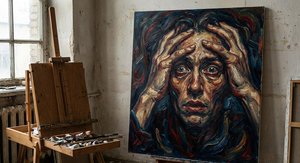
Figurative Expressionism: Emotional Intensity & Subjective Reality in 20th-Century Art
Explore the powerful world of Figurative Expressionism with OriginalUniqueArt. Discover key artists like Kirchner & Beckmann, understand its emotional depth, and learn how to collect this influential 20th-century art movement.

A Német Expresszionizmus 10 Mesterműve: Érzelmek és Forradalom a Falakon
Fedezze fel a Német Expresszionizmus 10 legikonikusabb műalkotását! Kirchner, Munch és más német mesterek érzelmi festményeinek történetét bemutatva. Vászonképek, faliképek otthonába – OriginalUniqueArt.com kínálata.

Max Beckmann: Navigating Trauma & Modernity Through a Distorted Lens
Explore the powerful world of Max Beckmann's art – a journey through trauma, modernity & distortion. Discover his key works, influences, and lasting legacy with expert analysis.

Unmasking Emotion: A Journey Through the Raw Power and Visceral Beauty of German Expressionism
Explore the raw emotional power of German Expressionism. From Kirchner to Die Brücke, discover how artists used distortion and vibrant color to unmask the human psyche. A deep dive into art history for the discerning collector and enthusiast.
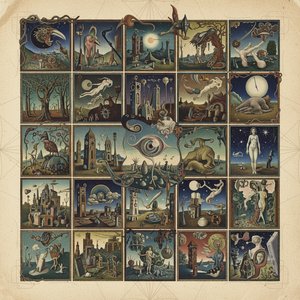
Max Ernst Mesterek: A 25 Leglenyűgözőbb Kép, Ami Megváltoztatja a Terét – OriginalUniqueArt
Fedezze fel Max Ernst 25 legikonikusabb művét! Merüljön el a szürrealizmus, dadaizmus világában és ismerje meg a német festő álomképeit. Művészeti reprodukcióinkkal egyedi faliképekkel varázsolja otthonát galériává – OriginalUniqueArt.


