

 Előnézet
 Megosztás
 Megosztás
 Részletek
 Útmutató

 Letöltés
 Hasonló darabok
 X-ray felvétel
 Diavetítés
 Statisztika
St Sebastian


 Tovább olvasom
Giclée / Műnyomat
Múzeumi minőségű giclée vagy vászonnyomat, gyors gyártással és rugalmas finomítási lehetőségekkel. ( Kézzel festett másolat vásárlása Áttérés digitális képre)




P118B Ft10

P118H Ft10

P118W Ft10

P438Z Ft10

P508JH Ft12

P508YH Ft12

P805H Ft10

P805Z Ft10

P919BZ Ft10

P919G Ft10

P919XJ Ft10

P959ZH Ft10

P968JZ Ft12

W106C Ft8

W218G Ft10

W218JH Ft8

W218Y Ft10

W307PJ Ft10

W316G Ft10

W316PJ Ft8

W316Y Ft10

W398PJ Ft8

W4111J Ft10

W500HY Ft15

W500JH Ft15

W692G Ft12

W849H Ft8

W940BG Ft15

W953PJ Ft8




Válasszon előre meghatározott méreteink közül, amelyek megfelelnek a műalkotás eredeti arányainak.

Írja be a keretének vagy a falának megfelelő szélességet és magasságot. A nyomatot csak le lehet vágni, soha nem tehető nagyobbá, mint az eredeti kép, így egy eltérő alakú méretnél a kép egy része elveszik. Mielőtt bármit kinyatintanánk, küldünk egy digitális próbamodellt jóváhagyásra. Az oldalon látható kép nem tartalmazza a valós levágást — ezt csak a próbamodell mutatja meg.
Világszerte történő kiszállítás területére mindössze 2 hét alatt, a szokásos 4-5 hét helyett. (23 október)

Ingyenes globális expressz szállítás

Prémium minőségű len vászon

Teljes körű szállítási biztosítás

Vámvisszatérítési Garancia

Tökéletes színarányosság garancia

100 napos visszaküldési garancia (csak gyártási hibás termékek esetén)

100% pénzvisszatérítési garancia

Több darab vásárlásakor kedvezmény
 Az üvegkeretes opció csak 110 cm alatti méretben érhető el

St Sebastian
Giclée / Műnyomat
Reprodukció méretei
-


Összesített ár
Ft 25718
A Study in Suffering: Mattia Preti’s St Sebastian
Mattia Preti's "St Sebastian" (c. 1660) is not merely a depiction of a biblical martyr; it’s a profoundly moving exploration of human suffering and faith, rendered with the dramatic intensity characteristic of the Calabrian Knight himself. This painting, showcasing St. Sebastian’s agonizing martyrdom – his imprisonment and self-flagellation after being shot with arrows – immediately draws the viewer into a world of palpable anguish. Preti, deeply influenced by Caravaggio's masterful use of *chiaroscuro*, employs this technique to devastating effect, sculpting the figure’s muscular form from pools of deep shadow while simultaneously illuminating his exposed flesh and contorted expression. The ropes and chains binding him to the post are not simply restraints; they become extensions of his torment, emphasizing his vulnerability against a backdrop of brutal reality.
Baroque Drama and Calabrian Roots
Born in Taverna, Calabria, in 1613, Mattia Preti’s artistic development was inextricably linked to the vibrant Baroque movement sweeping through Italy. His early training under Giovanni Battista Caracciolo provided a crucial foundation, introducing him to the Caravaggist style – a commitment to realism, dramatic lighting, and emotionally charged narratives. This influence is powerfully evident in “St Sebastian,” where Preti doesn’t shy away from depicting the raw physicality of suffering. The subdued color palette—earth tones dominate—contributes significantly to the painting's somber mood, amplifying the sense of despair and isolation. Preti’s time spent in Rome further solidified his artistic vision, allowing him to absorb the lessons of Caravaggio and Guercino before ultimately establishing himself as a leading figure in Malta, where he would spend much of his career.
Symbolism of Pain and Redemption
The iconography surrounding St. Sebastian is rich with symbolic meaning. He was martyred for refusing to worship pagan gods, representing unwavering faith against worldly temptations. The arrows piercing his body are a potent symbol of suffering and sacrifice, while the ropes and chains represent earthly bonds that cannot contain the spirit. Preti’s skillful rendering of these elements elevates the painting beyond a simple historical narrative; it becomes a meditation on human endurance and the promise of redemption. The figure's raised arms, though clearly in agony, also suggest a plea for divine intervention – a desperate reaching out to a higher power amidst unimaginable pain.
Technical Mastery and Emotional Resonance
“St Sebastian” exemplifies Preti’s technical brilliance and his ability to translate complex emotions onto canvas. The meticulous detail of the figure's anatomy, combined with the dramatic use of light and shadow, creates an incredibly realistic and emotionally resonant image. The artist’s attention to texture – from the rough grain of the wood to the tautness of Sebastian’s muscles – adds another layer of depth and intensity. This painting is a testament to Preti's mastery of Baroque technique, resulting in a work that continues to captivate viewers with its raw emotion and enduring power. It remains a cornerstone of his oeuvre, showcasing his profound understanding of human suffering and his ability to evoke powerful responses through masterful artistic execution.
Gyakran Ismételt Kérdések
Mennyire világos összességében "St Sebastian"?
A „St Sebastian”, Mattia Preti alkotása érzetelt fényessége deep_shadow. Ez összehangolható az adott tér világításával.
Hová sorolható a "St Sebastian" Mattia Preti ismétlődő témái közé?
Mattia Preti dokumentált témái – caravaggist influence, religious fervor, calabrian baroque, malta focus, martyrdom, suffering, redemption themes, preti’s signature dramatic style – között a „St Sebastian” különös hangsúlyt fektet st sebastian, martyrdom, religious art, baroque painting, mattia preti, chiaroscuro, suffering figure-ra.
A "St Sebastian" egy híres Baroque Italian Painting művészeti alkotás?
A katalógban a Baroque Italian Painting művek körében a "St Sebastian" Recognized rangsorolást kapott.
A művész életrajza
A Calabrian Knight of the Baroque: Mattia Preti’s Dramatic Vision
Mattia Preti, known as *Il Cavalier Calabrese* – the Calabrian Knight – stands as a pivotal figure in 17th-century Italian Baroque painting. Born in Taverna, Calabria, on February 24, 1613, his artistic journey was one of dynamic evolution, absorbing diverse influences and culminating in a uniquely expressive style that left an indelible mark on the art world, particularly in Malta where he would spend much of his later life. Preti’s early training began under Giovanni Battista Caracciolo, a painter deeply rooted in the Caravaggist movement. This foundational exposure instilled within him a profound understanding of dramatic chiaroscuro – the intense interplay of light and shadow – and a commitment to realistic depiction that would remain hallmarks of his work throughout his career. Before 1630, he joined his brother Gregorio in Rome, immersing himself in the artistic ferment of the city and studying the masters who defined the era: Caravaggio, Guercino, Rubens, Guido Reni, and Giovanni Lanfranco. This period was crucial, shaping not only his technical skills but also his aesthetic sensibilities.Forging a Dynamic Style
Preti’s artistic development wasn't merely imitation; it was a synthesis of influences, skillfully woven into a style distinctly his own. While initially steeped in Caravaggism, he gradually moved beyond its strict confines, embracing the dynamism and emotional intensity that characterized the High Baroque. His time in Naples further refined this evolution, exposing him to the vibrant work of Luca Giordano. This period saw Preti’s canvases swell with energetic movement, complex compositions, and a heightened sense of drama. He masterfully employed dramatic contrasts of light and shadow, inherited from Caravaggio, not simply as a technical device but as a means of intensifying emotional impact and guiding the viewer's eye. His figures are imbued with palpable emotion, conveyed through expressive faces and dynamic body language. This ability to evoke powerful feelings – piety, anguish, ecstasy – became a defining characteristic of his oeuvre. He wasn’t content merely to depict scenes; he sought to *animate* them, breathing life into biblical narratives and religious iconography. The influence of Luca Giordano is particularly evident in the looser brushwork and vibrant color palettes that appear in many of Preti's later works.Commissions and Masterpieces Across Italy
Mattia Preti’s talent quickly garnered recognition, leading to a series of significant commissions throughout Italy. Early in his career, he created impressive fresco cycles for Roman churches like Sant’Andrea della Valle and San Carlo ai Catinari, demonstrating an aptitude for large-scale decorative painting. His work at the church of San Biagio in Modena showcased his ability to adapt his style to different architectural settings. However, some of his most ambitious – though sadly lost – works were the frescoes he painted on seven city gates in Naples depicting the Virgin or saints delivering people from the plague. Though only sketches remain today, they testify to the scale and impact of these monumental creations. These commissions weren’t simply about fulfilling a patron's request; they were opportunities for Preti to engage with the religious and cultural life of the communities he served, imbuing his art with meaning and purpose. He also worked on several altarpieces during this period, demonstrating his versatility and mastery of different subjects.The Maltese Zenith: St. John’s Co-Cathedral
It was in Malta, however, that Mattia Preti reached the pinnacle of his artistic achievement. Appointed a Knight of the Order of Saint John in 1660, he embarked on a transformative project: the complete redecoration of the interior of St. John’s Co-Cathedral in Valletta. This undertaking – arguably his most significant legacy – involved an astonishing series of paintings depicting the life and martyrdom of Saint John the Baptist. The sheer scale of the project is breathtaking; Preti essentially created a visual narrative that enveloped the viewer, immersing them in the story of the saint. The opulent Baroque setting provided the perfect canvas for his dramatic style, and the resulting artwork cemented his reputation as one of Europe’s leading painters. His work at St. John's wasn't merely decorative; it was an act of devotion, a testament to his faith, and a powerful expression of the Order’s religious identity. The ceiling frescoes are particularly renowned for their dynamism and emotional intensity, capturing the essence of biblical scenes with remarkable skill.A Lasting Legacy
Mattia Preti continued to receive commissions from across Europe following his success in Malta, solidifying his position as a leading figure in Italian Baroque art. He died in 1699, leaving behind a rich artistic legacy that continues to inspire and captivate audiences today. His masterful use of light and shadow, dynamic compositions, and ability to convey intense emotion remain hallmarks of his style. His contributions are preserved in museums such as the Capodimonte Museum in Naples, and through reproductions made available by platforms like OriginalUniqueArt.com, ensuring that his art continues to reach new generations. The enduring impact of Preti’s work is perhaps most vividly felt within the walls of St. John’s Co-Cathedral, a breathtaking testament to his artistic genius and unwavering dedication to the Baroque aesthetic. *Il Cavalier Calabrese* truly earned his title, not only as a knight but as a master painter who illuminated the world with his vision.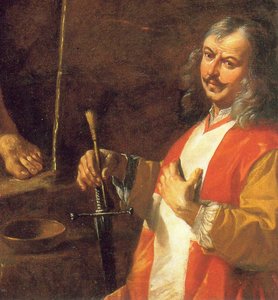
Mattia Preti
1613 - 1699 , Olaszország
Gyors információk
- Artistic Movement Or Style: Barokk
- Artists Or Movements Influenced By This Artist: ['Calabria']
- Artists Who Influenced This Artist:
- Caravaggio
- Guercino
- Date Of Birth: Feb 24, 1613
- Date Of Death: Jan 3, 1699
- Full Name: Mattia Preti
- Nationality: Olasz
- Notable Artworks:
- Saint George
- Absalom
- Place Of Birth: Taverna, Calabria
Kapcsolódó cikkek

El Greco 25 Mesterműve: A Spanyol Reneszánsz Legkiemelkedőbb Alkotásai – OriginalUniqueArt.com
Fedezze fel El Greco 25 leglenyűgözőbb művészeti alkotását! Ismerje meg a spanyol reneszánsz és manierizmus mesterét, festményeinek történetét és spirituális mélységét. Luxus reprodukciók – OriginalUniqueArt.com.

Theatricality & Triumph: Baroque Drama in Painting & Sculpture
Explore the dramatic world of Baroque art! Discover its history, defining characteristics, & lasting influence on painting & sculpture. Expert insights into Caravaggio, Zurbarán, and Bernini – plus high-quality reproductions at OriginalUniqueArt.

The Dramatic Flourish: Exploring the Baroque Movement's Enduring Legacy in Art History
Explore the dramatic world of Baroque art! Discover iconic artists like Caravaggio & Rubens, defining techniques, and its lasting impact on art history. Expert insights for collectors & enthusiasts at OriginalUniqueArt.
The Dramatic Flourish: Exploring Themes of Power, Faith & Emotion in Baroque Artworks
Explore the dramatic world of Baroque art! Discover masters like Zurbarán & the powerful influence of religious zeal on painting techniques. Expert insights for collectors and enthusiasts.

Barokk dráma: A nagyság és az érzelem bevonása a kortárs belső terekbe
Fedezze fel a barokk stílus nagyságát és drámáját! Ismerje meg a belsőépítészet jellegzetességeit, inspirálódjon híres enteriőrökből, és valósítsa meg álmai luxus otthonát szakértő útmutatásunkkal.


