

 Előnézet
 Megosztás
 Megosztás
 Részletek
 Útmutató

 Letöltés
 Hasonló darabok
 X-ray felvétel
 Diavetítés
 Statisztika
Perifery

 Tovább olvasom
Az ezen az oldalon megjelenített műalkotások szerzői jogi védelem alatt állnak, ami azt jelenti, hogy törvényileg nem készíthetünk és nem adhatunk el belőlük pontos másolatokat. Ez a védelem olyan nemzetközi megállapodások alapján érvényesül, mint például a Berni Egyezmény és a nemzeti törvények által, beleértve azokat is, amelyeket meghatározott Az USA szerzői jogi törvénye – 17. cím.
Mint tiszteletes és törvényes alternatívát, olyan egyedi, kézzel festett alkotásokat kínálunk, amelyek az eredetiből merítnek inspirációt. Tapasztalt és professzionális művészeink alaposan tanulmányozzák az eredeti stílusát, hangulatát és művészeti esszenciáját, hogy egy olyan új, egyedi alkotást hozzunk létre, amely ugyanazt az érzést kelti – miközben önálló, eredeti alkotásként létezik.
Ez a módszer teljes mértékben megfelel a szerzői jogi szabályozásnak, mivel nem tartalmazza a védett műalkotás másolását vagy duplikálását. Ehelyett ez egy kreatív újinterpretáció – egy új festmény, amely az eredetivel való összefüggései miatt hatással van rá, de nem az az.
Kézzel készített olajfestmény reprodukció
Kézzel festett olajvastú vászon, az Ön által választott méretben és keretben, művészeink készítik meglévőre. ( Váltás nyomtatványra Áttérés digitális képre)




P118B Ft10

P118H Ft10

P118W Ft10

P438Z Ft10

P508JH Ft12

P508YH Ft12

P805H Ft10

P805Z Ft10

P919BZ Ft10

P919G Ft10

P919XJ Ft10

P959ZH Ft10

P968JZ Ft12

W106C Ft8

W218G Ft10

W218JH Ft8

W218Y Ft10

W307PJ Ft10

W316G Ft10

W316PJ Ft8

W316Y Ft10

W398PJ Ft8

W4111J Ft10

W500HY Ft15

W500JH Ft15

W692G Ft12

W849H Ft8

W940BG Ft15

W953PJ Ft8




Válasszon előre meghatározott méreteink közül, amelyek megfelelnek a műalkotás eredeti arányainak.

Type the width and the height you need, to fit your frame or your wall. This is hand-painted, so for a size with a different shape the artist can paint a bit more around the picture, or cut a bit — you choose. We send you a digital mockup to approve before the painting starts. The picture shown on this page does not show the real result — only the mockup does.
A rendelést követően a OriginalUniqueArt.com csapata e-mailt küld az ügyfélnek az instrukciókért, és biztosít egy előnézeti képet (mockup).
Világszerte elérhető szállítás () 3-4 hét alatt a szokásos 5 hét helyett. (14 október). A minőség nem kérdőjelezhető.

Ingyenes globális expressz szállítás

Prémium minőségű len vászon

Teljes körű szállítási biztosítás

Vámvisszatérítési Garancia

Tökéletes színarányosság garancia

100 napos visszaküldési garancia (csak gyártási hibás termékek esetén)

100% pénzvisszatérítési garancia

Több darab vásárlásakor kedvezmény
 Az üvegkeretes opció csak 110 cm alatti méretben érhető el

Perifery
Reprodukciós technika
Reprodukció méretei
-


Összesített ár
Ft 95108
A művész életrajza
Mario Sironi: A Master of Italian Modernism
Mario Sironi, a name inextricably linked to the heart of 20th-century Italian art, was an artist who wrestled with profound themes – solitude, industrial landscapes, and the shifting realities of his time. Born in Sassari, Sardinia, in 1885, into a family steeped in artistic tradition (his father an engineer, his maternal grandfather a renowned architect), Sironi’s early life provided him with both stability and a deep appreciation for visual expression. However, a nervous breakdown in 1903 abruptly altered the course of his trajectory, leading him away from engineering and towards the captivating world of painting. This pivotal moment marked not just a career change but a fundamental shift in his artistic sensibility – a willingness to confront inner turmoil through his art. He began formal training at the Accademia di Belle Arti di Roma, where he quickly found himself drawn to the innovative techniques of Giacomo Balla, a key figure in the burgeoning Futurist movement. Sironi’s early work reveals a fascinating interplay between traditional influences and avant-garde experimentation. Initially, he embraced Divisionism, a technique characterized by the use of separate, unmixed colors applied in small brushstrokes to create an illusion of luminosity – a style reminiscent of Impressionism but with a distinctly Italian flair. This period produced evocative portraits and landscapes imbued with a delicate sense of atmosphere. However, Sironi’s artistic journey took a dramatic turn during the early years of the 20th century as he became increasingly involved with Futurism. He participated in exhibitions alongside Balla, Boccioni, and Severini, absorbing their radical ideas about speed, dynamism, and the celebration of modern life. He even created works like *Composizione futurista* (1915), incorporating collage elements to reflect the movement’s embrace of industrial imagery. Yet, Sironi's engagement with Futurism proved short-lived. He recognized its limitations and, after a period of introspection, embarked on a new artistic path – one defined by monumental forms, stark geometries, and a profound sense of isolation. The post-World War I years witnessed the most significant transformation in Sironi’s style. He abandoned the frenetic energy of Futurism and developed a distinctly personal aesthetic characterized by massive, immobile figures and simplified geometric shapes. This shift wasn't merely stylistic; it reflected his own emotional state following the horrors of war. His paintings from this period – works like *La Lampada* (1919) and *Solitudine* (1925) – are imbued with a palpable sense of melancholy and alienation. He drew inspiration from metaphysical painting, particularly the work of Giorgio de Chirico and Carlo Carrà, incorporating elements of dreamlike imagery and unsettling spatial relationships. The figures in his paintings often appear solitary, dwarfed by the surrounding environment, suggesting a profound disconnection from the world around them. This period also saw him become a founding member of the Novecento Italiano movement, a reaction against the excesses of Futurism and a return to clarity, order, and classical values. The movement sought to establish a new aesthetic rooted in Italian tradition while embracing modern sensibilities. Sironi’s artistic output during the 1920s and 30s solidified his reputation as one of Italy's most important modernist painters. He explored themes of industrial landscapes – factories, warehouses, and urban sprawl – alongside depictions of working-class life, often portraying them with a poignant sense of dignity and hardship. His work during this time is characterized by a deliberate ungainliness, a rejection of idealized beauty in favor of a more honest and unflinching portrayal of the human condition. Notably, he created *Venere* (1921-1923), a monumental sculpture-painting that embodies his evolving style – a synthesis of form, color, and texture. Throughout his career, Sironi remained politically engaged, aligning himself with Benito Mussolini’s Fascist regime. While this association has been subject to scrutiny, it's important to acknowledge the complex context of the time and Sironi’s belief in the potential for art to contribute to a new Italian identity. Despite the controversies surrounding his political affiliations, Sironi’s legacy endures as a significant figure in Italian Modernism, bridging the gap between early avant-garde movements and subsequent artistic developments. His exploration of themes like solitude, alienation, and industrialization continues to resonate with viewers today, cementing his place as a master of Italian art.Key Works
- La Lampada (1919) – A powerful depiction of a solitary figure illuminated by a streetlamp, capturing the mood of urban isolation.
- Venere (1921-1923) – A monumental sculpture-painting that exemplifies Sironi’s synthesis of form and color.
- Solitudine (1925) – A haunting portrayal of loneliness, characterized by massive, immobile forms and a muted palette.
Legacy
Mario Sironi's work remains a testament to the complexities of Italian Modernism. His distinctive style—marked by monumental forms, geometric shapes, and a profound sense of melancholy—continues to fascinate art historians and collectors alike. Exhibitions showcasing his paintings have been held internationally, including at the Centre Georges Pompidou in Paris and the Royal Academy in London, solidifying his place as a key figure in 20th-century art.

Mario Sironi
1885 - 1961 , Olaszország
Gyors információk
- Artistic Movement Or Style: Novecento Italiano, Modernista
- Artists Or Movements Influenced By This Artist: ['Futurizmus']
- Artists Who Influenced This Artist: ['Giacomo Balla']
- Date Of Birth: 1885-05-12
- Date Of Death: 1961-08-13
- Full Name: Mario Sironi
- Nationality: Olasz
- Notable Artworks:
- Venere
- Solitudine
- Place Of Birth: Sassari, Olaszország
Kapcsolódó cikkek

Katsushika Hokusai 25 Mesterműve: A Japán Art Élmény, Otthonodban – OriginalUniqueArt
Fedezze fel Katsushika Hokusai 25 legikonikusabb műalkotását! Merüljön el a japán ukiyo-e világában, ismerje meg a 'Nagy Hullám' történetét és más remekműveket. Museum minőségű reprodukciók otthonába – OriginalUniqueArt.com.

A Romantikus Tájképfestészet 10 Legikonikusabb Műalkotása – OriginalUniqueArt.com
Fedezze fel a romantikus tájképfestészet 10 legikonikusabb műalkotását! Caspar David Friedrich, J.M.W. Turner és más mesterek festményeinek története – inspiráló olajfestmények otthonába. OriginalUniqueArt.com: múzeumi minőségű reprodukciók és egyedi dekorációk online.
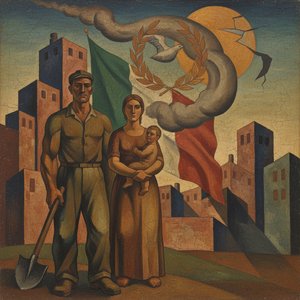
Mario Sironi: A Poetic of Modern Italian Identity Through Symbolism & Social Commentary
Explore the profound works of Mario Sironi, a key figure in Italian Modernism. Discover his evolution from Futurism to Metaphysical painting and his powerful social commentary. Learn about his legacy at OriginalUniqueArt.

Concrete Visions: Exploring the Urban Landscape in Painting – From Realism to Contemporary Art
Explore the evolution of cityscape painting from Realism to contemporary art with OriginalUniqueArt. Discover key artists & invest in timeless urban visions. Expert guidance, museum-quality reproductions.
Concrete Narratives: Exploring Urban Life in Modern & Contemporary Art
Explore the evolution of cityscape painting with OriginalUniqueArt. Discover key artists from Realism to contemporary movements & invest in timeless urban visions. Expert guidance, museum-quality reproductions.
