A szöveg mérete

() ·

A print made for you, with care

Figures

Giclée / Műnyomat

Múzeumi minőségű giclée vagy vászonnyomat, gyors gyártással és rugalmas finomítási lehetőségekkel. ( Kézzel festett másolat rendelése Áttérés digitális képre)

A gyűjtemény leírása

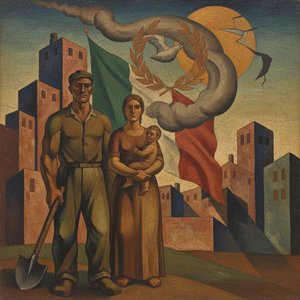
This tempera and pencil work by Mario Sironi features somber, abstract forms. Explore this evocative piece and add it to your collection today.

A művész életrajza

"Hungarian Meta Description": "Mario Sironi (1885-1961) olasz modern festő, hatalmas formák és geometriai alakzatokkal. Futurisztikus, Novecento Italiano stílusa a magány, az ipar és Olaszország identitásának témáival egyetemben."

előbb ·

1. fejezet

On which medium should it be printed?

Canvas is printed with giclée inks and can be stretched or framed like a painting; paper comes flat, or framed behind glass.

2. fejezet

Mekkora méretű legyen?

Húzza a csúszkát a méret megváltoztatásához; a bal oldali kép a keret valós szélességét mutatja. Az eredeti arányok megmaradnak.

Standard méret
egyedi méretű
CM
INCH

Válasszon előre meghatározott méreteink közül, amelyek megfelelnek a műalkotás eredeti arányainak.

szélesség
magasság

Írja be a keretének vagy a falának megfelelő szélességet és magasságot. A nyomatot csak le lehet vágni, soha nem tehető nagyobbá, mint az eredeti kép, így egy eltérő alakú méretnél a kép egy része elveszik. Mielőtt bármit kinyatintanánk, küldünk egy digitális próbamodellt jóváhagyásra. Az oldalon látható kép nem tartalmazza a valós levágást — ezt csak a próbamodell mutatja meg.

3. fejezet

Hogyan érkezzen meg?

Válaszd ki a feszített vászon széleit

Válassza ki a keretet

Corner sample of the WhiteWrap canvas edge finish, stretched on tömörfa bars
Fehér Ft1
Corner sample of the BlurSideWrap canvas edge finish, stretched on tömörfa bars
Elmosódott szélek Ft1
Corner sample of the ExtendedWrap canvas edge finish, stretched on tömörfa bars
Kiterjesztett Ft1
Corner sample of the P118B picture frame: formázott polisztirol, 5 cm wide and 3 cm thick
P118B Ft10
Corner sample of the P118H picture frame: formázott polisztirol, 5 cm wide and 3 cm thick
P118H Ft10
Corner sample of the P118W picture frame: formázott polisztirol, 5 cm wide and 3 cm thick
P118W Ft10
Corner sample of the P438Z picture frame: formázott polisztirol, 5.5 cm wide and 3.5 cm thick
P438Z Ft10
Corner sample of the P508JH picture frame: formázott polisztirol, 7 cm wide and 3.5 cm thick
P508JH Ft12
Corner sample of the P508YH picture frame: formázott polisztirol, 7 cm wide and 3.5 cm thick
P508YH Ft12
Corner sample of the P805H picture frame: formázott polisztirol, 5 cm wide and 3.5 cm thick
P805H Ft10
Corner sample of the P805Z picture frame: formázott polisztirol, 5 cm wide and 3.5 cm thick
P805Z Ft10
Corner sample of the P919BZ picture frame: formázott polisztirol, 7 cm wide and 3.5 cm thick
P919BZ Ft10
Corner sample of the P919G picture frame: formázott polisztirol, 7 cm wide and 3.5 cm thick
P919G Ft10
Corner sample of the P919XJ picture frame: formázott polisztirol, 7 cm wide and 3.5 cm thick
P919XJ Ft10
Corner sample of the P959ZH picture frame: formázott polisztirol, 5 cm wide and 3 cm thick
P959ZH Ft10
Corner sample of the P968JZ picture frame: formázott polisztirol, 6 cm wide and 4 cm thick
P968JZ Ft12
Corner sample of the W106C picture frame: tömörfa, 5 cm wide and 3 cm thick
W106C Ft8
Corner sample of the W218G picture frame: tömörfa, 5 cm wide and 3 cm thick
W218G Ft10
Corner sample of the W218JH picture frame: tömörfa, 5 cm wide and 3 cm thick
W218JH Ft8
Corner sample of the W218Y picture frame: tömörfa, 5 cm wide and 3 cm thick
W218Y Ft10
Corner sample of the W307PJ picture frame: tömörfa, 6 cm wide and 3 cm thick
W307PJ Ft10
Corner sample of the W316G picture frame: tömörfa, 6 cm wide and 3 cm thick
W316G Ft10
Corner sample of the W316PJ picture frame: tömörfa, 6 cm wide and 3 cm thick
W316PJ Ft8
Corner sample of the W316Y picture frame: tömörfa, 6 cm wide and 3 cm thick
W316Y Ft10
Corner sample of the W398PJ picture frame: tömörfa, 5 cm wide and 3 cm thick
W398PJ Ft8
Corner sample of the W4111J picture frame: tömörfa, 6.5 cm wide and 3.5 cm thick
W4111J Ft10
Corner sample of the W500HY picture frame: tömörfa, 7 cm wide and 5 cm thick
W500HY Ft15
Corner sample of the W500JH picture frame: tömörfa, 7 cm wide and 5 cm thick
W500JH Ft15
Corner sample of the W692G picture frame: tömörfa, 8 cm wide and 4 cm thick
W692G Ft12
Corner sample of the W849H picture frame: tömörfa, 5 cm wide and 3 cm thick
W849H Ft8
Corner sample of the W940BG picture frame: tömörfa, 7.5 cm wide and 4.5 cm thick
W940BG Ft15
Corner sample of the W953PJ picture frame: tömörfa, 6 cm wide and 3.5 cm thick
W953PJ Ft8
Corner sample of the H24-GOLD picture frame: faragott fa gesszóval, 10 cm wide and 6 cm thick
H24-GOLD Ft30
Corner sample of the H24-SILVER picture frame: faragott fa gesszóval, 10 cm wide and 6 cm thick
H24-SILVER Ft30
Corner sample of the H36-GOLD picture frame: faragott fa gesszóval, 15 cm wide and 6.5 cm thick
H36-GOLD Ft45
Corner sample of the H36-SILVER picture frame: faragott fa gesszóval, 15 cm wide and 6.5 cm thick
H36-SILVER Ft45

Keretprofil: . A kerettel együtt vett teljes méret: .

4. fejezet

Világszerte történő kiszállítás területére mindössze 2 hét alatt, a szokásos 4-5 hét helyett. (21 november)

Az utolsó finomhangolás

Egy felirat, mint egy múzeumban?

A gravírozott bronztábla részletei

This elegant plaque features the artist's name and the title of the artwork, finely engraved for a timeless presentation.

It is made from bronze with a refined, elegant finish. The text is precisely laser-engraved for a sharp and permanent result. Measuring 9x2 cm, the plaque is compact yet easy to read. It's built to be durable and scratch-resistant, offering a professional, museum-quality look. Mounting is simple thanks to the included adhesive backing.

Átlátszó akril tábla részletei

The plaque includes essential engraved details such as the artist's name, the title of the artwork, the date it was created, the type of media used-like oil on canvas or watercolor-a brief description of the piece, and a QR code that links to the complete artwork information.

It is crafted from clear acrylic, offering a sleek, modern appearance. The text is UV-engraved in black to ensure strong visual contrast. With a size of 10x15 cm, it ensures optimal readability. It comes equipped with two metal hooks for secure wall mounting. The plaque is designed to be weather-resistant, making it suitable for various environments, and it includes interactive features that work seamlessly with smartphone scanning.

Fekete akril tábla részletei

This elegant plaque includes engraved information such as the artist's name, the title of the artwork, the date it was created, the type of media used (like oil on canvas or watercolor), a short description of the artwork, and a QR code for quick access to more information.

The plaque itself is made from refined black acrylic with a premium finish. The text is laser-engraved in white for high contrast and readability. Its size is 10x15 cm, designed to be easy to read. It comes with two metal hooks for professional mounting. The design is sleek and fits any interior style. It is also weather-resistant and durable, with built-in digital integration for mobile compatibility.

Egy védőréteg?

Mikor lenne szüksége rá?

5. fejezet

Your print, as you ordered it

Figures

Reprodukciós technika

Reprodukció mérete

-

Reprodukció keretezése

-

-

A bármely oldalsó méretét túlszálaló 105 cm (kb. 41 hüvelyk) meghaladó műalkotások vagy reprodukciók esetében a keret összeszerelhető készletként, szétszerelve kerül szállításra. Ez a módszer biztosítja a biztonságos szállítást, és megakadályozza a szállítás során fellépő sérüléseket.

Szakmész összeszerelést igényel – ez nem DIY (önösszeszerelhető) termék.
A készletet egy tapasztalt keretező szakembernek kell összeszerelnie és a vásznat feszítenie kell, fa ragasztó (nem tartalmazza a csomag), vásznfeszítő fogó és szorítók használatával, amelyek a ragasztó száradásáig a keretrészeket egymáshoz vuôngjba tartják. A helytelen összeszerelés vagy a nem egyenletes vásznfeszítés maradandó károsíthatja a műalkotást, és ez nem része a garanciánknak.

  • A készlet tartalmazza az összes tömörfa rudat, pontosan méretre vágva.

  • A mellékelt csavarokkal, valamint a sarokszerekhez szükséges faütő ragasztóval kell összeszerelnie (ez nem tartalmazható a csomagban), így a keretrendezőnek külön kell beszereznie.

  • A csomag nem tartalmazza a szükséges professzionális eszközöket: egy vászonfeszítőt és klipseket a rácsok vízszintes tartásához a ragasztó megszáradásáig.

Fontos:
A sarokcsatlakozásokhoz fánylagra van szükség, a keretrudakat szorítókapcsokkal kell rögzíteni, amíg a rag teljesen meg nem szárad, a kész keretre feszített vászonhoz pedig vászonfeszítő fogat szükséges. Ezek egyike sem található meg a készletben. Kérjük, rendelés előtt győződjön meg róla, hogy rendelkezik tapasztalt keretező szakemberrel.

Névtábla

-

-

Védőréteg (Lakk)

Fényes lakk (intenzívabb színek, védelem a fény és a nedvesség hatása ellen)

-

Sürgős

Világszerte szállítás () 2 héten belül a szokásos 4-5 hét helyett. (21 november)

-

Express szállítás

Világszerte szállítás területére 4-5 hét alatt. (28 november).

A szállítás díja tartalmazza

Összesített ár

Ft 26482

Összesített ár Ft 26482

Az üvegkeretes opció csak 110 cm alatti méretben érhető el

Minden rendelés mellé tartalmazva

  • Ingyenes globális expressz szállítás
  • Prémium minőségű len vászon
  • Teljes körű szállítási biztosítás
  • Vámvisszatérítési Garancia
  • Hiteles színarányosság garancia
  • 100 napos visszaküldési lehetőség (csak hibás termékek esetén)
  • 100% pénzvisszatérítési garancia
  • Több darab vásárlásakor kedvezmény

Identification of Figures by Mario Sironi

The artwork titled Figures is a creation by the artist Mario Sironi. This specific piece was executed during the second half of the 1940s. The composition is presented without a signature, leaving the surface of the work free from the artist's handwritten mark.

Mario Sironi produced this work using tempera and pencil on paper that has been laid on canvas. The visual elements consist of forms that appear to merge into the background. These figures are rendered in black, creating a contrast against the underlying surface. The application of the medium results in a specific texture across the paper and canvas substrate.

Materials and Physical Dimensions

This work is executed in tempera and pencil on paper that has been laid on canvas. The application of these media onto the paper substrate creates a specific tactile surface. The piece is not signed by the artist.

The physical dimensions of the artwork measure 31.4 × 42 cm, which corresponds to 12 2/5 × 16 1/2 in. The scale of the work is relatively compact. It is registered in the Associazione per il Patrocinio e la Promozione della Figura e dell'Opera di Mario Sironi, Milan.

Kérdések és válaszok

Erős fény-árnyék kontrasztot mutat-e a "Figures"?

A „Figures”, Mario Sironi alkotása Bold kontrasztot mutat a világos és sötét részek között.

Milyen színpaletta jellemzi a(z) „Figures”, Mario Sironi alkotása alkotást?

A „Figures”, Mario Sironi alkotása színek palettáját úgy jellemzik, mint Earthy. Ez a mű színeinek tömör leírása.

Szabadon reprodukálható-e a/az „Figures”, Mario Sironi alkotása képe?

A „Figures”, Mario Sironi alkotása még szerzői jog védi státuszú mű. Ez a jogi státusz határozza meg, hogy a mű képmásolata hogyan reproduzható.

Több információ erről a festményről

Kézzel festett másolat rendelése Áttérés digitális képre Küldés
Részletek Útmutató Kedvencekhez ad Letöltés Hasonló darabok Diavetítés Kérdések és válaszok Statisztika

Számokban kifejezve

  • 29választható keretek
  • standard méretek, saját arányokkal
  • 5hetek a festésre és a kézbesítésre

Az eredeti műről

Méretek
112.0 x 94.0cm
Mario Sironi

Mario Sironi

1885 - 1961, Olaszország

Gyors információk Mario Sironi művészről

  • Artistic Movement Or Style: Novecento Italiano, Modernista
  • Artists Or Movements Influenced By This Artist: ['Futurizmus']
  • Artists Who Influenced This Artist: ['Giacomo Balla']
  • Date Of Birth: 1885-05-12
  • Date Of Death: 1961-08-13
  • Full Name: Mario Sironi
  • Nationality: Olasz
  • Notable Artworks:
    • Venere
    • Solitudine
  • Place Of Birth: Sassari, Olaszország

A művész életrajza

Mario Sironi: A Master of Italian Modernism

Mario Sironi, a name inextricably linked to the heart of 20th-century Italian art, was an artist who wrestled with profound themes – solitude, industrial landscapes, and the shifting realities of his time. Born in Sassari, Sardinia, in 1885, into a family steeped in artistic tradition (his father an engineer, his maternal grandfather a renowned architect), Sironi’s early life provided him with both stability and a deep appreciation for visual expression. However, a nervous breakdown in 1903 abruptly altered the course of his trajectory, leading him away from engineering and towards the captivating world of painting. This pivotal moment marked not just a career change but a fundamental shift in his artistic sensibility – a willingness to confront inner turmoil through his art. He began formal training at the Accademia di Belle Arti di Roma, where he quickly found himself drawn to the innovative techniques of Giacomo Balla, a key figure in the burgeoning Futurist movement. Sironi’s early work reveals a fascinating interplay between traditional influences and avant-garde experimentation. Initially, he embraced Divisionism, a technique characterized by the use of separate, unmixed colors applied in small brushstrokes to create an illusion of luminosity – a style reminiscent of Impressionism but with a distinctly Italian flair. This period produced evocative portraits and landscapes imbued with a delicate sense of atmosphere. However, Sironi’s artistic journey took a dramatic turn during the early years of the 20th century as he became increasingly involved with Futurism. He participated in exhibitions alongside Balla, Boccioni, and Severini, absorbing their radical ideas about speed, dynamism, and the celebration of modern life. He even created works like *Composizione futurista* (1915), incorporating collage elements to reflect the movement’s embrace of industrial imagery. Yet, Sironi's engagement with Futurism proved short-lived. He recognized its limitations and, after a period of introspection, embarked on a new artistic path – one defined by monumental forms, stark geometries, and a profound sense of isolation. The post-World War I years witnessed the most significant transformation in Sironi’s style. He abandoned the frenetic energy of Futurism and developed a distinctly personal aesthetic characterized by massive, immobile figures and simplified geometric shapes. This shift wasn't merely stylistic; it reflected his own emotional state following the horrors of war. His paintings from this period – works like *La Lampada* (1919) and *Solitudine* (1925) – are imbued with a palpable sense of melancholy and alienation. He drew inspiration from metaphysical painting, particularly the work of Giorgio de Chirico and Carlo Carrà, incorporating elements of dreamlike imagery and unsettling spatial relationships. The figures in his paintings often appear solitary, dwarfed by the surrounding environment, suggesting a profound disconnection from the world around them. This period also saw him become a founding member of the Novecento Italiano movement, a reaction against the excesses of Futurism and a return to clarity, order, and classical values. The movement sought to establish a new aesthetic rooted in Italian tradition while embracing modern sensibilities. Sironi’s artistic output during the 1920s and 30s solidified his reputation as one of Italy's most important modernist painters. He explored themes of industrial landscapes – factories, warehouses, and urban sprawl – alongside depictions of working-class life, often portraying them with a poignant sense of dignity and hardship. His work during this time is characterized by a deliberate ungainliness, a rejection of idealized beauty in favor of a more honest and unflinching portrayal of the human condition. Notably, he created *Venere* (1921-1923), a monumental sculpture-painting that embodies his evolving style – a synthesis of form, color, and texture. Throughout his career, Sironi remained politically engaged, aligning himself with Benito Mussolini’s Fascist regime. While this association has been subject to scrutiny, it's important to acknowledge the complex context of the time and Sironi’s belief in the potential for art to contribute to a new Italian identity. Despite the controversies surrounding his political affiliations, Sironi’s legacy endures as a significant figure in Italian Modernism, bridging the gap between early avant-garde movements and subsequent artistic developments. His exploration of themes like solitude, alienation, and industrialization continues to resonate with viewers today, cementing his place as a master of Italian art.

Key Works

  • La Lampada (1919) – A powerful depiction of a solitary figure illuminated by a streetlamp, capturing the mood of urban isolation.
  • Venere (1921-1923) – A monumental sculpture-painting that exemplifies Sironi’s synthesis of form and color.
  • Solitudine (1925) – A haunting portrayal of loneliness, characterized by massive, immobile forms and a muted palette.

Legacy

Mario Sironi's work remains a testament to the complexities of Italian Modernism. His distinctive style—marked by monumental forms, geometric shapes, and a profound sense of melancholy—continues to fascinate art historians and collectors alike. Exhibitions showcasing his paintings have been held internationally, including at the Centre Georges Pompidou in Paris and the Royal Academy in London, solidifying his place as a key figure in 20th-century art.

Gyors információk

  • Artist: Mario Sironi
  • Notable elements or techniques: Not signed
  • Artistic style: Massive, immobile forms
  • Subject or theme: Figures
  • Location: Royal Museum of Fine Arts Antwerp, Antwerp

Művészeti kvíz

Minden kérdésre csak egy helyes válasz létezik.

Kérdés 1:
What is the primary medium used in the artwork 'Figures'?
Kérdés 2:
What are the dimensions of the artwork 'Figures'?
Kérdés 3:
In which city was the artist Mario Sironi born?
Kérdés 4:
According to the description, what is the color palette of the woven textile?
Kérdés 5:
What was Mario Sironi's initial field of study before turning to art?
Fedezze fel a műalkotásokat témák, stílusok és jellemzők szerint csoportosítva.