
 Küldés
 Megosztás
 Részletek

 Letöltés
 Hasonló darabok
 Diavetítés
Swatch
 Textile
- Italian Baroque
 1949
1949- 19th Century
 42.0 x 50.0 cm
 Museo del Traje
 Összes részlet megjelenítése
Kézzel készített olajfestmény reprodukció
Kézzel festett olajvastú vászon, az Ön által választott méretben és keretben, művészeink készítik meglévőre. ( Nyomat rendelése Kép letöltése)




































Válasszon előre meghatározott méreteink közül, amelyek megfelelnek a műalkotás eredeti arányainak.

Ön megadhat saját méreteket egy adott kerethez vagy térhez igazításhoz. Ha a kiválasztott méret nem egyezik az eredeti kép arányával, akkor a műalkotást levágjuk, vagy további kézzel festett elemekkel meghosszabbítjuk a festményt. A gyártás megkezdése előtt küldünk Önnek egy digitális előnézetet jóváhagyásra.
Kérjük, vegye figyelembe, hogy a képernyőn megjelenő előnézet nem tükrözi a tényleges vágást vagy kiterjesztést. Csak az előnézet fog pontosan mutatni a végső kompozíciót.
Bár egyedi méretek állnak rendelkezésre, javasoljuk, hogy válasszon egy méretet az előre meghatározott listából az eredeti arányok megőrzése érdekében.
A rendelést követően a OriginalUniqueArt.com csapata e-mailt küld az ügyfélnek az instrukciókért, és biztosít egy előnézeti képet (mockup).
Világszerte elérhető szállítás () 3-4 hét alatt a szokásos 5 hét helyett. (18 augusztus). A minőség nem kérdőjelezhető.

Ingyenes globális expressz szállítás

Prémium minőségű len vászon

Teljes körű szállítási biztosítás

Vámvisszatérítési Garancia

Hiteles színpontosság garancia

60 napos visszaküldési lehetőség (csak hibás termékek esetén)

100% pénzvisszatérítési garancia

Több darab vásárlása esetén kedvezmény
 Az üvegkeretes opció csak 110 cm alatti méretben érhető el

Swatch
Reprodukciós technika
Reprodukció mérete
-


Összesített ár
$ 300
A műalkotás leírása
A Symphony of Blue: Exploring Mariano Fortuny’s “Swatch”
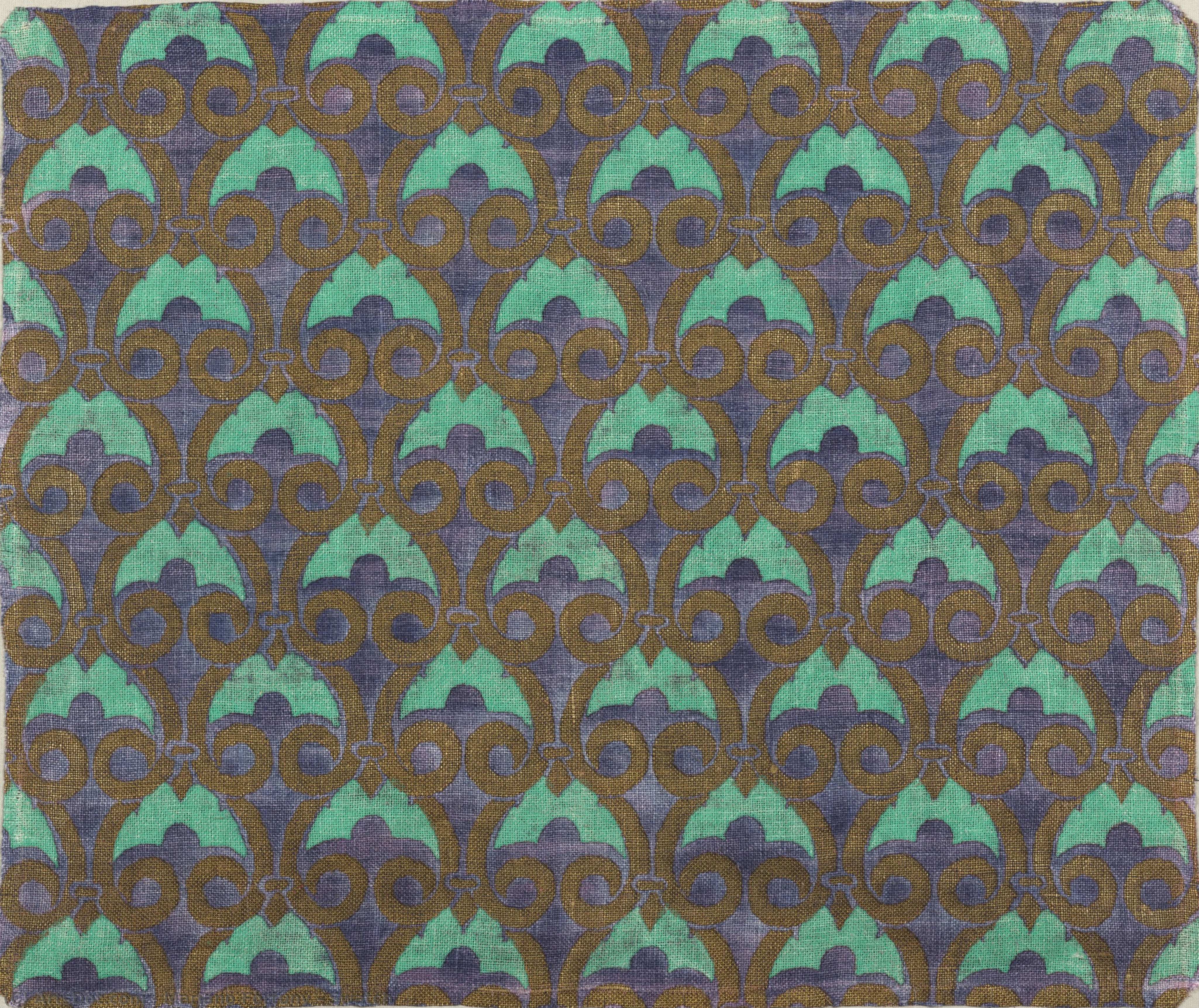
Mariano Fortuny's "Swatch," created in 1949, is more than just a textile; it’s a meticulously crafted echo of the Italian Baroque, a testament to the artist’s singular vision and revolutionary approach to design. Measuring 42 x 50 cm, this horizontal rectangle immediately draws the eye with its opulent layering of blues – from the deepest indigo to shimmering turquoise – punctuated by strategically placed gold stenciled plant and crown motifs. The piece, originally inspired by the rich velvets of the 17th century, demonstrates Fortuny’s masterful manipulation of color and texture, a hallmark of his enduring legacy.
Fortuny's Baroque Revival & Technological Innovation
Born in Reus, Spain, in 1871, Mariano Fortuny was a figure far ahead of his time. His early life, profoundly shaped by the untimely death of his father and subsequent relocation to Paris, exposed him to the world of textiles – a crucial influence that would define his career. Fortuny wasn't simply a designer; he was an inventor, a theatrical innovator, and a master colorist. He pioneered the use of indirect lighting in theater design with his “fortuny cyclorama dome,” a groundbreaking achievement that dramatically altered stagecraft. His relentless experimentation led to over twenty patents, showcasing his dedication to pushing the boundaries of artistic and technological possibilities. This pursuit of innovation is vividly apparent in "Swatch," where he meticulously controlled color variations and patterns.
The Language of Pattern: Symbolism & Technique
The intricate design of “Swatch” – a seemingly chaotic yet perfectly balanced arrangement of circles resembling fish scales – speaks to Fortuny’s fascination with natural forms and his desire to evoke the grandeur of classical antiquity. The gold stenciled plant and crown motifs, subtly integrated within the blue field, add an element of regal symbolism, referencing the opulent fabrics favored by European royalty during the Baroque period. Fortuny's technique is particularly noteworthy; he employed a complex layering process, utilizing multiple shades of blue to create a visual depth that mimics a painting. The retained selvages at the sides further enhance this effect, emphasizing the cloth’s dimensionality and tactile quality. This meticulous approach elevates “Swatch” beyond a mere decorative piece – it's a carefully constructed illusion.
A Timeless Masterpiece for Interior Design
"Swatch" remains a captivating example of Fortuny’s artistic genius and his ability to seamlessly blend historical references with innovative techniques. Its rich color palette, intricate design, and luxurious feel make it an ideal choice for discerning collectors and interior designers seeking to infuse their spaces with a touch of Baroque elegance. A hand-painted reproduction offers the opportunity to experience this remarkable artwork firsthand, bringing its beauty and sophistication into your home.
A művész életrajza
Early Life and Inspiration
Mariano Fortuny, a name synonymous with theatrical innovation and opulent textiles, was born in Reus, Spain, on May 11, 1871. His early life was marked by profound loss – his father, Mariano Fortuny y Marsal, a respected genre painter, passed away when the young boy was just three years old. This event spurred the family’s relocation to Paris, France, where his mother, a woman of considerable artistic sensibility, introduced him to the world of textiles and fabrics. These early experiences with luxurious materials would profoundly shape Fortuny's future creative endeavors, laying the foundation for his revolutionary approach to design. His upbringing fostered an appreciation for both visual arts and craftsmanship, setting the stage for his diverse talents.Artistic Talents and Revolutionary Inventions
From a remarkably young age, Mariano Fortuny demonstrated a prodigious range of artistic abilities. He excelled in painting, photography, sculpting, architecture, etching, and theatrical stage lighting – a testament to his innate creativity and technical skill. However, it was his inventions that truly cemented his place in art history. Between 1901 and 1934, Fortuny patented over twenty groundbreaking devices, transforming the world of theater design as we know it. His most celebrated invention is undoubtedly the “fortuny cyclorama dome,” a quarter-dome structure constructed from plaster or cloth, ingeniously designed to create seamless transitions between scenes in theatrical productions. This innovative system utilized indirect lighting, meticulously calculated and strategically placed, to eliminate harsh shadows and produce an illusion of continuous space – a radical departure from traditional stage lighting. Fortuny’s treatise, “Eclairage Scenique” (1904), meticulously documented his discoveries regarding reflecting light, explaining how manipulating its color, intensity, and properties could dramatically alter the visual experience. He wasn't simply illuminating a stage; he was sculpting with light itself.Notable Collaborations and Artistic Influences
Fortuny’s work gained significant recognition in the 1920s, largely due to his collaborations with some of the most influential figures of the era. He worked closely with Richard Wagner, the German composer, whose operas deeply inspired Fortuny's artistic vision. He designed sets for the premiere of Tristan und Isolde at La Scala opera house in Milan, adapting his dome system to accommodate the theater’s vast scale and even inventing a sophisticated suction fan mechanism to maintain the dome’s taut structure – a remarkable feat of engineering. His work extended beyond opera; he collaborated with Marchesa Casati, a prominent socialite and patron of the arts, creating lavish sets for her private theatre in Venice. Fortuny's legacy is inextricably linked to the Gesamtkunstwerk (total artwork) concept championed by Wagner, where all artistic disciplines – music, drama, visual art – are seamlessly integrated to create a unified and immersive experience. His work also drew inspiration from the vibrant colors and exotic motifs of Orientalism, reflecting his fascination with Eastern cultures.Legacy and Lasting Impact
Mariano Fortuny passed away on May 3, 1949, in Venice, Italy. His innovative contributions to theatrical design, combined with his exquisite textiles – particularly the iconic “Delphos” gown – ensured his enduring legacy. His work profoundly influenced French novelist Marcel Proust, who frequently referenced Fortuny’s designs and artistic philosophy in his novels. The life of Mariano Fortuny was also depicted in Pere Gimferrer's novel "Fortuny," a testament to the artist's lasting cultural impact. Today, Fortuny’s legacy continues to inspire designers and artists worldwide, demonstrating the power of innovation and the enduring allure of beauty and craftsmanship. His techniques and designs remain relevant, proving that his vision transcended its time.
Fortuny
1871 - 1949 , Spanyolország
A művészről röviden
- Artistic Movement Or Style: Orientalizmus
- Artists Or Movements Influenced By This Artist: ['Marcel Proust']
- Artists Who Influenced This Artist: ['Richard Wagner']
- Date Of Birth: 1871. május 11.
- Date Of Death: 1949. április 3.
- Full Name: Mariano Fortuny y Marsal
- Nationality: Spanyol
- Notable Artworks:
- Teagown
- Portrétt
- Place Of Birth: Reus, Spanyolország
Kapcsolódó cikkek

A kék árnyalatai: 10 ikonikus festmény a Slate Blue szín jegyében | OriginalUniqueArt.com
Fedezze fel a 10 legikonikusabb festményt, melyeket a Slate Blue szín ural! Monet, Renoir és más mesterek művei inspirálnak. Vászonképek eladás, otthon dekoráció tippek a OriginalUniqueArt.com-on. Explore the full collection online!

Mariano Fortuny: A Fusion of Art, Fashion & Design – Exploring a Venetian Innovator's Legacy
Explore the captivating world of Mariano Fortuny – artist, designer & innovator. Discover his revolutionary textiles, iconic Delphos gown, and lasting influence on art, fashion & interiors. A collector's guide to a Venetian master.

The Allure of Azure: Exploring the Symbolic & Aesthetic Depths of Blue in Art History
Explore the rich history of blue in art! Discover its symbolism, from ancient pigments to modern masterpieces by Kandinsky & Seurat. Uncover the psychological impact and cultural meanings behind this captivating hue.

Barokk dráma: A nagyság és az érzelem bevonása a kortárs belső terekbe
Fedezze fel a barokk stílus nagyságát és drámáját! Ismerje meg a belsőépítészet jellegzetességeit, inspirálódjon híres enteriőrökből, és valósítsa meg álmai luxus otthonát szakértő útmutatásunkkal.

The Dramatic Flourish: Exploring the Baroque Movement's Enduring Legacy in Art History
Explore the dramatic world of Baroque art! Discover iconic artists like Caravaggio & Rubens, defining techniques, and its lasting impact on art history. Expert insights for collectors & enthusiasts at OriginalUniqueArt.


