

 Előnézet
 Megosztás
 Megosztás
 Részletek
 Útmutató

 Letöltés
 Hasonló darabok
 X-ray felvétel
 Diavetítés
 Statisztika
Trébuchet (Trap)


 Tovább olvasom
Vásároljon nagy felbontású, javított digitális képet, amely minőségében messze felülmúlja az online előnézetet.
Minden fájlt szakembereink a legmodernebb eszközök és precíz, kézi retusálás segítségével készítenek el aprólékosan. Gondoskodunk arról, hogy minden kép kivételes tisztasággal, pontos színhelyességgel és részletgazdag finomsággal rendelkezzen.
A végleges fájl 72 órán belül e-mailben megérkezik, professzionális, szerkesztői és nyomtatási környezetbe optimalizálva az azonnali használathoz. Ez ugyanaz a minőség, amelyben a legmeghatározóbb tervezőstúdiók, kiadók és galériák is megbízhatnak.
Digitális kép
Töltsön le nagy felbontású fájlt személyes kiállításokhoz, nyomtatáshoz és kreatív projektekhez. ( Váltás nyomtatványra Kézzel festett másolat vásárlása)
Minden digitális kép rendeléséhez tartozó extrák
Szakértői digitális kézbesítés, garantáltan
Amikor a OriginalUniqueArt.com szolgáltatást választja, nem csupán egy képet kap – professzionálisan felmagasított digitális műalkotást kap, amely precizitással készült, és amelyet megelégsedési gwarancia tesz biztoslássá. Az alábbiakban automatikusan minden benne 】

Gyors e-mail teslimítés
A nagy felbontású digitális képmásolatát a megrendelést követő 72 órán belül e-mailben elküldjük Önnek – azonnal használható formátumban.

MI-alapú digitális képjavítás
Műve professzionális módon kerül optimalizálásra fejlett mesterséges intelligencia eszközök és manuális szerkesztés segítségével, biztosítva a maximális részletességet, tisztaságot és színpontosságot.

Örök életű ingyenes újradatás
Véletlenül törölted vagy elvesztetted a fájlodat? Ne aggódj – bármikor ingyen újra megküldjük neked.

Nincs importköltség – soha
Élvezze műalkotásait azonnal, vám, illeték vagy szállítási költség nélkül – a digitális letöltések mindig adamentesek.

Színpontosság garantálása
Professzionális eszközök és színkezelés segítségével garantáljuk, hogy digitális képe a lehető legpontosabban tükrözze az eredeti színeket.

100 napos elégedettségi garancia
Ha nemມີ elégedett a digitális képével, 100 napon belül felülvizsgáljuk vagy 100% visszatérítjük az amountot – kérdés बिना.

100% Pénzvisszatérítési garancia
Nem tetszett a vásárlás? 100 napon belül teljes visszatérítést garantálunk a digitális fájl megvételétől számítva – kérdés nélkül.

Tömegrendelési kedvezmények
Vásároljon 3 képet, spóroljon 10%-et - Vásároljon 5-öt, spóroljon 15%-et - Vásároljon 10+ képet, spóroljon 20%-at. Kiváló kreatív projektekhez, galériákhoz és ügynökségekhez.
Deconstructing the Everyday: Duchamp’s *Trébuchet (Trap)*
Marcel Duchamp's 1964 work, *Trébuchet (Trap)*, is a deceptively simple composition – a wooden plank supporting four black wrought-iron hooks. Yet, within this apparent banality lies a profound statement about art, perception, and the very definition of an artwork. Far from a traditional painting or sculpture, *Trébuchet* exemplifies Duchamp’s pioneering embrace of “readymades,” challenging conventional artistic boundaries and forcing viewers to reconsider what constitutes aesthetic value.
The Readymade & Conceptual Roots
- A Legacy of Disruption: Duchamp began his exploration of readymades in 1913, selecting mass-produced objects and presenting them as art. This radical approach rejected the emphasis on skillful execution and aesthetic beauty that had long defined artistic practice.
- Challenging Artistic Conventions: *Trébuchet* isn’t merely an object displayed; it's a conceptual gesture. Duchamp elevates a functional, utilitarian item – likely part of a butcher shop or similar setting – to the status of art through the act of selection and presentation.
- Beyond Retinal Art: Duchamp famously dismissed “retinal art” – work intended solely for visual pleasure. He sought instead to engage the intellect, prompting viewers to question their assumptions about art’s purpose and meaning. The title itself, *Trébuchet (Trap)*, adds a layer of intrigue, suggesting a hidden intention or a subtle provocation.
Materiality & Visual Impact
The stark contrast between the rough-hewn wooden plank and the smooth, polished metal hooks creates a compelling visual tension. The natural grain of the wood speaks to its origins, while the manufactured precision of the iron suggests industrialization and standardization. This juxtaposition highlights Duchamp’s interest in the interplay between the organic and the artificial. The composition is deliberately unadorned, focusing attention on the object's inherent qualities rather than any embellishment. The neutral color palette further emphasizes this sense of austerity and objectivity.
Symbolism & Interpretation
- Functionality Questioned: While hooks are inherently designed for holding or suspending objects, *Trébuchet* presents them devoid of their intended purpose. This deliberate removal of function forces us to contemplate the object's form and its relationship to space.
- The Trap Metaphor: The title suggests a sense of deception or entrapment. Is Duchamp trapping the viewer in a conceptual puzzle? Or is he commenting on the traps inherent within the art world itself – the expectations, conventions, and power structures that define artistic value?
- A Reflection of Modernity: Created during a period of rapid technological advancement and social change, *Trébuchet* can be seen as a reflection of modernity’s anxieties and uncertainties. The work embodies a sense of alienation and detachment, mirroring the fragmented experience of modern life.
Ultimately, *Trébuchet (Trap)* is not about what it depicts but rather about what it represents – a radical challenge to artistic norms and an invitation to engage in critical thinking. Its enduring power lies in its ability to provoke dialogue and inspire new perspectives on the nature of art itself.
Gyakran Ismételt Kérdések
Milyen színeket használ a "Trébuchet (Trap)"?
A "Trébuchet (Trap)" színei egy Neutrals palettát alkotnak. Ez a besorolás a domináns színek családjait írja le.
Hová sorolható a "Trébuchet (Trap)" Marcel Duchamp életművében?
A "Trébuchet (Trap)" megosztja Marcel Duchamp többi művével a Conceptual Art stílust és a rögzített témákat: dadaism, readymades, cubist geometry", minimalist aesthetics, anti-establishment stance", questioning art's value, deconstructing tradition.
Ki árul „Trébuchet (Trap)”, Marcel Duchamp alkotása kézzel festett másolatait?
A „Trébuchet (Trap)”, Marcel Duchamp alkotása kézzel festett reprodukcióját közvetlenül a(z) Kézzel festett másolat oldalon is megrendelheti: kézzel festett olajfesték reprodukció lino vászonon, egyedi igény szerinti gyártással.
Művész életrajza
Marcel Duchamp (1887–1968): A Revolutionary Spirit
Marcel Duchamp, born Henri-Robert-Marcel Duchamp in 1887 in Blainville-Crevon, Normandy, was more than an artist; he was a philosophical provocateur who fundamentally altered the course of modern art. His early life, though seemingly conventional – nurtured within a family that appreciated artistic expression with both brothers pursuing successful careers as artists – hinted at the iconoclasm to come. Duchamp initially pursued formal training, mastering traditional techniques and experimenting with post-impressionist styles. However, this academic foundation served not as an end in itself, but as a springboard for questioning the very nature of art, its purpose, and its definition. He wasn’t content merely to depict the world; he sought to challenge how we perceive it, and what constitutes artistic value. This restless intellectual curiosity would become the defining characteristic of his prolific career.Early Life and Artistic Beginnings
Duchamp's formative years were marked by a familial tradition of artistic inclination. His father, Eugène Duchamp, was a notary, yet four of the six Duchamp children embraced art as their vocation. Jacques Villon, Marcel’s elder brother, established himself as a painter, demonstrating an early aptitude for visual expression. Raymond Duchamp-Villon followed suit, pursuing sculpture with considerable success. Marcel himself began experimenting with painting at a young age, producing *Portrait of Marcel Lefrançois* (1904), which showcased his nascent stylistic sensibilities and technical prowess. His studies at the École des Beaux-Arts in Paris yielded mixed results—he famously failed to pass the final exam—but this setback fueled his determination to forge his own artistic path, independent from established conventions.Cubism: A Dialogue with Tradition
Duchamp’s initial engagement with Cubism, evident in works like *Portrait of Chess Players* (1911), represented a crucial step beyond purely decorative pursuits. He absorbed the influence of Picasso and Braque, adopting their innovative techniques for dissecting visual reality into fragmented planes and multiple perspectives—a deliberate departure from traditional representation. However, Duchamp didn’t simply replicate Cubist aesthetics; he interrogated its underlying principles, questioning whether it truly captured the essence of experience. The pervasive disillusionment stemming from World War I profoundly impacted his artistic vision, propelling him toward Dadaism as a reaction against perceived intellectual and moral failings.Dadaism: Rebellion Against Reason
The horrors of World War I galvanized Duchamp’s rebellious spirit, leading him to embrace Dadaism—a movement born out of utter despair and vehement rejection of logic, reason, and the prevailing artistic values of the time. Dadaists sought to dismantle accepted norms through absurdity, chance, and provocation, rejecting any attempt at rational explanation or aesthetic judgment. Within this anarchic framework, Duchamp unleashed his most radical innovation: the ‘readymade’. This concept—taking an ordinary manufactured object and declaring it art—challenged the very definition of artistic skill and authorship. His seminal work, *Fountain* (1917), a porcelain urinal signed “R. Mutt,” epitomized Dada’s irreverence for convention and ignited a furious debate about the role of the artist in society.The Readymades and Conceptual Art: A Paradigm Shift
Duchamp's embrace of the readymade irrevocably altered the trajectory of art history, establishing him as a progenitor of Conceptual Art—an artistic movement that prioritizes idea over material execution. Objects like *L.H.O.O.Q.* (1919), a postcard reproduction of the Mona Lisa defaced with a mustache and goatee, served as biting critiques of cultural icons and artistic traditions. These works weren’t judged on their visual beauty; they demanded contemplation and provoked viewers to confront uncomfortable questions about art's role in shaping our perceptions of reality. Duchamp’s unwavering conviction that art should reside in the mind—not merely in the eye—continues to resonate powerfully within contemporary artistic discourse. His legacy extends far beyond his individual creations, influencing countless artists who followed him and reshaping our understanding of what constitutes artistic expression.Later Years: Surrealism and Continued Innovation
Duchamp’s artistic explorations continued throughout his life, encompassing film, sculpture, and collaborative projects with fellow artists like Man Ray. He participated in Surrealist exhibitions organized by André Breton, demonstrating an enduring fascination with the subconscious mind and its capacity to generate unexpected imagery. His monumental *Etant donnés* (1965–6), a reconstructed version of *The Large Glass*, represents his final artistic endeavor—a complex symbolic work that embodies his lifelong preoccupation with challenging conventions and provoking intellectual engagement. Marcel Duchamp died in Neuilly-sur-Seine on October 2, 1968, leaving behind an unparalleled body of work that cemented his place as one of the most influential figures in modern art history.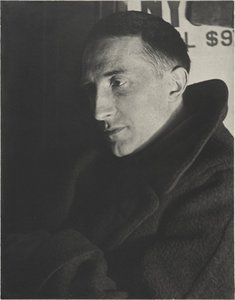
Marcel Duchamp
1887 - 1968 , Franciaország
Rövid tények
- Artistic Movement Or Style:
- Kubizmus
- Dadaizmus
- Szürrealizmus
- Artists Or Movements Influenced By This Artist: ['Minimalizmus']
- Date Of Birth: 28 július 1887
- Date Of Death: 2 október 1968
- Full Name: Marcel Duchamp
- Nationality: Francia-amerikai
- Notable Artworks:
- Fúvóka
- L.H.O.O.Q.
- A Nagy Üveg
- Place Of Birth: Blainville, Franciaország