

 Előnézet
 Megosztás
 Megosztás
 Részletek
 Útmutató

 Letöltés
 Hasonló darabok
 X-ray felvétel
 Diavetítés
 Statisztika
Nő Görögülés Szinte Három Éppen
 Olajfestmény vászonon
- Falfeliratok és faldekoráció
- Cubist Revolution
 1912
1912- Modern kor
 89.0 x 147.0 cm
 Philadelphia Art Múzeum
 Tovább olvasom
Az ezen az oldalon megjelenített műalkotások szerzői jogi védelem alatt állnak, ami azt jelenti, hogy törvényileg nem készíthetünk és nem adhatunk el belőlük pontos másolatokat. Ez a védelem olyan nemzetközi megállapodások alapján érvényesül, mint például a Berni Egyezmény és a nemzeti törvények által, beleértve azokat is, amelyeket meghatározott Az USA szerzői jogi törvénye – 17. cím.
Mint tiszteletes és törvényes alternatívát, olyan egyedi, kézzel festett alkotásokat kínálunk, amelyek az eredetiből merítnek inspirációt. Tapasztalt és professzionális művészeink alaposan tanulmányozzák az eredeti stílusát, hangulatát és művészeti esszenciáját, hogy egy olyan új, egyedi alkotást hozzunk létre, amely ugyanazt az érzést kelti – miközben önálló, eredeti alkotásként létezik.
Ez a módszer teljes mértékben megfelel a szerzői jogi szabályozásnak, mivel nem tartalmazza a védett műalkotás másolását vagy duplikálását. Ehelyett ez egy kreatív újinterpretáció – egy új festmény, amely az eredetivel való összefüggései miatt hatással van rá, de nem az az.
Kézzel készített olajfestmény reprodukció
Kézzel festett olajvastú vászon, az Ön által választott méretben és keretben, művészeink készítik meglévőre. ( Váltás nyomtatványra Áttérés digitális képre)




P118B Ft10

P118H Ft10

P118W Ft10

P438Z Ft10

P508JH Ft12

P508YH Ft12

P805H Ft10

P805Z Ft10

P919BZ Ft10

P919G Ft10

P919XJ Ft10

P959ZH Ft10

P968JZ Ft12

W106C Ft8

W218G Ft10

W218JH Ft8

W218Y Ft10

W307PJ Ft10

W316G Ft10

W316PJ Ft8

W316Y Ft10

W398PJ Ft8

W4111J Ft10

W500HY Ft15

W500JH Ft15

W692G Ft12

W849H Ft8

W940BG Ft15

W953PJ Ft8




Válasszon előre meghatározott méreteink közül, amelyek megfelelnek a műalkotás eredeti arányainak.

Ön megadhat saját méreteket egy adott kerethez vagy térhez igazításhoz. Ha a kiválasztott méret nem egyezik az eredeti kép arányával, akkor a műalkotást levágjuk, vagy további kézzel festett elemekkel meghosszabbítjuk a festményt. A gyártás megkezdése előtt küldünk Önnek egy digitális előnézetet jóváhagyásra.
Kérjük, vegye figyelembe, hogy a képernyőn megjelenő előnézet nem tükrözi a tényleges vágást vagy kiterjesztést. Csak az előnézet fog pontosan mutatni a végső kompozíciót.
Bár egyedi méretek állnak rendelkezésre, javasoljuk, hogy válasszon egy méretet az előre meghatározott listából az eredeti arányok megőrzése érdekében.
A rendelést követően a OriginalUniqueArt.com csapata e-mailt küld az ügyfélnek az instrukciókért, és biztosít egy előnézeti képet (mockup).
Világszerte elérhető szállítás () 3-4 hét alatt a szokásos 5 hét helyett. (13 október). A minőség nem kérdőjelezhető.

Ingyenes globális expressz szállítás

Prémium minőségű len vászon

Teljes körű szállítási biztosítás

Vámvisszatérítési Garancia

Tökéletes színarányosság garancia

100 napos visszaküldési garancia (csak gyártási hibás termékek esetén)

100% pénzvisszatérítési garancia

Több darab vásárlásakor kedvezmény
 Az üvegkeretes opció csak 110 cm alatti méretben érhető el

Nő Görögülés Szinte Három Éppen
Reprodukciós technika
Reprodukció méretei
-


Összesített ár
Ft 94012
Forradalmázó kubista remekmű
Marcel Duchamp „Nude Descending a Staircase, No. 2” (Leámpadozó akt, No. 2) című alkotása (1912) egy olyan ikonikus mű, amely alapjaiban kérdőjelezheti meg a forma és a perspektíva hagyományos fogalmát. Ez a földbreaking festmény a kubista mozgalom điểnusa, amely törekvése a tárgyak egyszerre, több nézőpontból történő ábrázolására irányult. A mű fragmentált, geometrikus kompozíciója képes megragadni a mozgás lényegét, ezzel is meghatározó szerepet adva a modern művészettörténetnek.
Dinamikus kompozíció és technika
A festmény egymásba ágyazott, kúpos és hengeres absztrakt elemek összetett aranyméretű elrendezését mutatja, amely ritmust és mozgást sugall. Duchamp éles, szögletes vonalakat és egymáson átfedő formákat alkalmaz, hogy mélységérzetet és háromdimenziós hatást keltsen. Az oker és a barna színek dominanciájával teli, visszafogott színpaletta időtlen minőséget kölcsönöz a munkának. A festék áttetsző rétegei hozzájárulnak a mű texturált megjelenéséhez, megerékeltve annak haptikus vonzerejét.
Történelmi kontextus és hatás
A 1912-es párizsi Salon des Indépendants kiállításra benyólt alkotást a kubisták kezdetben elrefuzálták, mivel túl futurista jellegűnek találták. Ennek ellenére a New Yorkban megrendezett 1913-as Armory Show során hatalmas figyelmet kapott, ahol vitákat és kontroversumokat váltott ki a közönségből. Duchamp mozgás ábrázolására vonatkozó innovatív megközelítése mély nyomot hagyott a későbbi művészeti irányzatokban, beleértve a futurizmust és a dadaizmust is.
Szimbolizmus és érzelmi hatás
A alak fragmentált természete a modern tapasztalás összetettségét és sokszínűségét szimbolizálja. A formák és vonalak dinamikus kölcsönhatása energiát és vitalitást közvetít, arra invitálva a nézőt, hogy Contemplálja az idő és a mozgás folyékonyságát. Duchamp többperspektívás alkalmazása arra készteti a tekintőt, hogy intellektuális szinten kapcsolódjon a műhöz, így ez a alkotás minden gyűjtemény gondolkodtatásra késztető kiegészítőjévé válik.
Miért válassza ezt a reprodukciót?
Varázsolja magát részévé a művészettörténetnek ezzel a kiváló minőségű „Nude Descending a Staircase, No. 2” reprodukcióval. Tökéletes választás művészbarátoknak, gyűjtőknek és belsőépítészeknek, akik modernista eleganciát szeretnének vinni otthonukba vagy munkahelyükre. Ez a remekmű lenyűgöző fókuszpontként szolgál bármely helyiségben, beszélgetést indítva és méltatást kiváltva.
Gyakran Ismételt Kérdések
Mi a "Nő Görögülés Szinte Három Éppen" formátuma?
A "Nő Görögülés Szinte Három Éppen" formátuma Lankás. Ez hasznos, amikor tervezünk, hogy a reprodukciót hová helyezzük el.
Melyik történelmi korszakból származik a „Nő Görögülés Szinte Három Éppen”, Marcel Duchamp alkotása?
„Nő Görögülés Szinte Három Éppen”, Marcel Duchamp alkotása történelmi korszaka Modern kor. Ez a klasszifikáció meghatározza a mű helyét a művészettörténetben.
Milyen színharmóniát mutat be „Nő Görögülés Szinte Három Éppen”, Marcel Duchamp alkotása?
A „Nő Görögülés Szinte Három Éppen”, Marcel Duchamp alkotása egy Éles kontrasztú színek színharmóniát mutat be.
Mennyi volt Marcel Duchamp életkora, amikor a "Nő Görögülés Szinte Három Éppen" készült?
Amikor a "Nő Görögülés Szinte Három Éppen" alkotása 1912-ben készült, Marcel Duchamp – aki 1887-ben született – 25 éves volt.
Mit ábrázol a „Nő Görögülés Szinte Három Éppen”, Marcel Duchamp alkotása, és milyen hangulatot közvetít?
A „Nő Görögülés Szinte Három Éppen”, Marcel Duchamp alkotása geometric abstraction, motion dynamics, cubist perspective, fragmented figure, color palette ochre, modern art history, avant-garde innovation-t ábrázol, Letisztult modern hangulatban. A tárgy és a légkör együtt határozza meg a művet.
Hogyan javasolt a(z) "Nő Görögülés Szinte Három Éppen" kinyomtatása – milyen méretben, milyen elrendezésben?
Nagy méretű méret, Lankás elrendezés: ez a javasolt nyomtatási beállítás a(z) „Nő Görögülés Szinte Három Éppen”, Marcel Duchamp alkotása alkotáshoz.
Milyen kontraszt jellemzi „Nő Görögülés Szinte Három Éppen”, Marcel Duchamp alkotása alkotást?
A "Nő Görögülés Szinte Három Éppen" fény-sötét kontrasztja Nyilatkozat értéket mutat. A kontraszt azt írja le, mennyire térnek el egymástól a világos és sötét részek.
Hová sorolható a "Nő Görögülés Szinte Három Éppen" Marcel Duchamp ismétlődő témái közé?
Marcel Duchamp ismétlődő témái közé tartozik a picasso’s cubist legacy, futurist debate critique, modern art challenge, symbolic figure complexity, duchamp artistic vision; a „Nő Görögülés Szinte Három Éppen” fókuszál a geometric abstraction, motion dynamics, cubist perspective, fragmented figure, color palette ochre, modern art history, avant-garde innovation témakörre.
A művész életrajza
Marcel Duchamp (1887–1968): A Revolutionary Spirit
Marcel Duchamp, born Henri-Robert-Marcel Duchamp in 1887 in Blainville-Crevon, Normandy, was more than an artist; he was a philosophical provocateur who fundamentally altered the course of modern art. His early life, though seemingly conventional – nurtured within a family that appreciated artistic expression with both brothers pursuing successful careers as artists – hinted at the iconoclasm to come. Duchamp initially pursued formal training, mastering traditional techniques and experimenting with post-impressionist styles. However, this academic foundation served not as an end in itself, but as a springboard for questioning the very nature of art, its purpose, and its definition. He wasn’t content merely to depict the world; he sought to challenge how we perceive it, and what constitutes artistic value. This restless intellectual curiosity would become the defining characteristic of his prolific career.Early Life and Artistic Beginnings
Duchamp's formative years were marked by a familial tradition of artistic inclination. His father, Eugène Duchamp, was a notary, yet four of the six Duchamp children embraced art as their vocation. Jacques Villon, Marcel’s elder brother, established himself as a painter, demonstrating an early aptitude for visual expression. Raymond Duchamp-Villon followed suit, pursuing sculpture with considerable success. Marcel himself began experimenting with painting at a young age, producing *Portrait of Marcel Lefrançois* (1904), which showcased his nascent stylistic sensibilities and technical prowess. His studies at the École des Beaux-Arts in Paris yielded mixed results—he famously failed to pass the final exam—but this setback fueled his determination to forge his own artistic path, independent from established conventions.Cubism: A Dialogue with Tradition
Duchamp’s initial engagement with Cubism, evident in works like *Portrait of Chess Players* (1911), represented a crucial step beyond purely decorative pursuits. He absorbed the influence of Picasso and Braque, adopting their innovative techniques for dissecting visual reality into fragmented planes and multiple perspectives—a deliberate departure from traditional representation. However, Duchamp didn’t simply replicate Cubist aesthetics; he interrogated its underlying principles, questioning whether it truly captured the essence of experience. The pervasive disillusionment stemming from World War I profoundly impacted his artistic vision, propelling him toward Dadaism as a reaction against perceived intellectual and moral failings.Dadaism: Rebellion Against Reason
The horrors of World War I galvanized Duchamp’s rebellious spirit, leading him to embrace Dadaism—a movement born out of utter despair and vehement rejection of logic, reason, and the prevailing artistic values of the time. Dadaists sought to dismantle accepted norms through absurdity, chance, and provocation, rejecting any attempt at rational explanation or aesthetic judgment. Within this anarchic framework, Duchamp unleashed his most radical innovation: the ‘readymade’. This concept—taking an ordinary manufactured object and declaring it art—challenged the very definition of artistic skill and authorship. His seminal work, *Fountain* (1917), a porcelain urinal signed “R. Mutt,” epitomized Dada’s irreverence for convention and ignited a furious debate about the role of the artist in society.The Readymades and Conceptual Art: A Paradigm Shift
Duchamp's embrace of the readymade irrevocably altered the trajectory of art history, establishing him as a progenitor of Conceptual Art—an artistic movement that prioritizes idea over material execution. Objects like *L.H.O.O.Q.* (1919), a postcard reproduction of the Mona Lisa defaced with a mustache and goatee, served as biting critiques of cultural icons and artistic traditions. These works weren’t judged on their visual beauty; they demanded contemplation and provoked viewers to confront uncomfortable questions about art's role in shaping our perceptions of reality. Duchamp’s unwavering conviction that art should reside in the mind—not merely in the eye—continues to resonate powerfully within contemporary artistic discourse. His legacy extends far beyond his individual creations, influencing countless artists who followed him and reshaping our understanding of what constitutes artistic expression.Later Years: Surrealism and Continued Innovation
Duchamp’s artistic explorations continued throughout his life, encompassing film, sculpture, and collaborative projects with fellow artists like Man Ray. He participated in Surrealist exhibitions organized by André Breton, demonstrating an enduring fascination with the subconscious mind and its capacity to generate unexpected imagery. His monumental *Etant donnés* (1965–6), a reconstructed version of *The Large Glass*, represents his final artistic endeavor—a complex symbolic work that embodies his lifelong preoccupation with challenging conventions and provoking intellectual engagement. Marcel Duchamp died in Neuilly-sur-Seine on October 2, 1968, leaving behind an unparalleled body of work that cemented his place as one of the most influential figures in modern art history.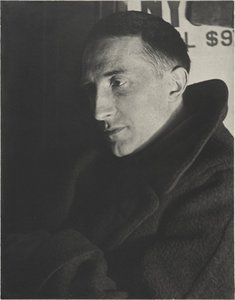
Marcel Duchamp
1887 - 1968 , Franciaország
Gyors információk
- Artistic Movement Or Style:
- Kubizmus
- Dadaizmus
- Szürrealizmus
- Artists Or Movements Influenced By This Artist: ['Minimalizmus']
- Date Of Birth: 28 július 1887
- Date Of Death: 2 október 1968
- Full Name: Marcel Duchamp
- Nationality: Francia-amerikai
- Notable Artworks:
- Fúvóka
- L.H.O.O.Q.
- A Nagy Üveg
- Place Of Birth: Blainville, Franciaország
Kapcsolódó cikkek

Kandinsky Mesterművei: 25 Lenyűgöző Festmény a Modern Művészet Gyöngyszemeiből | OriginalUniqueArt
Fedezze fel Wassily Kandinsky 25 legikonikusabb művét! Merüljön el az absztrakt művészet világában, ismerje meg a színek és formák lenyűgöző történetét. Prémium minőségű reprodukciók és inspiráló dekorötletek a OriginalUniqueArt.com-on.

Geometrikus Absztrakció Mesterei: 10 Alapvető Műalkotás a Lakberendezéshez
Fedezze fel a geometrikus absztrakció 10 legikonikusabb műalkotását! Kandinsky, Mondrian és más mesterek festményeinek története inspirálja otthona dekorációját. Múzeumi minőségű reprodukciók a OriginalUniqueArt.com-on – fedezze fel online!

Beyond Form & Color: Geometric Abstraction's Evolution in 20th/21st Century Art
Explore the evolution of geometric abstraction from Cubism to contemporary art. Discover key artists like Malevich & Mondrian, investment insights, and expert collecting advice at OriginalUniqueArt.
Beyond Form: Exploring the Philosophical Foundations of Geometric Abstraction
Explore the philosophical roots & artistic evolution of geometric abstraction with OriginalUniqueArt. Discover Mondrian, Malevich, De Stijl & more. Expert insights for collectors and art enthusiasts.

Beyond Form & Color: Geometric Abstraction's Enduring Legacy in Art History
Explore the captivating world of geometric abstraction! Discover its origins, key artists like Malevich & Mondrian, and why this movement remains highly valued by art collectors today. Expert insights at OriginalUniqueArt.


